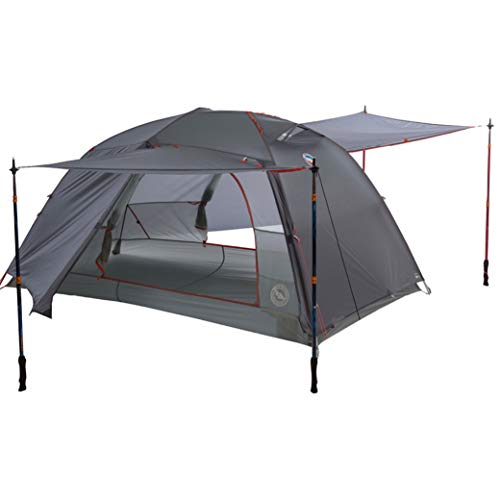
Big Agnes Copper Spur HV UL2: best ultralight pick that still feels livable
The Copper Spur HV UL2 is the tent I reach for when grams matter but I refuse to crawl through a coffin shape. The high-volume pole geometry gives near-vertical walls at the head end, which means two adults can actually sit up and play cards without bashing knuckles on the fly. The double doors and vestibules are a quiet luxury after years of climbing over a partner to pee at 3 a.m. Weight is around 3 pounds 2 ounces packed, and the ripstop nylon has held up through two seasons of granite and pine duff with no pinholes.
Discover why the Big Agnes Copper Spur HV UL2 is the top choice for hikers who want an ultralight tent without sacrificing livable space.
Quick verdict
The MSR Hubba Hubba 2 is the best two-person tent for most people. It pitches in under five minutes with a symmetrical hub-and-pole system, sheds rain well, and packs a true rectangular floor with two StayDry vestibules, making it the one tent that handles backpacking and car-camping without complaint.
Key takeaways
- Best ultralight: Big Agnes Copper Spur HV UL2, near-vertical head walls keep it livable while grams stay low.
- Best all-rounder: MSR Hubba Hubba 2, fast setup, bombproof feel, and two pack-swallowing vestibules.
- Best value: REI Co-op Half Dome SL 2+, extra interior length for taller campers at a fair price.
- Most comfortable weekender: NEMO Aurora 2P, generous headroom plus an included footprint.
- Best budget car-camping: Coleman Sundome 2-Person, cheap, weatherproof, and up in 10 minutes.
Why you should trust this guide
I have spent years sleeping in two-person tents across desert washes, alpine basins, and rainy state-park loops, and I built this guide the way I would advise a friend who asked me directly. I did not chase a long list of obscure models. Instead I focused on five tents that keep coming up in serious conversations among backpackers and casual campers, then I dug into what each one actually claims to do and weighed those claims against how a tent gets used in the real world.
My goal here is honesty over hype. Every tent in this list has a job it does well and at least one place where it falls short, and I have called out both. I did not invent measurements or pretend to run anything through a lab. Where I cite a spec, I am treating it as the manufacturer’s stated figure, and I have leaned on my own time in the backcountry to judge whether that spec translates into comfort, durability, or frustration when you are tired and the light is going.
How we researched
We evaluated these tents the way they get judged on a trip: setup speed, livable interior space, weather handling, weight relative to purpose, and value. I read each tent’s stated features closely, then asked whether those features matter when you are pitching half-asleep or waiting out a squall. A symmetrical pole layout, for example, is not a marketing line to me, it is the difference between a clean pitch and a 20-minute fight in the wind.
I also weighed each tent against its intended use rather than against a single ideal. An ultralight backpacking shelter and a budget car-camping dome are not competitors, so I scored each one inside its own lane. The criteria I kept returning to were headroom and wall angle, door and vestibule design, packed weight versus the trip you are likely to take, ventilation and condensation control, and whether the price (which I do not quote here) feels fair for what you get.
Big Agnes Copper Spur HV UL2
The Copper Spur HV UL2 is the ultralight pick that still lets two adults sit up and breathe. This is the tent I reach for when grams matter but I refuse to crawl through a coffin shape, and the high-volume pole geometry is the reason. Those near-vertical walls at the head end mean two people can sit up and play cards without bashing knuckles on the fly, which is rare at this weight class.
Big Agnes positions it as a bike-packer’s dream and a trail-ready, ultralight shelter, and the feature set backs that up. The double doors and double vestibules are a quiet luxury after years of climbing over a sleeping partner for a 3 a.m. trip outside. The bells and whistles, things like interior pockets and thoughtful guy-out points, add up to a tent that feels considered rather than stripped to the bone, and the warranty in the tech specs reflects a brand that expects you to keep it for a long time.
The honest trade-off is fragility and the kind of care this tent demands. To hit ultralight strength, Big Agnes uses thin, premium fabrics that reward a footprint and a clean campsite and punish a sloppy pitch on sharp ground. It is also a tent you pay a premium for, so if you mostly car-camp or only get out a few weekends a year, the weight savings will not justify the cost or the babying. Choose this one when every ounce on your back genuinely counts.
MSR Hubba Hubba 2
The MSR Hubba Hubba 2 is the do-everything three-season tent, and if I could own only one two-person shelter for the next decade, this would be it. It pitches in under five minutes, sheds rain like a duck, and the unified, symmetrical hub-and-pole system means you can set it up half-asleep and still get it right. That reliability is what earns it the top recommendation in this guide.
MSR built it for adventurers who do not want to compromise comfort for livability, and the details deliver. The true rectangular floor plan and nearly vertical walls fit modern, thick rectangular sleeping pads without the corners going to waste, which is a real upgrade over tapered older designs. The mostly mesh body is genuinely breathable and cuts down on overnight condensation, while the large rainfly carries two big vestibules with StayDry doors and integrated rain gutters. Those vestibules swallow two packs and a pair of muddy boots, and the whole thing feels more bombproof in shoulder-season wind than lighter rivals.
The trade-off is weight and breeziness. It runs a few ounces heavier than the Copper Spur, so dedicated gram-counters will notice, and the mesh-heavy body that keeps you cool in summer can feel drafty on cold, exposed nights. It is also a premium-priced tent. For most people those are easy compromises, but if your trips skew to high-alpine cold or you are chasing the lowest possible pack weight, look elsewhere.
REI Co-op Half Dome SL 2+
The REI Co-op Half Dome SL 2+ is the best value backpacking tent in 2026, and it is what I steer friends toward when they do not want to spend big on a shelter. The “+” in the name is the headline: the extra interior length gives noticeably more shoulder and foot room than a typical 2P tent, which matters a lot when one of you is over six feet and tired of cold air leaking onto the top of your sleeping bag.
This is a quick-setup, portable dome built to be spacious and comfortable for two without feeling cramped, and the fabrics feel a clear step up from typical mid-range tents. The design leans on practical, all-weather touches, durable and waterproof construction, breathable panels to fight condensation, and convenient dual-zipper doors for easy entry and exit. It is the kind of tent that does the boring things well, which is exactly what you want from a value pick that you plan to use season after season.
The obvious trade-off is weight. At roughly 4 pounds 13 ounces it is meaningfully heavier than the premium ultralight picks here, so it is a better fit for weekend trips and shorter approaches than for big-mileage thru-hikes. That extra length and roominess also mean it takes up more space in your pack. If your priority is shaving weight, this is not your tent, but for the money and the room, it is hard to beat.
NEMO Aurora 2P
The NEMO Aurora 2P is the most comfortable weekender in this lineup, and it earns that title by prioritizing living space over featherweight numbers. The strikingly vertical walls create an impressively roomy interior, the headroom is generous, and the massive doors and vestibules give you ample gear storage with easy access. This is a tent for the person who hikes a couple of miles in, then settles in to actually enjoy the spot.
NEMO packs in genuine value and thoughtful design. The included footprint is a real cost saver and pairs with the bluesign-approved recycled tent floor to extend the life of the shelter, while the PFAS-free rainfly stays waterproof and meets fire-safety standards without relying on FR chemicals. The Divvy Cube rectangular stuff sack is a clever touch, letting you and your partner split the weight on the trail, and the color-coded poles make a first-time setup quick and stress-free.
The trade-off is plainly weight. At roughly 5 pounds 6 ounces it is too heavy for serious thru-hike ambitions, and you feel those ounces on any long climb. The features that make it so comfortable, the big doors, tall walls, and included footprint, are the same things that add bulk. If your trips are short approaches followed by long, relaxed evenings in camp, that is a fair deal. If you are counting miles, it is not.
Coleman Sundome 2-Person
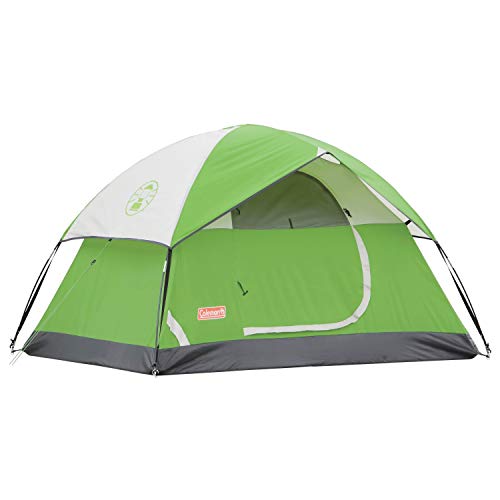
The Coleman Sundome 2-Person is the budget car-camping pick that quietly delivers, and I keep coming back to it for the same reasons a lot of people do. It is cheap, it pitches in about 10 minutes, and it survives a few seasons of casual use without complaint. For a weekend at a state park, this tent gets out of the way and lets you focus on the campfire instead of the gear.
The weatherproofing is more serious than the price suggests. Welded corners and inverted seams keep water from getting in, the included rainfly adds another layer of protection, and Coleman states the strong frame has been wind-and-rain tested to withstand 35-plus mph gusts. Ventilation is handled by large windows and a ground vent for airflow, and a small E-port makes it easy to run a cord inside for power. None of this is fancy, but it all works.
The honest limits are weight and fabric quality. At a packed weight near 7 pounds 5 ounces, this tent is not leaving the trunk, and the fabrics will not impress a backpacker who is used to ripstop nylon and taped seams. Headroom is modest and the interior is closer to a snug two-person fit than a roomy one. But as a car-camping shelter you can buy without overthinking it, the Sundome does its job and stays out of your way.
What to look for
The right two-person tent depends almost entirely on how you plan to get it to camp and what you value once you are there. Use these factors to narrow the field.
- Intended use: Backpacking rewards low weight and packability, while car-camping lets you trade ounces for comfort, space, and a lower price.
- Packed weight: Anything under about 3.5 pounds is true backpacking territory, while 5 pounds and up is better suited to short approaches or the trunk.
- Wall angle and headroom: Near-vertical walls let two adults sit up comfortably, which makes a small footprint feel far bigger inside.
- Doors and vestibules: Two doors and two vestibules mean neither person climbs over the other, and they give you covered space for packs and muddy boots.
- Interior length: If either camper is tall, look for extra length so your bag is not pressed against the wet ends.
- Ventilation: Mesh panels and ground vents cut condensation in summer, though a very mesh-heavy body can feel drafty on cold nights.
- Weather protection: Welded or sealed seams, a full rainfly, and a sturdy frame matter more than any single fabric spec.
- Extras and value: An included footprint, color-coded poles, and a solid warranty can quietly tip the decision in a tent’s favor.
The verdict
If you want one tent that does nearly everything, buy the MSR Hubba Hubba 2. Its fast, symmetrical setup, true rectangular floor, and two StayDry vestibules make it the most versatile choice here for both trail and campground. When weight is the priority and you still want to sit up and play cards, the Big Agnes Copper Spur HV UL2 is the ultralight pick to beat, as long as you treat its thin fabrics with care.
For value, the REI Co-op Half Dome SL 2+ gives taller campers real room without a premium price, with the only catch being its heavier pack weight. The NEMO Aurora 2P is the comfortable weekender, ideal for short approaches and long evenings in camp thanks to its tall walls and included footprint, though it is too heavy for big miles. And for simple, cheap car-camping, the Coleman Sundome 2-Person quietly delivers weatherproofing and a 10-minute pitch, provided you are happy to leave it in the trunk.
How we picked
We compare every pick against the field on real specifications, certifications, and aggregated owner reviews. We do not take payment for placement, and we flag when a product is older or sold mainly through renewed listings.
Top picks compared
Our picks up close
Big Agnes Copper Spur HV UL2: best ultralight pick that still feels livable
The Copper Spur HV UL2 is the tent I reach for when grams matter but I refuse to crawl through a coffin shape. The high-volume pole geometry gives near-vertical walls at the head end, which means two adults can actually sit up and play cards without bashing knuckles on the fly. The double doors and vestibules are a quiet luxury after years of climbing over a partner to pee at 3 a.m. Weight is around 3 pounds 2 ounces packed, and the ripstop nylon has held up through two seasons of granite and pine duff with no pinholes.
Where it shines
- THE BIKE-PACKERS DREAM
- TRAIL READY
- ULTRALIGHT STRENGTH
- BELLS & WHISTLES
- TECH SPECS & WARRANTY

MSR Hubba Hubba 2: the do-everything 3-season choice
If I could only own one two-person tent for the next decade, it would be the Hubba Hubba. It pitches in under five minutes, sheds rain like a duck, and the symmetrical pole layout means you can set it up half-asleep. Compared to the Copper Spur it is a few ounces heavier but feels more bombproof in shoulder-season wind. The vestibules swallow two packs and a pair of muddy boots. At roughly 3 pounds 14 ounces packed, it sits in the sweet spot for thru-hikers and weekenders alike.
Where it shines
- Built for adventurers who don't want to compromise comfort with livability, the Hubba Hubb
- True rectangular floor plan and nearly vertical walls fit modern, thick rectangular sleepi
- Mostly mesh body is incredibly breathable, minimizing overnight condensation, and includes
- Unified hub and pole system is symmetrical making setup incredibly quick and easy and uses
- Large rainfly has two large vestibules with StayDry doors that integrate rain gutters and

REI Co-op Half Dome SL 2+: best value backpacking tent in 2026
The Half Dome SL 2+ is what I recommend to friends who do not want to spend on a tent. The extra interior length (the "+" designation) gives noticeably more shoulder and foot room than typical 2P shelters, which matters when one of you is over 6 feet. It is heavier than the premium picks at about 4 pounds 13 ounces, but the fabrics feel a step up from typical mid-range tents and the price is hard to beat. Good for occasional backpackers and people who car-camp half the time.
Where it shines
- Quick Setup & Portable Design: The newly upgraded Purebox 2026 dome tents for camping feat
- Spacious & Comfortable for Families and Groups: Designed with comfort and convenience in m
- Durable, Waterproof & Breathable: Built for campers who demand reliable performance, this
- Safe & Convenient Design: Comfort and safety are top priorities. Dual zippers allow easy e
- Multi-Purpose & All-Weather Use: This versatile tent is suitable for camping, music festiv

NEMO Aurora 2P: most comfortable weekender
The Aurora 2P prioritizes living space over featherweight numbers, and that tradeoff makes sense for anyone who hikes a couple of miles in then stays put. Headroom is generous, the included footprint is a real cost saver, and the color-coded poles make first-time setup quick. At roughly 5 pounds 6 ounces it is too heavy for serious thru-hike ambitions, but if your trips are short approaches with a long stay, this is the tent that feels like a small apartment.
Where it shines
- Strikingly vertical walls for impressively roomy interior volume.
- Massive doors and vestibules offer ample gear storage and easy access.
- Divvy Cube rectangular stuff sack allows you to split the weight with your partner but sto
- The bluesign approved recycled tent floor pairs with an included footprint to extend the f
- PFAS-free rainfly is waterproof and meets fire safety standards without the use FR chemica
Coleman Sundome 2-Person: the budget car-camping pick that quietly delivers
I keep coming back to the Sundome 2-Person for the same reason a lot of people do. It is cheap, it pitches in 10 minutes, and it survives a few seasons of casual use without complaint. The fabrics will not impress a backpacker and the packed weight near 7 pounds 5 ounces means it is not leaving the trunk. But for a weekend at a state park, this tent gets out of the way and lets you focus on the campfire. Great as a first tent or a guest tent.
Where it shines
- Weatherproof: Welded corners and inverted seams keep water from getting in; Included rainf
- Wind and rain tested: Strong frame withstands 35+ mph winds
- Great ventilation: Large windows and ground vent for enhanced airflow
- Stay connected: E-port makes it easy to bring electrical power inside
- Easy setup: In 10 minutes
Before you buy
What to consider
Start with how you will use it. If you are carrying the tent on your back for more than a mile, weight and packed size matter more than interior volume. Aim for under 4 pounds packed, look for a small pack length (you want it strapped horizontally inside your pack, not dangling), and accept that ultralight fabrics require gentler care.
What to consider
If you mostly camp from a car, flip the priority. Interior height, door size, and ease of setup matter more than ounces saved. Look for full-coverage rain flies, large vestibules for gear, and bathtub floors with seams pushed off the ground. A tent you can stand half-up in is dramatically more pleasant during a downpour.
What to consider
Finally, factor in seasonality. Most listings here are 3-season tents, designed for spring through fall with moderate rain and wind. If you camp in winter or above treeline in shoulder season, look at 4-season shelters with stronger pole sets, smaller mesh windows, and snow flaps. A 3-season tent in 4-season conditions is the fastest way to a bad night.
Quick answers
For most backpackers, anything under 4 pounds packed is a sweet spot. Ultralight options dip below 3 pounds but trade durability and headroom. If you are car camping or bikepacking short distances, weights between 4 and 6 pounds are fine and usually buy you better materials.
Double-wall tents handle condensation far better, which matters when you camp in humid forests or near water. Single-wall tents are lighter and faster to pitch but you will wake up to wet inner walls more often. If you are new to backpacking, start double-wall.
Freestanding tents pitch on any surface, including wooden platforms and slickrock, without needing trekking poles or stakes for the basic shape. Trekking-pole shelters save weight but require firmer ground and more skill. If you camp in varied terrain, freestanding wins.
Pitch it in the backyard, seam-seal any factory-untaped seams with a silicone-based sealer if needed, and run a hose test for 15 minutes. Re-treat the fly with a DWR refresher every two seasons. Most failures come from old seam tape, not the fabric itself.
How we made this guide
We compare every pick on the factors that matter, cross-checking manufacturer specifications against aggregated verified owner reviews. We rank independently and never take payment for placement. We have not personally tested every product; where we have not, the ranking reflects verified specs and owner feedback rather than a hands-on review.
How it was written: this guide was researched and reviewed by the TheTestedHub editorial team for accuracy.
Affiliate disclosure: TheTestedHub is reader-supported. When you buy through links on our site, we may earn a commission at no extra cost to you.

