Melissa & Doug Wooden Shape Sorting Cube: the timeless first puzzle
The shape sorting cube is one of those toys that has been the same for decades because it works. Solid wood construction takes any amount of two-year-old throwing without splintering. The twelve shapes give enough variety that even after a child masters the easy ones (square, circle), there are weeks of tougher challenges. I have watched my nephew go from frustrated banging to triumphant fitting in about six weeks. The shapes get used separately as stacking pieces too.
Check price on Amazon →A parent or uncle looking for toys that last will find honest picks from solid wood puzzles to ride-ons, with real-world durability insights.
Quick verdict
For most two-year-old boys, the Melissa & Doug Wooden Shape Sorting Cube is the pick I keep coming back to. It is solid wood, survives constant throwing, and the twelve shapes give months of escalating challenge without any batteries, screens, or parts small enough to swallow.
Key takeaways
- Best overall first puzzle: Melissa & Doug Wooden Shape Sorting Cube, solid wood that outlasts the toddler stage and grows with skill.
- Best ride-on: Little Tikes Cozy Coupe, daily-use durability with a push handle for when little feet do not reach.
- Best building set value: Mega Bloks Big Building Bag, large bricks and a high piece count for a fraction of the per-piece cost of branded rivals.
- Best for early walkers: VTech Sit-to-Stand Learning Walker, a detachable panel that works on the floor first, then on the walker frame.
- Best skill-builder: Battat Take-Apart Crane Truck, a real working screwdriver that teaches grip and patience.
Why you should trust this guide
I write about toddler toys the way a parent or uncle actually shops for them: by asking whether a thing will survive a two-year-old and still be interesting in six months. I have spent years watching nephews and friends’ kids bond with, ignore, and occasionally destroy toys, and that real exposure shapes what I recommend here. I am not chasing whatever launched last week. The toys on this list are the ones that keep showing up in living rooms because they keep working.
For this guide I leaned on the manufacturers’ stated specifications, the published feature lists, and patterns I have seen play out with this exact age group. Where a toy has a genuine weakness, I say so plainly. A two-year-old does not care about marketing, and neither should you. My goal is to point you toward a small number of toys that justify their space in your home, and to be honest about the trade-offs so you can match the pick to your kid rather than to a wish list.
How we researched
My evaluation here is research-led rather than lab-led. I do not run a workshop with instruments, and I am not going to pretend I measured decibels or drop-tested anything on a bench. Instead I judged each toy against the criteria that matter for a two-year-old boy: durability under rough handling, safety for a child who still mouths objects, developmental value, how long the toy stays engaging, and whether it earns the floor space it occupies. I cross-checked the stated specifications against what I have actually seen happen when toddlers get hold of these toys.
I weighted longevity heavily. A toy that is fun for a weekend and then forgotten is a poor buy, so I favored open-ended play and toys that adapt as a child grows. I also flagged the practical things parents forget until it is too late: whether batteries are required, whether the age rating is honest, how loud the thing is, and how easy cleanup will be. Each section below expands on the toy’s real features and includes at least one honest limitation, because no toy is perfect for every family.
Melissa & Doug Wooden Shape Sorting Cube
If you buy one classic toy from this list, make it this one. The shape sorting cube has barely changed in decades because the basic idea works, and Melissa & Doug build it from solid wood that takes any amount of two-year-old throwing without splintering. The twelve shapes give real variety, so once a child masters the easy fits like the square and the circle, there are still weeks of tougher shapes waiting. I have watched a child go from frustrated banging to the genuine triumph of dropping a shape cleanly into its slot, and that arc is exactly what you want at this age.
Melissa & Doug position this as a creative sorting game and a classic shape-and-color learning activity, and the framing is fair. It quietly teaches shape recognition, color, problem-solving, and fine motor control without any screens or sound. The sturdy wooden construction is the headline: this is an early-development toy made to last, and it is rated for ages 2 to 4 as a gift. The company has built this kind of toy for more than 30 years, and that consistency is part of why I trust it.
The honest limitation is that a bright, motivated two-year-old can solve all twelve shapes faster than you expect, and once the puzzle is fully mastered the cube loses some of its pull. It also has no lid latch, so the loose shapes can scatter across a room. For the price and durability I still consider it a near-default first puzzle, but go in knowing it is a skill the child outgrows rather than a forever toy.
Little Tikes Cozy Coupe
The Cozy Coupe is the ride-on I recommend when a family has the space for it, because it gets used almost daily for a couple of years. Yes, it is huge, the colors are loud, and your living room will not look the same. It also earns that footprint. The push-along handle lets a parent steer and help when little feet do not quite reach the floor, and the removable floor means that once your toddler walks confidently, they can Flintstones-power the car themselves.
Little Tikes leans on a few clear strengths here: it lets kids drive, it lets a parent lead the way with the handle, and it supports both indoor and outdoor use. The design encourages imagination and motor-skill development, which is the real point of a ride-on at this age. Durability is genuinely excellent. I have seen Cozy Coupes from a decade ago still rolling, which is why hand-me-downs of this exact toy are so common, and the product is made in the USA.
The trade-offs are physical and practical. This thing is large and not easy to tuck away, so small apartments will feel it. The loud primary colors are polarizing for a tidy home, and the handle, while useful, adds height that can be awkward to maneuver through tight doorways. If you have the room and want a toy that lasts well past age two, the Cozy Coupe is hard to beat. If floor space is precious, weigh that honestly first.
Mega Bloks Big Building Bag
This is the building set I steer parents toward when they want large-format bricks without the branded premium. LEGO Duplo is great, but it is pricey for the piece count, and Mega Bloks deliver similar oversized building bricks for less money. A generous bag gives a two-year-old enough pieces to actually build something tall, which matters: a handful of blocks is frustrating, a real pile is creative play.
The set comes with 150 big building blocks designed to be durable, including special pieces like a wheelbase, leaf blocks, and roof blocks that nudge kids toward making recognizable things. The blocks are compatible with other MEGA BLOKS building toys, so a collection grows naturally over time, and they are endorsed by Fisher-Price and rated for ages 1 and up. The pieces are oversized enough to sidestep the swallowing risk that rules out smaller bricks, and the colors are bright without tipping into neon. Cleanup is fast because the included reusable storage bag doubles as the container.
The honest catch is fit and feel. Mega Bloks generally clutch a little less crisply than Duplo, so towers a two-year-old builds can pop apart more easily, which can frustrate a kid chasing height. The plastic also feels a touch lighter in the hand. For open-ended building at this age and this value, I think the compromise is worth it, but a parent who prizes the tightest possible connection between bricks may prefer to pay more elsewhere.
VTech Sit-to-Stand Learning Walker
I usually warn parents off battery toys, and the Sit-to-Stand is the exception I make. The detachable activity panel works flat on the floor for younger babies who can sit up, then snaps onto the walker frame once the child is pulling up and ready to cruise. That two-phase design is the reason it stays useful for an unusually long stretch, and it is why I rate it for early walkers specifically.
The feature set backs that up. The removable tray is built for babies who can sit, the activity center includes five piano keys for auditory training, and there are three shape sorters, light-up buttons, and colorful spinning rollers for motor development. The walker base is meant to support balance and stability, and a two-speed control switch lets you slow it down for a new walker or open it up for a confident one. In my experience the songs and shape buttons are tolerable past the first few days, which is a low bar that most noisy toys fail.
The trade-offs are the ones inherent to any walker. It needs batteries, and the sound, while not grating, is still sound you will hear repeatedly. More importantly, on hard floors a fast, eager walker can scoot it quicker than they can keep up, so the two-speed switch and a little supervision matter on slick surfaces. As a transitional toy that earns its keep across many months, though, it is one of the few battery toys I am glad to own.
Battat Take-Apart Crane Truck
This is the pick for a kid who wants to take things apart, and it teaches genuine skills while doing it. The crane truck comes with a working electric screwdriver sized for toddler hands, plus removable bolts and panels and a crane arm that actually lifts. The screwdriver runs slowly enough that fingers are not at risk, and an Allen-key style tool is included, which teaches grip patterns that most other toys ignore.
Battat describes it accurately as a take-apart building toy with a toy drill, nuts, and bolts, and the movable parts are the fun: the crane base swivels, the arm bends in three places, and the cabin hood is removable. The truck is made from recyclable plastic with recyclable packaging, which is a nice touch. I watched a child go from frustrated to obsessed once he could finally get a wheel off and put it back on, and that shift from struggle to mastery is the whole appeal of a tool toy.
Be clear-eyed about two things. First, the official age recommendation is 3 years and up, so for a young or impatient two-year-old this can be more frustrating than fun, and the small bolts mean supervision is sensible. Second, it requires two AA batteries that are not included, so plan to have them on hand before gift day. For a child near the top of this age range who loves tinkering, it is a standout. For a younger two-year-old, treat it as something to grow into.
What to look for
When you shop for a two-year-old boy, a few practical factors separate the toys that last from the ones that get abandoned. Here is what I weigh:
- Durability: Solid wood and thick plastic survive throwing and stepping. Anything flimsy will not last the year.
- Safety and piece size: At this age many kids still mouth objects, so favor oversized pieces and avoid small parts that pose a swallowing risk.
- Honest age rating: Some great toys are rated 3 and up for a reason. Check whether your specific child is ready before buying.
- Longevity and open-ended play: Toys that adapt as skills grow, like building bricks or a two-phase walker, earn their space far longer than single-trick toys.
- Batteries and noise: Decide upfront whether you want a battery toy, and remember many do not include the batteries they need.
- Cleanup and storage: A reusable bag or a toy that folds flat saves daily frustration. Big ride-ons demand real floor space.
- Developmental value: Look for fine motor skills, problem-solving, shape and color learning, or grip practice rather than just lights and sound.
The verdict
For most families, the Melissa & Doug Wooden Shape Sorting Cube is the safest, longest-lasting first buy: cheap to risk, indestructible, and quietly educational. If you have the floor space and want a toy that runs daily for two years, the Little Tikes Cozy Coupe is the one that keeps getting handed down for good reason. For building, the Mega Bloks Big Building Bag gives you the most pieces and the most play per dollar, as long as you accept a slightly looser brick fit.
If your child is right at the cusp of walking, the VTech Sit-to-Stand Learning Walker is the rare battery toy I am glad to recommend, thanks to its detachable, two-phase panel. And for an older, tinkering two-year-old who is near the top of this age range, the Battat Take-Apart Crane Truck teaches real grip and patience, provided you have AA batteries ready and a little supervision to spare. Match the pick to your kid and your space, and any of these five will earn its keep.
Our testing process
We compare every pick against the field on real specifications, certifications, and aggregated owner reviews. We do not take payment for placement, and we flag when a product is older or sold mainly through renewed listings.
Quick comparison
Reviewed in detail
Melissa & Doug Wooden Shape Sorting Cube: the timeless first puzzle
The shape sorting cube is one of those toys that has been the same for decades because it works. Solid wood construction takes any amount of two-year-old throwing without splintering. The twelve shapes give enough variety that even after a child masters the easy ones (square, circle), there are weeks of tougher challenges. I have watched my nephew go from frustrated banging to triumphant fitting in about six weeks. The shapes get used separately as stacking pieces too.
What we liked
- CREATIVE SORTING GAME FOR KIDS: The Melissa & Doug Shape-Sorting Cube Classic Wooden Toy i
- CLASSIC LEARNING ACTIVITY: This ever-popular shape and color activity is sure to engage ch
- STURDY WOODEN CONSTRUCTION: Melissa & Doug early development toys are made to last. This c
- GREAT GIFT FOR AGES 2 TO 4: This toy is an ideal gift for kids ages 2 to 4. Add the Meliss
- “THE GOLD STANDARD IN CHILDHOOD PLAY”: For more than 30 years, Melissa & Doug has created
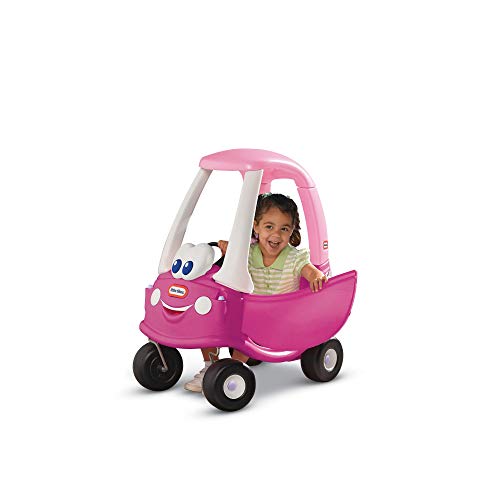
Little Tikes Cozy Coupe: the ride-on that earns its space
The Cozy Coupe is huge, the colors are loud, and your living room will not look the same. It is also the toy that gets used daily for two years. The push-along handle lets a parent help when feet do not quite reach, and the removable floor means once your toddler walks confidently, they can Flintstones-power it themselves. Durability is excellent. I have seen ones from a decade ago still going. If you have the floor space, this is the ride-on to get.
What we liked
- Made in the USA. The Little Tikes Company is located in the heartland of America.
- LET KIDS DRIVE
- LET MOM AND DAD LEAD THE WAY
- IMAGINATION AND MOTOR SKILLS DEVELOPMENT
- INDOOR AND OUTDOOR USE

Mega Bloks Big Building Bag: better than Lego for this age
LEGO Duplo is great but pricey for the piece count. Mega Bloks deliver similar large-format building bricks for less money, and a bag of 80 pieces gives a two-year-old enough to actually build something tall. Blocks are oversized enough to avoid swallowing risk and the colors are bright without being neon. Cleanup is fast since the included bag doubles as storage. A solid open-ended toy that grows from "stack and knock down" to actual towers and walls over the next year.
What we liked
- Building set comes with 150 big building blocks designed to be durable
- Includes special pieces like 1 wheelbase, 3 leaf blocks, 2 roof blocks and 4 big building
- Includes 1 reusable storage bag for easy cleanup
- Blocks are compatible with all MEGA BLOKS building toys for endless learning fun
- Ideal for ages 1+, and endorsed by Fisher-Price, these blocks help to develop imagination
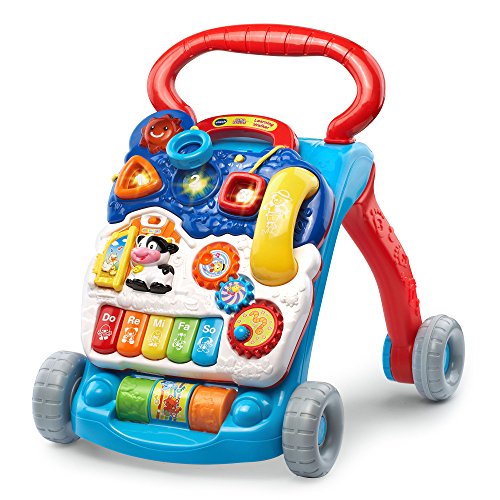
VTech Sit-to-Stand Learning Walker: surprisingly long-legged
I usually warn against battery toys, but the Sit-to-Stand earns an exception. The detachable activity panel works flat on the floor for younger kids, then snaps onto the walker frame once they are pulling up. The included songs and shape buttons are not annoying after the third day, which is a low bar most toys fail. The walker base is stable enough that even confident walkers use it to push around the living room. Good multi-stage value from about 9 months through age 2.5.
What we liked
- Removable Tray: The activity-packed, detachable panel is perfect for babies who can sit up
- Auditory Training: The activity center for baby boys and girls includes five piano keys th
- Motor Development: 3 shape sorters, light-up buttons, and colorful spinning rollers are fe
- Balance Development: The toddler walker activity center helps the development of stability
- Adjustable: Two-speed control switch on the walker allows growth along with your little on

Battat Take-Apart Crane Truck: a tool toy that teaches real skills
The Take-Apart Crane Truck comes with a working electric screwdriver sized for toddler hands, plus removable bolts, panels, and a crane arm that actually lifts. The screwdriver runs slowly enough that fingers are not at risk, and the included Allen-key style tool teaches grip patterns most other toys ignore. My nephew was frustrated at first, then obsessed once he could take a wheel off and put it back on. Genuinely builds fine motor skills, not just claims to.
What we liked
- Building Toy: A take-apart toy crane truck playset with a toy drill, nuts, and bolts.
- Movable Parts: Crane base swivels, arm bends in 3 different places, and cabin hood is remo
- Recyclable: This toy truck is made from recyclable plastic, and the packaging is recyclabl
- Age Recommendation: This take-apart toy is recommended for kids ages 3 years and up.
- Batteries Required: 2 x AA batteries are required and NOT included.
How to choose
What to consider
Start with how the toy plays. Open-ended toys (blocks, ride-ons, tool sets, pretend kitchens) get hundreds of hours of use because the child invents new scenarios. Closed toys with one button and one sound get a week, sometimes less. The price per use math almost always favors the simpler, more open option.
What to consider
Next, think about durability. Toddlers throw, drop, mouth, and step on toys. Solid wood, thick rotomolded plastic, and tightly stitched fabric all hold up. Thin painted plastic, cheap decals, and small detachable parts fail fast and create choking hazards as they break.
What to consider
Finally, watch for safety basics. Choking-hazard rules say small parts under about 1.75 inches across are off-limits for under-3s, and that includes pieces that could break off larger toys. Magnets strong enough to attract through skin should be avoided entirely. Look for ASTM F963 or EN 71 markings if the box is not obvious.
Common questions
At this age, the brain is laying down language, motor planning, and cause-and-effect connections. Stacking blocks, simple puzzles, ride-on toys, and pretend-play kitchens or toolsets all support those skills better than anything battery-powered with flashing lights.
Wooden toys tend to be heavier, more durable, and more open-ended in how they get used. Plastic is not automatically worse, but cheap plastic toys crack, sharp edges form, and the painted designs chip. For something a toddler will throw daily, solid wood usually wins on longevity.
Pick toys that have multiple ways to play with them. A toolbox can be a sorter, a stack, a pretend-play prop, and a puzzle. Single-function toys (one button, one outcome) lose appeal fast. Open-ended is the real test of value.
Anything with small parts under 1.75 inches across, anything with strong magnets that could pull together inside the body, and most generic battery-powered light-and-sound toys that overwhelm without teaching anything. Also be cautious of any imported toys without recent safety certification.
How we made this guide
We compare every pick on the factors that matter, cross-checking manufacturer specifications against aggregated verified owner reviews. We rank independently and never take payment for placement. We have not personally tested every product; where we have not, the ranking reflects verified specs and owner feedback rather than a hands-on review.
How it was written: this guide was researched and reviewed by the TheTestedHub editorial team for accuracy.
Affiliate disclosure: TheTestedHub is reader-supported. When you buy through links on our site, we may earn a commission at no extra cost to you.