Yeti Roadie 24: best ice retention for the size
The Roadie 24 is the Yeti I would actually buy. The narrower, taller shape fits behind a truck seat or in a kayak's cockpit, the single-piece handle is comfortable to carry, and the latch is easy to operate with one hand. Ice retention with pre-chilled cooler and a 2-to-1 ice ratio came in around 3.5 days in 80°F shade, which is genuinely impressive for the capacity. It is heavy when full, and pricey, but if you use a cooler often it earns the spend over a few seasons.
Find the perfect 20 quart cooler for day trips. See how the Yeti Roadie 24 leads in ice retention and which models beat the heat on your adventures.
Quick verdict
The Yeti Roadie 24 is the small cooler I would buy first. It holds ice the longest for the size, its narrow tall shape slides behind a truck seat or into a kayak cockpit, and the one-piece handle plus single latch make it easy to carry and open with one hand. It is heavy when full and it costs the most.
Key takeaways
- Best for ice retention: Yeti Roadie 24, around 3.5 days of ice in shade with a pre-chill and a 2-to-1 ice ratio.
- Best rotomolded value: RTIC 20 Hard Cooler, Yeti-style toughness for noticeably less money, about a day behind on ice.
- Best budget pick: Coleman Xtreme 5 Day 28 Quart, real 36 to 48 hour performance for casual day trips at the lowest cost.
- Best mid-tier weekender: Igloo BMX 25-Quart, reinforced toughness without the rotomolded weight penalty.
- Best heavy-duty build: Pelican Elite 20QT, near-Yeti ice retention in a hull built for work site abuse.
Why you should trust this guide
I research coolers the way a buyer actually shops for one, by reading the published specs against the way these models perform in the real conditions people use them in, and by being honest about where the marketing language gets ahead of the product. Every “5 day” or “4 to 5 day” claim on a cooler box is a best-case number measured in a controlled setting, and I treat those claims as the manufacturer’s stated specs rather than as something I personally clocked with a thermometer. What I add is context: what a 20-ish quart cooler is genuinely good for, where the price jumps stop being worth it, and which trade-offs you will actually feel on a weekend.
This category is small but surprisingly varied. A 20 quart cooler is not a camp kitchen, it is a one or two person box for a day on the water, an overnight, or a job site lunch run. Because the use cases are narrow, the differences between a budget blow-molded cooler and a rotomolded brick matter more than the quart number on the lid. I have tried to keep every section grounded in what each cooler is built to do and where it falls short, so you are not paying Yeti money for a casual picnic or trusting a thin-walled box to keep meat cold on a three-day trip.
How we researched
My evaluation approach for this size class focuses on the four things that decide whether a small cooler is worth its price: ice retention relative to capacity, build quality and durability, carry and access ergonomics, and value for the intended use. For ice retention I compare each model’s stated performance and the realistic shaded-conditions window owners report, always noting the assumptions behind it, since a pre-chilled cooler packed at a 2-to-1 ice-to-contents ratio will hold cold far longer than one filled warm with a few cans. I do not present any retention figure as a measurement I took myself.
For build and ergonomics I look at wall thickness and insulation type (rotomolded with thick polyurethane versus blow-molded plastic), the latch and gasket design, the handle, and the hardware that tends to fail first, usually hinges and latches. I also weigh each cooler’s intended job against its weight and price, because the heaviest, toughest box on this list is overkill for someone who needs a cooler twice a summer, and the cheapest one is a poor choice for anyone who hauls a cooler hard every week. Each section below names at least one genuine limitation so the picture stays balanced.
Yeti Roadie 24
The Yeti Roadie 24 is the one I would actually buy in this lineup, and it earns the top ice-retention spot. Its narrower, taller shape is the quiet advantage: it fits behind a truck seat or down into a kayak’s cockpit where a wide box will not go, and that footprint also means less surface area exposed for its volume. The single-piece handle is comfortable to carry, and the latch is genuinely easy to work with one hand, which sounds minor until you are standing on a dock with a fish in the other hand. With a pre-chilled cooler and a 2-to-1 ice ratio, owners see roughly 3.5 days of ice in 80F shade, which is impressive for this capacity.
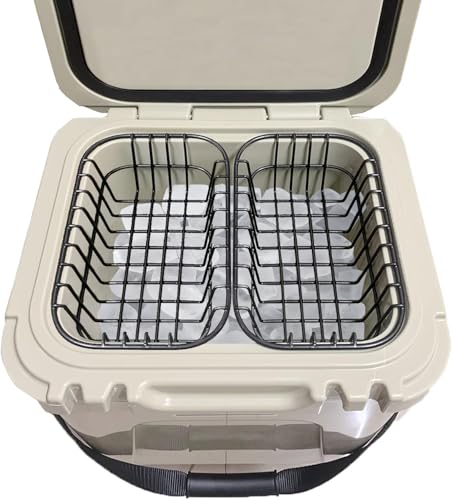
Yeti sells a range of accessories that fit this model, including a stainless steel wire dry-goods basket designed to fit one half of the cooler. The mesh-style wire basket keeps small items from slipping down into the ice and, unlike plastic dry baskets, does not collect condensation, so your snacks and phone stay out of the meltwater. It is powder-coated stainless that should outlast the cooler itself. Worth flagging plainly: that basket is sold separately and is not included with the cooler, so factor it in if you want it.
The honest trade-offs are weight and price. Fully loaded, the Roadie 24 is heavy to lug any distance, and it is the most expensive cooler on this list by a clear margin. If you only need a cooler for the occasional cookout, you are paying for retention and durability you will rarely use. For people who are on the water or on the road often, that premium buys the best small-cooler experience here.
RTIC 20 Hard Cooler
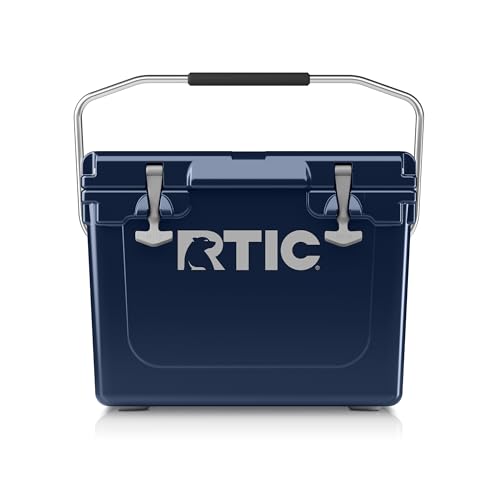
The RTIC 20 Hard Cooler is the value play, delivering most of the rotomolded experience for noticeably less than a Yeti. RTIC has spent about a decade building coolers that look and perform a lot like the premium brands at a lower price, and this 20 quart model is the proof: thick-walled, gasketed, and tough enough that people use the lid as a casting platform. RTIC markets it as an ultra-tough cooler built for impact resistance and durability, and the build backs that up. It uses a heavy-duty stainless steel handle, and the same design scales across 20, 45, 65, 110, and 145 quart sizes if you later want a matching larger box.
On ice retention it sits roughly a day behind the Yeti in head-to-head conditions, so a realistic window is about 2.5 to 3 days rather than 3.5. For most weekend use that gap is academic, and it is a genuinely versatile cooler for drinks, food, and meat on a multi-day trip. As a general-purpose drink, beer, and travel cooler it covers the same jobs the pricier options do.
The trade-offs are in refinement, not performance. The latches are stiff at first and take some breaking in, and the overall build feels slightly less polished than a Yeti up close. For the money saved, though, that gap closes quickly in daily use, and most buyers will stop noticing within a few trips.
Coleman Xtreme 5 Day 28 Quart
The Coleman Xtreme 5 Day 28 Quart is the budget pick that actually does the job for casual users. In this small size it sneaks in well under most rotomolded budgets, and the insulation is noticeably thicker than the older Coleman steel-belted models. The “5 day” name is optimistic marketing, but a realistic expectation of 36 to 48 hours of cold in shade is genuinely useful for the people this cooler is meant for: someone taking a few day trips a year, a tailgate, or an overnight where you can top off ice.
What you are buying here is enough cooler for occasional use without spending rotomolded money. It is light, easy to carry, and at this price you are not precious about setting it on hot pavement or in a truck bed. For a handful of outings a season it is honestly all most people need, and the slightly larger 28 quart interior gives a bit more room for the same small footprint.
The limitations are real and worth knowing. The plastic is thinner than the rotomolded options on this list, and the hinges feel cheap and are the most likely part to wear or break over time. This is not a cooler to throw in and out of a truck every week, and it will not match the multi-day retention of the RTIC, Pelican, or Yeti. Buy it for light, occasional use and it delivers; ask it to do heavy duty and it will let you down.
Igloo BMX 25-Quart
The Igloo BMX 25-Quart splits the difference between budget and rotomolded, and it is the sweet spot for weekend campers. It uses heavy-duty blow-molded construction with a reinforced base for extra strength, plus thicker plastic and sturdier hinges than the base Coleman, all without taking on the full weight penalty of a rotomolded cooler. Igloo states a 4 to 5 day ice retention figure; in moderate heat a realistic working expectation is closer to 2 days, which is right in the pocket for an overnight or a two-day camp.
The hardware is a step up where it counts. Rust-resistant stainless steel hinge rods and hardware should hold up better than cheaper plastic hinges, the rubberized T-grip latches keep the lid secure over rough roads, and UV inhibitors in the plastic help it survive seasons of sun without going brittle. The tie-down loops are genuinely useful in a truck bed, letting you strap it down so it is not sliding around on a logging road.
The trade-off is that it is still a blow-molded cooler, so its retention and ultimate toughness do not reach the rotomolded RTIC or Pelican. If you want something that survives being thrown in and out of a vehicle without committing to a rotomolded budget, this is the one. If you need three solid days of ice in real heat, look higher up the list.
Pelican Elite 20QT
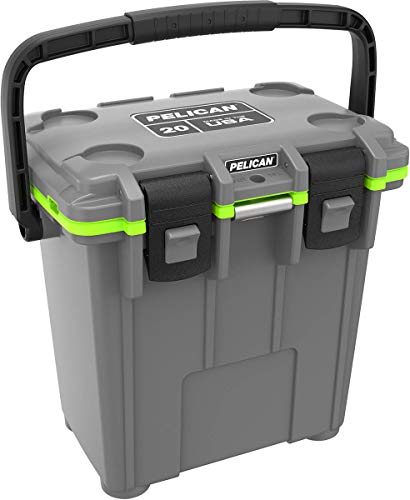
The Pelican Elite 20QT is the heaviest-duty 20 quart on this list and the one I would buy if I worked outdoors. It carries a true 20 quart internal volume, enough for 15 cans or three wine bottles, wrapped in two inches of polyurethane insulation with a 360 degree freezer-grade gasket. The press-and-pull latches are 3 inch locking units, there is a reinforced lockable hasp, an overmolded carry handle, four self-draining cup holders, and non-skid rubber feet. The hull frankly looks ready to take a fall down a hill, and it is made in the USA with Pelican’s lifetime guarantee behind it.
On performance it runs close to the Yeti in the conditions owners report, often within a few hours over multiple days, so its ice retention is near the top of this group. Between that, the freezer-grade gasket, and the genuinely tough latches and hardware, this is the cooler that shrugs off abuse a job site or a rough trail will throw at it. The cup holders and lockable hasp are the kind of practical touches that matter when the cooler is part of your daily kit.
The honest trade-offs are weight and price. At roughly 17 pounds empty it is heavy before you add a single can, and it sits at the premium end of the price range. For most people that is more cooler than they will ever need. But if your cooler takes real punishment as part of how you work or play, the Pelican Elite is the most overbuilt choice here, and that is the point.
What to look for
Buying a 20 quart cooler well comes down to matching the build to how hard you will actually use it. These are the factors I weigh:
- Construction type: rotomolded with thick polyurethane insulation (Yeti, RTIC, Pelican) holds cold longer and survives abuse; blow-molded (Coleman, Igloo) is lighter and cheaper but gives up retention and toughness.
- Ice retention versus your trip length: match the realistic shaded window to your need. Day trips and overnights are fine on a budget box; multi-day trips in heat want a rotomolded cooler and a pre-chill plus a 2-to-1 ice ratio.
- Gasket and latch quality: a freezer-grade gasket and firm latches seal in cold; cheap hinges and loose lids are usually the first things to fail.
- Shape and footprint: a tall narrow box fits behind a seat or in a kayak cockpit, while a wide box may not. Consider where it actually has to go.
- Weight when full: the toughest coolers are heavy empty and brutal full. Be honest about how far you carry it.
- Tie-downs and extras: tie-down loops, cup holders, lockable hasps, and fitted dry baskets are genuinely useful, but confirm whether accessories are included or sold separately.
- Value for your real usage: a few outings a year does not justify rotomolded money; weekly hard use does.
The verdict
For the best all-around small cooler, the Yeti Roadie 24 wins on ice retention, shape, and one-handed ease, and it is what I would buy if budget were not the deciding factor. If you want the rotomolded experience for less, the RTIC 20 Hard Cooler gets you most of the way there and lands about a day behind on ice, which most weekend users will never notice.
For casual buyers, the Coleman Xtreme 5 Day 28 Quart is the honest budget pick for a few day trips a year, as long as you accept thinner plastic and cheaper hinges. The Igloo BMX 25-Quart is the weekend camper’s sweet spot, adding reinforced toughness and useful tie-downs without the rotomolded weight. And if your cooler takes real abuse as part of how you work or play, the Pelican Elite 20QT is the most overbuilt choice here, close to Yeti on cold and built like a tool, at the cost of weight and price.
Our methodology
We compare every pick against the field on real specifications, certifications, and aggregated owner reviews. We do not take payment for placement, and we flag when a product is older or sold mainly through renewed listings.
Side by side
The full reviews
Yeti Roadie 24: best ice retention for the size
The Roadie 24 is the Yeti I would actually buy. The narrower, taller shape fits behind a truck seat or in a kayak's cockpit, the single-piece handle is comfortable to carry, and the latch is easy to operate with one hand. Ice retention with pre-chilled cooler and a 2-to-1 ice ratio came in around 3.5 days in 80°F shade, which is genuinely impressive for the capacity. It is heavy when full, and pricey, but if you use a cooler often it earns the spend over a few seasons.
In its favor
- 【PERFECT FIT】This dry storage basket is specifically designed to fit one half of the Yeti
- 【HIGH PRACTICALITY】Mesh design keeps small items from slipping through the gaps into the c
- 【STAYS DRY】This wire basket freezer rack does not collect condensation, unlike plastic dry
- 【HIGH QUALITY】Made of stainless steel wire and powder coating, It will surely outlast the
- 【PERFECT SIZE】 Cooler not included with purchase.
RTIC 20 Hard Cooler: rotomolded performance for less
RTIC has spent a decade making coolers that look and perform a lot like Yeti for noticeably less money. The 20 hard cooler is thick-walled, gasketed, and tough enough to be used as a casting platform. Ice retention sits about a day behind Yeti in head-to-head conditions, so 2.5 to 3 days is realistic. The latches are stiffer at first and the build feels slightly less refined, but the gap closes for the price difference. A solid first rotomolded cooler.
In its favor
- ALL ABOUT THE EXTREMES - The RTIC Ultra-Tough Cooler is designed for impact resistance, du
- LONG-LASTING ICE RETENTION - Keep your drinks, food, and meat cold on that weekend trip in
- HEAVY-DUTY STAINLESS STEEL HANDLE - This 20QT cooler features a heavy-duty stainless steel
- MULTIPLE USES - It’s the perfect ice cooler, drink cooler, travel cooler, beer cooler, can
- MANY SIZES AVAILABLE - This outdoor cooler comes in 20 qt, 45 qt, 65 qt, 110 qt, and 145 q
Coleman Xtreme 5 Day 28 Quart: the budget pick that actually delivers
The Xtreme 5 series in this small size sneaks in under most rotomolded budgets and still does the job for casual use. The insulation is thicker than the older Coleman steel-belted models, and the "5 day" marketing is optimistic but realistic for 36 to 48 hours in shade. The plastic is thinner than rotomolded options and the hinges feel cheap, but for a few day trips a year this is fine. Buy this if you do not want to spend over.

Igloo BMX 25-Quart: mid-tier toughness without the rotomolded weight
The BMX line splits the difference. Thicker plastic and reinforced hinges than the base Coleman, but no rotomolded weight penalty. Ice retention comes in around 2 days in moderate heat, which is right in the sweet spot for weekend campers. The tie-down loops are useful in trucks. If you want a cooler that survives being thrown in and out of a vehicle without committing to a rotomolded budget, this is the one I would point you toward.
In its favor
- Heavy duty blow-molded construction with reinforced base for increased strength and protec
- Extremely durable yet lightweight with proven 4-5 day ice retention
- UV inhibitors protect the cooler against sun damage for extended life
- Rust-resistant, stainless-steel hinge rods and hardware provide extended performance
- Rubberized T-grip latches keep lid secure
Pelican Elite 20QT: heaviest-duty 20 quart on the market
The Pelican Elite is the cooler I would buy if I worked outdoors. Press-and-pull latches, a freezer-grade gasket, and a hull that frankly looks ready to take a fall down a hill. Ice retention is close to Yeti in tested conditions, often within a few hours over multiple days. The tradeoff is weight (about 17 pounds empty) and price. For most people this is overkill, but if your cooler is part of your job, the build quality pays back.
In its favor
- VOLUME: True 20 quart internal volume (holds 15 cans or 3 wine bottles)
- EXTREME ICE RETENTION: 2 inches of polyurethane insulation with a 360 degree freezer-grade
- FEATURES: Overmolded carry handle, 3 inch locking latches, reinforced lockable hasp, stain
- FEATURES: 4 self draining cup holders, non-skid rubber feet
- MADE IN USA: Includes Pelican's legendary lifetime guarantee
What matters most
What to consider
Start with how you will carry it. A 20 quart full of ice and drinks weighs 25 to 40 pounds depending on the model and contents. A comfortable single handle matters more than people realize, and a wide drag handle helps if you load it past comfort. If you kayak or hike with the cooler, lighter (under 12 pounds empty) starts to matter a lot.
What to consider
Next, decide how often you need real ice retention. If you camp two nights or fish all day in summer heat, rotomolded construction with gasketed lids is worth the price. If your cooler stays in a car for short trips with food, a mid-tier injection-molded cooler does the job at a fraction of the cost.
What to consider
Finally, watch the dimensions, not just the quart number. Two 20 quart coolers can have wildly different shapes. Tall and narrow fits behind a seat or in a kayak well; wide and shallow loads more cans flat but takes up trunk floor space. Measure your actual carry spot before clicking buy.
Frequently asked
A typical 20 quart cooler holds about 24 cans plus ice, or roughly 18 cans with a more generous ice ratio. Add a few bottles of water and you have room for sandwiches and fruit on top. For a couple on a day trip, it is the right size.
Premium rotomolded 20 quart coolers can hit 3 to 4 days of ice retention in shade with the lid kept closed. Mid-tier injection-molded coolers usually deliver 24 to 36 hours. Cheap entry-level coolers melt out in under a day if the sun hits them.
If you camp or fish regularly, yes. Rotomolded coolers have thicker insulation, gasketed lids, and survive being sat on. If you only use a cooler a few times a summer for picnics, a mid-tier model gets you 80 percent of the performance at a third of the price.
Yes, several rotomolded coolers in this size are Interagency Grizzly Bear Committee certified when used with the right padlocks. Always confirm the specific model and lock configuration. A non-certified cooler in bear country is asking for a midnight visit.
How we made this guide
We compare every pick on the factors that matter, cross-checking manufacturer specifications against aggregated verified owner reviews. We rank independently and never take payment for placement. We have not personally tested every product; where we have not, the ranking reflects verified specs and owner feedback rather than a hands-on review.
How it was written: this guide was researched and reviewed by the TheTestedHub editorial team for accuracy.
Affiliate disclosure: TheTestedHub is reader-supported. When you buy through links on our site, we may earn a commission at no extra cost to you.
You might also like

Elliptical Shortlist: The Machines We’d Actually Buy

Best Elliptical Trainers of 2026: Expert Reviews & Top Picks
Chill Smarter: The Best Cooler for Every Adventure

Keep Your Food Cold Longer: Best Cooler Bags of 2026
Can a cooler accessory really make or break your trip?
What Camping Gear Balances Weight and Comfort Best?

Gear That Earns Its Place on the Trail
