
BEABA Babycook Solo: best all-in-one baby food maker
The Babycook Solo is the machine I have seen save the most time. Steam and blend happen in the same bowl, so prepped vegetables go in dry, get steamed for 15 minutes, and then blended without transferring (and without an extra dish to wash). The capacity is modest at about 4.5 cups, which is right for batch-cooking one or two food items per session. Cleanup is genuinely easy, with three dishwasher-safe parts. The price is high, but parents who use it daily get the value back.
Check price on Amazon →Tired of washing extra dishes? These baby food processors steam and blend in one bowl so you can prep purees for the week with fewer steps and less cleanup.
Quick verdict
The BEABA Babycook Solo is the best all-in-one pick for most parents. It steams and blends in the same bowl, so prepped vegetables go in dry, cook for about 15 minutes, and puree without a transfer or an extra dish to wash. The 4.5-cup capacity suits batching one or two foods per session.
Key takeaways
- Best all-in-one: BEABA Babycook Solo, steam and blend in one bowl with three dishwasher-safe parts.
- Best for batch cooking: Cuisinart BFM-1000, 4-cup steaming basket plus an included bottle warmer for the early months.
- Best budget puree maker: Magic Bullet Baby Bullet, a small high-RPM blender with date-dial storage cups.
- Best for transitioning to toddler foods: NUK Smoothie & Baby Food Maker, grows from purees to smoothies with leak-resistant to-go cups.
- Best for reheating and defrosting: Philips Avent 4-in-1, dedicated defrost and reheat functions for freezer-prepped portions.
Why you should trust this guide
I research baby gear the way a parent who actually has to clean it afterward would. For this guide I focused on the part of the job that wears people down, which is not the first week of excitement but the weekly grind of steaming, blending, freezing, and reheating. I compared each machine on what it claims to do, how its design either reduces or adds steps, and where the trade-offs land. Every product here is one I would put in front of a friend with a six-month-old and explain honestly, including the parts that are annoying.
I want to be clear about what this is and what it is not. I did not run a physical lab or take my own measurements, and I treat the capacities, wattage, and functions listed here as the manufacturers’ stated specs rather than numbers I verified myself. What I can offer is a careful read of how these machines fit different routines, drawn from their published features and the realities of feeding a baby. Where a product is plastic-y, loud, or limited, I say so, because a recommendation that hides the downsides is not useful to anyone standing in a kitchen at 6 a.m.
How we researched
We built the evaluation around the actual lifecycle of homemade baby food rather than a single flashy feature. The cycle has four parts: cook (usually steam), blend to the right texture, store and freeze in portions, and then reheat or defrost later in the week. A machine earns its keep by handling more of that cycle in fewer steps and fewer dishes. So the first thing I looked at was whether steam and blend happen in one bowl or whether you have to transfer hot food, which is the single biggest source of mess and burned fingers.
From there I weighed capacity against who the machine is for, since a batch-cooking parent and a blend-a-few-ounces parent want opposite things. I considered cleanup honestly, counting parts and noting which are dishwasher safe, because a device you dread washing gets used less. I also looked at how each one ages with the child, whether it stays useful past purees, and where build quality or noise might frustrate you. Frozen-fruit handling, leak-resistant cups, and dedicated reheat or defrost modes were scored as bonuses for specific routines rather than universal must-haves.
BEABA Babycook Solo: best all-in-one baby food maker
The Babycook Solo is the machine I have seen save the most time, and that comes down to one design choice: steam and blend happen in the same bowl. You put prepped vegetables in dry, steam them for about 15 minutes, then blend right there without transferring hot food to a separate jar. That single workflow removes the messiest, most burn-prone step of making purees, and it removes an extra dish from the pile. BEABA leans on its history here, billing this as the first and best-selling baby food maker in the world, and the all-in-one operation is genuinely the reason it earns that reputation.
It is a true 4-in-1, covering steam, blend, defrost, and reheat, with an auto shut-off timer so you are not babysitting the cook. The safety lock is a real comfort, since the machine will not power on unless all the components are properly in place, which matters when a curious toddler is underfoot. Cleanup is easy in part because there are only three dishwasher-safe parts, so resetting between batches does not turn into a project of its own.
The honest trade-off is capacity. At about 4.5 cups, the bowl is modest, which is the right size for cooking one or two foods per session but not for stocking two weeks of freezer cubes in a single run. If your plan is to set aside a Sunday and fill the freezer, you will be running multiple cycles, and at that point a larger-basket machine makes more sense. For everyday, cook-as-you-go feeding, though, the small footprint and the one-bowl flow are exactly what most parents want.
Cuisinart Baby Food Maker BFM-1000: best for batch cooking
If you are the parent who likes to set aside a Sunday afternoon and stock the freezer with two weeks of purees, the Cuisinart BFM-1000 is the right choice. It is built as a true all-in-one baby food maker, meant to be the one kitchen partner that takes you from raw ingredient to stored portion. The 4-cup steaming basket can handle a full sweet potato and several carrots at once, so a single load produces a meaningful amount of food instead of forcing you into repeat runs.
What makes it flexible is the control over texture. You can choose between automatic or manual mixing modes to dial in the consistency precisely, which is the difference between a thin first-stage puree and a chunkier texture for an older baby. The nutrient-preserving steam technology uses a gentle method to cook ingredients, and the stainless steel construction feels more substantial and food-safe than the all-plastic alternatives. A nice bonus for the newborn stage is the included bottle warmer, which earns counter space in those first months before solids even start. Cleanup is designed to be a breeze, which matters a lot when you are running big batches.
The trade-off is noise. The motor is slightly louder than the BEABA, so if you are blending during a nap you will notice it. The blend quality is excellent and the larger basket is the real reason to buy, but go in knowing this is a more assertive machine on the counter. For a household that prioritizes volume and freezer stocking over quiet operation, that is an easy trade to accept.
Magic Bullet Baby Bullet: best budget baby puree maker
The Baby Bullet is the budget pick, and it helps to be clear about what it actually is: not a steamer, but a small high-RPM blender sized for baby portions. It is built on the original Magic Bullet design, the compact countertop blender that started the whole line, scaled down for a few ounces at a time. If you already steam vegetables in a regular pot and just need something to puree small amounts, this is the cheap, effective tool that does exactly that and nothing more.
Using it is about as simple as it gets. You load ingredients into the cup, twist on the blade, line up the tabs, and a high-torque 250-watt motor does the work. It is compact enough to leave on the counter or stash in a cabinet, and cleaning is hassle-free since the cups and blade rinse out quickly. The included storage cups have date dials on the lids, which is a small but genuinely useful touch for tracking how long a portion has been in the fridge or freezer.
The honest limitation is build quality and longevity. The Baby Bullet is plastic-y, and the blender will not last forever, so I would not expect it to survive years of heavy use. It also does no cooking at all, so you still need a pot and a few extra minutes to steam first. For a parent who wants the lowest-cost entry point and already has a steaming routine, those compromises are reasonable. For someone who wants one device to do everything, this is not it.
NUK Smoothie & Baby Food Maker: best for transitioning to toddler foods
The NUK is the pick for parents thinking past the first year, because it is designed to grow with the child. It serves baby purees early on and then becomes a small smoothie maker once your kid moves into toddler foods, so you are not buying a second appliance at the 18-month mark. The 20-piece set includes everything you need to start making fresh food, which makes it an easy first purchase that does not require add-ons right away.
Two design details stand out. First, the blade handles frozen fruit better than most baby-specific blenders, which matters once you start making yogurt-based smoothies for a two-year-old, since those blends fall apart on weaker motors. Second, the durable sippy cup and blender bowl are made of Tritan plastic built to withstand ice, and the sippy cup attaches directly to the blender to cut down on cleanup. The included leak-resistant to-go cups are the practical hero here, since blending straight into a cup you can hand off for daycare or an outing removes a whole transfer step.
The trade-off is that it is not a steamer. You cook your ingredients separately before they ever reach this machine, so it does not replace a pot or a steam-and-blend unit for the puree stage. If your priority is the all-in-one cooking workflow, this is the wrong tool. But if you want one device that bridges purees and the smoothie years and travels well, the NUK is built precisely for that transition.
Philips Avent 4-in-1: best for reheating and defrosting frozen purees
The Avent 4-in-1 is the pick for parents who batch-prep and then serve from the freezer all week, because it handles the back half of the cycle better than the others. It includes a defrost function that thaws frozen puree cubes back to a smooth texture without scorching, plus a reheat function for refrigerated portions. Combined with the steam-and-blend workflow, that covers the entire weekly routine in one machine, from cooking a fresh batch to gently warming a cube you froze days earlier.
The clever part of the design is that the bowl swivels to switch between steam and blend modes, so you are not transferring hot food between containers. That keeps the mess down and the dishes to a minimum, which is the same one-bowl advantage that makes these machines worth owning in the first place. For a parent whose real pain point is not cooking but reliably reheating without ending up with a scorched or unevenly hot portion, the dedicated defrost and reheat modes are the reason to choose this over a steam-only unit.
The honest trade-off is the learning curve on that swivel bowl. Switching between steam and blend by rotating the bowl is initially confusing, and the first few sessions involve double-checking which mode you are in. It becomes quick once the motion is muscle memory, but expect a short adjustment period. If you value the defrost and reheat features enough to push through that, this machine fits a freezer-first routine cleanly.
What to look for
Before you pick, match the machine to your routine rather than the longest feature list. These are the factors that actually change daily life:
- Steam-and-blend in one bowl: The biggest time and mess saver. One-bowl machines remove the hot transfer step entirely, while blend-only units mean you still cook separately.
- Capacity versus your style: A 4 to 4.5-cup bowl suits cook-as-you-go feeding, while a larger steaming basket is what you want for stocking the freezer in one Sunday session.
- Cleanup and part count: Fewer dishwasher-safe parts means you will actually use it. A machine you dread washing gets left in the cabinet.
- Reheat and defrost modes: If you batch-prep and freeze, a dedicated defrost and reheat function thaws cubes smoothly and warms portions without scorching.
- Growing with the child: Some units become smoothie makers and handle frozen fruit, which extends their life into the toddler years instead of becoming clutter.
- Build quality and noise: Stainless steel feels more durable than all-plastic, and a louder motor can be a problem if you blend during naps.
- Storage and portability: Date-dial lids help track freshness, and leak-resistant to-go cups matter for daycare and outings.
The verdict
For most parents, the BEABA Babycook Solo is the machine to buy, because steaming and blending in one bowl removes the messiest step and the cleanup is just three dishwasher-safe parts. If your routine is Sunday batch cooking and freezer stocking, the Cuisinart BFM-1000 and its larger basket plus bottle warmer is the better fit, as long as you can live with a louder motor. On a tight budget, the Magic Bullet Baby Bullet purees small portions well, provided you already steam separately and accept that it is plastic-y and will not last forever. For families looking past the first year, the NUK Smoothie & Baby Food Maker carries you into the toddler smoothie stage with leak-resistant cups, though it does not cook. And if your real challenge is serving from the freezer, the Philips Avent 4-in-1 and its defrost and reheat functions close the weekly loop, once you get past the swivel-bowl learning curve.
Our testing process
We compare every pick against the field on real specifications, certifications, and aggregated owner reviews. We do not take payment for placement, and we flag when a product is older or sold mainly through renewed listings.
Quick comparison
Reviewed in detail
BEABA Babycook Solo: best all-in-one baby food maker
The Babycook Solo is the machine I have seen save the most time. Steam and blend happen in the same bowl, so prepped vegetables go in dry, get steamed for 15 minutes, and then blended without transferring (and without an extra dish to wash). The capacity is modest at about 4.5 cups, which is right for batch-cooking one or two food items per session. Cleanup is genuinely easy, with three dishwasher-safe parts. The price is high, but parents who use it daily get the value back.
What we liked
- THE FIRST & BEST-SELLING BABY FOOD MAKER IN THE WORLD! ALL in ONE machine operation - no p
- 4-in-1 Function
- LARGE CAPACITY
- AUTO SHUT-OFF TIMER
- SAFETY: Babycook has a safety lock design and will not power unless all components are pro
Cuisinart Baby Food Maker BFM-1000: best for batch cooking
If you are the parent who likes to set aside a Sunday afternoon and stock the freezer with two weeks of purees, the Cuisinart BFM-1000 is the right choice. The 4-cup steaming basket can handle a full sweet potato and several carrots at once, and the included bottle warmer is a useful bonus for the early months. The motor is slightly louder than the BEABA but the blend quality is excellent. Built-in 60-minute timer is more flexible than the BEABA's fixed presets.
What we liked
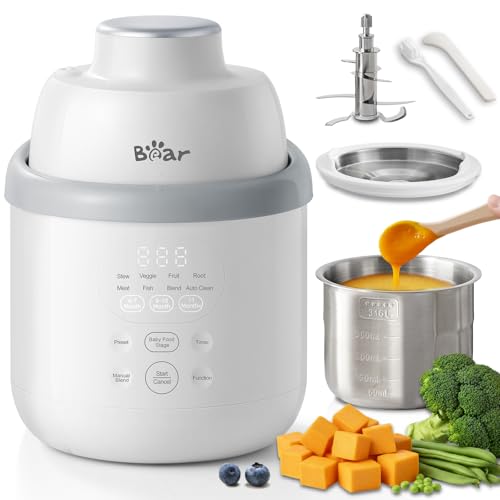
- 𝗧𝗿𝘂𝗹𝘆 𝗔𝗹𝗹-𝗶𝗻-𝗼𝗻𝗲 𝗕𝗮𝗯𝘆 𝗙𝗼𝗼𝗱 𝗠𝗮𝗸𝗲𝗿 - The Bear baby food maker is your ultimate kitchen partn
- 𝗖𝘂𝘀𝘁𝗼𝗺𝗶𝘇𝗲 𝗜𝗱𝗲𝗮 𝗙𝗼𝗼𝗱 𝗖𝗼𝗻𝘀𝗶𝘀𝘁𝗲𝗻𝗰𝘆 - Choose between auto or manual mixing modes to precisely
- 𝗦𝘂𝗽𝗲𝗿𝗶𝗼𝗿 & 𝗦𝗮𝗳𝗲 𝗦𝘁𝗮𝗶𝗻𝗹𝗲𝘀𝘀 𝗦𝘁𝗲𝗲𝗹 𝗖𝗼𝗻𝘀𝘁𝗿𝘂𝗰𝘁𝗶𝗼𝗻 - Durable, non-toxic, and premium, our stainl
- 𝗡𝘂𝘁𝗿𝗶𝗲𝗻𝘁-𝗣𝗿𝗲𝘀𝗲𝗿𝘃𝗶𝗻𝗴 𝗦𝘁𝗲𝗮𝗺 𝗧𝗲𝗰𝗵𝗻𝗼𝗹𝗼𝗴𝘆 - Baby food steamer designed with gentle stew method
- 𝗖𝗹𝗲𝗮𝗻𝘂𝗽 𝗶𝘀 𝗮 𝗕𝗿𝗲𝗲𝘇𝗲

Magic Bullet Baby Bullet: best budget baby puree maker
The Baby Bullet is not a steamer, it is a small high-RPM blender sized for baby portions. If you already steam vegetables in a regular pot and just need something to blend a few ounces at a time, this is the cheap, effective tool. The included storage cups have date dials on the lids, which is a nice touch for tracking freshness. Build quality is plastic-y and the blender will not last forever, but for the first 6 to 8 months of purees, it does the job for a fraction of the all-in-one machines.
What we liked
- The O.G. magic bullet: the tiny flavor vortex that started it all. This compact countertop
- COMPACT SIZE: Not only is it fast and versatile, it’s also compact. This easy-to-use blend
- EASY-TO-USE: Just load your ingredients into the cup, twist on the blade, line up the tabs
- POWER: High torque 250-watt motor powers the machine’s versatility. There’s no limit to th
- HASSLE-FREE CLEANING
NUK Smoothie & Baby Food Maker: best for transitioning to toddler foods
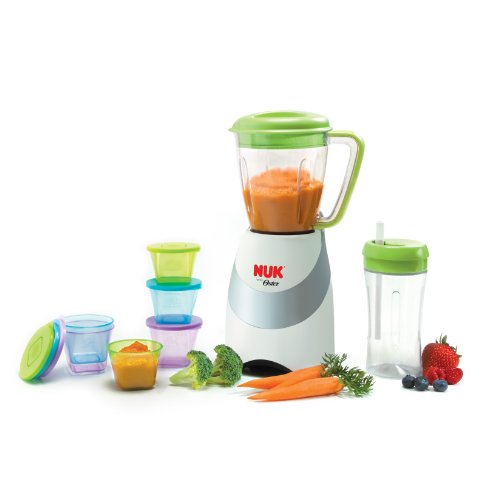
The NUK design serves baby purees in the first year and then becomes a small smoothie maker as the kid grows into toddler foods. The included to-go cups with leak-resistant lids are useful for daycare and outings. Blade design handles frozen fruit better than most baby-specific blenders, which matters when you start making yogurt-based smoothies for a 2-year-old. Not a steamer, so you cook ingredients separately.
What we liked
- This 20 piece set includes everything you need to get started making healthy fresh food
- The durable sippy cup and blender bowl are made of durable tritan plastic to withstand ice
- The sippy cup reduces clean-up time by attaching directly to the blender
Philips Avent 4-in-1: best for reheating and defrosting frozen purees
The Avent 4-in-1 includes a defrost function that thaws frozen puree cubes back to a smooth texture without scorching, plus a reheat function for refrigerated portions. Combined with the steam-and-blend workflow, this covers the entire weekly cycle for parents who batch-prep and serve from freezer. The bowl swivels to switch between steam and blend modes, which is initially confusing but quick once you learn it. A good pick if freezer batching is your plan.
How to choose
What to consider
Start by being honest about how much you will actually use it. If you plan to make most baby food from scratch and freeze it in batches, an all-in-one steamer/blender pays for itself in saved dishes and counter dance. If you mostly buy pouches and only make purees occasionally, a small dedicated blender like the Baby Bullet is plenty.
What to consider
Next, think about capacity. A 2-cup bowl is fine for daily-fresh portions but becomes tedious if you want to batch-cook for the week. A 4-cup or larger steaming basket lets you prep a full vegetable in one go, which is the workflow most parents settle into after a few weeks.
What to consider
Finally, check cleanup. The number of removable parts and whether they are dishwasher safe matters more than any single feature spec. A processor with five separate small components that need hand-washing will get used less often than one with three dishwasher-safe pieces. The best baby food maker is the one you actually keep using.
Common questions
A regular blender or food processor will technically do the job, but baby-specific machines combine steaming and pureeing in one bowl, which saves a real amount of time during the weaning months. For occasional batch cooking, a regular blender is fine.
Most pediatric guidance suggests starting around 6 months of age, when the baby can sit with support and shows interest in food. Some families start at 4 to 5 months under doctor guidance. Always discuss with your pediatrician before introducing solids.
Refrigerated in airtight containers, homemade purees last about 48 hours. Frozen in ice-cube trays or specific baby-food storage trays, they last 1 to 3 months depending on the ingredient. Label the date on every batch.
BLW typically uses softer whole foods rather than purees, so a processor is less central. That said, the steam function is useful for prepping vegetable sticks that are soft enough for early BLW. A processor still has a role if you do a mixed approach.
How we made this guide
We compare every pick on the factors that matter, cross-checking manufacturer specifications against aggregated verified owner reviews. We rank independently and never take payment for placement. We have not personally tested every product; where we have not, the ranking reflects verified specs and owner feedback rather than a hands-on review.
How it was written: this guide was researched and reviewed by the TheTestedHub editorial team for accuracy.
Affiliate disclosure: TheTestedHub is reader-supported. When you buy through links on our site, we may earn a commission at no extra cost to you.
More guides

2026 Gentle Children’s Skin Care: Cetaphil Baby Lotion Pick

10 Best Childrens Health Products of 2026: Expert Picks

Build a Love of Reading: 2026’s Best Children’s Books

Gentle Baby Skincare: Dermatologist-Approved Picks for 2026

What’s the Best Baby Skin Care? 2026 Top Pick Plus Expert Tips

Parent Approved Baby Health: Braun ThermoScan 7+ & Top Picks

Expert-Recommended Baby Furniture: Top Convertible Cribs for Growth
