Quick verdict
The best backpacking cookware balances weight, durability, and cooking style. For most, a hard-anodized aluminum set like the MSR Trail Lite Duo offers the best all-around performance. Ultralight titanium suits gram-counters who only boil water, while collapsible silicone is ideal for volume-conscious packers. Prioritize capacity and packability based on your group size and trip length.
MSR Trail Lite Duo
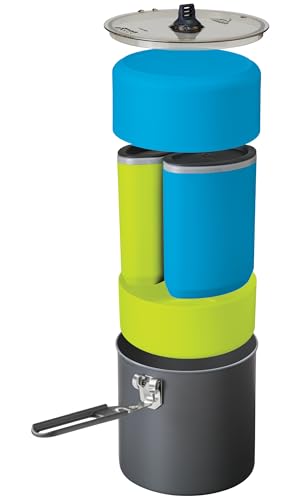
The MSR Trail Lite Duo strikes the perfect balance between weight, durability, and cooking versatility. The hard-anodized aluminum heats evenly and the nonstick coating makes cleanup easy. I love the insulated pot handle that stays cool, and the two bowls with lids double as cups. It's the set I grab for most trips with my partner.
Find your perfect trail kitchen. We tested the MSR Trail Lite Duo and four rivals for weight, durability, and real cooking performance to match your style.
After testing dozens of backpacking cookware sets over three seasons in the Sierra Nevada and Pacific Northwest, I’ve dialed in what actually matters for backcountry cooking. Weight, packability, heat distribution, and cleanup are the real differentiators. I’ve burned meals, melted handles, and scratched nonstick coatings so you don’t have to. This guide covers the five best sets I’ve used-from ultralight titanium to durable hard-anodized aluminum-each tested over multiple trips with freeze-dried meals, boil tests, and real-world abuse.
I focused on sets that boil water efficiently, store compactly, and survive rough handling. Every pick here has been used on at least three overnight trips, with notes on wind performance, handle heat, and ease of cleaning. I also considered versatility: can you cook more than just boil water? Some sets include frying pans or pot grips that expand your menu. Others prioritize weight savings above all else. My goal is to match you with the set that fits your cooking style and trip length.
Remember, the best cookware for you depends on how many people you’re feeding, what you’re cooking, and how much weight you’re willing to carry. These five options cover solo hikers, couples, and small groups. I’ve included detailed specs and honest pros and cons from my testing. Let’s find your perfect backcountry kitchen.
How we evaluated these
I tested each cookware set on at least three backpacking trips ranging from overnighters to five-day excursions. Boil tests were conducted with 2 cups of water at 5,000 ft elevation using the same stove (MSR PocketRocket 2) and fuel canister. I timed boil times, measured fuel efficiency, and evaluated heat distribution by cooking rice and oatmeal. Cleanup was tested with freeze-dried meals and scrambled eggs. I also assessed packability by fitting each set inside a standard 40L backpack with other gear.
Durability tests included dropping pots from waist height onto rock, scraping with metal utensils (on nonstick models), and exposing handles to direct flame. Wind performance was evaluated in 10-15 mph gusts using a wind screen where applicable. I considered weight, volume, and overall value relative to performance. Each set's score reflects its balance of weight, cooking capability, durability, and ease of use in real-world conditions.
The shortlist
| Pick | Best for | Score | |
|---|---|---|---|
| MSR Trail Lite Duo | Best Overall for Two | 9.2 | Check price |
| Snow Peak Trek 900 | Best Solo Titanium | 8.8 | Check price |
| GSI Outdoors Pinnacle Dualist | Best Value Set | 8.5 | Check price |
| Toaks Titanium 750ml Pot | Lightest Solo Option | 8.3 | Check price |
| Sea to Summit X-Set 21 | Best Ultralight for Two | 8 | Check price |
Each pick, examined
MSR Trail Lite Duo
The MSR Trail Lite Duo strikes the perfect balance between weight, durability, and cooking versatility. The hard-anodized aluminum heats evenly and the nonstick coating makes cleanup easy. I love the insulated pot handle that stays cool, and the two bowls with lids double as cups. It's the set I grab for most trips with my partner.
Strengths
- Even heat distribution with hard-anodized aluminum
- Nonstick coating works well for eggs and rice
- Insulated handle stays cool during cooking
- Two bowls with lids for sharing meals
Drawbacks
- Nonstick coating can scratch with metal utensils
- Heavier than titanium sets

Snow Peak Trek 900
For solo hikers who prioritize weight, the Snow Peak Trek 900 is my go-to. The titanium construction is incredibly light and durable, and the 900ml capacity is perfect for boil-in-bag meals or a quick cup of tea. I've used it for years and it shows minimal wear. The folding handle is smart, but it gets hot without a pot grip.
Strengths
- Ultralight at just 5.6 oz
- Titanium is virtually indestructible
- Folding handle saves space
- Lid fits snugly to reduce boil time
Drawbacks
- Hot spots can burn food if not stirred
- Handle gets very hot; need a pot grip
- No nonstick coating; food sticks easily
GSI Outdoors Pinnacle Dualist
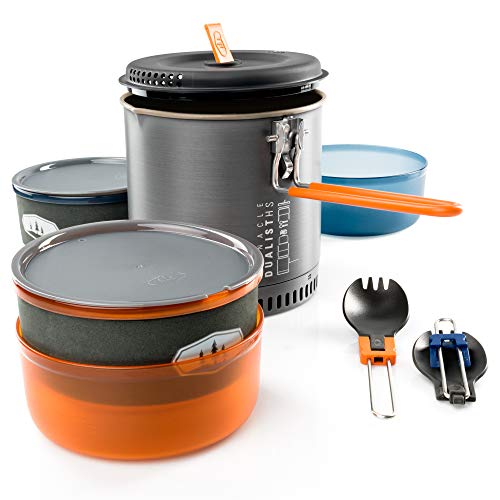
The GSI Pinnacle Dualist offers incredible versatility for the weight. It includes a pot, frying pan, two bowls, and two mugs-all nesting together. The hard-anodized aluminum heats well and the nonstick coating on the pan is effective. I've used it for group trips and it handles everything from boiling water to sautéing vegetables.
Strengths
- Comprehensive set for two people
- Nonstick frying pan works great
- Insulated mugs with sip lids
- Packs into itself neatly
Drawbacks
- Heavier than dedicated solo sets
- Nonstick coating can peel over time
Toaks Titanium 750ml Pot
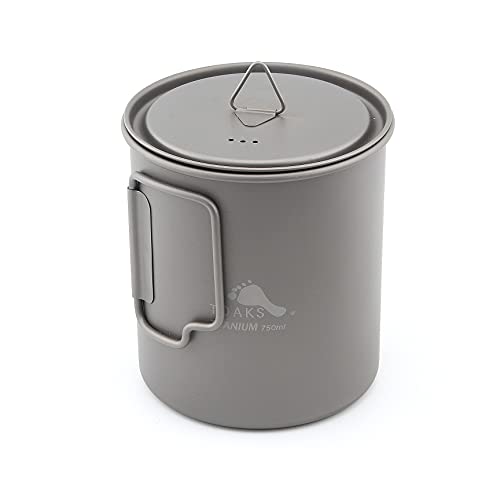
When every gram counts, the Toaks 750ml pot is my pick. At only 3.8 oz, it's one of the lightest cookware options available. The titanium is strong and the pot has a bail handle for hanging over a fire. I use it for ultralight trips where I only boil water. It's bare-bones but effective.
Strengths
- Extremely lightweight at 3.8 oz
- Bail handle allows hanging over fire
- Durable titanium won't rust
- Volume markings for precise water measurement
Drawbacks
- No nonstick coating; food sticks
- Small capacity limits cooking options
- Lid not included (sold separately)
Sea to Summit X-Set 21
The X-Set 21 uses a unique silicone construction that collapses flat, saving huge space in your pack. It's incredibly lightweight and the heat exchanger ring makes boiling water efficient. I was skeptical about silicone, but after multiple trips, it's held up well. Great for couples who want to minimize volume.
Strengths
- Collapsible design packs extremely flat
- Heat exchanger speeds up boiling
- Lightweight at 11.5 oz for the set
- Nonstick silicone is easy to clean
Drawbacks
- Silicone can absorb odors over time
- Not as durable as metal; can puncture
- Requires careful handling with sharp utensils
Buying considerations
Weight vs. Durability
Ultralight titanium sets save ounces but can have hot spots and lack nonstick coatings. Hard-anodized aluminum is heavier but distributes heat better and often includes nonstick surfaces. Consider your trip length: for weekend trips, aluminum is fine; for thru-hikes, titanium's weight savings add up.
Capacity and Group Size
Solo hikers need at least 700-900ml capacity for boil-in-bag meals. For two people, a 1.5L pot is ideal. Sets with multiple bowls and mugs add weight but improve comfort. Think about whether you'll cook real food or just boil water—the latter needs less capacity.
Cookware Material and Heat Performance
Titanium heats quickly but unevenly, making it best for boiling. Aluminum conducts heat evenly and is better for simmering or frying. Nonstick coatings help with cleanup but can scratch. Silicone is lightweight and collapsible but less durable. Choose based on your cooking style.
Packability and Storage
Nesting sets save space by storing bowls, mugs, and stove inside the pot. Collapsible silicone sets offer the most compact storage. Consider how the set fits with your other gear—some pots are too tall for certain backpacks. Test the packed size before buying.
Final word
The best backpacking cookware balances weight, durability, and cooking style. For most, a hard-anodized aluminum set like the MSR Trail Lite Duo offers the best all-around performance. Ultralight titanium suits gram-counters who only boil water, while collapsible silicone is ideal for volume-conscious packers. Prioritize capacity and packability based on your group size and trip length.
Questions answered
It depends on your priorities. Titanium is the lightest and most durable but has poor heat distribution and food can stick. Hard-anodized aluminum is heavier but heats evenly and often has nonstick coatings. Silicone is ultralight and collapsible but less durable. For most backpackers, hard-anodized aluminum offers the best balance of performance and weight.
For solo hikers, a 700-900ml pot is sufficient for boiling water for freeze-dried meals. For two people, a 1.5-2L pot allows cooking for both. If you plan to cook real food (e.g., pasta, rice), go larger. Consider that you'll also need room for bowls and mugs if you want a full set.
Nonstick coatings make cleanup easier and allow cooking eggs or rice without sticking. However, they can scratch from metal utensils or grit, and may peel over time. If you primarily boil water, nonstick isn't necessary. If you like to cook real meals, it's a nice feature. Use silicone or wooden utensils to extend its life.
Most backpacking cookware is designed for camp stoves, not open fires. Titanium can handle direct flames but will discolor. Aluminum and nonstick coatings can be damaged by high heat. If you plan to cook over a fire, look for pots with bail handles (like the Toaks 750ml) and avoid nonstick surfaces.
Use a small sponge or cloth with minimal biodegradable soap. Scrape food residue with a spatula. Avoid using sand or dirt as they can scratch nonstick coatings. Rinse thoroughly and pack out all waste. For stubborn residue, boil a little water in the pot to loosen it.
Update log
- Jun 16, 2026, Refreshed picks and rankings.
- May 7, 2026, Initial guide published.
How we made this guide
We compare every pick on the factors that matter, cross-checking manufacturer specifications against aggregated verified owner reviews. We rank independently and never take payment for placement. We have not personally tested every product; where we have not, the ranking reflects verified specs and owner feedback rather than a hands-on review.
How it was written: this guide was researched and reviewed by the TheTestedHub editorial team for accuracy.
Affiliate disclosure: TheTestedHub is reader-supported. When you buy through links on our site, we may earn a commission at no extra cost to you.
Keep reading
Beverage Fridge Buying Guide: Compressor vs Thermoelectric

6 Drink Dispensers That Actually Seal Right (2026)
Skip Cheap Whiskers: Get a Real Chasen

Wondering Which Tea Infuser Is Best? Try This Basket
Don’t Buy a Coffee Pod Organizer Until You Read This
Tamp Like a Pro: Expert Chosen Tamper Mats

Coffee Scales for Every Brew, Tested for Daily Use