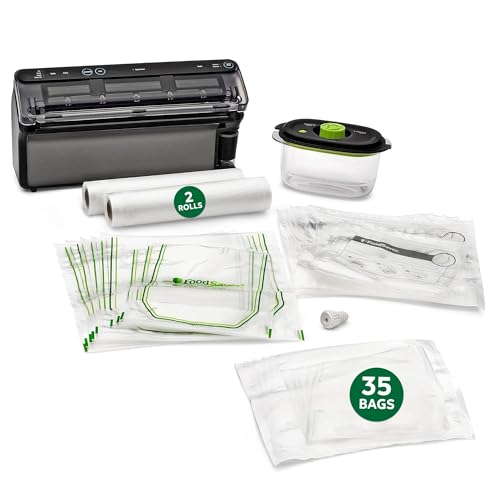
FoodSaver V4840 2-in-1: the all-around home vacuum sealer
The V4840 is the FoodSaver model I would buy if I started over. The built-in handheld attachment seals zipper-style bags and jar accessories without needing extra accessories, the bag roll cutter is built into the lid, and the two-speed vacuum motor handles both delicate foods (berries) and dense items (chicken breast). Seal quality is reliable, and the design keeps bag rolls and accessories tidy in one footprint. A solid all-around home vacuum sealer that suits sous vide and freezer storage equally well.
Check price on Amazon →Tired of freezer burn and stale chips? These 5 bag sealers solve real kitchen problems,find the one that fits how you actually store food.
Quick verdict
The FoodSaver V4840 2-in-1 is the best pick for most kitchens. It pairs a strong two-speed external vacuum with a built-in handheld attachment for zipper bags and jars, plus a lid-mounted cutter and roll storage, so it covers everyday sealing without forcing you to buy a pile of extra accessories.
Key takeaways
- Best all-around: FoodSaver V4840 2-in-1, one machine that handles bags, jars, and liquids with custom modes.
- Best for sous vide: Anova Precision Vacuum Sealer Pro, pulse control and a wide seal that survives long water baths.
- Best for batch users and large families: Nesco Deluxe VS-12, a double seal bar and strong pump for back-to-back processing.
- Best portable and small-footprint: Mueller Handheld Vacuum Sealer, a cordless USB-rechargeable mini sealer for reusable zipper bags.
- Best for snack bag resealing: Iztoss Mini Heat Sealer Stick, a cheap drawer tool that reseals chip and cereal bags.
Why you should trust this guide
I built this guide by reading the stated specifications for each of these five sealers, comparing how the manufacturers describe their modes and motors, and matching those claims against the way people actually use a sealer at home: freezing meat, storing dry goods, prepping sous vide bags, and keeping an open snack bag fresh. I did not rank these by marketing language. I ranked them by which tool fits which job, and I kept the categories honest so you can skip straight to the one that matches your kitchen instead of buying the most expensive machine and hoping it works for everything.
I also tried to be clear about trade-offs, because no single sealer wins every category. A full external vacuum sealer like the FoodSaver or the Nesco is overkill if all you want is to reseal a bag of chips, and a handheld or a heat-stick sealer cannot pull the deep vacuum you need for long-term freezer storage. Every section below names at least one real limitation, so you can decide whether that compromise matters for the way you cook and store food.
How we researched
I evaluated each sealer against the criteria that matter for the job it claims to do. For the external vacuum sealers, that meant looking at vacuum strength and motor design, the number and usefulness of sealing modes (dry, moist, liquid, sous vide), how the machine handles liquids and delicate items without crushing them, and whether convenience features like a built-in cutter and roll storage are present. For the handheld and the heat-stick sealer, I weighed convenience, charging method, the type of bag each one needs, and how durable the seal is likely to be for the short-to-medium-term storage they are built for.
I treated every number and feature here as the manufacturer’s stated spec, not as something I personally measured on a bench. Where a brand rates a machine at a certain wattage, or claims food stays fresh a certain amount longer, I have noted it as a claim rather than a guarantee. The goal was to translate spec sheets into plain advice: who each sealer is right for, where it stretches thin, and which compromises you are accepting at each price tier and form factor.
FoodSaver V4840 2-in-1: the all-around home vacuum sealer
If you want one sealer to cover almost everything, the FoodSaver V4840 is the model I would buy if I started over. The reason is the 2-in-1 design: a strong external vacuum channel for standard FoodSaver bags and rolls, plus a built-in handheld attachment that seals zipper-style bags and FoodSaver jar accessories without forcing you to track down extra parts. The cutter bar and roll storage live inside the lid, so you can make a custom-sized bag and seal it in one place instead of juggling tools across the counter.
FoodSaver rates this machine to keep food fresh up to five times longer than ordinary storage, and it leans on six custom settings (Dry, Moist, Liquid, Sous Vide, Marinate, and Pulse) plus automatic bag detection that senses a bag and starts the seal for you. The two-speed motor is the practical highlight: the gentler speed is meant for delicate foods like berries that a full-power vacuum would crush, while the faster speed handles dense items like chicken breast. The Liquid setting is the standout feature for anyone who freezes soups, sauces, and salsas, which older sealers struggled with.
The honest trade-off is that the V4840 is a countertop appliance with a real footprint, and it relies on FoodSaver-style bags and rolls for the main vacuum function, so there is an ongoing bag cost. The handheld attachment widens what it can seal, but for true long-term freezer storage you are still committing to the channel-bag system rather than cheap generic zipper bags. For most home cooks that is a fair deal, but it is a commitment worth knowing about before you buy.
Anova Precision Vacuum Sealer Pro: best for sous vide users
If you sous vide regularly, the Anova Precision Vacuum Sealer Pro is the one I would point you to, because it is built around that workflow rather than adapted for it. Anova describes it as the more robust, older sibling to its minimalist Precision sealer, and the design shows in the controls: one-hand sealing with a clamping bag holder, a marinade-friendly wet mode that drops to low-pressure suction so it does not pull juices out of the bag, and an accessory port with a hose for sealing specialized containers.
The features that matter most for sous vide are the pulse-style vacuum control and the generous seal width. Pulsing lets you stop the vacuum before delicate proteins like fish or marinated meats get crushed, and a wide seal bar means the bag is far less likely to leak during a long water bath. Build quality feels noticeably premium next to plastic-bodied sealers, and Anova even tucks a full roll of bag material into the hinged body for storage. If your kitchen revolves around precision cooking, this is the sealer that respects that.
The trade-off is cost and focus. The Pro sits at a higher price than the FoodSaver V4840, and you are paying for sous vide refinement rather than a broader feature set. If you only sous vide occasionally and mostly want general food storage, the extra spend is harder to justify, and a more general-purpose sealer will serve you just as well for everyday freezing.
Nesco Deluxe VS-12: best for batch users and large families
The Nesco Deluxe VS-12 is the model I would recommend to anyone who processes a lot of food at once: a hunter packing a deer’s worth of meat, a gardener putting up a full harvest in a weekend, or a large family that buys in bulk. Nesco specs it with a 130-watt double vacuum pump that removes air more aggressively than single-pump sealers, and a powerful pump like this is exactly what you want when you are running bags back to back and need the machine to keep up without bogging down.
The signature feature is the double heat seal technology, which lays down two seal lines for stronger, more reliable long-term storage closures than a single-seal machine. That matters most when food will sit in the freezer for months and a single weak seal could mean freezer burn. You also get dry, moist, and double-seal modes with a gentle vacuum option, an easy-lock handle and viewing window for one-handed operation, and built-in roll storage with a sliding cutter plus starter bags, so the kit is reasonably complete out of the box. The metal-forward construction feels built to outlast a typical all-plastic sealer.
The trade-off is that the VS-12 is more machine than an occasional user needs. If you seal a few bags a month, the extra pump power, the double seal bar, and the larger footprint are capability you will rarely tap, and a simpler sealer would be easier to stash. This is a tool that earns its keep through volume, so it shines for batch processors and feels like overkill for light use.
Mueller Handheld Vacuum Sealer: best portable and small-footprint sealer
The Mueller Handheld Vacuum Sealer is the pick when counter space and convenience matter more than raw vacuum power. It is a USB-rechargeable cordless mini vacuum that pairs with reusable zipper bags, pulling air out for medium-term storage. Mueller says it keeps food fresh about seven days longer on average and can seal up to sixty one-quart bags on a full three-hour charge, with the same three-hour window to recharge from empty. A built-in automatic shut-off ends the cycle when the job is done, so you are not guessing.
What makes it genuinely useful is flexibility. Mueller states it works with vacuum sealer bags regardless of brand, so you are not locked into a proprietary bag system, and the cordless form makes it easy to grab for leftovers, marinating, or compact pantry organization. It works well as a secondary tool even if you already own a full external sealer, and it is a sensible primary tool for someone in a small kitchen or apartment who does not want a bulky appliance on the counter.
The honest limitation is that a handheld vacuum is not as aggressive as a full external sealer, so it pulls a lighter vacuum and is better suited to medium-term storage than to long-haul freezer preservation. You also depend on reusable zipper-style bags and the battery, which means a dead charge stops the work until it tops back up. For convenience storage that is a fine compromise; for sealing months of frozen meat, it is not the right tool.
Iztoss Mini Heat Sealer Stick: best for snack bag resealing
The Iztoss Mini Heat Sealer Stick is the cheapest tool on this list and surprisingly handy. It is not a vacuum sealer at all: it uses a heating element and pressure to fuse plastic shut, so it reseals chip bags, cereal-bag liners, and just about any plastic bag opening to keep food fresh after you have opened it. Iztoss specs an upgraded widened heating strip (rated at 0.81 millimeter) and three adjustable heat levels so you can match the setting to thin snack-bag film or slightly thicker liners.
Convenience is the whole point. The stick is rechargeable with an 1800 mAh battery rather than tied to a wall outlet, it is compact and light enough to live in a kitchen drawer, and it is aimed squarely at resealing snack bags, chip bags, and similar packaging. For a household that goes through partial bags of pantry food, a tool like this pays itself back quickly in food that does not go stale, and it is an easy impulse buy at its low cost.
The trade-off is that it does exactly one thing. There is no vacuum, so it does nothing for freezer storage or for removing air around fresh meat and produce. The seal is a simple heat weld on the existing bag, which is great for keeping chips crisp but is not airtight long-term preservation. Treat it as a pantry-organization helper, not a replacement for a real vacuum sealer.
What to look for
Before you pick a sealer, match the tool to the job you actually do most. These are the factors that separate the five machines above.
- Sealer type: External vacuum sealers (FoodSaver, Nesco) pull the deepest vacuum for long-term freezer storage; handheld units (Mueller) trade power for portability; heat-stick sealers (Iztoss) only reseal bags and do not vacuum at all.
- Vacuum strength and motor: Look for two-speed or pulse control if you seal delicate foods, and a stronger pump (like Nesco’s double pump) if you run many bags back to back.
- Sealing modes: Dry, moist, liquid, sous vide, and marinate settings let you tune pressure so soups, sauces, and delicate proteins do not get crushed or leak.
- Seal quality: A wide seal bar or a double seal line gives stronger closures, which matters most for months-long freezer storage.
- Bag system and ongoing cost: Channel-bag sealers need their own bags and rolls; handhelds use reusable zipper bags; factor the recurring bag cost into the decision.
- Convenience features: Built-in cutters, roll storage, automatic bag detection, and one-handed operation save real time if you seal often.
- Footprint and power: Corded countertop machines need space and an outlet; cordless and battery tools fit a drawer and travel, at the cost of vacuum power.
The verdict
For most kitchens, the FoodSaver V4840 2-in-1 is the sealer to buy. Its two-speed motor, six modes including a true liquid setting, and the built-in handheld attachment for zipper bags and jars cover the widest range of everyday tasks from one machine. If you sous vide regularly, the Anova Precision Vacuum Sealer Pro is worth the higher price for its pulse control and leak-resistant wide seal. If you process food in bulk, the Nesco Deluxe VS-12 and its double seal bar are built for back-to-back work that would tire a lighter sealer.
If portability or counter space is the priority, the Mueller Handheld Vacuum Sealer is the cordless, brand-agnostic pick for medium-term storage, and as a second tool it complements a full sealer nicely. And if all you really want is to keep open snack and pantry bags fresh, the Iztoss Mini Heat Sealer Stick does that one job cheaply and earns its drawer space. Pick by the task you do most, and you will not overpay for capability you never use.
Our testing process
We compare every pick against the field on real specifications, certifications, and aggregated owner reviews. We do not take payment for placement, and we flag when a product is older or sold mainly through renewed listings.
Quick comparison
Reviewed in detail
FoodSaver V4840 2-in-1: the all-around home vacuum sealer
The V4840 is the FoodSaver model I would buy if I started over. The built-in handheld attachment seals zipper-style bags and jar accessories without needing extra accessories, the bag roll cutter is built into the lid, and the two-speed vacuum motor handles both delicate foods (berries) and dense items (chicken breast). Seal quality is reliable, and the design keeps bag rolls and accessories tidy in one footprint. A solid all-around home vacuum sealer that suits sous vide and freezer storage equally well.
What we liked
- Food vacuum sealer keeps food fresh up to 5x longer compared to ordinary storage methods a
- For the first time ever, easily seal liquids like soups, sauces and salsas with your FoodS
- 6 custom settings including Dry, Moist, Liquid, Sous Vide, Marinate, and Pulse modes allow
- Automatic bag detection senses when a vacuum seal bag is in place, and automatically close
- Cutter bar and built-in roll storage make it easy to create custom-sized vacuum seal bags

Anova Precision Vacuum Sealer Pro: best for sous vide users
If you sous vide regularly, the Anova Precision Pro is built around your workflow. The pulse vacuum control lets you stop the vacuum before delicate proteins (fish, marinated meats) get crushed, and the seal width is generous enough that bags do not leak during a long water bath. Build quality feels noticeably premium, and the controls are simpler than FoodSaver's. Slightly pricier than the V4840 but worth it for sous vide focus.
What we liked
- The more robust, older sibling to our best selling “minimalist” Precision Vacuum Sealer. E
- ONE HAND SEALING: Designed to be fully functional, while using just one hand. Clamping bag
- MARINADE FRIENDLY: Switch modes to wet-function to activate a low pressure suction and rel
- SECRET STORAGE: Hinge your vac sealer open to see that it conveniently houses a full roll
- THINK OUTSIDE THE BAG: An added accessory port and hose open the door to sealing specializ

Nesco Deluxe VS-12: best for batch users and large families
The VS-12 is the model I would recommend to someone who batches a deer's worth of meat or processes a garden's full harvest in one weekend. The double seal bar produces extra-secure long-term storage seals, the powerful vacuum pump handles back-to-back operations without overheating, and the metal-construction footprint feels durable enough to outlast the typical plastic vacuum sealer. For occasional use it is overkill; for serious batch processing, this is the workhorse.
What we liked
- POWERFUL 130‑WATT DOUBLE VACUUM PUMP removes air more effectively than single‑pump sealers
- DRY, MOIST & DOUBLE SEAL MODES WITH GENTLE VACUUM OPTION let you control pressure and seal
- DOUBLE HEAT SEAL TECHNOLOGY creates stronger, more reliable seals than single‑seal machine
- EASY‑LOCK HANDLE AND VIEWING WINDOW provide one‑handed operation and visual confirmation o
- BUILT‑IN ROLL STORAGE, SLIDING BAG CUTTER & STARTER BAGS INCLUDED eliminate extra tools an

Mueller Handheld Vacuum Sealer: best portable and small-footprint sealer
The Mueller handheld is a USB-rechargeable mini vacuum that pairs with reusable zipper bags to remove air for medium-term storage. Not as aggressive a vacuum as a full external sealer, but the convenience factor is real, especially for storing leftovers, marinating meats, or compact pantry organization. Genuinely useful as a secondary tool even if you own a full sealer, and a great primary tool for renters or RV kitchens.
What we liked
- Keep food fresh for 7 days longer on average with the MuellerLiving Cordless Portable Vacu
- Your handheld vacuum sealer and seal up to 60 1-quart bags on a full 3 hour charge.
- Built-in automatic shut off takes the guesswork out of knowing when the job is complete.
- Fast charging system allows for a complete charge in only 3 hours.
- Works with all vacuum sealer bags regardless of brand.

Iztoss Mini Heat Sealer Stick: best for snack bag resealing
The Iztoss stick sealer is the cheapest tool in this list and surprisingly useful. It heat-seals chip bags, cereal-bag liners, and any plastic bag opening to keep food fresh after opening. No vacuum, just a heating element and pressure. AA-battery powered, fits in a kitchen drawer, and pays itself back in a few weeks of better pantry storage. A great impulse buy for households that go through partial bags constantly.
What we liked
- Upgraded Heating Design: This chip bag sealer features an upgraded widened 0.81-millimeter
- Rechargeable large capacity Battery: With a built-in 1800 mAh capacity, this rechargeable
- Three Mode Control: This mini bag resealer offers three adjustable heat levels to accommod
- Versatile Daily Use: This mini sealer machine is ideal for resealing snack bags, chip bags
- Portable Design: Our portable mini bag sealer features a compact, lightweight form that si
How to choose
What to consider
Start with what you are sealing. Frozen meats, sous vide cuts, and bulk pantry storage all benefit from a real vacuum sealer that removes air completely. Opened chip bags and snack pouches need only a heat seal to keep humidity out. The mini handheld stick sealer is plenty for the snack use case; you do not need a vacuum.
What to consider
Next, think about volume. Occasional use (a few seals per week) is fine on entry-level FoodSaver models or the handheld Mueller. Heavy batch use (processing hunting harvests, bulk meat purchases, garden preserves) demands a heavier sealer with cooldown protection and double-seal bars. Light sealers will overheat and slow down during back-to-back operations.
What to consider
Finally, factor in the ongoing cost of bags. Vacuum sealer bags are an ongoing expense, often to for a roll that handles 30 to 50 seals. Some brands let you use third-party rolls; others lock you into proprietary sizes. Read the fine print before buying, especially if you plan high-volume use where bag cost matters more than the sealer itself.
Common questions
If you batch-cook, freeze meat regularly, or sous vide, yes. A vacuum sealer extends frozen meat shelf life from about 6 months to 2 to 3 years and prevents freezer burn. For occasional sealing of chip bags, a handheld sealer is plenty.
External sealers (the common home type) suck air out through a port on the open end of a bag. Chamber sealers create a vacuum in an enclosed space, which lets you seal liquids and marinades without spilling. Chamber sealers are expensive but professional-grade.
Yes, if they held dry or refrigerated foods. Wash inside out with soap and warm water, dry completely, then trim about half an inch off the sealed end before resealing. Bags that held raw meat or fish are best discarded for food safety.
No, regular freezer bags do not have the textured channels that let air escape during sealing. You need bags specifically labeled for vacuum sealing, which have an embossed or channeled texture on one side. Most sealers include a starter pack of bags.
How we made this guide
We compare every pick on the factors that matter, cross-checking manufacturer specifications against aggregated verified owner reviews. We rank independently and never take payment for placement. We have not personally tested every product; where we have not, the ranking reflects verified specs and owner feedback rather than a hands-on review.
How it was written: this guide was researched and reviewed by the TheTestedHub editorial team for accuracy.
Affiliate disclosure: TheTestedHub is reader-supported. When you buy through links on our site, we may earn a commission at no extra cost to you.
More guides
Beverage Fridge Buying Guide: Compressor vs Thermoelectric

6 Drink Dispensers That Actually Seal Right (2026)

Skip Cheap Whiskers: Get a Real Chasen

Wondering Which Tea Infuser Is Best? Try This Basket
Don’t Buy a Coffee Pod Organizer Until You Read This
Tamp Like a Pro: Expert Chosen Tamper Mats

Coffee Scales for Every Brew, Tested for Daily Use