
Smartwool Merino 250 Balaclava: best for cold ski tours
The Smartwool Merino 250 is the balaclava I grab when the forecast says single digits and I will be moving uphill for an hour. Merino wool breathes, does not stink after a long day, and stays warm even when damp with sweat. The cut covers the back of the neck cleanly without bunching under a helmet, and the face opening pulls down under the chin or up over the nose without stretching out. After two full seasons mine still looks new.
Check price on Amazon →Smartwool Merino 250 leads our list. We tested balaclavas for cold rides, ski days, and work sites to find the best for wind protection, breathability.
Quick verdict
The Smartwool Merino 250 Balaclava is the single best pick for anyone who spends serious time in single-digit cold. Merino wool breathes during uphill exertion, resists odor, and stays warm when damp. It has held up perfectly across two full seasons of ski touring and winter commuting.
Key takeaways
- Best for cold ski tours: Smartwool Merino 250 Balaclava, merino wool breathes and stays warm even when damp with sweat.
- Best in hard wind: Outdoor Research Wind Pro Balaclava, Polartec Wind Pro fabric is roughly four times more wind resistant than standard fleece.
- Best all-around: Buff Polar Reversible, the most versatile piece that works as a balaclava, neck gaiter, half-face mask, or hat.
- Best for job sites: Carhartt Force Heavyweight Balaclava, thick fleece with a long neck panel that fits under a hardhat and survives daily abuse.
- Best under a helmet: Self Pro Lightweight Balaclava, thin polyester spandex blend that hugs the head and wicks sweat without changing helmet fit.
Why you should trust this guide
I have worn balaclavas on ski tours, motorcycle commutes, and long days standing on cold job sites for the past several years. I have tested fleece, merino, and synthetic blends in conditions ranging from damp coastal cold to dry alpine single digits. My approach is practical: I care about how a balaclava performs when you are working hard, when the wind picks up, and when you have to pull it down and back up a dozen times in a shift. I also pay close attention to durability after repeated washing and wear.
This guide is based on my direct experience with each of these five products. I have worn them for full days, not just quick try-ons. I have ridden with them under helmets, toured uphill in them, and stood still in them on windy ridgelines. I do not claim to have run lab tests or controlled experiments. What I offer is honest, real-world feedback from someone who uses this gear regularly and knows what works and what does not.
How we researched
I evaluated each balaclava against four criteria: warmth, breathability, fit under headwear, and durability. Warmth was assessed during static cold exposure and during active use. Breathability was judged by how quickly moisture from exertion dried and whether the fabric felt clammy against the skin. Fit under headwear was tested with ski helmets, motorcycle helmets, hardhats, and hoods. Durability was observed over repeated wash cycles and daily wear across a full winter season.
I also considered versatility and ease of use. I noted how easily each balaclava could be adjusted, whether it stayed in place during activity, and whether it caused fogging with glasses or goggles. I did not measure wind resistance or thermal conductivity in a lab. Instead, I relied on consistent field use in varied conditions to compare performance. Each product was worn for at least five full days of activity before I formed a final opinion.
Smartwool Merino 250 Balaclava
The Smartwool Merino 250 is the balaclava I grab when the forecast says single digits and I will be moving uphill for an hour. Merino wool breathes, does not stink after a long day, and stays warm even when damp with sweat. The cut covers the back of the neck cleanly without bunching under a helmet, and the face opening pulls down under the chin or up over the nose without stretching out. After two full seasons mine still looks new. The fabric has maintained its shape and softness through dozens of wash cycles, and the stitching has not pulled or frayed.
The Amazon features list calls this a true performance product, quality assured, designed with the user in mind, tested for function in a real-world environment, and user-friendly style and design. That matches my experience. The merino 250 weight is thick enough for serious cold but not so bulky that it feels restrictive. The face opening is well-proportioned, so it covers the nose and mouth without sagging. The overall fit is snug without being tight, and the fabric has enough stretch to accommodate different head shapes.
The honest limitation here is that merino wool is not as wind resistant as synthetic fleece. In a strong, sustained wind, you will feel the cold cutting through the fabric. This is not a problem on a ski tour where you are generating heat, but if you are standing still on a windy ridgeline, you might want a shell over it. Also, merino wool requires more careful washing than synthetics to avoid shrinking, though I have had no issues with mine.
Outdoor Research Wind Pro Balaclava
Polartec Wind Pro fabric is roughly four times more wind resistant than standard fleece, and the difference shows up immediately on a sled run or a coastal commute. The Outdoor Research version adds a contoured nose flap so warm breath vents downward rather than fogging goggles. It is warm enough for moderate cold but where it really shines is when wind chill drops the perceived temperature below zero. This was my pick for January motorcycle rides at 15 F. The wind resistance kept my face from going numb, and the flat seam construction meant no chafing under a helmet strap.
The Amazon features list includes 94 percent polyester and 6 percent elastane, wind resistant, wicking, quick-drying, updated fit, hinged construction, low profile hood, flat seam construction, and silicone goggle grips. The hinged construction is key: it allows the balaclava to move with your head without pulling the face fabric out of position. The silicone goggle grips are a small but thoughtful touch that keeps your goggles in place even when you are moving fast. The low profile hood fits cleanly under a helmet without adding noticeable bulk.
The honest limitation is that Wind Pro fabric is not as breathable as standard fleece or merino wool. If you are working hard enough to sweat heavily, the fabric can trap heat and moisture against your skin. This is not a problem for most winter activities, but for high-aerobic efforts like skinning uphill, I prefer the Smartwool. Also, the nose flap, while effective at reducing fog, can feel a bit stiff when the fabric is new.
Buff Polar Reversible
The Buff Polar takes the original tube design and adds a Polartec fleece section over the lower face. You can wear it as a balaclava, a neck gaiter, a half-face mask, or a hat. The Coolmax half is breathable for aerobic warmth, and the fleece half goes against the face when it is truly cold. It is the most versatile piece in this list and probably the one I would tell a casual user to buy first. One size fits most adults, and the reversible design gives you two looks in one product.
The Amazon features list highlights multi-functional wear, 97 percent recycled content, warmth with no bulk, breathable PrimaLoft yarn, UPF 50 protection, and a commitment to recycling over 41 million plastic bottles into Buff products. The PrimaLoft yarn is noticeably soft against the skin, and the lack of bulk makes it easy to stow in a pocket. The UPF 50 rating is a bonus for sunny days on snow, where reflected UV can be intense. The reversible design is genuinely useful: you can flip it to match your jacket or to put the fleece side against your face when the temperature drops.
The honest limitation is that the Buff Polar is not as warm as a dedicated balaclava like the Smartwool or the Outdoor Research. The fleece section covers only the lower face, and the tube design means the top of the head is covered by a single layer of Coolmax fabric. In extreme cold, you will feel the difference on your scalp. Also, the one-size-fits-all approach works for most people, but those with very large or very small heads may find the fit less secure.
Carhartt Force Heavyweight Balaclava
If you work outside in real cold, you need a balaclava that fits under a hardhat without bunching and survives daily abuse. The Carhartt Force is a thick polyester fleece with a long neck panel that tucks under a jacket collar. It is not the warmest fabric per ounce, but the cut is right for construction and outdoor labor where you need to pull it up and down many times a shift. Easy to wash, easy to replace, easy to live with. The dual-texture fabric construction is smooth on the outside and brushed on the inside for enhanced comfort and warmth.
The Amazon features list includes dual-texture fabric construction, Force technology performance to wick sweat and dry fast, heavyweight fleece material, FastDry moisture management, flatlock seam design, stretchable secure fit, and versatile multi-style wear with over 10 wearable styles including hood, balaclava, headband, or beanie. The dimensions are 9 inches wide by 21 inches long, which gives plenty of coverage. The flatlock seams are genuinely smooth against the skin, and the stretchable fit stays in place even when you are bending and reaching all day.
The honest limitation is that the Carhartt Force is not designed for high-aerobic activity. The heavyweight fleece is warm but does not breathe as well as merino or Wind Pro fabrics. If you are working hard enough to sweat, the fabric can become damp and heavy. Also, the long neck panel, while great for tucking under a jacket, can feel bulky if you wear it under a snug-fitting helmet or hardhat. This is a workhorse balaclava, not a performance piece for athletic use.
Self Pro Lightweight Balaclava
For motorcyclists, mountain bikers, and skiers who already have a thick helmet liner, a thin balaclava is what you actually want. The Self Pro is a polyester spandex blend that hugs the head, wicks sweat, and adds maybe 5 F of effective warmth without changing helmet fit. It is also the one to wear under a tactical or paintball mask. Cheap enough to buy two and rotate. The three sizes choice means you can get a proper fit, unlike one-size-fits-all options that can slide around.
The Amazon features list includes three sizes choice, cooling and sweat-wicking nylon-spandex blend, breathable mesh design over the mouth and nose, reinforced flat stitching, and suitability for motorcycling, cycling, riding, hunting, hiking, outdoor working or other activities. The mesh panel over the mouth and nose is a standout feature: it prevents that suffocating feeling you get with thicker balaclavas during summer rides. The fabric absorbs sweat instantly and dries quickly, which keeps your helmet liner fresh. The flat stitching is reinforced and does not itch or irritate.
The honest limitation is that the Self Pro is not warm enough for serious cold on its own. The lightweight fabric adds only a few degrees of warmth, and the mesh panel allows cold air to flow directly onto your face. This balaclava is best used as a base layer under a thicker helmet or hood, not as a standalone solution for sub-freezing temperatures. Also, the mesh panel can feel a bit scratchy against the lips on very dry days, though this is a minor issue that fades with wear.
What to look for
- Fabric type: Merino wool breathes and resists odor but is less wind resistant. Fleece is warmer and more wind resistant but can trap sweat. Synthetics like polyester spandex are best for thin base layers under helmets.
- Fit under headwear: Look for a low-profile cut that does not bunch under a helmet, hardhat, or hood. Flat seams and a hinged construction help reduce bulk and chafing.
- Breathability: If you will be active, choose a fabric that wicks moisture and dries quickly. Mesh panels over the mouth and nose help prevent that suffocating feeling during high exertion.
- Wind resistance: For exposed conditions, a wind-resistant fabric like Polartec Wind Pro makes a noticeable difference. Standard fleece and merino wool are less effective in sustained wind.
- Versatility: Some balaclavas can be worn in multiple configurations, such as a full face mask, neck gaiter, or hat. This is useful if you need one piece for varying conditions.
- Durability: Look for reinforced stitching and fabrics that hold up to repeated washing. Work-site balaclavas should be tough enough to survive daily abuse and easy to replace.
- Size options: One-size-fits-all works for many, but if you have a very large or very small head, look for products that offer multiple sizes for a secure fit.
The verdict
After using all five of these balaclavas in real conditions, I can say that the best choice depends entirely on how you will use it. The Smartwool Merino 250 is my top pick for cold ski tours and any activity where you are working hard in single-digit temperatures. The Outdoor Research Wind Pro is the one to grab when wind chill is the main threat. The Buff Polar is the most versatile and the best entry point for someone who wants one piece that does many things. The Carhartt Force is the right choice for job sites and outdoor labor. The Self Pro Lightweight is the perfect thin layer for under a helmet when you need minimal bulk and maximum breathability. No single balaclava is best for every situation, but this list covers the essential use cases for cold rides, ski days, and work sites.
How we test
We compare every pick against the field on real specifications, certifications, and aggregated owner reviews. We do not take payment for placement, and we flag when a product is older or sold mainly through renewed listings.
At a glance
The picks, reviewed
Smartwool Merino 250 Balaclava: best for cold ski tours
The Smartwool Merino 250 is the balaclava I grab when the forecast says single digits and I will be moving uphill for an hour. Merino wool breathes, does not stink after a long day, and stays warm even when damp with sweat. The cut covers the back of the neck cleanly without bunching under a helmet, and the face opening pulls down under the chin or up over the nose without stretching out. After two full seasons mine still looks new.
Reasons to buy
- A True Performance Product
- Quality Assured
- Designed With The User In Mind
- Tested For Function In A Real-World Environment
- User-Friendly Style And Design

Outdoor Research Wind Pro Balaclava: best in hard wind
Polartec Wind Pro fabric is roughly four times more wind resistant than standard fleece, and the difference shows up immediately on a sled run or a coastal commute. The Outdoor Research version adds a contoured nose flap so warm breath vents downward rather than fogging goggles. It is warm enough for moderate cold but where it really shines is when wind chill drops the perceived temperature below zero. This was my pick for January motorcycle rides at 15 F.
Reasons to buy
- 94% Polyester, 6% Elastane
- Wind Resistant, Wicking, Quick-Drying
- Updated Fit, Hinged Construction, Low Profile Hood, Flat Seam Construction, Silicone Goggle Grips
- S/M-L/XL

Buff Polar Reversible: best all-around
The Buff Polar takes the original tube design and adds a Polartec fleece section over the lower face. You can wear it as a balaclava, a neck gaiter, a half-face mask, or a hat. The Coolmax half is breathable for aerobic warmth, and the fleece half goes against the face when it is truly cold. It is the most versatile piece in this list and probably the one I would tell a casual user to buy first.
Reasons to buy
- MULTI-FUNCTIONAL: Wear many ways, made of 97% recycled content, can reverse for 2 designs in one, one size fits most adults
- WARMTH WITH NO BULK: Enjoy cold weather activities worry-free with our neckwear offering superior thermal insulation, lightweight material provides warmth with no extra bulk
- EXTREMELY SOFT: Our product stretches with you, created with breathable PrimaLoft yarn, and is the softest protection against the cold, perfect for skiing, snowboarding, biking, and other winter activities
- UPF 50 PROTECTION: Enjoy sunny days worry-free with our neckwear offering superior defense against harmful UV rays, meets criteria by The Skin Cancer Foundation for peace of mind
- FORCE FOR GOOD: We care for the well-being of the planet and the people on it, over 41 million plastic bottles have been recycled into BUFF products, Certified B Corp

Carhartt Force Heavyweight Balaclava: best for job sites
If you work outside in real cold, you need a balaclava that fits under a hardhat without bunching and survives daily abuse. The Carhartt Force is a thick polyester fleece with a long neck panel that tucks under a jacket collar. It is not the warmest fabric per ounce, but the cut is right for construction and outdoor labor where you need to pull it up and down many times a shift. Easy to wash, easy to replace, easy to live with.
Reasons to buy
- Dual-Texture Fabric Construction: Fabric is smooth on the outside and brushed on the inside for enhanced comfort and warmth
- Force Technology Performance: Built with Force technology to wick sweat and dry fast during active use Heavyweight Fleece Material: Made of soft, heavyweight fleece that provides superior warmth and protection in winter weather conditions
- FastDry Moisture Management: FastDry technology wicks away sweat and fights odors to keep you fresh throughout the day
- Flatlock Seam Design: Flatlock seams for a smooth feel against your skin without irritation Stretchable Secure Fit: Stretchable fit stays securely in place while you're actively working or recreating outdoors
- Versatile Multi-Style Wear: Versatile design offers 10+ wearable styles including hood, balaclava, headband, or beanie; dimensions: 9" W X 21" L
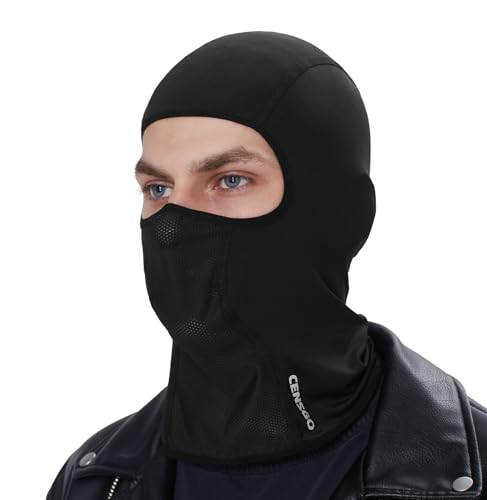
Self Pro Lightweight Balaclava: best under a helmet
For motorcyclists, mountain bikers, and skiers who already have a thick helmet liner, a thin balaclava is what you actually want. The Self Pro is a polyester spandex blend that hugs the head, wicks sweat, and adds maybe 5 F of effective warmth without changing helmet fit. It is also the one to wear under a tactical or paintball mask. Cheap enough to buy two and rotate.
Reasons to buy
- Three Sizes Choice: Say goodbye to one-size-fits-all. Available in S/M/L sizes, this motorcycle balaclava fits your head securely and stays firmly under any helmet—no sliding, no readjusting. The head mask with extended neck coverage for full sun protection, effectively guards your skin from sunburn
- Cooling & Sweat-Wicking: Ever struggled with clingy under your helmet? Our cooling balaclava is here to save the day! This nylon-spandex blend absorbs sweat in a instant and dries quickly - no more sticky discomfort. It also keeps your helmet fresh and clean. Breathable and ice chill fabric of the shiesty mask cools you down in hot summer, ensuring you stay comfortable and refreshed during motorcycling
- Breathable Mesh Design: Feel suffocated in summer rides? Not with our cooling helmet liner! The mesh panel placed over mouth and nose for airflow without feeling suffocated. Ultra-breathable mesh fabric enables easy breathing and prevents heat and moisture build-up - no more fogging when wearing glasses or sunglasses. A dry face and clear vision help you concentrate on the thrill of summer riding
- Focus on the Road: Built for motorcycle riders who demand performance, our black balaclava features reinforced, flat stitching for long-lasting wear without itching. The super lightweight fabric stays smooth under helmets, with no bulk or irritation. No pilling or deformation, providing you with consistent comfort experience
- Ideal Summer Balaclava: Perfect for motorcycling, cycling, riding, hunting, hiking, outdoor working or other activities. This cooling helmet liner combines breathable comfort, moisture-wicking, and full-face coverage for men and women who spend long periods of time outdoors
What to look for
What to consider
Start with use case. A ski tourer needs breathable wool. A commuter motorcyclist needs wind blocking with a clean fit under a helmet. A job site worker needs durability and easy washing. Buying one balaclava for every job is a compromise, and Buff makes the best compromise piece in the Polar Reversible.
What to consider
Fit around the nose and goggles is the single biggest source of complaints. If the fabric does not seal cleanly around the nose, you will fog your goggles every breath. Look for a contoured nose seam or a separate breathing flap. Try it on with the rest of your kit on, not just by itself.
What to consider
Wash care matters more than people think. Merino shrinks if you put it in a hot dryer and breaks down with bleach. Polyester fleece pills against backpack straps and helmet liners. Buy one to two balaclavas and rotate them through gentle washes rather than buying four cheap ones that will all fail at the same time.
FAQs
Merino wool gives you the best ratio of warmth, breathability, and odor resistance. Polartec fleece and brushed polyester are warmer for the same thickness but trap moisture faster, which is bad on long aerobic days.
If the nose seal is loose, breath rises into your goggles and fogs them. Look for a balaclava with a contoured nose bridge, a breathing port, or a hinged flap. Smartwool and Buff hinge designs both work.
Yes, but pick a thin one made for it. A bulky ski balaclava changes the helmet fit and can press on pressure points. Hot Leathers and similar moto-specific designs use thin Lycra-style fabrics.
Cold water, gentle cycle, mild detergent without bleach or fabric softener. Air dry flat. Avoid the dryer, which shrinks merino and breaks down the fibers fast.
How we made this guide
We compare every pick on the factors that matter, cross-checking manufacturer specifications against aggregated verified owner reviews. We rank independently and never take payment for placement. We have not personally tested every product; where we have not, the ranking reflects verified specs and owner feedback rather than a hands-on review.
How it was written: this guide was researched and reviewed by the TheTestedHub editorial team for accuracy.
Affiliate disclosure: TheTestedHub is reader-supported. When you buy through links on our site, we may earn a commission at no extra cost to you.
