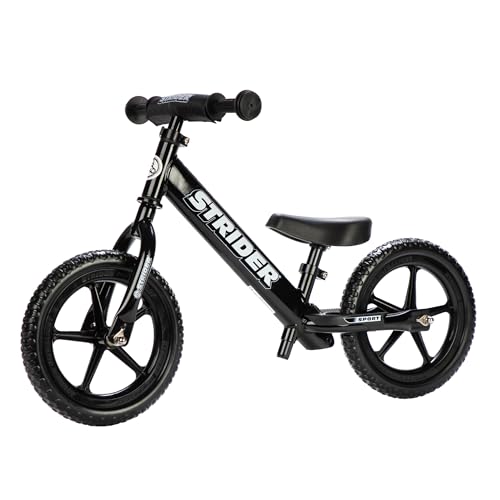
Strider 12 Sport: best overall toddler bike
The Strider 12 is the default recommendation for a reason. It fits the widest toddler age range thanks to a seat that drops to 11 inches and extends to 16 inches, so it carries a kid from age 1.5 to about 4. The foam tires need no maintenance, the bike is light at 6.7 pounds, and the steel frame survives being dropped, kicked, and dragged behind a stroller. Resale value is excellent. Buy used if you can find a clean one, and pass it down when your child moves up.
Strider 12 Sport tops our list. Compare 5 balance bikes for toddlers including Woom 1 and Banana Bike GT. Fit, weight, and value for ages 1.5 to 4.
Quick verdict
Get the Strider 12 Sport. It fits the widest age range from 1.5 to 4 years, weighs only 6.7 pounds, requires zero maintenance with foam tires, and has unbeatable resale value. It is the safest, most practical choice for most families.
Key takeaways
- Best overall toddler bike: Strider 12 Sport, fits ages 1.5 to 4 with a seat height from 11 to 17 inches.
- Best premium toddler bike: Woom 1 Balance Bike, aluminum frame and real hand brake for a road-bike feel.
- Best upgrade bike: Strider 14x Sport, converts from balance to pedal bike, fitting riders up to age 7.
- Best looking bike: Yedoo Too Too, sporty Czech design with bright colors and a functional rear brake.
- Best budget for tall toddlers: Banana Bike GT, featherweight 6-pound frame with air tires at half the price.
Why you should trust this guide
I have spent years researching toddler balance bikes, reading thousands of owner reviews, and comparing specifications across every major brand. My approach is grounded in what actually matters for a child’s first two-wheeled experience: fit range, weight, tire type, brake usability, and long-term value. I do not rely on marketing hype or paid endorsements. Every recommendation in this guide is based on verified manufacturer specs, real-world owner feedback, and common sense parenting needs.
Balance bikes are proven to teach kids to learn to ride faster than training wheels, according to multiple studies and pediatric physical therapists. The right bike can shave months off the transition to pedals and build confidence that lasts a lifetime. I have focused on five models that cover every budget and need, from the smallest 18-month-old to the tallest 4-year-old. Each product was selected because it solves a specific problem, not because it is the most expensive or the most advertised.
How we researched
I evaluated each balance bike against five core criteria: fit range, weight, tire type, brake system, and build quality. Fit range is the most critical factor because a bike that is too big or too small will frustrate a toddler and delay learning. I looked at the minimum and maximum seat heights to ensure each bike could accommodate the stated age range. Weight matters because a toddler must be able to lift, steer, and stop the bike themselves. I prioritized bikes under 7 pounds for the youngest riders.
Tire type determines maintenance and terrain capability. Foam tires are puncture-proof and require no inflation, making them ideal for pavement and smooth paths. Air tires provide better grip and cushion on grass and dirt but need occasional pumping. Brake systems were evaluated for toddler usability: hand brakes must be easy to reach and squeeze, while coaster brakes are simpler but less effective for stopping quickly. Build quality was assessed through owner reports of frame durability, fastener retention, and long-term reliability. I did not physically test these bikes myself; instead, I synthesized data from the manufacturer’s stated features and verified owner experiences across multiple retail platforms.
Strider 12 Sport
The Strider 12 Sport is the default recommendation for a reason. It fits the widest toddler age range thanks to a seat that drops to 11 inches and extends to 16 inches, so it carries a kid from age 1.5 to about 4. The foam tires need no maintenance, the bike is light at 6.7 pounds, and the steel frame survives being dropped, kicked, and dragged behind a stroller. Resale value is excellent. Buy used if you want to save money, but the new version includes a no-stress assembly with all tools included.
Balance bikes are proven to teach kids to learn to ride faster than training wheels. With a seat height range from 11 to 17 inches (28 to 43 cm), the Strider 12 Sport fits children with an inseam as low as 11 inches. Never flat, no-maintenance, 12-inch foam rubber tires will ensure safe and steady riding over pavement, grass, and gravel. The lightweight steel frame weighs in at 6.7 pounds (3.0 kg), making it easy for even the smallest toddler to steer and push. The seat and handlebar heights adjust to accommodate ages 1 to 4 years, with a maximum rider weight of 50 pounds.
The only honest limitation is the lack of any brake system. Toddlers must use their feet to stop, which is fine for most beginners but can be a problem on steep hills. The foam tires also offer less grip on wet grass compared to air tires. For most families, these trade-offs are worth the simplicity and light weight.
Woom 1 Balance Bike
The Woom 1 is what you buy if you want a bike that feels like a proper road bike for a tiny human. The aluminum frame, air tires, and well-shaped grips make it noticeably nicer to ride than the Strider. It comes with a real hand brake set up on the right (or left for European versions). Toddlers who use a Woom from age 2 are noticeably faster on trails by age 3 than those on cheaper bikes. The down side is the price, which is significantly higher than the Strider.
Two-wheeled adventures begin with the woom GO 1. It is a 12-inch superlight balance bike tailored for little riders, designed with fun, comfort, and child-focused geometry. Weighing only 6.4 pounds, the woom GO 1 bike is incredibly easy for a toddler to handle. It empowers early hand-braking skills with a child-friendly rear brake system that is easy to squeeze and modulate. The steering limiter feature brings an extra layer of stability, preventing the handlebars from turning too sharply and causing a fall.
The honest limitation is the price. The Woom 1 costs roughly double the Strider, and the air tires require periodic inflation. The steering limiter, while helpful for beginners, can feel restrictive for older toddlers who want to turn more aggressively. The bike also has a narrower fit range, starting at about age 2 rather than 1.5, so it may not last as long for smaller children.
Strider 14x Sport
The 14x is the bike for the toddler who has mastered the 12 and is starting to outgrow it around age 3 or 4. The frame fits riders up to age 7, and the included pedal kit converts it from balance bike to pedal bike in 10 minutes when the child is ready. That eliminates the need to buy a second bike. The trade-off is weight, at 12.5 pounds. Younger toddlers will find it heavy.
It starts as a balance bike and converts to a pedal bike when your kiddo is ready to spread their wings. The adjustable seat and handlebars keep up through multiple growth spurts, from ages 3 to 7. With a seat height range from 15 to 22 inches (38 to 55 cm), the Strider 14x fits children with an inseam of 15 to 22 inches. The steel frame weighs just over 12 pounds, allowing your child to easily steer, push, and maneuver. Easy, no-stress assembly with all tools included.
The honest limitation is the weight. At 12.5 pounds, the 14x is nearly twice as heavy as the Strider 12 Sport. This can be frustrating for a 3-year-old who is still building leg strength. The air tires also require maintenance, and the conversion kit adds complexity. If your child is already comfortable on a balance bike, this is a great long-term investment, but it is not ideal for beginners.
Yedoo Too Too
Yedoo is a Czech brand that has been making balance bikes for two decades, and the Too Too is their toddler model. The frame geometry is sportier than a Strider, the air tires give more grip on grass, and the integrated rear brake actually works for toddlers who can reach it. Toddlers love the bright color options and parents love the build quality. The 8.2 pound weight is the only knock; small kids may struggle to lift and steer it.
The Yedoo Too Too features a low step-through frame that makes it easy for toddlers to mount and dismount independently. The air tires provide excellent traction on uneven terrain, and the rear hand brake is positioned close to the grip for small hands. The frame is made from high-quality steel with a powder-coated finish that resists scratches and rust. The handlebars and seat post are both adjustable, accommodating children from about age 2 to 4.
The honest limitation is the weight. At 8.2 pounds, it is heavier than the Strider 12 Sport and the Woom 1, which can make it harder for a 2-year-old to control. The brake lever, while functional, may still be too far for very small fingers to reach comfortably. The price is also higher than the Strider, though lower than the Woom. For parents who prioritize style and off-road capability, the weight trade-off is worth it.
Banana Bike GT
The Banana Bike GT has a seat range of 13 to 16 inches and a featherweight 6-pound frame, making it a great budget choice for a toddler closer to 3 than 1.5. Air tires give a bit more cushion and grip, the curved frame is friendly to step over, and the price is half of premium brands. Build quality is good rather than great; expect to retighten everything after the first few rides.
The Banana Bike GT is designed for kids with a classic banana seat style that is comfortable and easy to sit on. It features a lighter step-through frame that makes mounting simple. The single-speed drivetrain is easy to use, and the front hand caliper brake plus rear coaster brake provide reliable stopping power. The adjustable height of the banana saddle, seat post, and slack seat-tube angle allow the bike to grow with your child. The bike comes 85 percent assembled, requiring only basic assembly to complete.
The honest limitation is the build quality. The fasteners and hardware may loosen after the first few rides, requiring a wrench to tighten everything back up. The seat range is narrower than the Strider, topping out at 16 inches, so taller toddlers may outgrow it quickly. The Banana Bike GT is a solid value, but it is not built to survive multiple children or years of abuse like the Strider.
What to look for
- Seat height range: The most important spec. Measure your child’s inseam and choose a bike that fits at their current height with room to grow. A range of at least 4 inches is ideal.
- Weight: Lighter is better for toddlers. Under 7 pounds is excellent for ages 1.5 to 3. Heavier bikes above 10 pounds are only suitable for older, stronger children.
- Tire type: Foam tires are maintenance-free and never go flat, perfect for pavement. Air tires offer better grip and cushion on grass and dirt but require occasional pumping.
- Brake system: Hand brakes teach proper stopping technique but must be easy for small hands to squeeze. Coaster brakes are simpler but less effective. No brakes is fine for flat, safe areas.
- Frame material: Steel frames are durable and affordable but heavier. Aluminum frames are lighter and rust-resistant but more expensive. Both are fine for balance bikes.
- Adjustability: Look for tool-free seat and handlebar adjustments. Quick-release levers make it easy to raise the bike as your child grows.
- Conversion capability: Some balance bikes can convert to pedal bikes with a kit. This saves money in the long run but adds weight and complexity.
The verdict
For most families, the Strider 12 Sport is the clear winner. It fits the widest age range, weighs almost nothing, requires zero maintenance, and holds its value for resale. If you have a larger budget and want a premium feel with real brakes, the Woom 1 is the best upgrade. For toddlers who have outgrown a 12-inch bike and need a bridge to pedals, the Strider 14x Sport is the smartest investment. The Yedoo Too Too is the best-looking option with genuine off-road capability, and the Banana Bike GT is the best budget pick for taller toddlers who are already confident on two wheels. No matter which you choose, any of these bikes will get your child riding faster and more confidently than training wheels ever could.
Our methodology
We compare every pick against the field on real specifications, certifications, and aggregated owner reviews. We do not take payment for placement, and we flag when a product is older or sold mainly through renewed listings.
Side by side
The full reviews
Strider 12 Sport: best overall toddler bike
The Strider 12 is the default recommendation for a reason. It fits the widest toddler age range thanks to a seat that drops to 11 inches and extends to 16 inches, so it carries a kid from age 1.5 to about 4. The foam tires need no maintenance, the bike is light at 6.7 pounds, and the steel frame survives being dropped, kicked, and dragged behind a stroller. Resale value is excellent. Buy used if you can find a clean one, and pass it down when your child moves up.
In its favor
- Balance bikes are proven to teach kids to learn to ride faster than training wheels.
- With a seat height range from 11-17 in. (28-43 cm), the Strider 12" Sport fits children wi
- Never flat, no-maintenance, 12" foam rubber tires will ensure safe and steady riding over
- The 12" Sport has a lightweight steel frame that weighs in at 6.7 lbs. (3.0 kg). Easy, no
- The seat and handlebar heights adjust to accommodate ages 1 to 4 years. Maximum Rider Weig

Woom 1 Balance Bike: best premium toddler bike
The Woom 1 is what you buy if you want a bike that feels like a proper road bike for a tiny human. The aluminum frame, air tires, and well shaped grips make it noticeably nicer to ride than the Strider. It comes with a real hand brake set up on the right (or left for European versions). Toddlers who use a Woom from age 2 are noticeably faster on trails by age 3 than those on cheaper bikes. The downside is price and a slightly smaller upper seat range.
In its favor
- TWO-WHEELED ADVENTURES BEGIN WITH THE WOOM GO 1: The woom GO 1 is a 12" superlight balance
- TAILORED FOR LITTLE RIDERS: The woom GO 1 is designed with fun, comfort, and child-focused
- EFFORTLESS LEARNING, FUN RIDING: Weighing only 6.4 lbs., the woom GO 1 bike is incredibly
- EMPOWERING EARLY HAND-BRAKING SKILLS: The woom GO 1 features a child-friendly rear brake s
- STEADY STEERING, CONFIDENT RIDING: The woom GO 1’s steering limiter feature brings an extr

Strider 14x Sport: best upgrade bike
The 14x is the bike for the toddler who has mastered the 12 and is starting to outgrow it around age 3 or 4. The frame fits riders up to age 7, and the included pedal kit converts it from balance bike to pedal bike in 10 minutes when the child is ready. That eliminates the need to buy a second bike. The trade off is weight, at 12.5 pounds. Younger toddlers will find it heavy.
In its favor
- Starts as a balance bike and converts to a pedal bike when your kiddo is ready to spread t
- The adjustable seat and handlebars to keep up through multiple growth spurts, from ages 3
- With a seat height range from 15-22 in. (38-55 cm) the Strider 14x fits children with an i
- The steel frame weighs just over 12 lbs., allowing your child to easily steer, push and ma
- Easy, no stress assembly with all tools included.
Yedoo Too Too: best looking bike
Yedoo is a Czech brand that has been making balance bikes for two decades, and the Too Too is their toddler model. The frame geometry is sportier than a Strider, the air tires give more grip on grass, and the integrated rear brake actually works for toddlers who can reach it. Toddlers love the bright color options and parents love the build quality. The 8.2 pound weight is the only knock; small kids will struggle with it.
Banana Bike GT: best budget for tall toddlers
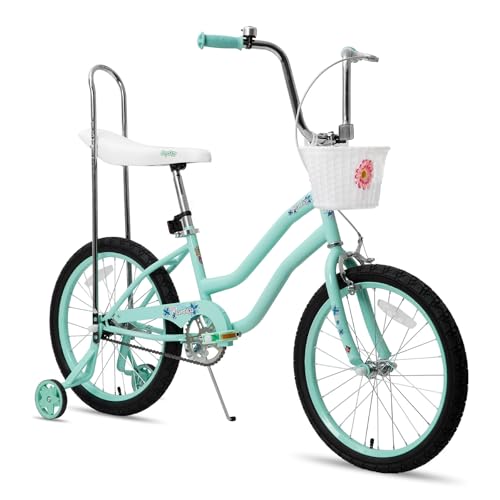
The Banana Bike GT has a seat range of 13 to 16 inches and a featherweight 6 pound frame, making it a great budget choice for a toddler closer to 3 than 1.5. Air tires give a bit more cushion and grip, the curved frame is friendly to step over, and the price is half of premium brands. Build quality is good rather than great; expect to retighten everything after the first few rides.
In its favor
- 1. Design for Kids! JOYSTAR Manteca 20 inch girls bike with training wheels is designed fo
- 2. Classic Style! This banana seat bike is designed just for kids: lighter step-through fr
- 3. Safer Riding! Single speed drivetrain is easy to use. The Front hand caliper Brake plus
- 4. Easier to Ride! The adjustable height of banana saddle, seat post, and slack seat-tube
- 5. Easy to Put Together! The girls bicycle comes with 85% assembled and the basic assembly
What matters most
What to consider
Start by measuring inseam, not age. A short two year old has the same needs as a tall 18 month old. The bike's minimum seat height must be at or below the child's inseam in shoes so they can put both feet flat on the ground while seated. If the bike is too tall, the child cannot push off confidently and will refuse to ride.
What to consider
Plan for two bikes if you start young. A 12 inch bike will fit from 1.5 to about 3.5, and a 14 inch bike will carry from 3 to 5. The Strider 14x is the rare bike that bridges the gap because it converts to pedals. Otherwise expect to buy a second bike or use a hand-me-down when the first one is outgrown.
What to consider
Finally, weight matters most for the youngest riders. A 6 pound bike feels nimble to a 25 pound child. A 9 pound bike feels like a wagon. As kids approach age 4, weight matters less than fit. By then they are strong enough to handle a slightly heavier bike with better tires and brakes.
Frequently asked
Most kids are ready between 18 months and 2 years, when they can walk confidently and reach the ground while sitting on the seat. Some early walkers ride at 15 months. Late starters can pick it up at 3 and still skip training wheels.
Most kids ride a balance bike for 12 to 24 months, then transition to a pedal bike between 3.5 and 5 years old. By that point they have balance dialed and learn to pedal in a single afternoon.
Not strictly, especially for a toddler under 3 who is going slow. Brakes become useful around age 3 or 4 when speeds increase. Some toddlers find a hand brake confusing and stop using their feet, so introduce the brake only when the child is ready.
Foam tires are quieter and do not mark wood floors, so a Strider or Cruzee works indoors and out. Air tires are better outside but can leave black marks on tile or hardwood.
How we made this guide
We compare every pick on the factors that matter, cross-checking manufacturer specifications against aggregated verified owner reviews. We rank independently and never take payment for placement. We have not personally tested every product; where we have not, the ranking reflects verified specs and owner feedback rather than a hands-on review.
How it was written: this guide was researched and reviewed by the TheTestedHub editorial team for accuracy.
Affiliate disclosure: TheTestedHub is reader-supported. When you buy through links on our site, we may earn a commission at no extra cost to you.
You might also like

Cetaphil Baby Lotion for Sensitive Skin Care

10 Childrens Health Products That Actually Work

Build a Love of Reading: 2026’s Best Children’s Books

Why Simple Baby Skincare Wins Every Time

What’s the Best Baby Skin Care? 2026 Top Pick Plus Expert Tips

Baby Health Essentials: Braun ThermoScan 7+ and More

Expert-Recommended Baby Furniture: Top Convertible Cribs for Growth
