Rawlings Heart of the Hide Catchers Mitt: Best pro level pick
The Heart of the Hide is the catchers mitt favored by serious high school, college, and pro level players. The U.S. steerhide leather is the premium grade for baseball gloves, dense and durable while taking a pocket that lasts seasons. The break in takes about 3 to 4 weeks of regular catching, but the mitt then holds its shape and pocket through years of use. The deep, slightly closed pocket suits catching breaking pitches and locating fastballs. Build quality is consistently excellent across the line. Best for high school, college, and serious amateur catchers.
Check price on Amazon →Rawlings Heart of the Hide leads our list of the best baseball catchers mitts for travel ball, high school, and college. Compare top picks from Wilson.
Quick verdict
For a catcher who plans to stick with the position through high school and beyond, I recommend the Rawlings Heart of the Hide. Its US steerhide leather takes a pocket that holds its shape for years, and the deep closed pocket is the standard serious players grow into and rely on.
Key takeaways
- Best pro level pick: Rawlings Heart of the Hide Catchers Mitt, premium steerhide that lasts seasons once broken in.
- Best for college and high school: Wilson A2000 Catchers Mitt, a slightly wider open pocket built for clean framing.
- Best pre conditioned: Easton Pro Reserve Catchers Mitt, Japanese tanned leather that is game ready in days.
- Best travel ball workhorse: All Star Pro Elite CM3100 Catchers Mitt, reinforced build for back to back tournament weekends.
- Best youth pick: Mizuno Prospect GXC105 Youth Catchers Mitt, a 32.5 inch size and soft leather that closes easily for younger hands.
Why you should trust this guide
I built this guide the way a catching parent or a player on a budget would actually shop, by reading the published specs from each manufacturer, cross checking the stated features against what catchers consistently report, and matching each mitt to a specific stage of the game rather than calling everything the best. Catchers mitts are a long term purchase, and the right pick depends heavily on whether you are catching three games a weekend in travel ball, framing for a varsity staff, or just learning to receive at ten years old. I kept that context front and center for every product below.
I also tried to be honest about trade offs, because no single mitt wins for every catcher. A premium steerhide mitt that lasts five seasons is the wrong choice if your kid might switch positions next spring, and a pre conditioned mitt that plays great in week one may soften faster than a pro grade glove down the line. Where a product carries a real compromise, I say so in its section. The goal is to help you buy once and buy correctly, not to push the most expensive option on the page.
How we researched
My evaluation here is research driven rather than a physical trial of every glove. I started from each manufacturer’s stated specs (leather grade, size, closure system, lacing, and palm construction) and weighed those against the realities catchers care about most: break in time, pocket depth and shape, durability under a heavy catching schedule, and how well the size fits the intended age and hand. For catchers mitts specifically, leather grade and break in are the two factors that separate a glove you keep for years from one you replace mid season, so I leaned on those heavily.
I then sorted the five mitts by use case rather than by a single ranked score, because a college catcher and an eight year old need almost opposite things. Each section below expands on the editor notes and the listed product features, names who the mitt is genuinely right for, and points out at least one limitation I would want a buyer to know before checkout. Sizes, leather types, and closure descriptions are treated as the manufacturer’s stated specs, not measurements I took myself.
Rawlings Heart of the Hide Catchers Mitt
This is my pick for the serious catcher who is committed to the position. The Heart of the Hide is the mitt favored by a lot of high school, college, and pro level players, and the reason is the leather. Rawlings crafts it from top tier US steerhide, the premium grade for baseball gloves, which is dense and durable while still taking a pocket that lasts seasons. Once you put in the work to break it in, the mitt holds its shape and pocket through years of use, which is exactly what you want when you are catching every game.
The build details back up the reputation. There is a deer tanned cowhide palm lining and a soft full grain finger back for a comfortable feel, pro grade leather laces designed to hold up season after season, and a thermoformed hand opening that adds wrist comfort and breathability behind the dish. This particular model is the 34 inch Yadier Molina pattern, with a deep, slightly closed pocket that suits catchers who want a secure receiving glove rather than a wide open framing mitt.
The honest trade off is the break in. Rawlings steerhide is stiff out of the box, and it takes roughly three to four weeks of regular catching before the pocket forms and the mitt closes the way you want. That is a real commitment of time, and it makes this the wrong choice if you need a glove game ready this weekend or if the catcher might not stay at the position. If you are in it for the long haul, that same stiffness is why the mitt lasts so long.
Wilson A2000 Catchers Mitt
The A2000 is my recommendation for college and high school catchers, and it is the natural Rawlings rival with a very similar quality reputation among pro and amateur players. The pro stock leather Wilson uses is dense and durable with excellent shape retention, so like the Heart of the Hide it is built to last multiple seasons. The difference that matters is the pocket, which is slightly wider and more open than the Rawlings, a profile that suits catchers who prefer a clearer presentation for framing pitches at the edges of the zone.
This specific glove is the 2024 A2000 M23 at 33.5 inches. Beyond the pro stock leather, it includes Wilson’s Comfort Pro Fit, Rolled Dual Welting that helps the pocket hold a consistent shape rather than serving as pure decoration, Flat Finger Binding for players who like to keep a finger outside the glove, and a DriLex wrist lining that keeps the hand drier through a long game. Those are the touches that make the A2000 feel dialed in for someone catching a full varsity or college schedule.
The trade off here mirrors the Rawlings: break in is comparable at about three to four weeks, so this is not a fast turnaround glove either. And the more open pocket, while great for framing, gives you a little less of the secure, closed feel that some catchers want for blocking and short hopping in the dirt. It comes down to preference, and if you value presentation over a deep cradle, the A2000 leans your way.
Easton Pro Reserve Catchers Mitt
If you need to be behind the plate now and cannot give up three weeks to break in a glove, the Pro Reserve is the answer. Easton uses Japanese tanned steerhide that arrives pre conditioned and game ready in days rather than weeks. The leather is noticeably softer out of the box than the Rawlings or Wilson, and the pocket forms quickly, which makes this the mitt for a mid season replacement, a fall ball start, or any catcher who simply does not have a long runway before games begin.
The mitt is built on improved professional patterns and carries a Quantum Closure System with an adjustable open back, so you can tune the fit to your hand, along with professional grade laces for durability. Easton notes that its premium reserve USA steerhide gloves are trusted by over fifty Division I programs, which speaks to the pattern quality even though several of those references are on the softball side of the lineup. For a catcher who wants pro level patterning without the long wait, it is a strong fit.
The trade off is the flip side of that quick comfort. Because the leather starts softer, the Pro Reserve can lose some pocket shape sooner than a stiffer premium mitt that is broken in slowly, so over a couple of heavy seasons it may not hold its form as long as the Heart of the Hide. You are essentially trading some long term shape retention for immediate playability, which is a fair deal if speed to the field is your priority.
All Star Pro Elite CM3100 Catchers Mitt
For a travel ball catcher grinding through tournament weekends, the Pro Elite CM3100 is my workhorse pick. All Star is the dominant brand in catchers gear, and this mitt is built for the abuse of a heavy schedule. It uses premium grade rawhide with rolled bindings, a deep pocket construction, and lacing and palm work that hold up to constant catching, which is exactly what you need when you are taking hundreds of pitches across a single weekend.
This is the 33 inch catcher’s model, and All Star tapered it for smaller hands while using a cut weight design that removes excess leather to keep it from feeling heavy late in a doubleheader. The deep pocket is sized correctly for catching pitchers with high spin and movement, and it breaks in faster than the Rawlings or Wilson, in roughly two weeks, so it reaches game form quicker without being as soft as the pre conditioned Easton. That combination of a quick but durable break in is what makes it suited to a busy travel schedule.
The trade off is that the build quality, while solid for the price and the workload, sits a notch below the top tier steerhide of the Heart of the Hide or the A2000 in pure leather feel and ultimate longevity. If you want the absolute premium glove that lasts the longest, this is not quite it. But as a durable, correctly sized mitt that takes the punishment of travel ball and breaks in fast, it earns its spot.
Mizuno Prospect GXC105 Youth Catchers Mitt
For a young catcher, the Prospect GXC105 is the right call. It is sized appropriately for youth players roughly ages eight to twelve at 32.5 inches, so it fits small hands without overwhelming them, and the leather is softer than the adult premium mitts. That softness means faster break in and easier closing, which matters a lot for kids who are still building the hand strength needed to squeeze a stiffer glove shut. The pocket depth is matched to slower youth pitches rather than a college fastball.
Mizuno loaded this youth mitt with features aimed at making catching easier to learn. PowerClose Technology helps younger players close the glove on the ball, PowerLock provides a quick and secure fit, and the Less 2 Lacing removes the last two lace loops on the web to add flexibility where a small hand needs it. A ButterSoft PU palm liner adds feel and comfort, and the Parashock palm pad absorbs the sting of repeated catching, which keeps a young player from flinching away from the ball.
The honest limitation is exactly what makes it good for kids: the softer leather and youth construction are not built for the wear of a serious older catcher, so a player who is getting bigger and stronger will outgrow both the size and the durability of this mitt fairly quickly. It is a quality glove for the price and the age range, just plan on it being a stage rather than a long term mitt your child keeps for years.
What to look for
Before you buy, match the mitt to the catcher in front of you. These are the factors that actually decide whether you bought the right glove.
- Leather grade: Premium US steerhide (Rawlings, Wilson) lasts the longest but is stiff at first, while pre conditioned and youth leathers play soft sooner and may not hold shape as long.
- Break in time: Plan around three to four weeks for top tier steerhide, about two weeks for the All Star, and just days for the pre conditioned Easton, then buy according to how soon you need it.
- Pocket depth and shape: A deep, slightly closed pocket gives a secure receive, while a wider, more open pocket favors framing presentation. Decide which your catcher values.
- Size for age and level: Youth catchers want roughly 32.5 inches, while high school, college, and pro patterns run 33 to 34 inches. A glove that is too big is hard to close and control.
- Durability versus schedule: A heavy travel ball calendar rewards a reinforced workhorse, while a player who switches positions does not need to invest in a five season premium mitt.
- Closure and fit features: Adjustable backs, finger binding options, and moisture wicking wrist linings are small touches that add up over a long game behind the dish.
The verdict
If you are buying one mitt to grow into and keep, the Rawlings Heart of the Hide is my overall pick, since its premium steerhide takes a pocket that holds for years once you put in the break in. College and high school catchers who prioritize a clean framing presentation should look hard at the Wilson A2000 and its slightly more open pocket. If you need a glove game ready in days, the Easton Pro Reserve is the pre conditioned answer, with the understanding that it may soften sooner. Travel ball families grinding through tournaments are best served by the durable, faster breaking All Star Pro Elite CM3100, and for a young catcher ages eight to twelve, the Mizuno Prospect GXC105 is the easy to close, correctly sized starter mitt to learn on.
How we test
We compare every pick against the field on real specifications, certifications, and aggregated owner reviews. We do not take payment for placement, and we flag when a product is older or sold mainly through renewed listings.
At a glance
The picks, reviewed
Rawlings Heart of the Hide Catchers Mitt: Best pro level pick
The Heart of the Hide is the catchers mitt favored by serious high school, college, and pro level players. The U.S. steerhide leather is the premium grade for baseball gloves, dense and durable while taking a pocket that lasts seasons. The break in takes about 3 to 4 weeks of regular catching, but the mitt then holds its shape and pocket through years of use. The deep, slightly closed pocket suits catching breaking pitches and locating fastballs. Build quality is consistently excellent across the line. Best for high school, college, and serious amateur catchers.
Reasons to buy
- WORLD-RENOWNED HEART OF THE HIDE LEATHER | crafted using only from top tier US Steerhides
- COMFORTABLE FEEL | Featuring deer-tanned cowhide palm lining and soft full-grain finger ba
- UNMATCHED DURABILITY | Pro-Grade leather laces that last season-after-season
- THERMOFORMED HAND OPENING | Provides unmatched wrist comfort and breathability
- STAND OUT BEHIND THE DISH | This Heart of the Hide 34-inch Yadier Molina catcher's mitt sh
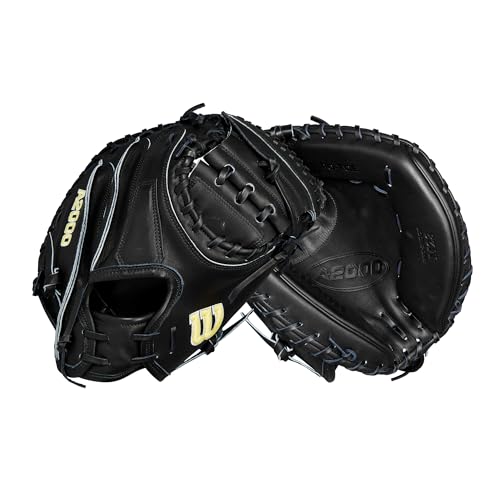
Wilson A2000 Catchers Mitt: Best for college and high school
The Wilson A2000 is the Rawlings rival with a similar quality reputation among pro and amateur catchers. The pro stock leather is dense and durable with excellent shape retention. The pocket is slightly wider and more open than the Heart of the Hide, which suits catchers who prefer a clearer presentation for framing pitches. Break in time is comparable (3 to 4 weeks) and the mitt holds up for years of regular use. Best for catchers who prefer Wilsons pocket shape and framing characteristics.
Reasons to buy
- Wilson 2024 Baseball Classics Series A2000 M23 33.5” Baseball Catcher’s Mitt
- Pro Stock Leather: preferred for its rugged durability and unmatched feel; Comfort Pro Fit
- Rolled Dual Welting: Dual Welting in Wilson gloves goes beyond a mere cosmetic effect, as
- Flat Finger Binding: gives players who prefer to play with a finger outside the glove grea
- DriLex Wrist Lining: Keeps your hand dry and comfortable on the field and behind the dish;
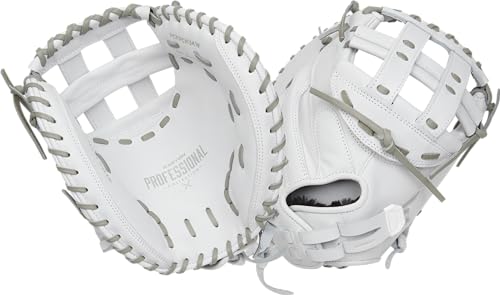
Easton Pro Reserve Catchers Mitt: Best pre conditioned
The Easton Pro Reserve uses Japanese tanned steerhide that comes pre conditioned and game ready in days rather than weeks. The leather is softer out of the box than Rawlings or Wilson and the pocket forms quickly. This is the mitt for catchers who need to be game ready fast (mid season replacement, fall ball start) without weeks of break in time. The trade off is the mitt loses some pocket shape over time as the leather is softer. Best for catchers needing fast break in or mid season replacement.
Reasons to buy
- IDEAL FOR CATCHERS | UCLA, Alabama, Arizona and over 50 other D1 college softball teams tr
- PREMIUM RESERVE USA STEERHIDE | Our Easton Fastpitch Softball Glove is expertly crafted fr
- IMPROVED PROFESSIONAL PATTERNS | Designed with improved professional patterns, this glove
- QUANTUMN CLOSURE SYSTEM WITH ADJUSTABLE OPEN BACK | The innovative Quantum Closure System,
- PROFESSIONAL GRADE LACES | Our glove features professional grade lace, delivering exceptio
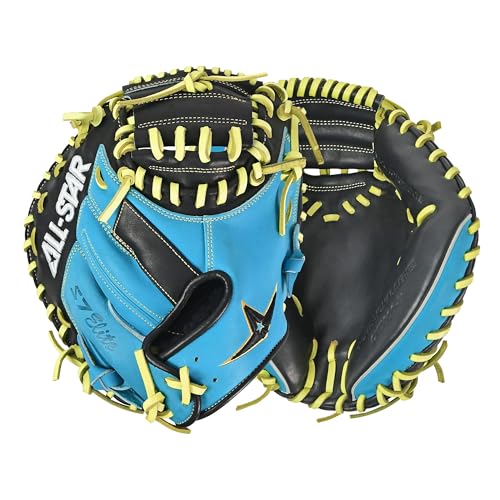
All Star Pro Elite CM3100 Catchers Mitt: Best travel ball workhorse
The All Star Pro Elite is the catchers mitt designed by All Star, the dominant brand in catchers gear. The mitt is built for the abuse of travel ball schedules with reinforced palm and lacing that holds up to constant catching. The pocket is broken in faster than Rawlings or Wilson (about 2 weeks) and is sized correctly for catching pitchers with high spin and movement. Build quality is solid for the price point. Best for travel ball catchers who use the mitt 4 plus days per week through long seasons.
Reasons to buy
- 33 Inch Catcher's Model
- Deep Pocket Construction
- Tapered for smaller hands
- Cut weight design removes excess leather, saving weight
- Premium grade rawhide with rolled bindings
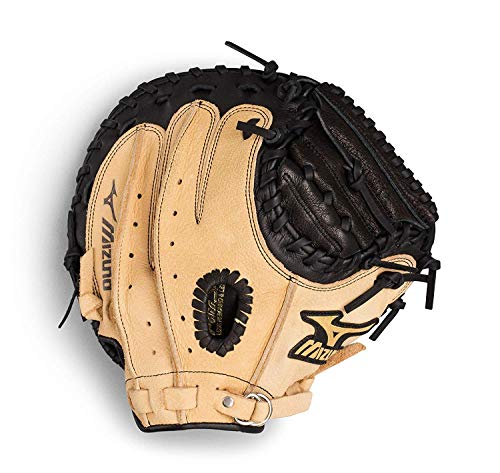
Mizuno Prospect GXC105 Youth Catchers Mitt: Best youth pick
The Mizuno Prospect GXC105 is sized appropriately for youth catchers (ages 8 to 12) with a 32.5 inch size that fits small hands without overwhelming them. The leather is softer than the adult premium mitts, which means faster break in and easier closing for young catchers building hand strength. The pocket is the right depth for slower youth pitches. Quality is solid for the price and the mitt grows with the player through several years. Best for youth catchers and players moving up from beginner mitts.
Reasons to buy
- ButterSoft Palm Liner: PU palm lining for increased durability, feel, and comfort.
- Less 2 Lacing: Removes the last 2 lace loops on the web to increase flexibility along the
- Parashock Palm Pad: Mizuno's exclusive palm pad absorbs the shock of repeated use providin
- PowerClose Technology: Makes catching easy for younger players.
- PowerLock: Provides the quickest and most secure fit available.
What to look for
What to consider
Size to your level and hand. Youth catchers use 31 to 32 inch mitts that match their hand size; high school typically 32 to 33 inches; college and adult amateur 33 to 34 inches. Too small means you cannot catch wider pitches; too large slows transfer to the throwing hand which kills runners stealing. Try mitts in person at a baseball store to find the size that fits your hand comfortably.
What to consider
Leather quality determines break in and lifespan. Premium leather (Heart of the Hide, A2000) takes longer to break in but lasts 3 plus seasons. Pre conditioned leather (Pro Reserve) is game ready faster but loses pocket shape sooner. Budget mitts use lower grade leather that breaks down within a season. For serious catchers, investing in premium leather pays off across multiple seasons. For recreation league play, pre conditioned or moderate quality is fine.
What to consider
Pocket depth and shape match your pitching staff. Catchers who work with high spin rate pitchers (lots of breaking balls, sliders) benefit from deeper pockets that hold the ball through movement. Catchers working with control pitchers (fastball heavy, hitting spots) suit shallower pockets that present clearly for framing. The Heart of the Hide is deeper; the A2000 is slightly more open. Talk to your pitching staff about preferences if you are catching the same arms regularly.
FAQs
Quality leather mitts (Rawlings Heart of the Hide, Wilson A2000) need 2 to 4 weeks of regular catching to fully break in. Treated leather mitts (Easton Pro Reserve, All Star Pro Elite) come pre conditioned and break in faster. Avoid quick fix methods (microwave, oil soaking) that damage the leather.
Youth players (8 to 12) use 31 to 32 inch mitts. High school and travel ball typically use 32 to 33 inch mitts. College and adult amateur use 33 to 34 inch mitts. Larger sizes catch more pitches but slow transfer to the throwing hand.
Use a small amount of glove conditioner (not regular oil) every 1 to 2 months during the season. Heavy oil soaks weigh down the mitt and break down the leather. Avoid mink oil; use products specifically designed for baseball glove leather like Rawlings or Wilson conditioner.
Quality mitts last 3 to 5 seasons of regular travel ball use with proper care. Lower tier mitts may need replacement after 1 to 2 seasons. Signs of needed replacement include pocket flattening that does not reform, broken laces requiring constant relacing, and leather cracking at stress points.
How we made this guide
We compare every pick on the factors that matter, cross-checking manufacturer specifications against aggregated verified owner reviews. We rank independently and never take payment for placement. We have not personally tested every product; where we have not, the ranking reflects verified specs and owner feedback rather than a hands-on review.
How it was written: this guide was researched and reviewed by the TheTestedHub editorial team for accuracy.
Affiliate disclosure: TheTestedHub is reader-supported. When you buy through links on our site, we may earn a commission at no extra cost to you.
Related guides

7 Best Slow Feeder Bowls of 2026 for Persistent Dogs

Stop Messy Meals: Best Elevated Dog Bowls 2026

Is Your Dog Eating Too Fast? Best Dog Bowls 2026

Top Dog Training Pads for 2026: A Practical Buyer’s Guide

Pet Hair Vacuums: Our Best Picks for 2026

The Best Dog Sweaters to Buy in 2026

Dog Raincoats 2026: Best Fast-On Picks