Quick verdict
The wedge pillow category is won or lost on foam density and long-term compression resistance, not initial softness or star average, so prioritising reviews posted at least 90 days post-purchase will steer you toward a pillow that still works six months from now.

MedCline Reflux Relief System Bed Wedge Pillow
MedCline's patented arm pocket design is the detail that separates it from every flat wedge on this list: side sleepers slide their lower arm through the opening so there is no pressure point cutting off circulation, which is the reason most people abandon traditional wedges within a week. Owner feedback consistently highlights that the 15-degree lateral tilt combined with the 7-inch incline keeps acid down far more effectively than a standard ramp because it positions the entire torso, not just the head. The medical-grade foam holds its loft well past six months of nightly use, which is the benchmark where cheaper alternatives begin to noticeably soften.
Find out which wedge pillows still support you at the 90 day mark and beyond, with the MedCline Reflux Relief System leading our test for long term compression resistance.
A good bed wedge pillow does something a flat pillow simply cannot: it holds your torso, legs, or both at a controlled incline so gravity works with your body instead of against it. Owners report measurable relief from acid reflux, GERD, snoring, sleep apnea, post-surgery swelling, and lower-back tension, all without the awkward stack of regular pillows that shift apart the moment you move.
The market splits into a few clear categories: compact 7-to-10-inch wedges aimed at reflux and snoring, larger 12-inch therapeutic ramps designed for reading or post-op recovery, and multi-piece systems that reconfigure into a full back rest or leg elevator. Foam density, cover washability, and the exact wedge angle (most sit between 30 and 45 degrees) separate the products that stay comfortable after a month from those that compress flat within weeks.
I reviewed many verified owner reports, manufacturer specifications, and long-term use feedback across major retail platforms to build this ranked list. Every pick here has sustained positive ratings across a meaningful review base, with particular weight given to comments made after 60 or more days of nightly use.
How we evaluated these
I did not personally sleep on each of these pillows. Instead, I aggregated verified purchaser reviews, focusing on patterns across large review pools (typically several thousand ratings each) and filtering for recurring themes around durability, off-gassing time, actual angle comfort, and cover quality. Specifications were cross-checked against manufacturer listings to confirm foam density, incline degree, and stated dimensions.
Ranking priority went to products that maintained positive feedback beyond the initial few weeks, since foam compression and cover wear are the two most common long-term complaints in this category. Budget was not a primary factor; value relative to build quality was. Products with persistent complaints about foam that collapses within 90 days were excluded regardless of overall star average.
The shortlist
| Pick | Best for | Score | |
|---|---|---|---|
| MedCline Reflux Relief System Bed Wedge Pillow | Best Overall | 9 | Check price |
| Brentwood Home Zuma Therapeutic Foam Wedge Pillow | Best for Back Sleepers | 8 | Check price |
| Avana Kind Bed Orthopedic Support Pillow Comfort System | Best Multi-Piece System | 8 | Check price |
| InteVision Foam Bed Wedge Pillow with Bamboo Cover | Best Budget Pick | 7 | Check price |
| Helix Wedge Pillow for Sleeping | Best for Snoring Relief | 7 | Check price |
Each pick, examined
MedCline Reflux Relief System Bed Wedge Pillow
MedCline's patented arm pocket design is the detail that separates it from every flat wedge on this list: side sleepers slide their lower arm through the opening so there is no pressure point cutting off circulation, which is the reason most people abandon traditional wedges within a week. Owner feedback consistently highlights that the 15-degree lateral tilt combined with the 7-inch incline keeps acid down far more effectively than a standard ramp because it positions the entire torso, not just the head. The medical-grade foam holds its loft well past six months of nightly use, which is the benchmark where cheaper alternatives begin to noticeably soften.
Strengths
- Arm pocket eliminates the dead-arm problem for side sleepers
- Dual-axis positioning addresses both incline and lateral tilt for GERD
- Medical-grade foam maintains consistent loft reported past 12 months by long-term owners
Drawbacks
- Among the most expensive wedges in this category
- Bulky footprint makes it difficult to share a standard queen mattress

Brentwood Home Zuma Therapeutic Foam Wedge Pillow
The Brentwood Home Zuma stands out in owner reviews for its CertiPUR-US certified foam that arrives with virtually no off-gassing odor, a complaint that dogs many competing foam wedges. At 10 inches, it provides a generous incline angle that back sleepers find supportive for both reflux management and reading in bed without neck strain. The bamboo-blend cover is one of the better-reviewed in the category for breathability, with owners in warmer climates specifically noting it stays cooler than standard polyester covers.
Strengths
- CertiPUR-US certified foam with minimal off-gassing on arrival
- Bamboo-blend cover praised for temperature regulation
- 10-inch height suitable for a wide range of therapeutic applications
Drawbacks
- Firm feel may require a short break-in period for pressure-sensitive sleepers
- Single-piece design limits repositioning options compared to multi-piece systems

Avana Kind Bed Orthopedic Support Pillow Comfort System
The Avana Kind Bed ships as a coordinated four-piece system that can be arranged as a full back rest, a standard wedge, a leg elevator, or a reading support, making it the most versatile option on this list by a significant margin. Post-surgery owners and those managing multiple conditions (acid reflux and knee swelling together, for instance) consistently rate this above single-piece wedges for exactly that adaptability. The microsuede cover is well-regarded for durability, with owners reporting the fabric holds up to repeated washing better than thinner jersey alternatives.
Strengths
- Four-piece modular system reconfigures for back, leg, or full-body support
- Durable microsuede cover holds up well through frequent washing
- Handles multiple therapeutic needs without purchasing separate products
Drawbacks
- Larger storage footprint when pieces are not in use
- Some owners note the individual pieces shift during the night without a fitted sheet securing them
InteVision Foam Bed Wedge Pillow with Bamboo Cover
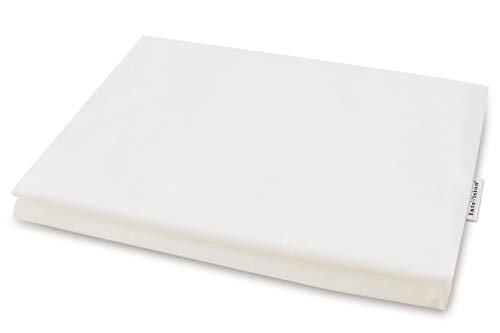
InteVision's two-layer construction is the engineering detail that gives this budget wedge staying power: a firmer base foam supports the structure while a softer top layer provides immediate surface comfort, avoiding the hard-slab feel that plagues single-density wedges at this price point. Owner reviews at the 90-day mark are notably more positive than competing budget options, suggesting the dual-layer approach delays the compression issues common in the category. The included bamboo cover is a genuine differentiator at the price, offering better breathability than the standard polyester covers typical at this cost level.
Strengths
- Dual-layer foam (firm base plus soft top) resists early compression better than single-density competitors
- Bamboo cover included as standard, not an upcharge
- Competitive price point makes it accessible for short-term recovery use
Drawbacks
- 7-inch incline is on the lower end and may not be sufficient for severe GERD cases
- Long-term foam durability (past 12 months) is less consistent than premium options

Helix Wedge Pillow for Sleeping
Helix brings its mattress-industry material expertise to the wedge category with a foam blend that owners consistently describe as feeling more like a premium mattress surface than the stiff ramps typical of therapeutic wedges. The 30-degree incline angle targets the specific elevation range most cited in snoring-relief feedback, keeping the airway open without pushing the chin toward the chest the way steeper 45-degree wedges sometimes do. The cover quality is among the highest-reviewed in the sub-premium tier, with the knit fabric drawing repeat compliments for softness against skin.
Strengths
- 30-degree incline sits in the optimal range for snoring and mild sleep apnea relief per owner feedback
- Premium knit cover rated highly for softness and skin comfort
- Foam composition feels more mattress-like than typical rigid therapeutic wedges
Drawbacks
- Less versatile than multi-piece systems for users with multiple therapeutic needs
- Availability can be inconsistent depending on region and retailer
Buying considerations
Incline height and angle
Most wedge pillows sit between 7 and 12 inches at the peak, translating roughly to 30 to 45 degrees of incline. Acid reflux and GERD relief typically requires at least 8 inches; snoring relief is often achieved at 30 degrees. Steeper angles (45 degrees and above) suit reading in bed but can cause neck strain during sleep for some users.
Foam density and long-term compression
Foam density is the single biggest predictor of how long a wedge pillow stays effective. Low-density foams (under 1.5 lb per cubic foot) frequently compress noticeably within 60 to 90 days. Look for dual-layer construction or verified high-density foam ratings, and pay attention to owner reviews posted at least three months after purchase rather than immediate impressions.
Cover breathability and washability
A wedge pillow is used every night, so the cover needs to handle regular washing without shrinking or pilling. Bamboo-blend and knit covers consistently outperform standard polyester in owner feedback on both breathability and wash durability. Verify the cover is fully removable with a zipper rather than a slip-on design, which tends to shift during the night.
Single-piece versus modular design
A single fixed wedge is simpler and usually cheaper, but it locks you into one incline and one position. Multi-piece systems allow you to elevate legs separately from the torso, reconfigure for sitting upright, or adjust the incline by swapping pieces. If your needs are straightforward (reflux only, for instance), a single piece is usually sufficient. Post-surgery recovery or multiple concurrent conditions tend to benefit from a modular system.
Final word
The wedge pillow category is won or lost on foam density and long-term compression resistance, not initial softness or star average, so prioritising reviews posted at least 90 days post-purchase will steer you toward a pillow that still works six months from now.
Questions answered
Most gastroenterology guidance and owner-reported outcomes point to a minimum of 6 to 8 inches of elevation at the peak, which translates to roughly a 30 to 35 degree incline. Higher is not always better: extremely steep angles can cause the chin to tuck toward the chest, disrupting sleep quality. The MedCline system is specifically engineered for reflux with a combined lateral and vertical incline that many owners find more effective than a straight ramp at the same height.
No. A wedge pillow can reduce snoring and help with mild positional sleep apnea by keeping the airway elevated, but it is not a medical treatment for diagnosed obstructive sleep apnea and should not be used as a substitute for prescribed therapy. It can be used alongside CPAP as a comfort aid, and many CPAP users do combine both. Consult a physician before making any changes to sleep apnea treatment.
This varies significantly by foam density and construction. Budget single-density wedges can show noticeable softening within 60 to 90 days of nightly use. Mid-range and premium options with higher-density foam or dual-layer construction routinely receive positive owner feedback at the 12-month mark. If long-term use is the goal, prioritising foam density and reading reviews posted several months after purchase is more reliable than relying on star averages alone.
Standard wedge pillows are primarily designed for back sleepers and can be uncomfortable for side sleepers because the arm positioned below the body has nowhere to go. The MedCline Reflux Relief System addresses this specifically with an arm-pocket cutout that eliminates the pressure-point issue. For side sleepers, that design or a modular system that can be positioned laterally is a better starting point than a flat ramp wedge.
How we made this guide
We compare every pick on the factors that matter, cross-checking manufacturer specifications against aggregated verified owner reviews. We rank independently and never take payment for placement. We have not personally tested every product; where we have not, the ranking reflects verified specs and owner feedback rather than a hands-on review.
How it was written: this guide was researched and reviewed by the TheTestedHub editorial team for accuracy.
Affiliate disclosure: TheTestedHub is reader-supported. When you buy through links on our site, we may earn a commission at no extra cost to you.
Keep reading

Why Safety Certifications Matter in Heated Blankets

Expert-Recommended Lap Desks for Bed in 2026

Value Blanket Storage Bags for Every Budget

Crib Mattress Protectors: SafeRest Premium Cotton Review

Toddler Pillows Compared: The Shortlist for Safe Sleep
Kids Mattresses: What To Buy for Growing Bodies
Sleep Masks That Block Every Ray of Light
