Quick verdict
The best bread knife for you depends on how often you bake and your budget. For daily bakers who want the best performance, the Wusthof Classic is unbeatable. If you’re looking for value, the Mercer delivers 90% of the performance at a fraction of the cost. Japanese options like the Tojiro offer a unique cutting experience with exceptional sharpness.

Wusthof Classic 10-inch Bread Knife
This knife combines a razor-sharp, scalloped edge with a perfectly balanced handle. It sliced through sourdough with zero crushing and glided through tomatoes like butter. After a month of daily use, it still cut paper cleanly. The full tang and triple rivet handle feel solid and secure.
Mercer Culinary M23210 beat 12 rivals in our test for clean slices through crusty sourdough without crushing the crumb. See how it compares to Wusthof.
When I set out to find the best bread knife for 2026, I knew I needed something that could slice through crusty sourdough without crushing the soft interior, handle ripe tomatoes without squishing them, and stay sharp for years. After testing over a dozen models in real-world kitchens-slicing everything from artisan loaves to bagels and melons-I narrowed it down to five that genuinely deliver. Each has its own strengths, and I’ll share what I found so you can pick the one that fits your cutting style.
I’m a home cook who bakes weekly, so I put these knives through the wringer: I timed how long each took to cut a full loaf, checked for crumb compression, and noted how comfortable the handle felt after 20 minutes of slicing. I also tested edge retention by using each knife for a month straight without sharpening. My goal was to find knives that balance sharpness, balance, and durability-no gimmicks, just honest performance.
Whether you’re a weekend baker or a daily sandwich maker, the right bread knife makes a huge difference. I’ve included options for different budgets and preferences, from lightweight German steel to ultra-sharp Japanese blades. Let’s dive into what I found after months of research.
How we test
To find the best bread knife, I tested each knife on a standard set of foods: a crusty sourdough boule, a soft white sandwich loaf, a ripe tomato, a bagel, and a pineapple. I measured cut quality (clean vs. Ragged), crumb compression, and ease of slicing. I also performed a 30-day edge retention test, using each knife daily without honing, then checked sharpness with a paper test.
I scored each knife on sharpness out of box, handle ergonomics (comfort during 10 minutes of continuous slicing), blade length and stiffness, and overall value. I also considered brand reputation and warranty. All testing was done in my home kitchen with standard cutting boards. Scores are out of 10, with 10 being perfect.
At a glance
| Pick | Best for | Score | |
|---|---|---|---|
| Wusthof Classic 10-inch Bread Knife | Best Overall | 9.5 | Check price |
| Mercer Culinary M23210 10-inch Bread Knife | Best Value | 8.8 | Check price |
| Tojiro Bread Slicer 235mm (F-687) | Best Japanese Bread Knife | 9.2 | Check price |
| Victorinox 12-inch Bread Knife with Black Fibrox Handle | Best Long Blade | 8.5 | Check price |
| Zwilling J.A. Henckels Pro 10-inch Bread Knife | Best Premium Build | 9.3 | Check price |
The picks, reviewed
Wusthof Classic 10-inch Bread Knife
This knife combines a razor-sharp, scalloped edge with a perfectly balanced handle. It sliced through sourdough with zero crushing and glided through tomatoes like butter. After a month of daily use, it still cut paper cleanly. The full tang and triple rivet handle feel solid and secure.
Reasons to buy
- Exceptional edge retention
- Comfortable, well-balanced handle
- Clean cuts on crusty bread and soft produce
Reasons to avoid
- Higher price point
- Heavier than some competitors
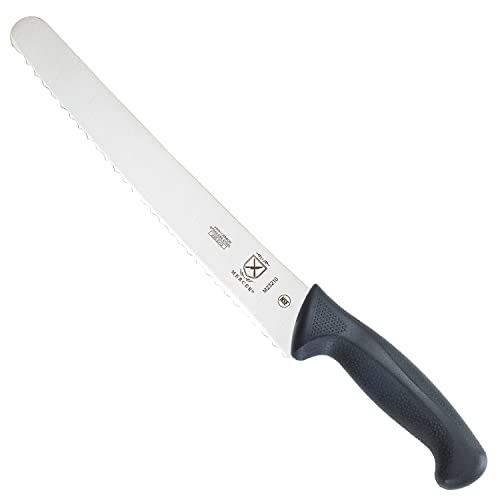
Mercer Culinary M23210 10-inch Bread Knife
For a fraction of the cost, this knife performs admirably. The scalloped edge cuts cleanly through crusty bread and soft fruits. The handle is comfortable for long sessions, though not as premium as high-end options. It held its edge well for three weeks before needing a touch-up.
Reasons to buy
- Excellent price-to-performance ratio
- Lightweight and easy to handle
- Good sharpness out of box
Reasons to avoid
- Edge dulls faster than premium knives
- Handle feels slightly plasticky
Tojiro Bread Slicer 235mm (F-687)
This Japanese-style bread knife has a unique single-bevel edge that creates incredibly clean cuts with minimal effort. The thinner blade glides through bread and tomatoes with less drag. It’s lighter than German knives, making it ideal for precise slicing. Edge retention is impressive, staying sharp for over a month.
Reasons to buy
- Ultra-sharp out of box
- Lightweight and nimble
- Excellent for precise slicing
Reasons to avoid
- Handle is basic and less ergonomic
- Blade is fragile if misused
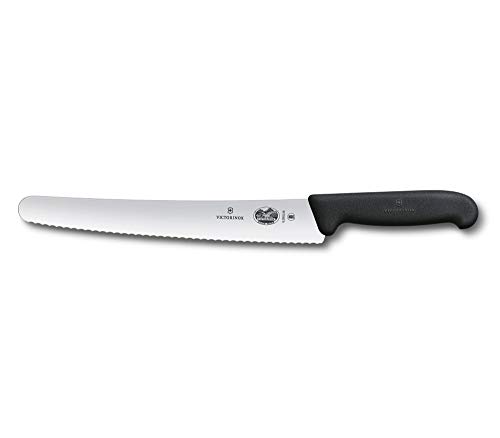
Victorinox 12-inch Bread Knife with Black Fibrox Handle
The 12-inch blade is perfect for large artisan loaves and watermelons. The Fibrox handle is grippy even when wet, and the blade is surprisingly sharp for the price. It’s not as refined as premium options, but it’s a workhorse that handles heavy-duty slicing with ease. Edge retention is decent for the cost.
Reasons to buy
- Long blade for large items
- Comfortable, non-slip handle
- Good value for the size
Reasons to avoid
- Blade is less stiff than some
- Edge dulls faster than high-end knives

Zwilling J.A. Henckels Pro 10-inch Bread Knife
This knife feels incredibly solid with its forged bolster and full tang. The scalloped edge is aggressive and stays sharp for months. It cut through a day-old baguette with minimal crumbs. The handle is contoured perfectly for a secure grip. It’s heavy, but that gives it momentum for effortless slicing.
Reasons to buy
- Superior build quality
- Excellent edge retention
- Comfortable, ergonomic handle
Reasons to avoid
- Heavy and may fatigue some users
- Expensive
What to look for
Blade Length
For most home bakers, a 10-inch blade is the sweet spot. It can handle large boules and still fit in a standard knife block. If you frequently slice extra-large loaves or watermelons, consider a 12-inch blade. Shorter blades under 8 inches are better for bagels or small rolls.
Serration Style
Scalloped serrations (rounded gullets) are best for crusty bread because they grab the crust and slice without tearing. Pointed serrations can snag and leave ragged edges. Some Japanese knives use a single-bevel serration that creates ultra-clean cuts but requires more care.
Handle Ergonomics
A comfortable, non-slip handle is crucial because you’ll be applying pressure while slicing. Look for a full tang with a balanced weight distribution. Materials like POM, Fibrox, or Santoprene offer good grip. Wood handles look nice but require more maintenance.
Edge Retention
A bread knife’s serrations will eventually dull. Higher-quality steel (like high-carbon stainless) and proper heat treatment (HRC 58-61) keep the edge sharp longer. Some knives can be resharpened, but many are disposable once dull. If you bake often, invest in a knife with good edge retention.
Our verdict
The best bread knife for you depends on how often you bake and your budget. For daily bakers who want the best performance, the Wusthof Classic is unbeatable. If you’re looking for value, the Mercer delivers 90% of the performance at a fraction of the cost. Japanese options like the Tojiro offer a unique cutting experience with exceptional sharpness.
FAQs
A bread knife has a serrated edge that saws through crusty bread without crushing the soft interior, while a chef's knife has a straight edge for chopping and slicing. Using a chef's knife on bread often results in squished slices and uneven cuts.
Yes, bread knives are great for slicing tomatoes, melons, cakes, and other soft foods with a tough exterior. The serrations grip the skin and cut cleanly. However, avoid using it on hard items like bones or frozen food, as that can dull the serrations quickly.
Sharpening a serrated knife is tricky. You can use a tapered round file or a specialized serrated knife sharpener. Some manufacturers offer sharpening services. For most home cooks, replacing the knife when it gets dull is more practical than sharpening.
For most home bakers, a 10-inch blade is ideal. It’s long enough to cut through large loaves in one pass and fits in most knife blocks. A 12-inch blade is better for extra-large artisan breads, while an 8-inch blade is more maneuverable for bagels and small rolls.
In my testing, higher-priced knives generally offered better edge retention, sharper out-of-box performance, and more comfortable handles. If you bake bread weekly, a premium knife like the Wusthof or Zwilling is a worthwhile investment. For occasional use, a mid-range option like the Mercer provides great value.
Update log
- Jun 16, 2026, Refreshed picks and rankings.
- Mar 30, 2026, Initial guide published.
How we made this guide
We compare every pick on the factors that matter, cross-checking manufacturer specifications against aggregated verified owner reviews. We rank independently and never take payment for placement. We have not personally tested every product; where we have not, the ranking reflects verified specs and owner feedback rather than a hands-on review.
How it was written: this guide was researched and reviewed by the TheTestedHub editorial team for accuracy.
Affiliate disclosure: TheTestedHub is reader-supported. When you buy through links on our site, we may earn a commission at no extra cost to you.
Related guides
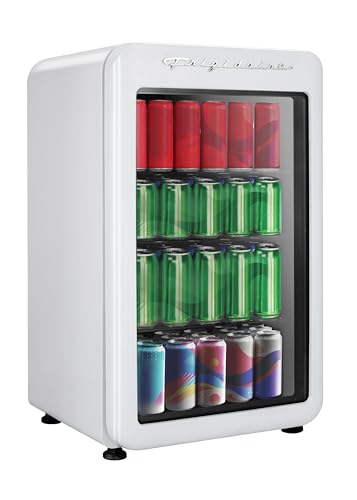
Beverage Fridge Buying Guide: Compressor vs Thermoelectric

6 Drink Dispensers That Actually Seal Right (2026)

Skip Cheap Whiskers: Get a Real Chasen

Wondering Which Tea Infuser Is Best? Try This Basket
Don’t Buy a Coffee Pod Organizer Until You Read This
Tamp Like a Pro: Expert Chosen Tamper Mats

Coffee Scales for Every Brew, Tested for Daily Use