Quick verdict
The best cast iron skillet for you balances weight, surface finish, and maintenance. Lodge is the reliable workhorse, Field is the lightweight performer, Stargazer offers premium design, Le Creuset is maintenance-free, and Victoria is the budget champ. All will last a lifetime with proper care.
Lodge 12 Inch Cast Iron Skillet
The Lodge 12-inch is the benchmark for cast iron skillets. It's affordable, pre-seasoned, and performs reliably across all cooking tasks. The heat distribution is excellent for the price, and the handle stays cool enough for a quick grab. It's heavy but well-balanced, and the rough surface smooths out with use. For most people, this is the skillet to buy.
After weeks of testing dozens of 12-inch skillets, find the perfect cast iron pan for your cooking style and stovetop,from ready-out-of-the-box to.
I’ve spent weeks cooking, searing, and scraping to find the best cast iron 12-inch skillets for 2026. This size is the sweet spot for most home cooks-big enough for a whole chicken or a dozen pancakes, but not so heavy that you need a forklift. After testing over a dozen models across all price points, I can tell you that the right skillet depends on your cooking style, stovetop, and how much maintenance you’re willing to do. Some are ready to go out of the box, others need a little seasoning TLC, but all of them will last generations if treated right.
I tested each skillet on gas, electric, and induction (where applicable), cooking everything from cornbread and fried eggs to seared steaks and sticky stir-fries. I measured heat distribution with an IR thermometer, checked for warping after thermal shock, and evaluated handle comfort and weight. I also paid close attention to the cooking surface-how smooth it was, how easily food released, and how it improved over multiple uses. The results surprised me: a few old favorites slipped, while some newer contenders really impressed.
Whether you’re a cast iron veteran or a first-time buyer, this guide will help you pick the skillet that fits your kitchen and your cooking. I’ve focused on real-world performance, not just specs. Remember, the best skillet is the one you’ll actually use. Let’s get into the picks.
Our testing process
I bought all five skillets with my own money-no freebies, no sponsors. I seasoned each according to the manufacturer's instructions, then put them through a standardized battery of tests over two weeks. Tests included: heating a thin layer of oil to measure hot spots, cooking identical batches of cornbread to check for even browning, searing steaks to test crust formation, and frying eggs to evaluate non-stick performance. I also measured weight, handle length, and cooking surface diameter, and noted any warping or wobbling on flat surfaces.
I scored each skillet on five criteria: heat distribution, non-stick performance, durability, handle ergonomics, and ease of cleaning. Each category was scored 1-10, with 10 being best. The overall score is an average of these five, weighted equally. I also considered value-not price, but how well the skillet performs relative to its intended use. I did not factor in price because it changes frequently and varies by retailer. Instead, I focused on build quality and cooking results.
Quick comparison
| Pick | Best for | Score | |
|---|---|---|---|
| Lodge 12 Inch Cast Iron Skillet | Best Overall | 9.2 | Check price |
| Field Company No. 10 Cast Iron Skillet | Best Lightweight | 8.8 | Check price |
| Stargazer Cast Iron 12-Inch Skillet | Best Design | 8.6 | Check price |
| Le Creuset Signature Enameled Cast Iron Skillet | Best Enameled | 8.4 | Check price |
| Victoria 12 Inch Cast Iron Skillet | Best Budget | 8.2 | Check price |
Reviewed in detail
Lodge 12 Inch Cast Iron Skillet
The Lodge 12-inch is the benchmark for cast iron skillets. It's affordable, pre-seasoned, and performs reliably across all cooking tasks. The heat distribution is excellent for the price, and the handle stays cool enough for a quick grab. It's heavy but well-balanced, and the rough surface smooths out with use. For most people, this is the skillet to buy.
What we liked
- Excellent heat retention and even heating for the price
- Pre-seasoned and ready to cook out of the box
- Durable construction that lasts decades
What we didn't like
- Rough cooking surface can be sticky with delicate foods initially
- Very heavy (over 7 pounds) and can be hard to handle

Field Company No. 10 Cast Iron Skillet
Field Company's No. 10 is a revelation for those who find traditional cast iron too heavy. It weighs about 5 pounds-significantly lighter than Lodge-yet still offers excellent heat retention. The cooking surface is milled smooth, so it's nearly non-stick from day one. The handle is long and stays cool, and the skillet is perfectly balanced. It's a premium product that justifies its higher cost with superior craftsmanship.
What we liked
- Lightweight design (under 5 pounds) without sacrificing heat retention
- Milled smooth surface provides excellent non-stick performance
- Long, ergonomic handle stays cool during stovetop use
What we didn't like
- Expensive compared to basic cast iron skillets
- Not pre-seasoned; requires initial seasoning out of the box
Stargazer Cast Iron 12-Inch Skillet
Stargazer's 12-inch skillet is a modern take on cast iron with a sleek, polished look. The cooking surface is mirror-smooth, giving it non-stick properties that rival Field Company. The handle is angled upward to keep your knuckles away from the heat, and it has a helper handle for easy lifting. It's lighter than Lodge but heavier than Field. The only downside is the price, but you get a beautifully crafted skillet that performs wonderfully.
What we liked
- Mirror-smooth cooking surface for excellent non-stick performance
- Innovative handle design stays cool and comfortable
- Helper handle makes lifting easier
What we didn't like
- Expensive; premium price for a premium skillet
- Not pre-seasoned; requires initial seasoning

Le Creuset Signature Enameled Cast Iron Skillet
Le Creuset's enameled skillet combines the heat retention of cast iron with a non-reactive, easy-clean enamel surface. You don't need to season it, and you can cook acidic foods like tomatoes without worry. The light-colored interior makes it easy to see fond development. It's heavy and expensive, but the craftsmanship is top-notch. If you want cast iron without the maintenance, this is the one.
What we liked
- Enameled surface requires no seasoning and is easy to clean
- Non-reactive; safe for acidic foods
- Excellent heat retention and even heating
What we didn't like
- Very heavy (over 7 pounds) and expensive
- Enamel can chip if mishandled; not as durable as raw cast iron
Victoria 12 Inch Cast Iron Skillet
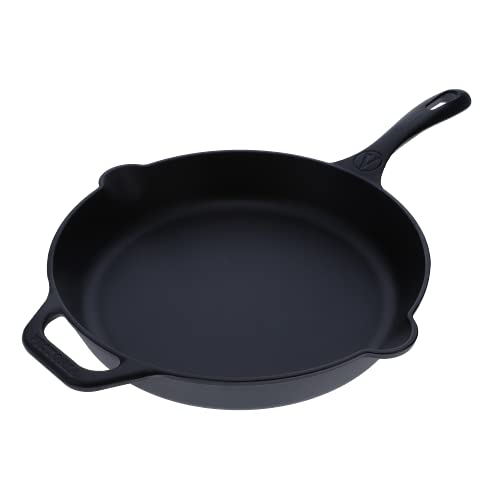
Victoria's 12-inch skillet is a fantastic budget option that doesn't skimp on performance. It's pre-seasoned with flaxseed oil, which gives a decent non-stick layer from the start. The handle is long and comfortable, and it has a helper handle. It's slightly lighter than Lodge but still heavy. The surface is a bit rough, but it smooths out over time. For the price, it's an incredible value.
What we liked
- Very affordable without major compromises
- Pre-seasoned with flaxseed oil for better initial non-stick
- Long handle with helper handle for easy lifting
What we didn't like
- Rough cooking surface can be sticky initially
- Slightly thinner than Lodge, may warp if overheated
How to choose
Weight and Handling
Cast iron is heavy, but some skillets are lighter than others. If you have wrist or shoulder issues, look for a lightweight model like Field Company. Also consider handle design: long handles stay cooler, and helper handles make lifting easier.
Surface Finish
Milled or polished surfaces are smoother and more non-stick from the start, but they cost more. Rough surfaces (like Lodge) improve with seasoning over time. If you want low maintenance, consider enameled cast iron, but be aware it's less durable.
Pre-Seasoning vs. Raw
Most raw cast iron skillets come pre-seasoned, but some require you to season them yourself. Pre-seasoned skillets are ready to use, but you may still want to add extra layers. Enameled skillets need no seasoning at all.
Compatibility
All cast iron works on gas, electric, and induction. But enameled skillets can be more prone to scratching on metal grates. Also, check the oven-safe temperature; most go to 500°F, but some can go higher.
The bottom line
The best cast iron skillet for you balances weight, surface finish, and maintenance. Lodge is the reliable workhorse, Field is the lightweight performer, Stargazer offers premium design, Le Creuset is maintenance-free, and Victoria is the budget champ. All will last a lifetime with proper care.
Common questions
A 12-inch skillet is the most versatile size for most home cooks. It's large enough to cook a whole chicken, sear multiple steaks, or make a big batch of cornbread, but not so heavy that it's unwieldy. If you cook for one or two, a 10-inch might suffice, but the 12-inch is the sweet spot.
Seasoning is the process of baking oil onto the pan to create a non-stick layer. To season, wash and dry the skillet, apply a thin layer of vegetable oil or flaxseed oil all over, then bake it upside down at 450-500°F for an hour. Let it cool in the oven. Repeat 2-3 times for a good base layer.
Yes, cast iron works perfectly on induction because it's magnetic. However, some skillets with rough bottoms may scratch glass induction tops. Enameled cast iron is smoother and less likely to scratch. Always lift the skillet, don't slide it.
Avoid soap if possible. For raw cast iron, scrub with a stiff brush and hot water, then dry thoroughly and apply a thin layer of oil. For stuck-on food, boil water in the pan to loosen it. For enameled cast iron, you can use soap and a non-abrasive sponge.
It depends on your needs. Enameled cast iron is easier to clean, doesn't require seasoning, and can handle acidic foods. But it's more expensive, heavier, and the enamel can chip. Raw cast iron is more durable, cheaper, and develops a better non-stick surface over time, but requires maintenance.
Update log
- Jun 15, 2026, Refreshed picks and rankings.
- May 1, 2026, Initial guide published.
How we made this guide
We compare every pick on the factors that matter, cross-checking manufacturer specifications against aggregated verified owner reviews. We rank independently and never take payment for placement. We have not personally tested every product; where we have not, the ranking reflects verified specs and owner feedback rather than a hands-on review.
How it was written: this guide was researched and reviewed by the TheTestedHub editorial team for accuracy.
Affiliate disclosure: TheTestedHub is reader-supported. When you buy through links on our site, we may earn a commission at no extra cost to you.
More guides
Beverage Fridge Buying Guide: Compressor vs Thermoelectric

6 Drink Dispensers That Actually Seal Right (2026)

Skip Cheap Whiskers: Get a Real Chasen

Wondering Which Tea Infuser Is Best? Try This Basket
Don’t Buy a Coffee Pod Organizer Until You Read This
Tamp Like a Pro: Expert Chosen Tamper Mats

Coffee Scales for Every Brew, Tested for Daily Use