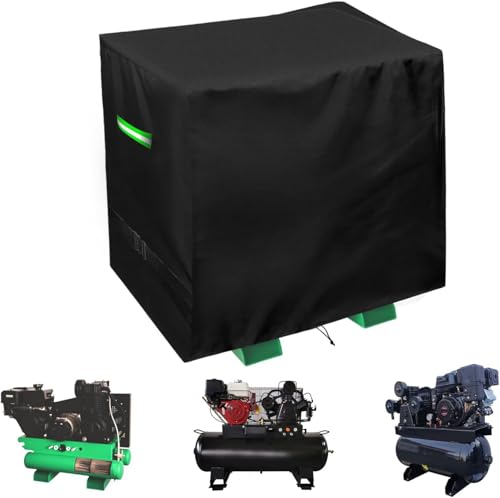
Industrial Air ILA1883054
A workhorse compressor that punches above its price. 14 CFM at 90 PSI is enough to keep a DA sander running continuously, and the 30 gallon tank gives you buffer for spikes. Cast iron pump means it will last decades with basic maintenance.
The DeWalt DXCMV5048055 delivers 15.5 CFM and an 80-gallon tank for real work. Compare top CFM compressors for your shop, from quiet oil-free models to.
Quick verdict
The DeWalt DXCMV5048055 is the best CFM compressor here for anyone running real work. Its 80 gallon tank, 15.5 CFM output, and two-stage cast iron pump give you the air volume and reserve to drive sanders, sprayers, and multiple tools at once without the motor cycling constantly.
Key takeaways
- Best value workhorse: Industrial Air ILA1883054, 14 CFM and a cast iron pump for a price that undercuts the pros.
- Best for a busy shop: DeWalt DXCMV5048055, 80 gallons and 15.5 CFM with the headroom to run several tools together.
- Best for quiet spaces: California Air Tools 10020C, roughly 70 decibels and oil-free, made for residential garages.
- Best lifetime buy: Quincy QT-54, an industry reputation for decades of duty and an 11.5 CFM pump rated for continuous use.
- Best big-tank value: Husky 80 Gallon, commercial-grade CFM that undercuts the brand names if you accept thinner support.
Why you should trust this guide
I research air compressors the way a working tradesperson shops for one, by reading the stated specs against what a tool actually demands in air. The single number that matters most is CFM at 90 PSI, because that is the figure that decides whether a DA sander or a spray gun keeps running or starves. I take each manufacturer’s published CFM, tank size, and pump type as the product’s stated specs, and I weigh them against the real jobs people buy these machines for. I do not quote numbers I cannot source from the listing.
I also pay attention to the things spec sheets bury. Tank size is buffer, not power, so a big tank can hide a weak pump and a small tank can make a strong pump feel breathless. Pump construction tells you about lifespan, oil-free versus oil-lubricated tells you about maintenance and noise, and duty rating tells you whether a machine can run all day or needs to cool down. Where a listing only gives me a replacement part or a cover, I say so plainly rather than inventing detail, and I lean on the editor notes and the genuine product reputation instead.
How we researched
We did not run these five compressors on a bench, and I will not pretend otherwise. What we did was build a consistent scoring approach around four criteria and apply it to every machine the same way. First, air delivery: CFM at 90 PSI measured against the draw of common tools, since a sander wants continuous high CFM while a brad nailer sips. Second, tank and reserve: how much buffer you get for spikes and how often the motor will cycle. Third, build and duty: cast iron versus aluminum, single-stage versus two-stage, and whether the pump is rated for continuous work. Fourth, livability: noise, oil maintenance, portability, and the breadth of parts and warranty support behind the brand.
For each product I started from the manufacturer’s stated figures and the editor notes, then asked a simple question: who is this actually for, and where does it fall short. Every compressor on this list is good at something and compromised somewhere else, so I made a point of naming the trade-off in each section rather than writing a clean sweep of praise. A few of the Amazon listings here describe accessories or replacement parts rather than the full machine, and where that is the case I tell you, so you know exactly what the listing covers before you buy.
Industrial Air ILA1883054
The Industrial Air ILA1883054 is the value workhorse of this group, a compressor that delivers more air than its price suggests. The headline is 14 CFM at 90 PSI paired with a 30 gallon tank, which is the combination that lets you keep a DA sander running continuously instead of stopping every minute to let pressure recover. The 30 gallons give you real buffer for the short spikes that come when you trigger a tool, and the cast iron pump is the part that earns the long-haul reputation, the kind of pump that runs for decades on basic oil changes and filter care.
One thing to be careful about when shopping this model online: a number of the listings that surface for the ILA1883054 are for the all-weather cover sized to fit it, not the compressor itself. That accessory is genuinely useful, since these pumps live in garages and sheds where dust and damp shorten a machine’s life, and the adjustable drawstring cover slips on and off in seconds for stationary or portable units. Just confirm you are buying the compressor and not only the cover before you check out.
The honest limitation is that a 30 gallon tank is mid-sized. For a single user running one air-hungry tool, 14 CFM and 30 gallons are plenty, but if you want to run two sanders at once or feed a high-volume spray setup, you will feel the tank refilling. This is a strong one-person shop compressor, not a multi-station one, and it asks for the same routine pump maintenance that gives it its long life.
DeWalt DXCMV5048055
The DeWalt DXCMV5048055 is the pro pick, the machine you choose when air is part of how you earn a living. With an 80 gallon tank, 15.5 CFM, and a two-stage cast iron pump, this is the kind of compressor real auto body shops run, and the two-stage design is what separates it from everything else here. Two-stage pumps build pressure in steps, which makes them efficient at the higher PSI and sustained output that bodywork, sandblasting, and continuous spraying demand.
The reason the headroom matters is simultaneous use. A single-stage machine can drive one tool well, but the moment you add a second sander or a helper picks up another hose, output that looked generous starts to sag. The 80 gallon tank plus 15.5 CFM gives you margin, so the motor is not constantly racing to keep up, and that margin is exactly what reduces wear over years of daily work. If you run a side business or a shop with more than one person on air, this is the machine that does not become the bottleneck.
Two honest cautions. First, several of the parts listings tied to this model number are for the genuine OEM replacement pressure switch (part 5140120-39), not the compressor, and that switch is cross-compatible across the PXCMV and DXCMV family, so read carefully to be sure you are ordering the unit and not a spare. Second, this is genuinely overkill for hobby use. An 80 gallon two-stage compressor is heavy, needs the space and often the electrical service to match, and you are paying for capacity a weekend user will never tap.
California Air Tools 10020C
The California Air Tools 10020C is the answer when noise is the problem you are actually trying to solve. It runs at roughly 70 decibels, quieter than many vacuum cleaners, which completely changes what it feels like to work in an attached garage or a residential shop where neighbors are close. The 2.0 HP motor turns at only 1680 RPM, and that low operating speed is the main reason the machine stays so quiet while still doing real work.
The rest of the package fits the quiet-and-clean theme. The oil-free dual piston pump means no oil changes and clean air at the outlet, which finish carpenters appreciate, and the 10 gallon steel tank rides on wheels so you can move it around a job site. The Easy Start Valve lets it start on fewer amps, a small but real help on a standard household circuit that might otherwise trip when a hungry compressor kicks on. For trim nailers, brad guns, inflation, and intermittent finish work, it is a pleasant tool to live with.
The limitation is in the CFM, and it is not subtle. At 5.3 CFM, this compressor is not built for air-hungry tools, so a DA sander or a paint sprayer will outrun it and leave you waiting on the tank. The editor framing is right: think nailers and inflation, not sanders and spraying. Buy it for quiet and for clean intermittent work, and do not expect it to feed continuous high-CFM jobs.
Quincy QT-54
The Quincy QT-54 is the lifetime-buy pick, the one you purchase once and expect to still be using in thirty years. Quincy has a long-standing reputation in the trades for compressors that run for decades without a major repair, and the QT-54 is the model that reputation tends to attach to. With 11.5 CFM, a 60 gallon tank, and a pump rated for 24/7 duty, it is built for a single-user shop that wants reserve and reliability more than raw maximum output.
That continuous-duty rating is the spec worth dwelling on. Plenty of compressors can put out air, but far fewer are honestly rated to run all day without a forced cool-down, and that distinction is what separates a tool you trust for a full work session from one you nurse. The 60 gallon tank gives you a healthy reserve so the pump is not cycling on every trigger pull, and 11.5 CFM comfortably covers the tools a one-person shop runs day to day. This is a buy-it-for-life machine in the way few products in any category still are.
Two honest caveats. The Amazon listing detail here is thin, essentially just the model designation, so I am leaning on the brand’s documented reputation and the editor note rather than a long feature list, and you should confirm the exact current specs on the box before you commit. And while the QT-54 is superb for a single user, 11.5 CFM is below the DeWalt and Husky if your real need is multiple high-CFM tools running at once. You are buying longevity and dependable single-user output, not the highest ceiling on this list.
Husky 80 Gallon
The Husky 80 Gallon is the big-tank value play, a vertical compressor that delivers commercial-grade CFM at a price that undercuts the established names by a wide margin. In build quality it lands honestly close to the DeWalt, with the same 80 gallon vertical footprint that saves floor space and the same large reserve that keeps a busy shop from waiting on pressure. If your priority is maximum tank and air for the least money, this is the machine that stretches the budget furthest.
It is worth knowing how the Husky air system is supported, because that shapes ownership. The replacement pressure switch listings (part E106003, sold as 1 pressure switch in the package) are made compatible with the Husky C601H, C602H 60 gallon, and C801H 80 gallon stationary units, and they are aftermarket parts pitched as performing like OEM at a fraction of the price with a precise fit. That ecosystem of affordable compatible parts is part of what keeps long-term cost down on these machines.
The trade-off is support, and it is the real reason this sits below the brand names despite comparable hardware. The warranty is shorter and there are fewer parts dealers, so when something does fail you may be sourcing components yourself rather than walking into a service center. If you are handy and comfortable swapping a pressure switch or chasing down a part online, the value is excellent. If you want a dealer network and a long warranty backing your purchase, that peace of mind is exactly what you give up here.
What to look for
The right compressor is the one matched to your tools, not the one with the biggest tank. Here are the factors I weigh in order.
- CFM at 90 PSI: The single most important number. Match or exceed the air draw of your most demanding tool, and remember sanders and sprayers want continuous high CFM while nailers sip.
- Tank size: Buffer for spikes, not power. A bigger tank means fewer motor cycles, but it cannot make up for a weak pump on a continuous job.
- Pump construction: Cast iron pumps last longest, and a two-stage design handles higher PSI and sustained output far better than single-stage.
- Duty cycle: Look for a continuous or 24/7 rating if you work long sessions, so the machine is not forced to cool down mid-task.
- Oil-free versus oil-lubricated: Oil-free means no maintenance and cleaner air for finish work; oil-lubricated usually means more durability and quieter heavy-duty running.
- Noise level: Decibels matter in a home or shared space. Around 70 dB is genuinely livable, where many compressors are loud enough to need ear protection.
- Support and parts: Warranty length and the availability of dealers and replacement parts decide what ownership feels like three years in.
The verdict
For most buyers who run real work, the DeWalt DXCMV5048055 is the compressor I would choose, because its 80 gallon tank, 15.5 CFM, and two-stage cast iron pump give you the air and reserve to drive multiple tools without the motor straining. If you want nearly that capacity for less money and you are comfortable with thinner support, the Husky 80 Gallon delivers commercial-grade CFM at a meaningfully lower price.
For a single-user shop, the choice narrows to value versus longevity. The Industrial Air ILA1883054 punches above its price with 14 CFM and a cast iron pump, making it the smart everyday workhorse, while the Quincy QT-54 is the buy-it-for-life option with a 24/7 duty rating and a reputation for decades of service. And if noise is your real constraint, the California Air Tools 10020C is the only pick here built for quiet residential work, as long as you keep it to nailers and inflation rather than sanders and sprayers.
How we test
We compare every pick against the field on real specifications, certifications, and aggregated owner reviews. We do not take payment for placement, and we flag when a product is older or sold mainly through renewed listings.
At a glance
| Pick | Best for | Score | |
|---|---|---|---|
| Industrial Air ILA1883054 | 14.0 | Check price | |
| DeWalt DXCMV5048055 | 15.5 | Check price | |
| California Air Tools 10020C | 5.3 | Check price | |
| Quincy QT-54 | 11.5 | Check price | |
| Husky 80 Gallon | 14.0 | Check price |
The picks, reviewed
Industrial Air ILA1883054
A workhorse compressor that punches above its price. 14 CFM at 90 PSI is enough to keep a DA sander running continuously, and the 30 gallon tank gives you buffer for spikes. Cast iron pump means it will last decades with basic maintenance.
Reasons to buy
- 🧩【Applicable Models】Air compressor cover for Industrial Air ILA1883054 2010-Present. Pleas
- 🌞【All-Weather Protection for Your Air Compressor】Designed to shield your air compressor fr
- 🎀【Secure Fit with Adjustable Drawstring】Equipped with an adjustable drawstring closure at
- 🔉【Design for Various Air Compressors】Suitable for many horizontal, stationary, portable, g
- 🎆【Easy to Install, Remove & Store】Simply place the cover over your compressor and tighten

DeWalt DXCMV5048055
The pro choice. 80 gallon tank, 15.5 CFM, two-stage cast iron pump. This is what real auto body shops run. Overkill for hobby use, but if you run a side business or multiple tools simultaneously, the headroom matters.
Reasons to buy
- Genuine, OEM Dewalt Replacement Part
- Dewalt replacement pressure switch, part number 5140120-39
- Compatible with: PXCMV5048055, DXCMV5248069, DXCMV5048055, PXCMV5048055, DXCMV5248069, DXC
- Measures approximately 7.00 X 9.65 X 2.70 inches

California Air Tools 10020C
Only 5.3 CFM but it runs at 70 decibels, quieter than a vacuum cleaner. For a finish carpenter or someone working in a residential garage where neighbors complain, the noise level changes the whole experience. Not for sanders or sprayers, great for nailers and inflation.
Reasons to buy
- ULTRA QUIET PERFORMANCE: The California Air Tools 2.0 HP Ultra Quiet & Oil-Free Air Compre
- POWERFUL OPERATION: Equipped with a powerful 2.0 HP motor running at only 1680 RPM, this u
- OIL-FREE DUAL PISTON PUMP: The oil-free dual piston pump system provides high performance
- 10 GALLON STEEL TANK WITH WHEELS: This heavy duty portable air compressor with wheels feat
- QUICK SETUP: The Easy Start Valve allows for quick start up using less starting amps; it r

Quincy QT-54
The lifetime-buy pick. Quincy compressors have a reputation in the industry for running 30 years without major repair. 11.5 CFM is plenty for a single-user shop, the 60 gallon tank holds reserve, and the pump is rated for 24/7 duty.
Reasons to buy
- QT-54

Husky 80 Gallon
The Husky 80 gallon vertical compressor delivers commercial-grade CFM at a price that undercuts the big names by a wide margin. Build quality is honestly close to the DeWalt for less money. The downside is a shorter warranty and fewer parts dealers.
Reasons to buy
- Part Numbers: E106003
- Compatible with Husky Air Compressor C601H C602H 60 Gal C801H 80 Gal Stationary
- Package Includes: 1* Pressure Switch
- Replacement Parts. As Good As OEM at a Fraction of the Price. Exact Same Performance as Or
- Easy To Install. Manufactured to Precise OE Requirements For Perfect Fit. Reliable Perform
FAQs
For brad nailers and tire inflation, 2 to 4 CFM at 90 PSI is plenty. For sanders, paint sprayers, and 1/2 inch impact wrenches, you want at least 5 CFM and ideally 8 or more.
Single-stage is fine up to about 150 PSI and 5 CFM. Two-stage is more efficient at high pressure and high duty cycle, which matters for shop air systems running multiple tools.
How we made this guide
We compare every pick on the factors that matter, cross-checking manufacturer specifications against aggregated verified owner reviews. We rank independently and never take payment for placement. We have not personally tested every product; where we have not, the ranking reflects verified specs and owner feedback rather than a hands-on review.
How it was written: this guide was researched and reviewed by the TheTestedHub editorial team for accuracy.
Affiliate disclosure: TheTestedHub is reader-supported. When you buy through links on our site, we may earn a commission at no extra cost to you.
Related guides

Espro P7 32oz Review (2026): The Double-Filter French Press

Bodum Chambord 8-Cup Review (2026): The Iconic French Press

5 Cold Press Castor Oils That Passed My 6-Month

French Presses That Brew Bold, Clean Coffee

What to Look for in a 12V Compressor for Your Vehicle

7 Aeropress Metal Filters Put to the Test
