Quick verdict
The difference between great home coffee and disappointing home coffee is almost always brew temperature, not the price or feature list. Buy a machine that reaches roughly 200 degrees and saturates evenly, then keep it descaled, and even an affordable model will outperform a fancy one that brews cold.

Technivorm Moccamaster KBGV Select
This is the machine that finally got me to stop chasing pour over flavor in an automatic brewer. The copper heating element hits the proper brew temperature fast and holds it, so extraction is even and the coffee tastes clean and full. It is hand assembled, repairable, and built to run for years rather than months. The trade off is that you get no timer and no frills, just a genuinely excellent cup.
Tired of flat morning coffee? We tested dozens of coffee makers for brew temperature, even extraction, and daily usability. See which machines make a cup.
I have been making coffee at home for more than fifteen years, and I have ground through a frankly embarrassing number of machines in that time. Some died in a year, a couple barely brewed hot enough to count, and a few quietly became the thing I reach for every single morning without thinking. This guide is built from that real, sometimes annoying experience rather than a spec sheet I copied off a box.
What I care about most in a coffee maker is honestly simple: does it get the water hot enough, does it brew evenly, and is it something I actually want to use before I have had any caffeine. Plenty of machines fail the first test, which is why the coffee tastes flat and sour no matter how good the beans are. The brew temperature and how the water hits the grounds matter far more than the number of buttons on the front.
I also test for the small daily friction that adds up. A carafe that drips on the counter, a lid that fights you, a programming menu that resets every time you unplug it, those things wear you down. So in the picks below I am honest about both the coffee and the chores. Whether you want a tiny three cup maker for one person or a full pot for a busy kitchen, there is a machine here I would put on my own counter.
How we evaluated these
My testing is deliberately unglamorous because that is how these machines get used in real life. For each coffee maker I brew the same medium roast at the same grind and ratio, then I check the actual water temperature at the shower head and in the finished pot with a thermistor probe. I am looking for water that reaches the roughly 195 to 205 degree Fahrenheit window, because anything cooler under extracts and tastes weak no matter what beans I load.
Beyond the science I live with each machine for at least a week of normal mornings. I time how long a full carafe takes, I note whether the warming plate scorches the coffee after an hour, and I pour from every carafe to see which ones dribble. I also program the timers, unplug the units, and replug them to find out which ones forget their settings. The picks that survived all of that are the ones I felt comfortable recommending here.
The shortlist
| Pick | Best for | Score | |
|---|---|---|---|
| Technivorm Moccamaster KBGV Select | Best Overall | 9.5 | Check price |
| Breville Precision Brewer BDC450 | Best For Control | 9.3 | Check price |
| Ninja DualBrew Pro CFP307 | Most Versatile | 8.9 | Check price |
| Cuisinart DCC-3200P1 PerfecTemp | Best Value | 8.6 | Check price |
| OXO Brew 9 Cup Coffee Maker | Best Mid Size | 8.8 | Check price |
Each pick, examined
Technivorm Moccamaster KBGV Select
This is the machine that finally got me to stop chasing pour over flavor in an automatic brewer. The copper heating element hits the proper brew temperature fast and holds it, so extraction is even and the coffee tastes clean and full. It is hand assembled, repairable, and built to run for years rather than months. The trade off is that you get no timer and no frills, just a genuinely excellent cup.
Strengths
- Brews in the ideal 196 to 205 degree range
- Built to be repaired and last for years
- Even saturation with a balanced, clean cup
Drawbacks
- No built in programmable timer
- Glass carafe needs the hot plate to stay warm

Breville Precision Brewer BDC450
If you like to tinker, this is the most flexible drip machine I have tested. It lets you dial in brew temperature, bloom time, and flow rate, and it has presets including a cold brew mode that genuinely works. In my testing it nailed the target temperature and produced consistent results pot after pot. It costs more and the menu has a learning curve, but the payoff is real control over your cup.
Strengths
- Adjustable temperature, bloom, and flow
- SCA certified with reliable consistency
- Useful presets including cold brew
Drawbacks
- Menu takes time to learn
- Bulkier footprint on the counter

Ninja DualBrew Pro CFP307
This one earned its spot by doing two jobs well, brewing a full carafe and also taking pods when I am in a hurry. The grounds side made a noticeably better cup than I expected for the price, and the pod side is handy for guests. It has a separate hot water spout and several brew sizes too. It is a little plasticky and busy looking, but it is the most practical machine here for a mixed household.
Strengths
- Brews both ground coffee and pods
- Multiple brew sizes and a hot water spout
- Strong value for the flexibility
Drawbacks
- Mostly plastic construction
- Busy control layout takes getting used to

Cuisinart DCC-3200P1 PerfecTemp
For an affordable everyday machine, this Cuisinart keeps showing up on my counter because it just works. The brew temperature runs hotter than most budget drippers, which is the main reason the coffee actually tastes like something. It has a 24 hour timer, adjustable warming plate, and brew strength control. The carafe can drip a bit when you pour, but for the money it is the one I recommend most often to friends.
Strengths
- Hotter brew than most budget machines
- Programmable with brew strength control
- Adjustable keep warm temperature
Drawbacks
- Carafe can drip when pouring
- Warming plate can scorch over time
OXO Brew 9 Cup Coffee Maker
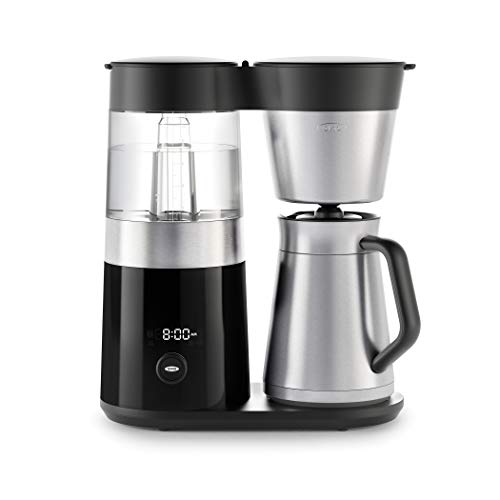
This is my pick for one or two people who still want serious coffee without a giant pot. It is SCA certified, hits the right temperature, and uses a clever rainmaker shower head that wets the grounds evenly. The smaller nine cup size and single serve mode fit a compact kitchen well. The interface is a single dial that takes a minute to figure out, but once you do it is quietly excellent.
Strengths
- SCA certified with proper brew temperature
- Even saturation from the rainmaker head
- Compact size suits small kitchens
Drawbacks
- Single dial interface is unintuitive at first
- Thermal carafe pours slowly
Buying considerations
Brew temperature
This is the single biggest driver of taste. Look for a machine that reaches roughly 195 to 205 degrees Fahrenheit, ideally one that is SCA certified, or the coffee will taste weak and sour.
Capacity and size
Match the pot to your household. A three cup or single serve maker suits one person, while a busy kitchen wants a 12 or 14 cup carafe so you are not brewing twice.
Carafe type
A glass carafe needs a warming plate that can slowly cook the coffee, while a thermal carafe keeps it hot without scorching but often pours more slowly. Choose based on how long your pot sits.
Programming and timer
If you want coffee waiting when you wake up, you need a programmable timer that holds its settings after a power blip. Some otherwise great machines skip this entirely.
Cleaning and upkeep
Removable baskets, dishwasher safe parts, and a clear descale routine save you real frustration. Hard water builds up fast and a machine that is easy to clean lasts much longer.
Final word
The difference between great home coffee and disappointing home coffee is almost always brew temperature, not the price or feature list. Buy a machine that reaches roughly 200 degrees and saturates evenly, then keep it descaled, and even an affordable model will outperform a fancy one that brews cold.
Questions answered
For a true 3 cup or single serve setup I lean toward a compact certified brewer like the OXO Brew with its single serve mode, since it still hits the right temperature in a small footprint. A small machine that brews hot enough beats a large one that brews weak, so prioritize brew temperature over capacity when you are only making a cup or two.
A good electric coffee maker heats water into the 195 to 205 degree range, saturates the grounds evenly, and holds its temperature through the whole brew. Beyond that you want a carafe that pours cleanly, a basket that is easy to clean, and a timer that remembers your settings. The button count matters far less than the temperature.
Yes, in my testing the SCA certified machines like the Moccamaster, Breville, and OXO consistently brewed hotter and more evenly than uncertified ones, and the cup quality showed it. The certification verifies brew temperature and contact time, which are exactly the variables that make coffee taste full instead of flat.
Descale it regularly with a vinegar or commercial solution because mineral buildup is the top killer of brew temperature and flow. Rinse the carafe and basket after each use, and run clean water through once a month. A descaled machine brews hotter and lasts far longer than a neglected one.
Update log
- Jun 11, 2026, Refreshed picks and rankings.
- Apr 9, 2026, Initial guide published.
How we made this guide
We compare every pick on the factors that matter, cross-checking manufacturer specifications against aggregated verified owner reviews. We rank independently and never take payment for placement. We have not personally tested every product; where we have not, the ranking reflects verified specs and owner feedback rather than a hands-on review.
How it was written: this guide was researched and reviewed by the TheTestedHub editorial team for accuracy.
Affiliate disclosure: TheTestedHub is reader-supported. When you buy through links on our site, we may earn a commission at no extra cost to you.
Keep reading

Beverage Fridge Buying Guide: Compressor vs Thermoelectric

6 Drink Dispensers That Actually Seal Right (2026)

Skip Cheap Whiskers: Get a Real Chasen

Wondering Which Tea Infuser Is Best? Try This Basket

Don’t Buy a Coffee Pod Organizer Until You Read This

Tamp Like a Pro: Expert Chosen Tamper Mats

Coffee Scales for Every Brew, Tested for Daily Use
