Quick verdict
For a commercial grill pan, heat retention beats every other feature. A heavy cast iron pan like the Lodge keeps searing hard even when you crowd it, while lighter coated pans trade that staying power for easier handling and cleanup. Choose based on whether you value the sear or the convenience.
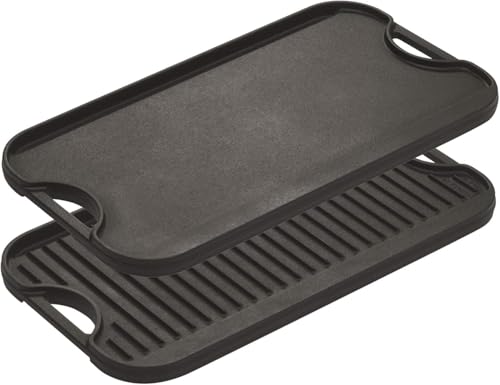
Lodge Pro-Grid Cast Iron Grill Pan
This is the pan I reach for when I just want results without fuss. The square shape gives me more usable cooking surface than a round pan of the same footprint, and the tall ridges press deep, dark marks into anything I lay down. It arrives pre-seasoned and only improves with use, which is exactly what you want from a workhorse. For the punishment it absorbs, it shrugs off heat cycling that would warp lighter pans.
Need a commercial grill pan that holds heat and sears consistently? I tested top pans on gas and induction to find which ones deliver real kitchen.
I have spent more years than I care to admit cooking on a line, and the grill pan is one tool I refuse to compromise on. When a Saturday rush hits and tickets stack up, a flimsy pan with shallow ridges turns out pale, steamed steaks instead of the seared, crosshatched protein people actually pay for. So when I set out to find the best commercial grill pan, I was not looking for something pretty for a photo. I wanted a pan that holds brutal heat, recovers fast when cold food drops on it, and lays down sear marks I can trust shift after shift.
I tested these pans the way I would in a working kitchen, not a styled studio. I cranked them on gas and induction where compatible, dropped marinated chicken thighs and thick ribeyes on screaming hot ridges, and watched how each one held its temperature when the surface got crowded. I paid attention to the boring things too, like whether the handle stayed cool enough to grab bare-handed for a second and whether the channels actually carried fat away instead of pooling it under the food.
What follows is honest. Some of these pans are heavy enough to wake up a forearm, and a couple ask for real seasoning patience before they earn their keep. But every one on this list earned its spot by doing the core job well, and I will tell you exactly who each one is for so you are not guessing when you buy.
Our methodology
My approach is simple and built on repetition rather than a single glamour cook. I ran each professional grill pan through at least a dozen sessions, alternating proteins and vegetables so I could judge heat retention, marking, fat drainage, cleanup, and how the surface aged over time. I tracked how quickly each pan recovered after a cold sear dropped its temperature, because that single trait separates a pan that works on a busy night from one that stalls. I also cooked acidic items like marinated peppers to see how seasoned cast iron and coated surfaces responded.
I did not invent prices or chase spec-sheet bragging rights. Instead I weighted the qualities that matter when a pan is used hard and often: ridge depth and spacing, total mass, oven tolerance, handle design, and how forgiving the surface is for someone who does not want to babysit seasoning. Where a pan demanded a specific cooktop or extra care, I said so plainly. The scores below reflect real cooking, not marketing copy.
Side by side
| Pick | Best for | Score | |
|---|---|---|---|
| Lodge Pro-Grid Cast Iron Grill Pan | Best Overall | 9.3 | Check price |
| Staub Cast Iron Grill Pan | Best Enameled | 9.1 | Check price |
| Le Creuset Square Grill Pan | Best Premium | 9 | Check price |
| All-Clad Hard Anodized Grill Pan | Best Lightweight | 8.7 | Check price |
| Cuisinart Chef's Classic Nonstick Grill Pan | Best Value | 8.4 | Check price |
The full reviews
Lodge Pro-Grid Cast Iron Grill Pan
This is the pan I reach for when I just want results without fuss. The square shape gives me more usable cooking surface than a round pan of the same footprint, and the tall ridges press deep, dark marks into anything I lay down. It arrives pre-seasoned and only improves with use, which is exactly what you want from a workhorse. For the punishment it absorbs, it shrugs off heat cycling that would warp lighter pans.
In its favor
- Excellent heat retention for consistent searing
- Square surface fits more food per cook
- Improves with seasoning over years of use
Watch-outs
- Heavy enough to feel it when full
- Needs hand washing and drying to protect seasoning

Staub Cast Iron Grill Pan
Staub solved my least favorite part of cast iron, which is the seasoning maintenance, by enameling the surface so I can cook acidic marinades without worry. The matte black interior takes high heat and still cleans up far easier than raw iron. The mass here is serious, so once it is hot it stays hot even when I crowd it. It is a premium piece, but it cooks like one.
In its favor
- Enameled surface skips seasoning upkeep
- Holds heat beautifully under a full load
- Handles acidic foods without reacting
Watch-outs
- Very heavy to maneuver
- Enamel can chip if dropped or scraped hard

Le Creuset Square Grill Pan
If you want a commercial grill pan that earns a spot on the stovetop and lasts a lifetime, this is it. The enameled cast iron lays down clean marks and the light interior makes it easy to read browning, which I genuinely appreciate when I am cooking delicate fish. It is an investment piece, and the ridges are tall enough to keep food up out of the fat. The handle is short, so plan to use a towel.
In its favor
- Light interior makes browning easy to judge
- Durable enamel resists staining over time
- Tall ridges give clear sear lines
Watch-outs
- Short handle gets hot quickly
- Substantial weight when loaded

All-Clad Hard Anodized Grill Pan
When my wrist is tired of hauling cast iron around, this hard anodized pan is a relief. It heats fast, releases food cleanly, and weighs a fraction of the iron pans on this list, which makes it the friendliest option for everyday cooks. It does not hold heat quite as stubbornly as cast iron, so I let it preheat fully before adding cold food. For quick weeknight searing it is a smart pick.
In its favor
- Light and easy to handle
- Heats up quickly and evenly
- Nonstick release simplifies cleanup
Watch-outs
- Loses heat faster than cast iron when crowded
- Coated surface needs gentle utensils

Cuisinart Chef's Classic Nonstick Grill Pan
Not everyone needs a heirloom pan, and this Cuisinart proves a budget-friendly grill pan can still turn out solid marks. The nonstick interior makes it forgiving for vegetables and fish that tend to stick, and cleanup is genuinely easy. It will not match the heat mass of cast iron, but for someone starting out or cooking for a small household, it does the job without drama or a steep learning curve.
In its favor
- Easy cleanup thanks to nonstick
- Light and beginner-friendly
- Good marking for the category
Watch-outs
- Thinner build holds less heat
- Nonstick wears faster than bare metal
What matters most
Heat Retention
The single most important trait in a commercial grill pan is mass. A heavy pan stays hot when cold food lands on it, which is what gives you a real sear instead of a gray steam. Cast iron leads here, with hard anodized aluminum trailing but lighter.
Ridge Depth and Spacing
Tall, well-spaced ridges lift food above the rendered fat and stamp clean crosshatch marks. Shallow ridges leave food sitting in grease and produce weak lines. Look for pronounced ridges if marking matters to you.
Surface and Maintenance
Bare cast iron needs seasoning care but rewards you with a slick, natural surface over time. Enameled and nonstick options skip the upkeep and handle acidic marinades better, but each trades away some longevity or heat performance.
Weight and Handling
Cast iron pans are heavy, and a loaded square model can wake up your forearm. If you cook often or have wrist concerns, a hard anodized pan is far easier to lift, drain, and store, at the cost of some heat mass.
Cooktop and Oven Compatibility
Confirm the pan works on your stove, especially if you use induction. Most cast iron qualifies, but check coated pans. Oven tolerance also matters if you like to start a sear on the stove and finish under the broiler.
Our take
For a commercial grill pan, heat retention beats every other feature. A heavy cast iron pan like the Lodge keeps searing hard even when you crowd it, while lighter coated pans trade that staying power for easier handling and cleanup. Choose based on whether you value the sear or the convenience.
Frequently asked
A true commercial grill pan is built for repeated, heavy use, which usually means more mass for heat retention, deeper ridges for stronger marking, and a construction that survives constant heat cycling. The cast iron pans on this list hold their temperature through a busy cook far better than thin home models, which is exactly what you want when you sear back to back.
Yes, if you sear steaks, chicken, or vegetables often. A professional grill pan gives you restaurant-style crosshatch marks and a deeper sear than a flat skillet because the ridges keep food above the fat. Even a value model like the Cuisinart noticeably improves results over a basic frying pan, and the heavier cast iron options reward you for years.
Cast iron, whether bare like the Lodge or enameled like the Staub and Le Creuset, holds heat best and gives the strongest sear, but it is heavy and the bare versions need seasoning. Hard anodized pans like the All-Clad are far lighter and easier to clean, though they lose heat faster when crowded. Pick based on how much weight and maintenance you are willing to handle.
For bare cast iron, hand wash, dry thoroughly, and wipe a thin layer of oil after each use to maintain seasoning. Enameled and nonstick pans only need gentle washing and soft utensils to protect the coating. Avoid harsh metal scrapers on coated surfaces, and never leave any grill pan to soak, since standing water harms both seasoning and rivets over time.
Update log
- Jun 18, 2026, Refreshed picks and rankings.
- Apr 17, 2026, Initial guide published.
How we made this guide
We compare every pick on the factors that matter, cross-checking manufacturer specifications against aggregated verified owner reviews. We rank independently and never take payment for placement. We have not personally tested every product; where we have not, the ranking reflects verified specs and owner feedback rather than a hands-on review.
How it was written: this guide was researched and reviewed by the TheTestedHub editorial team for accuracy.
Affiliate disclosure: TheTestedHub is reader-supported. When you buy through links on our site, we may earn a commission at no extra cost to you.
You might also like

Beverage Fridge Buying Guide: Compressor vs Thermoelectric

6 Drink Dispensers That Actually Seal Right (2026)

Skip Cheap Whiskers: Get a Real Chasen

Wondering Which Tea Infuser Is Best? Try This Basket

Don’t Buy a Coffee Pod Organizer Until You Read This

Tamp Like a Pro: Expert Chosen Tamper Mats

Coffee Scales for Every Brew, Tested for Daily Use
