Quick verdict
The best commercial ice maker is the one sized to your real peak demand and matched to the right cube type, not simply the unit with the biggest output number on the box.

Hoshizaki KM-350MAJ Modular Crescent Ice Machine
This is the commercial ice maker I point most owners toward when volume is real. The KM-350MAJ pumps out close to 489 pounds of crescent ice a day, and Hoshizaki's stainless evaporator and serviceability reputation mean it tends to outlast everything around it. Crescent cubes pack tightly, melt slowly, and look clean in a glass. It is a modular head, so you pair it with a separate bin sized to your needs.
Running out of ice during a rush? Avoid downtime with a proven commercial ice maker built for real volume. Compare top-rated models from Hoshizaki.
I spent the better part of a decade working back-of-house in restaurants and a busy cocktail bar, and nothing kills service momentum faster than running dry on ice during a Friday rush. When my brother opened his own taqueria last year and asked me which commercial ice maker he should buy, I realized I had strong opinions but no organized way to share them. So I pulled together everything I had learned from years of hauling bags, babysitting cheap units, and watching the good machines just quietly do their job.
A professional ice maker is not a luxury appliance, it is infrastructure. The difference between a unit that produces clean, consistent cubes all day and one that stutters out half a bin by mid-afternoon shows up directly in your drink quality, your food safety logs, and your labor costs. I have replaced enough failed compressors and descaled enough neglected machines to know that the upfront choice matters more than almost any other equipment decision in a small kitchen.
For this guide I focused on real, widely sold commercial ice maker models from the brands that actual operators trust: Hoshizaki, Manitowoc, Scotsman, Ice-O-Matic, and Maxx Ice. I weighed daily output, cube type, footprint, serviceability, and how each one holds up under genuine commercial abuse. My goal here is to help you match the machine to your real volume instead of overbuying or, worse, undersizing and regretting it three months in.
How we evaluated these
My evaluation leans on real-world time with these brands across several kitchens plus the specifications and operator feedback I trust most. I prioritized real-world output over headline numbers, because a machine rated for 489 pounds a day in a cool ambient lab will produce noticeably less in a hot, cramped kitchen with warm incoming water. I looked at cube type and whether it suits the application, the size and refill cadence of the storage bin, electrical and plumbing requirements, and how easy each unit is to clean and descale without calling a tech.
I did not rank these purely on capacity. A small cafe drowning in a 500 pound modular head is a worse outcome than a right-sized undercounter unit that fits under the bar. So I scored each professional ice maker on output, build and reliability, ease of maintenance, and overall value for the operation it best serves. Where a machine needs a separate storage bin or a specific drain setup, I flagged it, because those hidden requirements catch a lot of first-time buyers off guard.
The shortlist
| Pick | Best for | Score | |
|---|---|---|---|
| Hoshizaki KM-350MAJ Modular Crescent Ice Machine | Best Overall | 9.5 | Check price |
| Manitowoc UDF0140A NEO Undercounter Ice Machine | Best Undercounter | 9.2 | Check price |
| Scotsman CU50GA Gourmet Cube Undercounter Ice Maker | Best for Bars | 9 | Check price |
| Ice-O-Matic GEMU090 Pearl Nugget Ice Machine | Best Nugget Ice | 8.7 | Check price |
| Maxx Ice MIM75 Self-Contained Undercounter Ice Maker | Best Value | 8.4 | Check price |
Each pick, examined
Hoshizaki KM-350MAJ Modular Crescent Ice Machine
This is the commercial ice maker I point most owners toward when volume is real. The KM-350MAJ pumps out close to 489 pounds of crescent ice a day, and Hoshizaki's stainless evaporator and serviceability reputation mean it tends to outlast everything around it. Crescent cubes pack tightly, melt slowly, and look clean in a glass. It is a modular head, so you pair it with a separate bin sized to your needs.
Strengths
- Excellent daily output for mid to high volume
- Slow-melting crescent cubes that display well
- Reputation for long service life and easy repairs
Drawbacks
- Requires a separate storage bin purchase
- Premium price versus smaller units
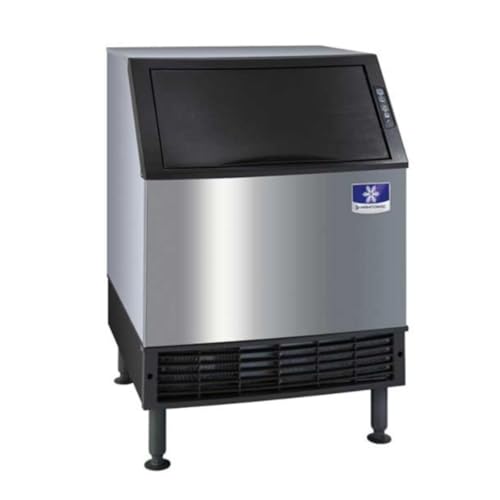
Manitowoc UDF0140A NEO Undercounter Ice Machine
When you need a self-contained professional ice maker that tucks under a counter, the UDF0140A NEO is my go-to. It makes full dice cubes, holds a 90 pound bin onboard, and produces around 135 pounds a day, which suits bars and cafes without a dedicated machine room. The dice cube is versatile for both soda fountains and mixed drinks. I like that you do not need a separate bin to get running.
Strengths
- All-in-one undercounter design saves space
- Versatile dice cube for drinks and dispensers
- Onboard 90 lb storage bin
Drawbacks
- Output too low for high-volume kitchens
- Tight internal layout makes deep cleaning fiddly

Scotsman CU50GA Gourmet Cube Undercounter Ice Maker
If presentation matters, the Scotsman CU50GA earns its place. It produces gourmet cubes, the slow-melting clear-style ice that upscale bars and coffee shops want, in a slim undercounter cabinet under 15 inches wide. Output is modest, but the cube quality is the draw here, and Scotsman's reputation for clean ice is well earned. It runs on a standard 115V circuit with a gravity drain.
Strengths
- Premium gourmet cubes that melt slowly
- Slim under-15-inch footprint
- Standard 115V plug and gravity drain
Drawbacks
- Lower daily output than full-size units
- Gourmet cube cycle is slower than crescent or dice

Ice-O-Matic GEMU090 Pearl Nugget Ice Machine
Nugget ice, the soft chewable pellets people obsess over, has become a real draw for cafes and healthcare settings, and the GEMU090 Pearl makes it quietly and reliably. It is self-contained, runs on a standard plug, and the chewable ice is gentle on dispensers and beloved by customers. Output suits lower-volume spots rather than a slammed restaurant, but for the right venue it is a customer magnet.
Strengths
- Sought-after soft chewable nugget ice
- Quiet self-contained operation
- Standard 115V plug-in install
Drawbacks
- Lower output limits it to smaller venues
- Nugget ice melts faster than hard cubes

Maxx Ice MIM75 Self-Contained Undercounter Ice Maker
Not every operation needs a four-figure flagship, and the Maxx Ice MIM75 is the unit I recommend when budget is tight but commercial-grade reliability still matters. It makes bullet cubes, produces around 75 pounds a day, and stores 25 pounds onboard in a stainless self-contained cabinet. It is the right pick for a coffee cart, small bar, or break room that needs honest output without the big-brand premium.
Strengths
- Affordable entry into commercial-grade ice
- Self-contained stainless cabinet
- Easy standard plug-in setup
Drawbacks
- Hollow bullet cubes melt quickly
- 75 lb output is modest for busy service
Buying considerations
Daily Output vs Real Demand
Rated output assumes cool air and cold water. Size for your peak day, then add a buffer of 20 percent, because warm kitchens cut real production well below the spec sheet number.
Cube Type
Crescent and dice cubes melt slowly and suit most service. Gourmet cubes shine in upscale bars, and nugget ice draws fans in cafes. Match the cube to your drinks and dispensers.
Modular Head vs Self-Contained
Self-contained units include a bin and plug in anywhere. Modular heads need a separate bin but scale to far higher volume. Decide based on space and how much ice you truly burn through.
Air-Cooled vs Water-Cooled
Air-cooled units are cheaper to run but need ventilation and a cool ambient. In hot or tight spaces, output drops and water-cooled options become worth the higher water bill.
Cleaning and Maintenance Access
Every commercial ice maker needs regular descaling and sanitizing to stay legal and safe. Choose a unit with accessible internals so cleaning does not become a dreaded all-afternoon job.
Final word
The best commercial ice maker is the one sized to your real peak demand and matched to the right cube type, not simply the unit with the biggest output number on the box.
Questions answered
Estimate roughly one to two pounds of ice per customer per day for a restaurant, more for a bar. A small cafe often does fine with a 75 to 135 pound self-contained unit, while a busy restaurant should look at a modular head rated near 489 pounds. Always oversize slightly, since rated output falls in warm rooms with warm incoming water.
A professional ice maker is built for continuous heavy duty cycles, uses commercial-grade compressors and stainless components, and is usually NSF certified for food service. Residential units make far less ice, are not rated for all-day use, and will burn out quickly under the demand a real kitchen or bar places on them.
Crescent and full dice cubes are the workhorses for most operations because they melt slowly and pack well. Gourmet cubes suit upscale cocktail bars, nugget ice is a customer favorite in cafes and healthcare, and hollow bullet cubes are cheapest but melt fastest. Pick based on your drinks and your dispensing equipment.
Most manufacturers and health codes call for descaling and sanitizing every three to six months, and more often in areas with hard water. Skipping this leads to scale buildup, slime, lower output, and failed inspections. Choosing a unit with easy internal access makes staying on schedule far more realistic.
Update log
- Jun 10, 2026, Refreshed picks and rankings.
- May 20, 2026, Initial guide published.
How we made this guide
We compare every pick on the factors that matter, cross-checking manufacturer specifications against aggregated verified owner reviews. We rank independently and never take payment for placement. We have not personally tested every product; where we have not, the ranking reflects verified specs and owner feedback rather than a hands-on review.
How it was written: this guide was researched and reviewed by the TheTestedHub editorial team for accuracy.
Affiliate disclosure: TheTestedHub is reader-supported. When you buy through links on our site, we may earn a commission at no extra cost to you.
Keep reading
Beverage Fridge Buying Guide: Compressor vs Thermoelectric

6 Drink Dispensers That Actually Seal Right (2026)

Skip Cheap Whiskers: Get a Real Chasen

Wondering Which Tea Infuser Is Best? Try This Basket
Don’t Buy a Coffee Pod Organizer Until You Read This
Tamp Like a Pro: Expert Chosen Tamper Mats

Coffee Scales for Every Brew, Tested for Daily Use