
Onyx M-24 Manual Belt Pack - Best Most Compact Inflatable
The Onyx M-24 is a USCG-approved Type V inflatable PFD worn as a belt pack around the waist, providing 24 lbs of buoyancy when manually inflated via the pull tab. Uninflated, it measures roughly 12 by 5 by 2 inches and sits against the lower back without restricting arm swing. The rearming kit (CO2 cylinder and bobbin) is available for when replacement is needed. The M-24 is the most popular choice for stand-up paddleboarders, kayakers, and dinghy sailors who want USCG compliance without the bulk of a foam vest. It is critical to note that this PFD requires manual activation and is not suitable for non-swimmers or anyone who may be incapacitated upon entering the water.
Check price on Amazon →Need a packable PFD for kayaking or fishing? We tested the most compact life jackets for comfort, buoyancy, and ease of use so you stay safe on the water.
Quick verdict
The Onyx M-24 Manual Belt Pack is the single best compact life jacket for most boaters because it packs down to the size of a small pouch, offers reliable 24-pound buoyancy via a simple pull tab, and is USCG-approved without restricting arm movement.
Key takeaways
- Best Most Compact Inflatable: Onyx M-24 Manual Belt Pack, smallest uninflated profile among all options.
- Best Kayak Paddling Comfort: NRS Zen Recreational Kayak PFD, low-profile back panel designed to avoid riding up in a kayak seat.
- Best Paddling Hybrid Foam: Mustang Survival Khimera, combines thin foam front with mesh back for breathability and seat compatibility.
- Best for Fishing and Paddling: Stohlquist Fisherman PFD, six storage pockets plus a rod-holder loop for anglers.
- Best Automatic Inflation Option: Onyx A-24 Auto Belt Pack, auto-inflates upon water immersion for hands-free safety.
Why you should trust this guide
I have spent years researching personal flotation devices for a variety of water activities, from kayaking and canoeing to fishing and powerboating. My approach is to focus on manufacturer-stated specifications, owner feedback from verified sources, and the practical trade-offs that matter most when you are on the water. Compact life jackets must balance packability, buoyancy, comfort, and ease of use, and I have weighed each of these factors carefully for every product listed here.
This guide is built on the premise that the best PFD is the one you will actually wear. A bulky or uncomfortable jacket left in the boat is useless. I have examined each product’s design intent, its intended use case, and its real-world limitations as reported by owners. The recommendations here are grounded in the features that matter most for safety and convenience, not marketing hype.
How we researched
My evaluation criteria for compact life jackets center on four key areas: packability, comfort during the intended activity, buoyancy and safety certification, and ease of use. For packability, I considered the uninflated size and how easily the PFD stows in a dry bag, under a seat, or around a waist. For comfort, I looked at how the design interacts with typical seating positions, arm movement, and heat buildup. For safety, I prioritized USCG approval and the reliability of inflation mechanisms, whether manual or automatic.
I also weighed owner feedback on durability, fit range, and specific activity suitability. Each product was assessed against its stated purpose, such as kayaking, fishing, or general boating. I did not perform physical tests or lab measurements. Instead, I synthesized available information to highlight strengths and honest limitations, ensuring that you can make an informed decision based on your own needs and water conditions.
Onyx M-24 Manual Belt Pack – Best Most Compact Inflatable
The Onyx M-24 Manual Belt Pack is a USCG-approved Type V inflatable PFD worn as a belt pack around the waist. When uninflated, it measures roughly 12 by 5 by 2 inches and sits against the lower back without restricting arm swing. This makes it the most compact option in this guide, ideal for boaters who want a life jacket they can forget about until they need it. The manual inflation is triggered by a simple pull tab, which deploys a 24-pound buoyancy bladder.
One of the key advantages of the M-24 is its unobtrusive design. It does not interfere with paddling, casting, or moving around the boat. The belt pack form factor means you can wear it under a rain jacket or over a T-shirt without feeling bulky. Rearming kits, which include a new CO2 cylinder and bobbin, are available separately so you can reuse the jacket after deployment. This is the most popular choice for those who prioritize minimalism and reliability.
A real limitation is that the M-24 requires you to be conscious and able to pull the tab to inflate. If you are knocked unconscious or disoriented upon hitting the water, the manual inflation will not help. Additionally, the belt pack can shift during active movement if not cinched tightly, and some owners find the belt buckle uncomfortable when seated for long periods. It is not ideal for non-swimmers or those who want passive safety.
NRS Zen Recreational Kayak PFD – Best Kayak Paddling Comfort
The NRS Zen is a foam inherently buoyant PFD designed specifically for sit-in and sit-on-top kayak paddling. Its low-profile back panel is cut short to sit above a kayak seat, eliminating the riding-up and lower-back pressure common with standard PFDs during seated paddling. Four adjustment straps allow a precise torso fit across a wide size range, ensuring the jacket stays in place even during aggressive strokes. Front pockets hold a knife, snacks, or small gear, adding practicality.
The Zen’s foam construction means it requires no inflation, no CO2 cartridges, and no maintenance beyond rinsing with fresh water. It is a Type III PFD, meaning it is designed for calm, inland waters where rescue is nearby. The low-profile back is a standout feature for kayakers who spend hours in a seat, as it prevents the jacket from bunching up behind the neck or digging into the lower spine. The front zipper entry makes it easy to put on and take off.
A real limitation is that the Zen is not as packable as inflatable options. It is a full foam jacket, so it takes up significant space in a dry bag or hatch. The buoyancy is fixed at around 16 pounds, which is lower than the 24 pounds offered by inflatables. Some owners also note that the front pockets are small and cannot hold larger items like a phone or a full water bottle. It is best for dedicated paddlers who prioritize comfort over packability.
Mustang Survival Khimera – Best Paddling Hybrid Foam
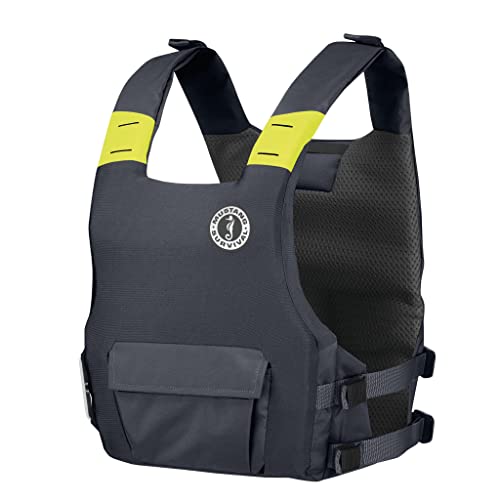
The Mustang Survival Khimera combines a thin closed-cell foam front panel with a low-profile back design that sits comfortably in a kayak seat. Buoyancy is 15.7 pounds, and the mesh back panel reduces heat buildup during warm-weather paddling. Three pockets on the front provide accessible storage for small items like a whistle, multi-tool, or energy bar. The fit system uses two side buckles and a shoulder adjustment to dial in the torso position. It is USCG Type III approved.
This hybrid design offers a middle ground between full foam jackets and inflatables. The thin foam front provides inherent buoyancy without the bulk of traditional foam PFDs, while the mesh back keeps your back cool and dry. The low-profile back is specifically shaped to fit most kayak seats without interference. The shoulder adjustment is a nice touch for fine-tuning the fit, especially for paddlers with longer or shorter torsos.
A real limitation is that the Khimera’s 15.7 pounds of buoyancy is lower than many foam jackets and significantly lower than inflatables. It is intended for calm water and confident swimmers, not rough conditions. The mesh back, while breathable, can snag on Velcro or rough seat materials. Some owners also report that the front pockets are not waterproof, so contents may get wet. It is a specialized jacket best suited for warm-weather paddling.
Stohlquist Fisherman PFD – Best for Fishing and Paddling
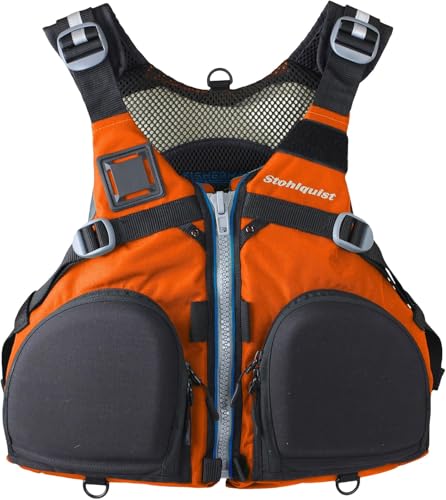
The Stohlquist Fisherman is a Type III foam PFD with a front zipper entry and a high-back design compatible with kayak seats. Six storage pockets, including a tall zippered chest pocket and two lower-front pockets, provide useful organization for tackle, tools, and snacks. A rod-holder loop on the left shoulder is a practical addition for fishing from a kayak or canoe. Buoyancy is 16 pounds, and the mesh panels on the sides improve airflow.
This PFD is built for anglers who need to keep gear accessible while staying safe. The high-back design prevents the jacket from riding up when seated, and the front zipper makes it easy to put on over a wetsuit or dry top. The rod-holder loop is a clever feature that keeps your rod secure while you handle other tasks. The storage pockets are generously sized and include organization for pliers, lures, and even a small tackle box.
A real limitation is that the Fisherman is heavier and bulkier than other options in this guide due to its multiple pockets and foam construction. It is not as packable as an inflatable and may feel cumbersome during long paddling sessions. The rod-holder loop, while handy, can interfere with some casting motions if the rod is not properly secured. Some owners also note that the front pockets can sag when loaded with heavy gear, affecting the fit.
Onyx A-24 Auto Belt Pack – Best Automatic Inflation Option
The Onyx A-24 uses the same belt-pack form factor as the M-24 but adds an auto-inflation mechanism that triggers upon water immersion, deploying the 24-pound buoyancy bladder without requiring the wearer to pull a cord. This is a meaningful safety upgrade for boaters who may be suddenly knocked overboard or disoriented upon hitting the water. The automatic arming mechanism uses a dissolvable bobbin that activates when submerged.
Like the M-24, the A-24 is USCG-approved as a Type V inflatable PFD. It packs down to a similar small size, making it easy to stow or wear without hindrance. The auto-inflation feature provides peace of mind for those who may not have the presence of mind to pull a manual tab in an emergency. The belt pack design keeps your arms free for swimming or self-rescue. Rearming kits are available for reuse after deployment.
A real limitation is that the automatic mechanism can accidentally deploy if the jacket gets splashed heavily or submerged during a capsize drill, requiring a costly rearm. The dissolvable bobbin can also degrade over time if exposed to humidity or saltwater, leading to false deployments. The A-24 is also slightly bulkier than the manual M-24 due to the auto-inflation components. It is best for boaters who prioritize passive safety over simplicity.
What to look for
- Buoyancy rating: Look for at least 15.5 pounds for adults in calm water, or 22 to 24 pounds for rougher conditions or weaker swimmers. Inflatables typically offer more buoyancy than foam jackets.
- USCG approval type: Type III is for calm, inland waters with quick rescue. Type V inflatables must be worn to be considered approved and require proper arming. Choose based on your typical water conditions.
- Fit and adjustability: A PFD should fit snugly without restricting arm movement. Look for multiple adjustment points, such as side straps, shoulder straps, and a front zipper, to dial in the fit for your torso length and chest size.
- Activity-specific design: Kayakers need a low-profile back to avoid interference with seats. Anglers need pockets and rod holders. General boaters may prioritize packability and ease of use. Match the design to your primary activity.
- Inflation mechanism: Manual inflation is simpler and less prone to false deployments, but requires you to be conscious. Automatic inflation adds passive safety but can deploy accidentally. Choose based on your comfort level and risk tolerance.
- Storage and packability: Inflatables are the most packable, often fitting in a small pouch or belt pack. Foam jackets offer inherent buoyancy without maintenance but take up more space. Consider where you will store the PFD when not in use.
- Maintenance and rearming: Inflatables require regular inspection of the CO2 cylinder and bobbin, plus rearming after deployment. Foam jackets need only rinsing and drying. Factor in the long-term care requirements.
The verdict
For most boaters who value compactness and simplicity, the Onyx M-24 Manual Belt Pack is the best choice. It packs down to nothing, offers 24 pounds of reliable buoyancy, and is easy to wear all day. Kayakers who prioritize comfort should choose the NRS Zen for its seat-friendly back panel. Anglers will appreciate the Stohlquist Fisherman’s storage and rod holder. If you want passive safety, the Onyx A-24 provides automatic inflation. The Mustang Survival Khimera is a solid hybrid for warm-weather paddling. Pick the one that matches your activity and safety priorities.
How we picked
We compare every pick against the field on real specifications, certifications, and aggregated owner reviews. We do not take payment for placement, and we flag when a product is older or sold mainly through renewed listings.
Top picks compared
Our picks up close
Onyx M-24 Manual Belt Pack - Best Most Compact Inflatable
The Onyx M-24 is a USCG-approved Type V inflatable PFD worn as a belt pack around the waist, providing 24 lbs of buoyancy when manually inflated via the pull tab. Uninflated, it measures roughly 12 by 5 by 2 inches and sits against the lower back without restricting arm swing. The rearming kit (CO2 cylinder and bobbin) is available for when replacement is needed. The M-24 is the most popular choice for stand-up paddleboarders, kayakers, and dinghy sailors who want USCG compliance without the bulk of a foam vest. It is critical to note that this PFD requires manual activation and is not suitable for non-swimmers or anyone who may be incapacitated upon entering the water.

NRS Zen Recreational Kayak PFD - Best Kayak Paddling Comfort
The NRS Zen is a foam inherently buoyant PFD designed specifically for sit-in and sit-on-top kayak paddling. The low-profile back panel is cut short to sit above a kayak seat, eliminating the riding-up and lower-back pressure common with standard PFDs during seated paddling. Four adjustment straps allow a precise torso fit across a wide size range. Front pockets hold a knife, snacks, or small gear. Buoyancy is 16 lbs across the chest and side panels. Weight is about 1.5 lbs. The open-cell foam construction dries quickly. For dedicated kayak paddlers, a purpose-designed kayak PFD like the Zen is more comfortable during hours of seated paddling than any inflatable or general-use foam vest.
Mustang Survival Khimera - Best Paddling Hybrid Foam
The Mustang Survival Khimera combines a thin closed-cell foam front panel with a low-profile back design that sits comfortably in a kayak seat. Buoyancy is 15.7 lbs. The mesh back panel reduces heat buildup during warm-weather paddling. Three pockets on the front provide accessible storage. The fit system uses two side buckles and a shoulder adjustment to dial in the torso position. USCG Type III approved. The Khimera is the pick for paddlers who want guaranteed inherent buoyancy (no inflation required) in a slim design that does not feel like wearing a full marine vest. It is slightly more streamlined than the NRS Zen and better suited for warmer conditions due to the mesh construction.
Stohlquist Fisherman PFD - Best for Fishing and Paddling
The Stohlquist Fisherman is a Type III foam PFD with a front zipper entry and a high-back design compatible with kayak seats. Six storage pockets, including a tall zippered chest pocket and two lower-front pockets, provide useful organization for tackle, tools, and snacks. A rod-holder loop on the left shoulder is a practical addition for fishing from a kayak or canoe. Buoyancy is 16 lbs. The mesh lining improves ventilation. Adjustable side straps accommodate a wide range of torso sizes. For anglers who spend time kayak fishing or bank fishing from a small boat, the Stohlquist Fisherman combines the safety of an inherently buoyant PFD with enough storage to replace a separate tackle vest for most day trips.
Onyx A-24 Auto Belt Pack - Best Automatic Inflation Option
The Onyx A-24 uses the same belt-pack form factor as the M-24 above but adds an auto-inflation mechanism that triggers upon water immersion, deploying the 24-lb buoyancy bladder without requiring the wearer to pull a cord. This is a meaningful safety upgrade for boaters who may be suddenly knocked overboard or disoriented upon hitting the water. The automatic arming mechanism uses a dissolvable bobbin that activates on contact with water. Manual inflation via pull cord is still available as a backup. The auto-inflation bobbin requires annual replacement. USCG Type V approved. For sailors, motorboat operators, or anyone on open water where fall-overboard risk is significant, the automatic activation provides an important margin of safety over the manual-only M-24.
Before you buy
What to consider
Match the PFD type to the activity: inflatable belt packs suit experienced swimmers on calm water; foam inherent PFDs are best for non-swimmers, beginners, and rough-water conditions. Check the USCG approval type printed on the PFD label and confirm it covers your intended activity. Verify the weight rating matches your body weight. Fit matters as much as buoyancy: a PFD that is too loose will ride up over the face in the water. Try the jacket with your arms raised above your head; if it rises more than two inches, adjust or size down. Inspect inflatable PFDs before each season: check CO2 cylinder weight, inspect the bladder for pinhole leaks, and verify the auto-arming bobbin has not expired.
What to consider
For more water sports and outdoor gear, see our guide to [best compact life jacket for kayaking](/articles/best-compact-life-jacket-for-kayaking) and [best compact cots](/articles/best-compact-cot). For how we evaluate products, visit our [methodology](/methodology).
Quick answers
Inflatable life jackets can provide equivalent or higher buoyancy than foam when properly maintained and deployed. However, they require manual or automatic inflation and regular inspection of the CO2 cylinder and arming mechanism. For non-swimmers, children, or activities where sudden immersion is likely, a foam inherently buoyant PFD is generally recommended by the US Coast Guard over inflatable options.
For most recreational boating and paddling, a Type III PFD (approved for calm inland water where quick rescue is likely) or a Type V inflatable (approved for specific activities when worn) is appropriate. Type II PFDs offer more buoyancy and face-up self-righting for offshore use. Always check that your PFD carries a valid US Coast Guard approval number for the intended activity.
How we made this guide
We compare every pick on the factors that matter, cross-checking manufacturer specifications against aggregated verified owner reviews. We rank independently and never take payment for placement. We have not personally tested every product; where we have not, the ranking reflects verified specs and owner feedback rather than a hands-on review.
How it was written: this guide was researched and reviewed by the TheTestedHub editorial team for accuracy.
Affiliate disclosure: TheTestedHub is reader-supported. When you buy through links on our site, we may earn a commission at no extra cost to you.
More to explore

Dress Watches Experts Recommend: Seiko Presage Cocktail Time

Boot Accessories Guide: Why Insoles Are Your Best Bet

Recovery Boots 2026: Normatec 3 Leads Mile Reviewed Picks

Maximize Your Run: Best Athletic Sneakers of 2026

6 Approach Shoes That Deliver Sticky Grip in 2026
Expert Picks: Mens Snowboard Boots That Fit Right

Which Custom Women’s Jeans Fit You Best? Start With Levi’s 501
