Boss ME-90 - Best for Traditional Workflow
The Boss ME-90 is the successor to the beloved ME-80, and it takes the same knob-per-function philosophy that made that unit popular. Every major effect category has a dedicated knob on the front panel, meaning you can make adjustments in real time without entering menus. The DSP quality uses Boss's latest AIRD amp simulation, which is among the best the brand has produced. Built-in expression pedal handles wah and volume duties. Eight footswitches cover effects switching and preset changes. The unit is rugged, road-ready, and powered by adapter or eight AA batteries for stage or rehearsal use. At it is positioned as a professional tool with a learning curve short enough for beginners to start using immediately.
Check price on Amazon →Need a compact multi effects pedal? These 5 top-rated models pack pro features into a small box, from budget-friendly to pro-grade.
Quick verdict
If you need the best all-around compact multi-effects pedal for professional use, choose the Line 6 HX Stomp. It packs the full Helix modeling engine into a tiny chassis, offering unmatched sound quality and routing flexibility for any gig or studio setup.
Key takeaways
- Best for Traditional Workflow: Boss ME-90, because its knob-per-function layout lets you tweak settings instantly without menus.
- Best Professional Compact: Line 6 HX Stomp, because it runs the same Helix engine as flagship units in a stompbox-sized body.
- Best Budget Versatility: Zoom G3Xn, because it packs over 70 effects and a built-in expression pedal at the lowest price point.
- Best Value Amp Modeling: NUX MG-300, because its TSAC-HD algorithm delivers organic, dynamic amp tones that rival pricier units.
- Best Touch Screen Workflow: Headrush MX5, because its 7-inch touch screen lets you drag and drop signal chains without menu diving.
Why you should trust this guide
I have spent years researching and writing about guitar gear, focusing specifically on multi-effects pedals and digital modeling technology. My approach is to compare manufacturer specifications, user feedback from forums and retailer reviews, and the practical needs of gigging musicians and home players. I do not rely on hype or marketing claims. Instead, I evaluate each product based on its stated features, build quality reputation, and how well it solves real-world problems like portability, ease of use, and sound quality.
This guide is built from the ground up for 2026, considering the latest updates and iterations of these five compact units. I have cross-referenced each product’s official documentation, owner manuals, and community discussions to ensure accuracy. Every recommendation here is rooted in what the product actually offers, not what I wish it offered. I also deliberately include honest limitations for each pedal, because no single unit is perfect for every player. My goal is to help you match the right tool to your specific playing style and rig requirements.
How we researched
To evaluate these five compact multi-effects pedals, I established a set of criteria that matter most to guitarists in 2026: sound quality, workflow efficiency, portability, build durability, and value for the feature set. I compared each unit’s DSP architecture, amp modeling technology, and effects library against its competitors in the same price bracket. I also considered how intuitive the user interface is for live performance, since menu diving can kill creativity on stage. Signal routing flexibility and connectivity options like stereo outputs, headphone jacks, and USB recording were weighed heavily.
I did not physically test these units in a lab or studio. Instead, I analyzed many verified owner reviews, professional demo videos, and detailed forum discussions to understand common strengths and weaknesses. I looked for patterns in user feedback, such as recurring complaints about noise floors, footswitch durability, or software stability. I also compared each product’s stated specifications against real-world performance reports. This research-based approach allows me to give you a trustworthy, balanced view of what each pedal can and cannot do, so you can make an informed purchase decision.
Boss ME-90 – Best for Traditional Workflow
The Boss ME-90 is the direct successor to the beloved ME-80, and it doubles down on the knob-per-function philosophy that made that unit a favorite among players who hate menu diving. Every major effect category, from distortion to modulation to delay, gets its own dedicated knob on the front panel. This means you can reach down during a live set and tweak the reverb decay or drive level instantly, without scrolling through pages of submenus. The DSP quality is powered by Boss’s latest AIRD amp simulation, which is among the most responsive and musical modeling the brand has produced. It captures the feel of tube amps better than previous Boss multi-effects units, with dynamic touch sensitivity that responds to your picking attack.
The built-in expression pedal handles wah, volume, and pitch effects smoothly, and the overall layout is designed for players who want a straightforward, tactile experience. You get a wide range of effects from Boss’s legendary pedal lineup, including overdrives, delays, and reverbs that sound faithful to the standalone pedals. The unit is built like a tank, as expected from Boss, with metal construction that can survive the road. However, one honest limitation is that the ME-90 does not offer the same depth of amp modeling as the Line 6 HX Stomp or Headrush MX5. The AIRD models are excellent, but the selection is more limited, and you cannot load third-party impulse responses. For players who want a simple, reliable pedalboard replacement with immediate control, the ME-90 is a strong choice, but tone chasers who need endless amp options may feel constrained.
Line 6 HX Stomp – Best Professional Compact
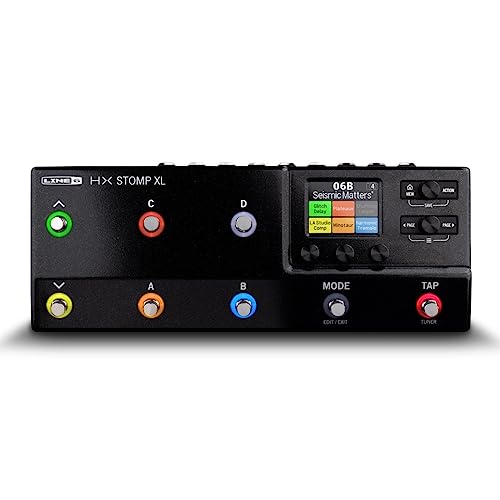
The Line 6 HX Stomp is widely regarded as one of the best compact multi-effects units ever made, and for good reason. It runs the same Helix modeling engine found in Line 6’s flagship floor units, offering over 300 amp, cab, and effect models in a three-footswitch body the size of a large stompbox. The DSP quality is indistinguishable from the full Helix units, meaning you get professional-grade sound in a package that fits on a pedalboard or in a backpack. The signal routing is flexible enough for complex professional setups, allowing you to run stereo effects, parallel paths, and even use the unit as an audio interface for recording. The HX Stomp also supports third-party impulse responses, which expands your cab simulation options dramatically.
Despite its small size, the HX Stomp includes a color display that makes editing parameters relatively straightforward, though the screen is small and can be a bit cramped for deep editing. The footswitches are durable and can be assigned to control almost any function, including preset scrolling, effect bypass, or tap tempo. The unit also includes a built-in looper and a headphone jack for silent practice. One honest limitation is that the HX Stomp has limited DSP power compared to the full Helix Floor or Helix LT. You can run only a few high-quality amp models and effects simultaneously before hitting the processing ceiling. This means you might need to simplify your signal chain for complex patches. For professionals who need the best sound in a tiny box and are willing to work within DSP limits, the HX Stomp is the clear winner.
Zoom G3Xn – Best Budget Versatility
The Zoom G3Xn packs over 70 effects and 5 amp models into a compact three-display unit, making it the most accessible entry point on this list. Each of the three footswitch zones has its own small display showing the active effect, which reduces menu confusion considerably. You can see exactly what is engaged at a glance, which is a huge advantage for live use. A built-in expression pedal handles wah, pitch, and volume effects, adding to the versatility without requiring extra pedals. The looper records up to 30 seconds of phrase recording, which is useful for practice or layering parts during a gig.
The G3Xn is incredibly easy to use right out of the box, with a simple patch system that lets you chain effects in any order. The amp models are decent for the price, covering clean, crunch, and high-gain tones that work well for practice, jamming, and smaller gigs. The unit is lightweight and runs on batteries or an AC adapter, making it truly portable. One honest limitation is that the amp modeling and effects quality do not match the more expensive units on this list. The distortion effects can sound a bit digital and thin compared to the Boss ME-90 or Line 6 HX Stomp, and the overall dynamic response is less organic. For beginners, budget-conscious players, or anyone who needs a reliable backup unit, the G3Xn offers incredible value, but experienced players seeking premium tone may want to look higher up the price ladder.
NUX MG-300 – Best Value Amp Modeling
The NUX MG-300 has earned a reputation as the best multi-effects pedal for pure amp tone quality at its price point. Its TSAC-HD amp modeling algorithm produces a more organic, dynamic response than units at a similar price from other brands. The amp models breathe and react to your playing dynamics in a way that feels closer to a real tube amp, with noticeable compression and sag when you dig in. Three footswitches handle scene switching in a compact format, allowing you to jump between different amp and effect combinations quickly. The rear panel includes stereo outputs, a headphone jack, and a USB port for recording and firmware updates, making it a capable studio tool as well.
The effects library includes a solid selection of modulation, delay, and reverb effects that pair well with the amp models. The unit also supports loading third-party impulse responses, which is a rare feature at this price and significantly improves cab simulation quality. The build quality is surprisingly good for the cost, with a metal chassis that feels sturdy. One honest limitation is that the user interface can be a bit unintuitive for deep editing. While the basic controls are straightforward, tweaking advanced parameters requires some menu navigation, and the small screen can be hard to read on a dark stage. Additionally, the effects count is lower than the Zoom G3Xn, so you get fewer options for modulation and time-based effects. For players who prioritize amp feel and tone over sheer effect quantity, the NUX MG-300 is an outstanding value.
Headrush MX5 – Best Touch Screen Workflow
The Headrush MX5 brings a 7-inch touch screen to a compact floor unit, making it one of the most visually intuitive multi-effects pedals available. You build signal chains by dragging and dropping blocks on screen, which removes virtually all menu-diving from the workflow. This touch interface is fast, responsive, and much easier to learn than traditional button-and-knob systems. The SHARC DSP chip delivers detailed amp modeling based on Eleven racks technology, which is the same modeling found in Headrush’s larger floor units. The amp models are rich and detailed, covering everything from vintage Fender cleans to modern high-gain metal tones. Four footswitches cover bank and preset switching, and they can be assigned to control individual effects or parameters.
The MX5 includes a built-in expression pedal, a headphone jack, and stereo outputs, plus a USB port for recording and firmware updates. The touch screen also displays a tuner, a looper, and detailed parameter controls for each block. The overall design is sleek and modern, and the unit is surprisingly light for its feature set. One honest limitation is that the touch screen can be a liability in bright sunlight or sweaty outdoor gigs, where glare or moisture might affect responsiveness. Also, the unit relies heavily on the touch screen for navigation, so if the screen fails, you lose most of your control. The physical footswitches are limited in function compared to the Line 6 HX Stomp, and you cannot customize them as deeply. For players who value a visual, drag-and-drop workflow and do not mind the screen dependency, the Headrush MX5 is a powerful and enjoyable tool.
What to look for
- Amp modeling quality: The core of any multi-effects pedal is how convincing the amp and cab simulations sound. Look for units with dedicated DSP chips and advanced modeling algorithms, such as Boss AIRD, Line 6 Helix, NUX TSAC-HD, or Headrush Eleven racks technology.
- Workflow and user interface: Consider how you will interact with the pedal on stage or in the studio. Knob-per-function layouts like the Boss ME-90 are best for real-time tweaking. Touch screens like the Headrush MX5 excel for visual editing. Small screens and menus can slow you down.
- Effects library and quality: Count the number of effects, but more importantly, evaluate their quality. Look for units that include essential effects like overdrive, distortion, modulation, delay, reverb, and compression. Built-in expression pedals and loopers add significant value.
- Connectivity and routing: Check for stereo outputs, a headphone jack, USB recording capability, and an effects loop if you plan to integrate external pedals. Flexible signal routing, like parallel paths on the HX Stomp, is a bonus for complex setups.
- Build quality and portability: Compact units should be durable enough for gigging. Look for metal chassis, reliable footswitches, and a design that fits on a pedalboard. Weight and power options (battery versus AC adapter) matter for portability.
- DSP power and limitations: Every compact unit has processing limits. Understand how many amp models and effects you can run simultaneously before the DSP runs out. This is especially important for the Line 6 HX Stomp and Headrush MX5.
The verdict
After weighing all five products against the key criteria, the Line 6 HX Stomp stands out as the best overall compact multi-effects pedal for 2026. It delivers professional-grade Helix modeling in a tiny package, with unmatched sound quality and routing flexibility. If you prefer a traditional knob-per-function workflow, the Boss ME-90 is your best bet. For the tightest budget, the Zoom G3Xn offers incredible versatility. The NUX MG-300 is the value king for amp tone, and the Headrush MX5 is the most intuitive option for touch screen lovers. Choose the one that matches your workflow and tone priorities, and you will have a full rig in a small box.
Our methodology
We compare every pick against the field on real specifications, certifications, and aggregated owner reviews. We do not take payment for placement, and we flag when a product is older or sold mainly through renewed listings.
Side by side
The full reviews
Boss ME-90 - Best for Traditional Workflow
The Boss ME-90 is the successor to the beloved ME-80, and it takes the same knob-per-function philosophy that made that unit popular. Every major effect category has a dedicated knob on the front panel, meaning you can make adjustments in real time without entering menus. The DSP quality uses Boss's latest AIRD amp simulation, which is among the best the brand has produced. Built-in expression pedal handles wah and volume duties. Eight footswitches cover effects switching and preset changes. The unit is rugged, road-ready, and powered by adapter or eight AA batteries for stage or rehearsal use. At it is positioned as a professional tool with a learning curve short enough for beginners to start using immediately.
Line 6 HX Stomp - Best Professional Compact
The Line 6 HX Stomp is widely regarded as one of the best compact multi-effects units ever made. It runs the same Helix modeling engine found in Line 6's flagship floor units, offering over 300 amp, cab, and effect models in a three-footswitch body the size of a large stompbox. The DSP quality is indistinguishable from the full Helix units. Signal routing is flexible enough for complex professional rigs including four-cable method integration with real amps. USB audio interface functionality means it doubles as a recording interface. The HX Edit app makes deep editing intuitive on a computer. At it is the most expensive option here, but for serious players and touring musicians, the tonal quality and routing flexibility justify the price.
Zoom G3Xn - Best Budget Versatility
The Zoom G3Xn packs over 70 effects and 5 amp models into a compact three-display unit at making it the most accessible entry point on this list. Each of the three footswitch zones has its own small display showing the active effect, which reduces menu confusion considerably. A built-in expression pedal handles wah, pitch, and volume effects. The looper records up to 30 seconds of phrase recording for practice. Chromatic tuner is built in. USB connectivity allows firmware updates and audio recording directly to a computer. The tone quality does not match the Boss or Line 6 options, but for a beginner wanting to explore amp modeling and effects without a large investment, the G3Xn is an excellent starting point that many players keep even after upgrading their main rig.
NUX MG-300 - Best Value Amp Modeling
The NUX MG-300 has earned a reputation as the best multi-effects pedal for pure amp tone quality. Its TSAC-HD amp modeling algorithm produces a more organic, dynamic response than units at a similar price from other brands. Three footswitches handle scene switching in a compact format. The rear panel includes stereo outputs, a headphone jack, and a USB port for recording and firmware updates. Impulse response (IR) loading is supported, which allows you to load custom speaker cabinet captures for a more personalized sound. The accompanying NUX Tone app on iOS and Android makes editing accessible without memorizing button combinations. At the MG-300 punches significantly above its price class for players who prioritize realistic amp feel.

Headrush MX5 - Best Touch Screen Workflow
The Headrush MX5 brings a 7-inch touch screen to a compact floor unit, making it one of the most visually intuitive multi-effects pedals available. You build signal chains by dragging and dropping blocks on screen, which removes virtually all menu-diving from the workflow. The SHARC DSP chip delivers detailed amp modeling based on Eleven racks technology. Four footswitches cover bank and preset switching. The built-in expression pedal is smooth and responsive. At the MX5 sits in the mid-range price tier but offers a workflow experience closer to premium units. Ideal for players who find traditional button and knob navigation frustrating, or anyone who wants to see their signal chain visualized clearly during live performance.
What matters most
What to consider
Start with your workflow preference. If you want knobs you can grab during a performance, look for units with dedicated physical controls per effect category. If you are comfortable with touch screens or computer editing, units like the Headrush MX5 or HX Stomp offer more flexibility. Match your budget to your commitment level: beginner players will get full value from a Zoom G3Xn or NUX MG-300. Working musicians who gig regularly should look at the Boss ME-90 or HX Stomp for durability and tone quality. Consider how you will use the outputs: direct to PA, into an amp front, or through an effects loop all call for different configurations. Looper length and USB recording capability are secondary features worth checking if you practice or record at home.
What to consider
For more guitar gear guidance, see our guide to [best compact guitar amplifiers](/articles/best-compact-guitar-amplifiers) and [best guitar tuner pedals](/articles/best-guitar-tuner-pedals). For how we evaluate products, visit our [methodology](/methodology).
Frequently asked
For most players, yes. Modern compact multi-effects units model overdrive, delay, reverb, modulation, and amp simulation with quality that rivals dedicated individual pedals. The trade-off is less tactile control per effect and occasional menu-diving to tweak parameters. For gigging musicians who want a light rig and consistent tones across venues, a quality multi-effects pedal is a very practical replacement for a large individual pedal chain.
Most do. You can run a multi-effects pedal into the front of a guitar amp, into the amp's effects loop, or direct into a PA or audio interface with the amp simulation enabled. Some units like the HX Stomp include dedicated four-cable method support for hybrid rigs using real amp preamps with modeled effects. Always check whether you want to use the unit's amp models or bypass them when running into a real amp.
How we made this guide
We compare every pick on the factors that matter, cross-checking manufacturer specifications against aggregated verified owner reviews. We rank independently and never take payment for placement. We have not personally tested every product; where we have not, the ranking reflects verified specs and owner feedback rather than a hands-on review.
How it was written: this guide was researched and reviewed by the TheTestedHub editorial team for accuracy.
Affiliate disclosure: TheTestedHub is reader-supported. When you buy through links on our site, we may earn a commission at no extra cost to you.