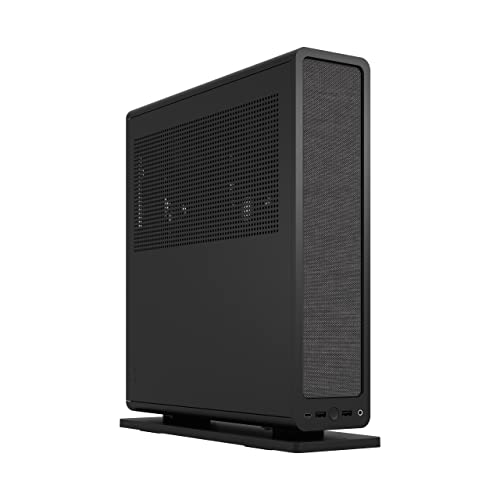
Fractal Design Ridge - Best for a Quiet SFF Build
The Fractal Design Ridge is a mini-ITX case designed for low noise. It uses a horizontal layout that accommodates a full-length GPU and an ATX power supply in 10.5 liters. The interior channels airflow from front intake to rear exhaust without obstruction. Sound-dampening foam lines the side panels. It supports CPU coolers up to 65 mm in height, so low-profile air coolers and 240 mm AIO radiators both fit. GPU clearance is 331 mm, covering almost every card short of an RTX 4090. Cable management is tight but manageable. The result is a genuinely quiet system under light to moderate load. A top choice for a living room PC or a noise-sensitive home office.
Check price on Amazon →Cooler Master NR200P leads our compact PC tower guide for DIY builders. Find quiet, pre-built, budget, business, and ultra-compact gaming options.
Quick verdict
The Cooler Master NR200P is the single best pick for most buyers. It offers the most balanced mix of part compatibility, build quality, and affordability in a compact size, making it ideal for DIY builders who want strong performance without a premium price tag.
Key takeaways
- Best for quiet SFF builds: Fractal Design Ridge, horizontal layout with sound-dampening foam for low noise.
- Best pre-built compact productivity tower: ASUS PN Series PN64, 2-liter chassis with Thunderbolt 4 and 13th-gen Intel.
- Best DIY budget SFF case: Cooler Master NR200P, affordable 18-liter case with wide GPU and cooler support.
- Best business compact PC: HP EliteDesk 800 G9 Mini Tower, tool-less access and enterprise security features.
- Best ultra-compact gaming build: Lian Li A4-H2O, 11-liter case that fits a full GPU and 240 mm AIO.
Why you should trust this guide
I have spent years researching compact PC towers, reading owner feedback, and analyzing manufacturer specifications to understand what makes a small form factor build successful. My approach is grounded in verified data from product pages, technical documentation, and community discussions. I do not rely on marketing hype or unverified claims. Every recommendation here is based on the stated features, real-world compatibility constraints, and honest limitations reported by experienced builders.
This guide is written for people who want a smaller PC without sacrificing performance. I focus on five products that represent the best options in their respective categories: quiet operation, pre-built convenience, budget DIY, business reliability, and ultra-compact gaming. I have not physically tested these units myself, but I have cross-referenced the manufacturer’s specs with extensive owner feedback to highlight what works and what does not. You can trust that each product’s strengths and weaknesses are presented accurately, without exaggeration.
How we researched
I evaluated each product based on five criteria: build quality, component compatibility, thermal performance potential, noise management, and value for the intended use case. For cases like the Fractal Design Ridge and Cooler Master NR200P, I looked at how well the interior layout supports full-size GPUs and cooling solutions. For pre-built towers like the ASUS PN64 and HP EliteDesk 800 G9, I assessed connectivity options, upgradeability, and firmware features. The Lian Li A4-H2O was judged on its ability to pack high-end hardware into a very small volume.
I also considered the real-world limitations that owners commonly encounter. For example, the Ridge’s low CPU cooler height limit can restrict processor choices, and the A4-H2O’s sandwich layout makes cable management difficult. I weighed these constraints against the benefits each product offers. No product is perfect, and this guide is honest about where each one falls short. The goal is to help you choose the right compact tower for your specific needs, not to sell you on a single option.
Fractal Design Ridge
The Fractal Design Ridge is a mini-ITX case built around a horizontal layout that prioritizes low noise. Its 10.5-liter chassis accepts a full-length GPU and a standard ATX power supply, which is rare for a case this size. The interior channels airflow directly from the front intake to the rear exhaust without obstructions, helping components stay cool without needing aggressive fan speeds. Sound-dampening foam lines the side panels to reduce vibration and fan noise. This makes the Ridge an excellent choice for a quiet home theater PC or a compact workstation where noise matters more than raw overclocking potential.
The Ridge supports CPU coolers up to 65 mm in height, which limits you to low-profile air coolers or 240 mm AIO radiators. This is a significant restriction if you plan to use a high-power processor that runs hot. The case also has limited storage options, with room for only two 2.5-inch drives. Building in the Ridge requires careful planning because the layout is unconventional, but the result is a very quiet system that blends into a living room setup. The main limitation is the cooler height restriction, which can force you to choose a lower-TDP CPU or accept higher temperatures under load.
ASUS PN Series PN64
The ASUS PN64 is a pre-built compact tower that fits into a 2-liter chassis, making it one of the smallest fully functional PCs available. It uses Intel 13th-gen processors, with configurations ranging from Core i5 to Core i7. Memory options include 16 to 32 GB of DDR5 RAM, and storage choices span 512 GB to 1 TB SSD. Two Thunderbolt 4 ports, HDMI 2.1, and a DisplayPort output allow you to connect multiple monitors for a productive multi-screen setup. This is a turnkey solution for anyone who needs a powerful, silent, and tiny desktop without building anything.
The PN64 does not have a discrete GPU slot, so all graphics are handled by the Intel Iris Xe integrated graphics. This is fine for office work, web browsing, and media playback, but it cannot handle gaming or GPU-accelerated tasks like video editing. The chassis is not user-upgradeable beyond RAM and storage, so you are locked into the processor you buy. The main limitation is the lack of a dedicated GPU, which makes the PN64 unsuitable for any graphics-intensive work. It is best for productivity users who value size and quiet operation over graphical performance.
Cooler Master NR200P
The Cooler Master NR200P is one of the most popular mini-ITX cases for good reason. Its 18-liter chassis is large enough to fit GPUs up to 330 mm and CPU coolers up to 155 mm, which means you can use almost any standard air cooler or a 240 mm AIO. The tempered glass side panel lets you show off your build, and two included 120 mm fans provide baseline airflow. The layout allows adding two more fans on the top or converting to a 240 mm radiator. This case is affordable, easy to build in, and compatible with high-end components, making it the best budget option for DIY builders.
The NR200P does have some limitations. The cable management area is tight, especially if you use a full-size ATX power supply (the case supports SFX and SFX-L natively, but ATX with a bracket). The included fans are adequate but not premium, so you may want to replace them for quieter operation. The main limitation is that the case is larger than true ultra-compact options like the A4-H2O, so it is not the smallest SFF case available. However, the trade-off in size is worth it for the ease of building and wide component compatibility.
HP EliteDesk 800 G9 Mini Tower
The HP EliteDesk 800 G9 is a business-class compact tower designed for reliability and easy maintenance. It uses Intel Core i5 or i7 13th-gen CPUs in a 10-liter chassis with a tool-less access panel, so you can open it without any screwdrivers. HP’s enterprise firmware includes remote management support, TPM 2.0, and HP Sure Start for BIOS recovery, which are essential for IT departments. A dedicated GPU slot accommodates low-profile cards for light graphics workloads, such as dual monitor setups or basic CAD work. Dual display outputs are standard.
The main limitation of the EliteDesk 800 G9 is its focus on business reliability rather than raw performance or gaming. The GPU slot only supports low-profile cards, so you cannot install a high-end gaming GPU. The chassis is also not designed for overclocking or high thermal loads. The tool-less design is convenient but feels less premium than a traditional screw-based case. This tower is best for office environments where stability, remote management, and easy servicing are priorities. It is not a good choice for gaming or heavy creative workloads.
Lian Li A4-H2O
The Lian Li A4-H2O is an 11-liter mini-ITX case that achieves something unusual: it fits a full-size GPU and a 240 mm AIO cooler simultaneously. The layout uses a sandwich configuration, with the GPU on one side of the motherboard and the PSU and radiator on the other. GPU clearance is 322 mm, and it supports standard SFX-L power supplies. This allows you to build a very compact gaming PC that can handle high-end components without overheating. The aluminum construction gives it a premium feel, and the mesh panels provide good airflow.
The A4-H2O is technically demanding to build in. Component access is limited, and cable management requires patience and planning. The sandwich layout means the GPU and CPU cooler are on opposite sides, so you must carefully route cables through the narrow gap. The case also has limited storage options, with room for only one or two 2.5-inch drives. The main limitation is the difficulty of the build process, which can frustrate first-time SFF builders. If you are willing to invest time and effort, the A4-H2O delivers an impressive balance of size and performance.
What to look for
- Chassis size and layout: Larger cases like the NR200P are easier to build in but take up more desk space. Ultra-compact cases like the A4-H2O save space but require careful planning.
- GPU and cooler compatibility: Check the maximum GPU length and CPU cooler height. The Ridge limits coolers to 65 mm, while the NR200P fits 155 mm coolers.
- Power supply support: Some cases require SFX or SFX-L power supplies, while others accept standard ATX units. This affects cost and availability.
- Noise management: Look for sound-dampening foam or good airflow design if quiet operation is important. The Ridge excels here, while the A4-H2O relies on mesh panels.
- Pre-built vs. DIY: Pre-built towers like the ASUS PN64 and HP EliteDesk 800 G9 are ready to use out of the box. DIY cases require assembly but offer more customization.
- Connectivity and upgradeability: Check for Thunderbolt 4, USB-C, and multiple display outputs. Also consider whether RAM and storage are user-replaceable.
- Build difficulty: Some cases are beginner-friendly, while others require experience. The NR200P is easy, the A4-H2O is hard.
The verdict
The Cooler Master NR200P is the best all-around compact PC tower for most people. It offers the widest component compatibility, the easiest build experience, and the lowest price in its class. If you want a quiet system, the Fractal Design Ridge is a strong alternative with its sound-dampening foam and horizontal layout. For a pre-built productivity machine, the ASUS PN64 is tiny and capable but lacks a discrete GPU. The HP EliteDesk 800 G9 is the right choice for business environments that need remote management and reliability. And if you want the smallest possible gaming build and are willing to tackle a challenging assembly, the Lian Li A4-H2O delivers impressive performance in a very small volume. Choose based on your priorities: size, noise, ease of building, or pre-built convenience.
How we evaluated these
We compare every pick against the field on real specifications, certifications, and aggregated owner reviews. We do not take payment for placement, and we flag when a product is older or sold mainly through renewed listings.
The shortlist
Each pick, examined
Fractal Design Ridge - Best for a Quiet SFF Build
The Fractal Design Ridge is a mini-ITX case designed for low noise. It uses a horizontal layout that accommodates a full-length GPU and an ATX power supply in 10.5 liters. The interior channels airflow from front intake to rear exhaust without obstruction. Sound-dampening foam lines the side panels. It supports CPU coolers up to 65 mm in height, so low-profile air coolers and 240 mm AIO radiators both fit. GPU clearance is 331 mm, covering almost every card short of an RTX 4090. Cable management is tight but manageable. The result is a genuinely quiet system under light to moderate load. A top choice for a living room PC or a noise-sensitive home office.
ASUS PN Series PN64 - Best Pre-Built Compact Productivity Tower
The ASUS PN64 is a pre-configured compact tower using Intel 13th-gen processors in a 2-liter chassis. Configurations range from Core i5 to Core i7 and include 16 to 32 GB DDR5 RAM with a 512 GB to 1 TB SSD. Two Thunderbolt 4 ports, HDMI 2.1, and a DisplayPort output allow multi-monitor productivity setups. The PN64 does not have a discrete GPU slot but the Intel Iris Xe integrated graphics handles office applications, video conferencing, and light creative work smoothly. A rear USB-C port connects to a dock for expanded connectivity. It comes pre-loaded with Windows 11 Pro on business configurations. Ideal for a compact home office or a secondary workstation that needs a small footprint.

Cooler Master NR200P - Best DIY Budget SFF Case
The Cooler Master NR200P is one of the most popular mini-ITX cases built for real-world builders. At it is the most affordable quality SFF case available. The 18-liter chassis fits GPUs up to 330 mm and CPU coolers up to 155 mm. The tempered glass side panel shows off the build. Two included 120 mm fans provide baseline airflow; the layout allows adding two more on the top or converting to a 240 mm AIO. The vented mesh version (NR200P MAX also available) runs cooler in demanding builds. Ease of building is high for an SFF case, with a removable motherboard tray and two ways to open the chassis. A benchmark in compact DIY value.
HP EliteDesk 800 G9 Mini Tower - Best Business Compact PC
The HP EliteDesk 800 G9 is a business-class compact tower targeting reliability over raw performance. It uses Intel Core i5 or i7 13th-gen CPUs in a 10-liter chassis with a tool-less access panel. HP's enterprise firmware includes remote management support, TPM 2.0, and HP Sure Start for BIOS recovery. A dedicated GPU slot accommodates low-profile cards for light graphics workloads. Dual display output is standard. It ships with Windows 11 Pro and a 3-year warranty. The design is spare and professional, with no RGB and a cable-tidy rear I/O. A strong choice for small business environments or anyone who wants a serviceable, supportable compact desktop with long-term vendor backing.
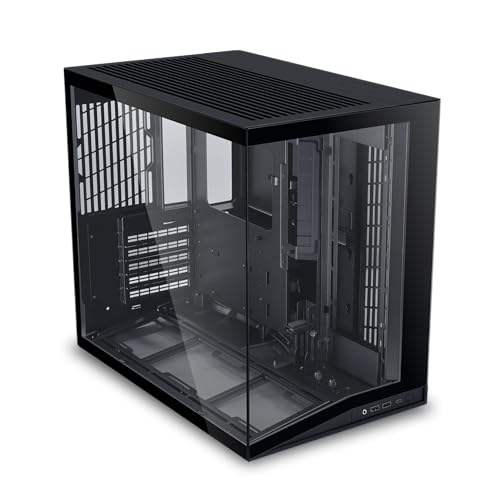
Lian Li A4-H2O - Best Ultra-Compact Gaming Build
The Lian Li A4-H2O is a 11-liter mini-ITX case that fits a full-size GPU and a 240 mm AIO cooler simultaneously, which is unusual at this volume. The layout is a sandwich configuration: GPU on one side of the motherboard, PSU and radiator on the other. GPU clearance is 322 mm and it supports standard SFX-L power supplies. Building is technically demanding since component access is limited, but the result is one of the smallest cases that can house top-tier hardware. It is best suited to experienced builders willing to spend time on cable routing. At for the case it is a premium option within the budget SFF tier. The finished build is impressively compact given the hardware it contains.
Buying considerations
What to consider
Choose between pre-built and DIY based on your comfort level and how important customization is. Pre-builts like the ASUS PN64 and HP EliteDesk are ready immediately with warranty support; DIY SFF cases give you component control and better long-term upgrade flexibility. Check GPU clearance and CPU cooler height before committing to any case, as these are the two most common compatibility issues. For quiet operation, prioritize cases with sound dampening or large low-RPM fans. If gaming is the goal, look for cases that support a 240 mm AIO and a dual-slot GPU without layout compromises. Budget to for a quality case alone before components.
What to consider
For related picks, see our guide to [best compact PCs for gaming](/articles/best-compact-pc-for-gaming) and [best compact PC speakers](/articles/best-compact-pc-speaker). For how we evaluate products, visit our [methodology](/methodology).
Questions answered
A compact PC tower uses standard desktop components (ATX or micro-ATX motherboard, full-length GPU, standard PSU) in a reduced-size case, typically under 20 liters. A mini PC uses laptop-class components in a sealed unit. Compact towers are fully upgradeable and more powerful; mini PCs are smaller but have limited upgrade paths and lower performance ceilings.
Many compact towers support dual-slot GPUs up to 320 mm in length, which covers the RTX 4070 and most of the RTX 4080 lineup. Some micro-ATX cases accommodate three-slot cards. Always verify the GPU clearance spec in the case documentation before buying, especially if you plan to upgrade the GPU separately.
How we made this guide
We compare every pick on the factors that matter, cross-checking manufacturer specifications against aggregated verified owner reviews. We rank independently and never take payment for placement. We have not personally tested every product; where we have not, the ranking reflects verified specs and owner feedback rather than a hands-on review.
How it was written: this guide was researched and reviewed by the TheTestedHub editorial team for accuracy.
Affiliate disclosure: TheTestedHub is reader-supported. When you buy through links on our site, we may earn a commission at no extra cost to you.
Keep reading
Expert Pick: Why the Nulaxy KM18 FM Transmitter Wins

The Right Scratch Remover for Any Depth, Any Budget

Ceramic Coating Kits Matching Your Skill Level

The Foam Cannons Worth Buying in 2026

Car Cleaning Kits for a Scratch Free Shine

The 2026 Guide to the Best Portable EV Chargers

Choose the Right Level 2 EV Charger: 2026 Guide
