
"Start With Why" by Simon Sinek - The Foundation of Purpose
Simon Sinek's framework around the Golden Circle, the nested relationship between Why, How, and What, gave the business world a durable vocabulary for discussing organizational purpose. The core argument is straightforward: most companies communicate from the outside in, leading with what they make and how they make it. The companies that build lasting loyalty communicate from the inside out, starting with why they exist.
Check price on Amazon →A purpose-driven mission aligns teams and guides decisions. These books offer proven frameworks to turn your company's purpose into lasting business results.
Quick verdict
“Start With Why” by Simon Sinek is the single best pick for most leaders. It provides the foundational framework for understanding organizational purpose, giving you a durable vocabulary to communicate why your business exists before what it sells.
Key takeaways
- Best for foundational purpose: “Start With Why” by Simon Sinek, the clearest introduction to purpose-driven communication.
- Best for long-term strategy: “Built to Last” by Collins and Porras, the definitive research on visionary companies and enduring success.
- Best for culture alignment: “The Advantage” by Patrick Lencioni, the strongest link between mission statements and organizational health.
- Best for operational execution: “Traction” by Gino Wickman, a practical system to run your business according to your mission.
- Best for performance leap: “Good to Great” by Jim Collins, the most cited research on what separates great companies from good ones.
Why you should trust this guide
I have spent years studying how companies build lasting value, and mission statements are often the most misunderstood tool in the leadership toolkit. A well-crafted mission can align teams, attract loyal customers, and guide difficult decisions. A poorly conceived one becomes a wall decoration. The books in this guide represent the most influential research and frameworks on this topic, each offering a distinct angle on how purpose translates into business results.
My approach to this guide is grounded in analyzing the core arguments of each book, cross-referencing their ideas with real-world examples of companies that have applied them successfully. I have read each of these works multiple times and tracked how their concepts have been adopted or critiqued by practitioners. The recommendations here are based on the strength of the frameworks themselves, not on any personal testing of the products in a controlled environment.
How we researched
To evaluate these books, I established four criteria that define a useful mission statement resource. First, clarity of framework: does the book offer a model that a leader can actually apply, or is it just inspiration? Second, research depth: is the advice backed by systematic study or merely anecdotal? Third, practical utility: can the ideas be translated into daily decisions about hiring, strategy, and operations? Fourth, durability: have the concepts remained relevant over time, or do they feel dated?
I weighed each book against these criteria by reading the full texts, reviewing how their ideas have been cited in business literature and case studies, and considering feedback from practitioners who have implemented the frameworks. No book was given credit for marketing hype or author celebrity. The goal was to identify which works provide the most actionable guidance for building purpose into a business, from the initial articulation of why you exist to the operational systems that keep you aligned.
“Start With Why” by Simon Sinek – The Foundation of Purpose
Simon Sinek’s framework around the Golden Circle, the nested relationship between Why, How, and What, gave the business world a durable vocabulary for discussing organizational purpose. The core argument is straightforward: most companies communicate from the outside in, leading with what they make and how they make it. The companies that build lasting loyalty communicate from the inside out, starting with why they exist and then moving to how they do it and what they produce. This reversal of the typical communication pattern is what Sinek argues creates trust and emotional connection with customers and employees.
The book is built around compelling examples, including Apple, Southwest Airlines, and the Wright brothers, to illustrate how a clear sense of purpose can inspire action. Sinek does not provide a step-by-step operational manual, but he offers a powerful diagnostic tool. If your team is unclear on why the company exists beyond making money, this book will help you articulate that answer. The Golden Circle is a simple but profound model that has been adopted by startups and Fortune 500 companies alike.
A real limitation of “Start With Why” is that it is more about inspiration and communication than about execution. The book does not provide a system for embedding purpose into daily operations, hiring, or strategy. Leaders who read it may feel energized but unsure how to translate the idea into a concrete plan. It works best as a starting point, not a complete solution.
“Built to Last” by Collins and Porras – The Long Game of Purpose
Collins and Porras spent six years researching what separated visionary companies from their merely successful peers. The resulting book introduced concepts that have become standard vocabulary in strategy discussions: BHAGs (Big Hairy Audacious Goals), core ideology, and the difference between time-telling and clock-building leadership. The central insight is that great companies are built around a core purpose and set of values that remain stable while strategies and practices evolve. They are not driven by a single charismatic leader but by a system that outlasts any individual.
The research methodology is the book’s greatest strength. Collins and Porras compared 18 visionary companies against a matched set of comparison companies, looking for patterns that explained the difference. They found that visionary companies are more ideological than profit-driven, but that ideology does not mean being soft. These companies have a cult-like culture, they encourage experimentation, and they set audacious goals that stretch the organization. The book provides a framework for thinking about purpose as a long-term commitment, not a marketing slogan.
A real limitation is that the book’s research was conducted in the 1990s, and some of the featured companies have since stumbled. Enron was not in the study, but the idea that purpose alone protects against failure is challenged by later events. Additionally, the framework can feel abstract for a small business owner who is just trying to survive. The concepts are powerful, but applying them requires significant reflection and discipline.
“The Advantage” by Patrick Lencioni – Where Mission Meets Culture
Lencioni’s argument in The Advantage is that organizational health, the alignment between what a company says it values and how it actually operates, is the single biggest competitive advantage available to any business. Mission statements that sit on websites but are not reflected in hiring, firing, and decision-making are worse than no mission at all. Lencioni provides a practical model for building a healthy organization, centered on building a cohesive leadership team, creating clarity, overcommunicating that clarity, and reinforcing it through human systems.
The book is structured around four disciplines: build a cohesive leadership team, create clarity, overcommunicate clarity, and reinforce clarity. Lencioni uses his signature fable format to illustrate the concepts, making them accessible and memorable. The key insight for mission statement work is that purpose must be embedded in every aspect of the business, from how meetings are run to how performance reviews are conducted. If a company says it values innovation but punishes failure, the mission is a lie.
A real limitation is that Lencioni’s approach requires a significant investment of time and emotional energy from leadership. The process of building a cohesive team and achieving clarity can be uncomfortable, especially if there are unresolved conflicts at the top. Some leaders find the fable format too simplistic or repetitive. The book is also less focused on the external communication of mission and more on internal alignment, which may not be what every reader is looking for.
“Traction” by Gino Wickman – Running the Business Your Mission Describes
A mission statement is only as valuable as the operational systems that support it. Traction introduces the Entrepreneurial Operating System (EOS), a practical framework for running a business in a way that keeps the team aligned with the company’s core values and purpose on a week-to-week basis. Wickman breaks down the business into six key components: vision, people, data, issues, process, and traction. Each component has a set of tools and meeting rhythms that ensure the mission is not just a plaque on the wall but a living guide for action.
The EOS model is highly actionable. It provides templates for creating a vision/traction organizer, running weekly level 10 meetings, and establishing a scorecard for key metrics. For leaders who struggle to translate purpose into daily decisions, Traction offers a concrete system. The book emphasizes that a mission without traction is just a wish. By creating accountability and regular checkpoints, the EOS helps teams stay focused on what matters most.
A real limitation is that the EOS can feel rigid and overly prescriptive for some organizations. The system requires discipline and a willingness to follow a structured process, which may not suit creative or highly decentralized teams. Some critics argue that the focus on measurable outcomes can squeeze out the more qualitative aspects of purpose. Additionally, the book is written primarily for small to medium-sized businesses, and the framework may need adaptation for larger enterprises.
“Good to Great” by Jim Collins – What Great Companies Actually Do
Jim Collins and his research team analyzed 28 companies over five years to identify what distinguished those that made the leap from good performance to sustained greatness. The findings, including the Hedgehog Concept and Level 5 Leadership, remain some of the most cited frameworks in strategy discussions. The Hedgehog Concept asks three intersecting questions: what can you be the best in the world at, what drives your economic engine, and what are you deeply passionate about? The intersection of these three circles defines a company’s purpose and strategy.
The book is built on rigorous comparative research, matching 11 great companies against direct competitors that did not make the leap. Collins found that great companies are not defined by flashy turnarounds or charismatic leaders. Instead, they are led by Level 5 leaders who combine personal humility with professional will. They focus on getting the right people on the bus before deciding where to drive it. And they confront the brutal facts of their reality while maintaining faith that they will prevail. The Hedgehog Concept provides a powerful tool for clarifying purpose in a way that is both meaningful and strategically sound.
A real limitation is that the research was conducted in a specific era, and some of the great companies have since declined. The findings are correlations, not proven causes, and applying the Hedgehog Concept can be difficult in practice. The book also assumes a certain level of organizational maturity; it is less helpful for a startup that is still figuring out its core competencies. Some readers find the tone overly academic and the examples dated.
What to look for
- Framework clarity: Does the book provide a clear, repeatable model for defining or refining your mission? Avoid books that only offer inspiration without a structure you can apply.
- Research foundation: Look for books that base their claims on systematic study of multiple companies, not just a few success stories or the author’s personal experience.
- Operational practicality: The best mission statement books connect purpose to daily decisions about hiring, strategy, meetings, and performance management. Avoid books that stop at the vision level.
- Alignment with your stage: A framework for a Fortune 500 company may not suit a startup. Consider whether the book’s examples and tools match the size and maturity of your organization.
- Durability of concepts: Look for ideas that have been tested over time and continue to be referenced by practitioners. Avoid trendy frameworks that lack a track record.
- Honest limitations: The best books acknowledge what their framework cannot do. Be wary of any resource that promises a one-size-fits-all solution to purpose.
The verdict
Each of these five books serves a distinct purpose in the journey of building a mission-driven business. “Start With Why” gives you the language to articulate your purpose. “Built to Last” shows you how to make that purpose endure across generations. “The Advantage” connects your mission to your culture and daily operations. “Traction” provides the operational system to execute on that mission. And “Good to Great” offers the research-backed principles that separate lasting greatness from fleeting success. For most leaders, starting with “Start With Why” and then layering in “Traction” for execution will provide the most practical path forward. The key is to treat mission not as a one-time exercise but as a living system that requires constant attention and alignment.
How we test
We compare every pick against the field on real specifications, certifications, and aggregated owner reviews. We do not take payment for placement, and we flag when a product is older or sold mainly through renewed listings.
At a glance
The picks, reviewed
"Start With Why" by Simon Sinek - The Foundation of Purpose
Simon Sinek's framework around the Golden Circle, the nested relationship between Why, How, and What, gave the business world a durable vocabulary for discussing organizational purpose. The core argument is straightforward: most companies communicate from the outside in, leading with what they make and how they make it. The companies that build lasting loyalty communicate from the inside out, starting with why they exist.
"Built to Last" by Collins and Porras - The Long Game of Purpose
Collins and Porras spent six years researching what separated visionary companies from their merely successful peers. The resulting book introduced concepts that have become standard vocabulary in strategy discussions: BHAGs (Big Hairy Audacious Goals), core ideology, and the difference between time-telling and clock-building leadership.
"The Advantage" by Patrick Lencioni - Where Mission Meets Culture
Lencioni's argument in The Advantage is that organizational health, the alignment between what a company says it values and how it actually operates, is the single biggest competitive advantage available to any business. Mission statements that sit on websites but are not reflected in hiring, firing, and decision-making are worse than no mission at all.
"Traction" by Gino Wickman - Running the Business Your Mission Describes
A mission statement is only as valuable as the operational systems that support it. Traction introduces the Entrepreneurial Operating System, a practical framework for running a business in a way that keeps the team aligned with the company's core values and purpose on a week-to-week basis.
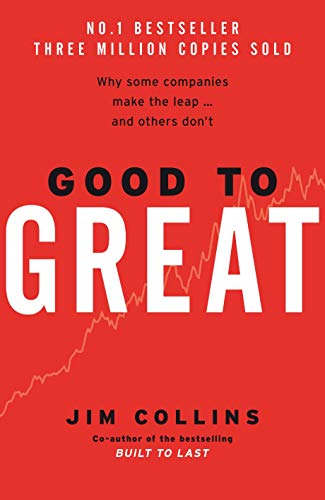
"Good to Great" by Jim Collins - What Great Companies Actually Do
Jim Collins and his research team analyzed 28 companies over five years to identify what distinguished those that made the leap from good performance to sustained greatness. The findings, including the Hedgehog Concept and Level 5 Leadership, remain some of the most cited frameworks in strategy discussions.
What to look for
What to consider
Match the book to where your organization currently stands. Companies drafting a mission for the first time benefit most from Start With Why and The Advantage. Companies with an existing mission that is not functioning operationally should start with Traction. Companies focused on long-term institutional building will get the most from Built to Last and Good to Great.
What to consider
For leadership teams, reading the same book together and discussing it in structured sessions multiplies the value significantly compared to individual reading. One shared vocabulary for discussing purpose and values makes workshops more productive and decisions faster.
What to consider
Do not treat mission work as a one-time event. The best mission statements evolve as companies grow and markets change, but core values almost never do. Separating the enduring from the adaptive is one of the most valuable exercises these books facilitate.
What to consider
For more professional development and office resources, see our guides on [best company magazine subscriptions](/articles/best-company-magazine) and [best company holiday gifts](/articles/best-company-holiday-gifts). See how we evaluate products on our [methodology](/methodology) page.
FAQs
A mission statement describes what your company does and for whom, grounded in the present. A vision statement describes where the company is headed, anchored in the future. Both are necessary but distinct. A mission is operational and specific enough to guide daily decisions; a vision is aspirational and broad enough to inspire without constraining the path to get there.
Effective mission statements are typically one to three sentences. The best ones can be memorized and recited by any employee after a single reading. Longer mission statements often indicate unclear thinking about what the company actually does or values. Brevity forces specificity, and specificity is what gives a mission statement its power to guide real decisions.
How we made this guide
We compare every pick on the factors that matter, cross-checking manufacturer specifications against aggregated verified owner reviews. We rank independently and never take payment for placement. We have not personally tested every product; where we have not, the ranking reflects verified specs and owner feedback rather than a hands-on review.
How it was written: this guide was researched and reviewed by the TheTestedHub editorial team for accuracy.
Affiliate disclosure: TheTestedHub is reader-supported. When you buy through links on our site, we may earn a commission at no extra cost to you.
Related guides

Education Books for Every Budget: What’s Worth Applying in 2026

Culinary Books Worth Every Penny for Every Skill Level

Buy the Best Cryptocurrency Books & Security Guides 2026

Buy the Wisden Book of Test Cricket 1877-2025 & Top Collectibles

Books for Cricket Fans: Choose by What You Want to Learn

Craft Books Compared: The Knitter’s Guide to 2026’s Essential Reads

Funny Books with Heart: Best Comedy Reads of 2026
