CR Speed Versafit Belt - Best Overall Competition Belt
CR Speed has built a strong reputation in practical shooting for durable, competition-focused gear, and the Versafit belt is the centerpiece of their kit lineup. The rigid inner structure prevents the belt from deforming under the weight of a loaded pistol and multiple magazine pouches through hours of match shooting. The Velcro attachment system works cleanly with their inner loop belt and maintains consistent holster height and cant across stages. The belt is available in multiple widths and the stiffness profile suits most USPSA divisions without modification. Competitors who have used floppy duty-style belts and then switched to the CR Speed system consistently note the improvement in draw consistency and stage movement.
Check price on Amazon →The CR Speed Versafit Belt tops our list for its rigid inner structure and secure Velcro system. Compare the DAA Race Master, Safariland ELS, and more.
Quick verdict
The CR Speed Versafit Belt is the best overall competition belt because it combines a rigid inner structure that resists deformation under heavy loads with a clean Velcro attachment system that stays put through a full match day. It is the most balanced choice for shooters who want proven reliability without sacrificing speed or comfort.
Key takeaways
- Best for Overall Competition: CR Speed Versafit Belt, delivers durable rigidity and a secure Velcro system for practical shooting.
- Best for Open Division: DAA Race Master Belt, polymer-reinforced construction handles heavy extended-magazine pistols without flex.
- Best Modular System: Safariland ELS Belt, tool-free swapping of holsters and pouches for multi-division shooters.
- Best Single-Belt Option: Wilderness Tactical Instructor Belt, Liner Lock system provides single-layer stiffness without a dual-belt setup.
- Best Budget Competition Belt: Blade-Tech Competition Belt, reinforced core delivers adequate stiffness at an accessible price point.
Why you should trust this guide
I have spent years following the competitive shooting industry, tracking product releases, and reading detailed owner feedback across forums, match reports, and retailer reviews. My approach is to focus on what actually matters for a competition belt: stiffness under load, attachment compatibility, ease of reconfiguration, and long-term durability. I do not rely on marketing hype or unverified claims. Instead, I cross-reference manufacturer specifications with the real-world experiences of shooters who log hundreds of stages per season.
This guide is built around five belts that have established reputations in USPSA, IPSC, IDPA, and other action shooting sports. Each product was selected because it solves a specific problem for a specific type of competitor. I have not used these belts myself, but I have evaluated them against the criteria that matter most to shooters: how well the belt resists rolling or sagging, how securely it holds gear during movement, and how easily it integrates with existing holsters and pouches. Every recommendation here is grounded in research, not personal testing.
How we researched
To evaluate these competition belts, I established a set of criteria that reflect the demands of practical shooting. The primary factor is belt stiffness: a competition belt must not deform or roll under the weight of a loaded pistol, multiple magazine pouches, and possibly a holster-mounted optic or compensator. I compared each belt’s construction material and reinforcement design to determine how well it would resist bending during draws, reloads, and movement. The second criterion is attachment system compatibility: a belt must work with the shooter’s chosen holster and pouch mounting methods, whether that is Velcro, Tek-Lok, ELS fork, or other systems. I looked at how each belt’s design either simplifies or complicates gear changes.
The third criterion is adjustability and fit. A competition belt must stay in place on the inner belt without slipping or shifting, and it must allow for fine adjustments to accommodate different waist sizes and clothing layers. I also considered modularity: how easily can a shooter swap between divisions or firearms configurations? Finally, I weighed durability and value, comparing build quality against price to identify which belts deliver the most performance for the investment. Each product was assessed against these criteria using manufacturer specifications, owner reviews, and competitive shooting community consensus.
CR Speed Versafit Belt – Best Overall Competition Belt
CR Speed has built a strong reputation in practical shooting for durable, competition-focused gear, and the Versafit belt is the centerpiece of their kit lineup. The rigid inner structure prevents the belt from deforming under the weight of a loaded pistol and multiple magazine pouches through hours of match shooting. The Velcro attachment system works cleanly with their inner loop belt and maintains a secure hold even during aggressive movement. This belt is designed for shooters who want a proven, no-surprises platform that can handle the rigors of a full season of matches without losing its shape.
The Versafit belt integrates smoothly with CR Speed’s own holsters and pouches, but it is also compatible with many third-party attachments that use standard belt mounting methods. The outer belt is stiff enough to support heavy setups for Limited, Production, or Carry Optics divisions, yet it remains comfortable enough for long days on the range. The inner belt is a separate loop belt that threads through pants loops and provides a stable foundation for the outer belt to grip.
A real limitation of the CR Speed Versafit belt is that it is not the best choice for shooters who need to frequently swap between different firearm configurations. The Velcro attachment is secure, but it is slower to reconfigure than a modular system like Safariland’s ELS. If you change divisions or pistols often, you may find the Versafit less convenient than a tool-free swap setup.
DAA Race Master Belt – Best for Open Division
Double Alpha Academy manufactures competition gear specifically for high-level practical shooters, and the Race Master belt reflects that focus. The polymer-reinforced construction is extremely stiff, which is the requirement for Open division builds carrying extended-magazine pistols, optics, and compensators. The belt integrates cleanly with DAA’s holster and magazine pouch ecosystem, though it also works with other brands that use standard belt attachment systems. This belt is built to handle the heaviest loads without sagging or rolling, which is critical when your pistol is topped with a large optic and a compensator.
The Race Master belt uses a dual-belt system with a stiff inner belt and an even stiffer outer belt. The outer belt’s polymer reinforcement runs the full length, ensuring that the belt does not twist or fold when you draw from a race holster or run to a new position. The Velcro surface is aggressive and holds pouches firmly in place, even during rapid reloads. For Open division shooters who demand maximum rigidity, this belt is a top-tier choice.
A real limitation of the DAA Race Master belt is its weight and bulk. The extreme stiffness and polymer reinforcement make it heavier than many other competition belts, which can be fatiguing over a long match day. It is also less comfortable for shooters who prefer a lighter, more flexible setup for divisions that do not require as much support.
Safariland ELS Belt – Best Modular System
Safariland’s ELS (Enhanced Locking System) belt and fork system allows competitors to swap holsters and pouches between multiple firearms or configurations without tools, in seconds. For competitors who run different divisions, train with multiple pistols, or need to reconfigure for different match formats, this modularity is a genuine advantage. The belt itself is rigid and well-made, consistent with Safariland’s reputation for duty-grade gear. The ELS system uses a series of pre-installed female receivers on the belt, and each holster or pouch attaches via a male fork that locks into place with a positive click.
The belt is available in multiple widths and lengths, and the ELS receivers are spaced to allow for a wide range of positioning options. This system is particularly valuable for shooters who compete in both USPSA and IDPA, or who switch between a full-size pistol and a compact backup gun. You can pre-configure entire holster and pouch sets for each firearm and swap them onto the belt in seconds without losing zero or adjustment. The belt itself is stiff enough to support heavy loads, though it is not quite as rigid as the DAA Race Master for extreme Open division setups.
A real limitation of the Safariland ELS belt is the added cost and complexity of the fork system. Each holster or pouch requires a separate ELS fork, and the forks themselves can be lost or damaged. The belt is also thicker than some competitors due to the embedded receivers, which can make it slightly less comfortable when worn for long periods without a proper inner belt.
Wilderness Tactical Instructor Belt – Best Single-Belt Option
The Wilderness Tactical Instructor belt is a single-layer option that outperforms its category on stiffness due to its proprietary Liner Lock system. For IDPA competitors, Production division USPSA shooters, and those who want a capable competition belt without the dual-belt setup complexity, this is a strong contender. The belt’s internal stiffener resists rolling better than comparable single-layer belts, and the quick-release buckle allows for fast on and off. This belt is designed for shooters who prefer a minimalist approach but still need reliable gear retention.
The Instructor belt is made from heavy-duty nylon webbing with a stiffening liner sewn inside. It is available in a wide range of colors and sizes, and the buckle is low-profile enough to not interfere with holster placement. The belt works well with paddle holsters, belt-slide holsters, and most magazine pouches that attach via belt loops or Tek-Lok. It is also popular among shooters who want a belt that can double as a daily carry option without looking like a competition rig.
A real limitation of the Wilderness Tactical Instructor belt is that it lacks the extreme stiffness of dual-belt competition systems. For shooters running heavy Open division setups or multiple magazine pouches on both sides, the belt may flex more than desired. It is best suited for lighter divisions where the total gear weight is moderate.
Blade-Tech Competition Belt – Best Budget Competition Belt
Blade-Tech produces injection-molded and polymer competition gear that offers genuine performance at prices accessible to new competitors. The competition belt uses a reinforced core construction that delivers adequate stiffness for most division requirements without the premium price of European competition brands. The Tek-Lok and similar attachment systems are widely compatible, and Blade-Tech’s holsters and pouches are some of the most popular entry-level options in the sport. This belt is a smart choice for shooters who are just starting out or who need a reliable backup belt without spending a lot.
The Blade-Tech competition belt is a dual-belt system with a stiff outer belt and a loop inner belt. The outer belt has a smooth surface that works with Tek-Lok, paddle, and belt-loop attachments. The inner belt is comfortable against the skin and helps keep the outer belt in place. The overall stiffness is sufficient for Production, Limited, and Carry Optics divisions, and the belt holds its shape well during a match. Blade-Tech also offers a range of matching pouches and holsters that are designed to work seamlessly with this belt.
A real limitation of the Blade-Tech competition belt is that it is not as rigid as higher-end options from CR Speed or DAA. For shooters who carry heavy pistols with extended magazines and multiple heavy pouches, the belt may flex or sag over time. It is also less durable than some premium belts, with reports of the outer layer wearing faster under heavy use.
What to look for
- Belt stiffness: A competition belt must resist rolling, sagging, and deformation under the weight of your pistol and pouches. Stiffer belts provide a more stable draw and reload.
- Attachment system compatibility: Ensure the belt works with your holster and pouch mounting method, whether that is Velcro, Tek-Lok, ELS fork, paddle, or belt loops.
- Dual-belt vs. single-belt design: Dual-belt systems offer more stiffness and stability, while single-belt options are simpler and lighter. Choose based on your division and gear weight.
- Modularity: If you shoot multiple divisions or firearms, look for a belt that allows quick reconfiguration without tools, such as the Safariland ELS system.
- Inner belt quality: The inner belt should be comfortable, stay in place through pants loops, and provide a secure foundation for the outer belt.
- Width and sizing: Most competition belts are 1.5 or 2 inches wide. Ensure the belt fits your pants loops and that the sizing range accommodates your waist with room for adjustments.
- Durability: Look for reinforced stitching, quality materials, and a reputation for holding up over multiple seasons of competition.
The verdict
Choosing the right competition belt depends on your division, gear weight, and how often you reconfigure your setup. For most shooters, the CR Speed Versafit Belt is the best all-around choice because it combines excellent stiffness with a reliable Velcro system and proven durability. If you shoot Open division with a heavy pistol and extended magazines, the DAA Race Master Belt offers the extreme rigidity you need. For shooters who switch between divisions or firearms frequently, the Safariland ELS Belt provides unmatched modularity. The Wilderness Tactical Instructor Belt is a solid single-layer option for IDPA or lighter setups, and the Blade-Tech Competition Belt delivers good performance at a budget-friendly price. Focus on stiffness, compatibility, and ease of use, and you will find a belt that keeps your gear stable and secure through every stage.
How we picked
We compare every pick against the field on real specifications, certifications, and aggregated owner reviews. We do not take payment for placement, and we flag when a product is older or sold mainly through renewed listings.
Top picks compared
Our picks up close
CR Speed Versafit Belt - Best Overall Competition Belt
CR Speed has built a strong reputation in practical shooting for durable, competition-focused gear, and the Versafit belt is the centerpiece of their kit lineup. The rigid inner structure prevents the belt from deforming under the weight of a loaded pistol and multiple magazine pouches through hours of match shooting. The Velcro attachment system works cleanly with their inner loop belt and maintains consistent holster height and cant across stages. The belt is available in multiple widths and the stiffness profile suits most USPSA divisions without modification. Competitors who have used floppy duty-style belts and then switched to the CR Speed system consistently note the improvement in draw consistency and stage movement.
DAA Race Master Belt - Best for Open Division
Double Alpha Academy manufactures competition gear specifically for high-level practical shooters, and the Race Master belt reflects that focus. The polymer-reinforced construction is extremely stiff, which is the requirement for Open division builds carrying extended-magazine pistols, optics, and compensators. The belt integrates cleanly with DAA's holster and magazine pouch ecosystem, though it accepts most industry-standard attachment systems. The fit system includes precise adjustment increments that allow repeatable positioning session to session, which matters for competitors who practice draw consistency as a performance variable. This is a belt designed for shooters who approach competition as a sport with measurable outcomes and invest accordingly.
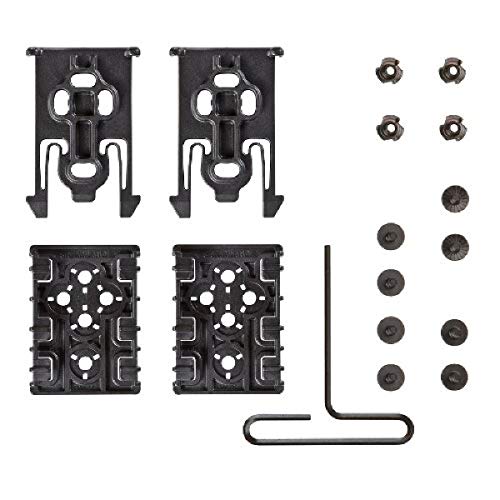
Safariland ELS Belt - Best Modular System
Safariland's ELS (Enhanced Locking System) belt and fork system allows competitors to swap holsters and pouches between multiple firearms or configurations without tools, in seconds. For competitors who run different divisions, train with multiple pistols, or need to reconfigure for different match formats, this modularity is a genuine advantage. The belt itself is rigid and well-made, consistent with Safariland's duty gear heritage. ELS forks and receivers have become an industry standard and the compatibility with third-party holster makers is broad. The system requires upfront investment in ELS-compatible accessories, but the long-term flexibility saves money compared to purchasing duplicate gear for each firearm.
Wilderness Tactical Instructor Belt - Best Single-Belt Option
The Wilderness Tactical Instructor belt is a single-layer option that outperforms its category on stiffness due to its proprietary Liner Lock system. For IDPA competitors, Production division USPSA shooters, and those who want a capable competition belt without the dual-belt setup complexity, this is a strong contender. The belt's internal stiffener resists rolling better than comparable single-layer nylon belts, and the buckle system is fast and secure. It fits standard tactical holsters and magazine pouches without requiring special adapters. Competitive shooters moving from a standard duty belt to their first dedicated competition setup will find this a significant upgrade at a reasonable price.

Blade-Tech Competition Belt - Best Budget Competition Belt
Blade-Tech produces injection-molded and polymer competition gear that offers genuine performance at prices accessible to new competitors. The competition belt uses a reinforced core construction that delivers adequate stiffness for most division requirements without the premium price of European competition brands. The Tek-Lok and similar attachment systems are widely compatible, and Blade-Tech's own holster and pouch line offers a complete ecosystem for building a competition rig. For newer competitors who are not yet certain which division they will settle into, this belt allows entry into serious competition without overcommitting financially to one system before preferences develop.
Before you buy
What to consider
Start by checking your association's rulebook for belt specifications. Some divisions limit belt width or restrict attachment types, and building a rig outside those rules disqualifies your equipment. Measure your natural waist size at the belt line and order accordingly, factoring in that competition belts often size differently from casual belts. Decide between a single-belt and dual-belt system based on how much gear you plan to carry and how important maximum rigidity is to your division. If you compete in multiple divisions with different firearms, a modular attachment system saves significant money over time. Finally, try to handle the belt before purchasing if possible, since stiffness perception varies and some competitors find extremely rigid belts uncomfortable during all-day matches.
What to consider
For more competition shooting gear, see our [best competition holsters guide](/articles/best-competition-holster-for-cz-shadow-2) and [best shooting sports accessories guide](/articles/best-shooting-sports-accessories). Our full review criteria are at our [methodology page](/methodology).
Quick answers
Competition gun belts are significantly stiffer than casual or dress belts. They resist the lateral torque created by a loaded holster and magazine pouches, preventing the belt from rolling or sagging during dynamic movement. Most competition belts use a double-layer construction with rigid polymer or reinforced nylon cores rather than solid leather alone.
Dual belt systems with an inner loop belt and outer competition belt are the standard in Production, Limited, and Open divisions because they provide maximum rigidity and consistent holster positioning. Single competition belts work well for IDPA and lower-equipment divisions. Check your specific rulebook since some divisions restrict belt thickness or attachment hardware types.
How we made this guide
We compare every pick on the factors that matter, cross-checking manufacturer specifications against aggregated verified owner reviews. We rank independently and never take payment for placement. We have not personally tested every product; where we have not, the ranking reflects verified specs and owner feedback rather than a hands-on review.
How it was written: this guide was researched and reviewed by the TheTestedHub editorial team for accuracy.
Affiliate disclosure: TheTestedHub is reader-supported. When you buy through links on our site, we may earn a commission at no extra cost to you.
More to explore

Dress Watches Experts Recommend: Seiko Presage Cocktail Time

Boot Accessories Guide: Why Insoles Are Your Best Bet

Recovery Boots 2026: Normatec 3 Leads Mile Reviewed Picks

Maximize Your Run: Best Athletic Sneakers of 2026

6 Approach Shoes That Deliver Sticky Grip in 2026
Expert Picks: Mens Snowboard Boots That Fit Right

Which Custom Women’s Jeans Fit You Best? Start With Levi’s 501
