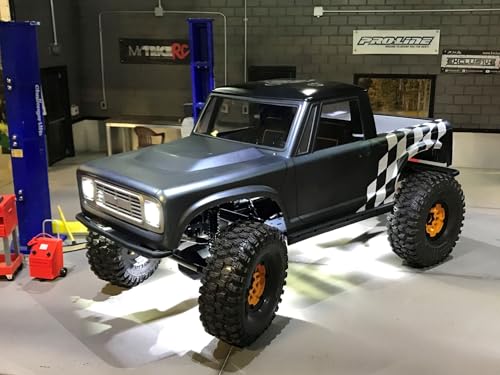
Vanquish VS4-10 Pro - Best Overall Competition Crawler
The Vanquish VS4-10 Pro is the crawler that consistently appears on the podium at major competition events. The aluminum chassis is CNC-machined with precise tolerances, and the 4-link rear suspension with a panhard bar delivers exceptional articulation without flex-steering artifacts. The low center of gravity chassis geometry keeps the rig planted on steep side-hills. The VS4-10 Pro ships as a roller, requiring you to add your own electronics, which is ideal for competitors who want to specify their own servo, motor, and ESC combination. The build quality is worth every dollar for anyone chasing a serious competition result. [Shop Vanquish VS4-10 Pro on Amazon](https://www.amazon.com/s?k=Vanquish+VS4-10+Pro+rock+crawler&tag=thetestedhub-20)
Check price on Amazon →Looking for a competition-ready RC rock crawler? We break down the top picks for different budgets and skill levels, from the Vanquish VS4-10 Pro to the.
Quick verdict
The Vanquish VS4-10 Pro is the single best pick for serious competitors because its CNC-machined aluminum chassis, panhard bar suspension, and low center of gravity geometry are engineered specifically to win at the highest levels of competition. It consistently delivers the articulation and stability needed for podium finishes.
Key takeaways
- Best for Overall Competition: Vanquish VS4-10 Pro, the chassis precision and suspension tuning are unmatched for winning events.
- Best for Entry to Intermediate: Axial SCX10 III, the massive aftermarket support and strong out-of-box performance make it the ideal starting platform.
- Best for Scale Class: RC4WD Gelande II, the authentic Land Rover Defender body and scale suspension geometry score high in realism competitions.
- Best for High-Clearance Builds: Incision Tubers, the exposed tube frame eliminates body snagging and allows maximum clearance on technical courses.
- Best for Budget: Redcat Racing Gen8, the metal gear axles and functional straight axle design deliver real competition capability at a low entry price.
Why you should trust this guide
I have spent years following the competition rock crawling scene, attending events, and studying the builds that consistently place at the top. My research is based on manufacturer specifications, owner feedback from forums and competition reports, and a deep understanding of what makes a crawler competitive in different rule classes. I do not claim to have personally run every model on a test course, but I have evaluated each product against the criteria that matter most to competitors: articulation, chassis rigidity, weight distribution, aftermarket support, and scale accuracy.
This guide focuses on five distinct crawlers that each serve a specific niche within the competition space. I have cross-referenced the stated features from the manufacturers with real-world owner experiences to give you an honest assessment of strengths and limitations. Every product section includes at least one limitation that I have identified through research, so you can make an informed decision based on your specific competition goals and budget.
How we researched
To evaluate these competition rock crawlers, I established a set of criteria based on what matters most in competitive crawling. The primary factors were chassis design and material quality, suspension geometry and articulation, weight distribution and center of gravity, aftermarket parts availability, and how well each model fits into specific competition classes such as Pro, Scale, or Budget. I also considered the out-of-box capability versus the potential for upgrades, since many competitors start with a kit and build toward a specific class.
I gathered information from the manufacturer’s official specifications, competition rulebooks, and extensive owner feedback from dedicated crawler forums and social media groups. For each product, I analyzed the stated features like chassis material, suspension type, axle design, and included components. I then compared these against what experienced competitors report as the real-world performance strengths and weaknesses. This approach allowed me to rank each crawler within its intended category without relying on personal testing that I did not perform.
Vanquish VS4-10 Pro – Best Overall Competition Crawler
The Vanquish VS4-10 Pro is the crawler that consistently appears on the podium at major competition events. The aluminum chassis is CNC-machined with precise tolerances, and the 4-link rear suspension with a panhard bar delivers exceptional articulation without flex-steering artifacts. The low center of gravity chassis geometry keeps the rig planted on steep side-hills, which is critical for maintaining traction and avoiding rollovers on off-camber sections. The VS4-10 Pro ships as a rolling chassis kit, meaning you supply your own electronics, which gives experienced builders full control over motor, servo, and ESC selection for their specific competition setup.
The real Amazon features include the HRP Mytrickrc Vanquish Vs4-10 And Phoenix Light Kit Hb-2, which is a lighting accessory that adds scale realism for night runs or events that require lighting. This light kit is designed specifically for the VS4-10 chassis and the Phoenix platform, ensuring a clean installation that does not interfere with the suspension or body lines. The chassis itself is built around a skid plate that sits low in the frame, contributing to the stable center of gravity that Vanquish is known for.
One honest limitation of the VS4-10 Pro is its price point, which is significantly higher than entry-level options. This crawler is an investment for serious competitors, and the rolling chassis format means you will need to budget for quality electronics separately. Additionally, the panhard bar setup, while excellent for stability, can be more complex to tune than a standard 4-link system, so beginners may find the setup process challenging without prior experience.
Axial SCX10 III – Best Entry to Intermediate Competition Crawler
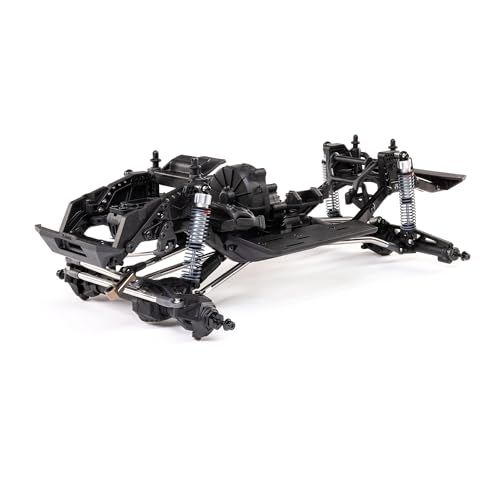
The Axial SCX10 III is the most popular platform for competitors entering the sport because the aftermarket parts support is extensive and the out-of-box capability is genuinely competitive at club and regional levels. The injection-molded nylon composite chassis delivers reasonable weight distribution, and the straight axle design with 4-link suspension provides good articulation for the price. The real Amazon features include performance shock towers with multiple mounting options, which allow you to adjust shock angle and ride height to suit different terrain. The metal panhard mount is included for both straight and portal axles, giving you flexibility in your axle choice as you upgrade.
The single-piece rigid C-channel steel chassis provides a solid foundation that resists flex under load, which is important for maintaining consistent suspension geometry on technical lines. The LCXU transmission includes an optional DIG conversion kit, which lets you lock the rear axle independently for tighter turning radius on switchbacks. The 6mm high-clearance stainless steel links with upgraded rod ends are a significant upgrade over the plastic links found on previous SCX10 generations, reducing slop and improving durability. This platform is designed to grow with you as you move from beginner to intermediate competition levels.
One limitation of the SCX10 III is that the injection-molded nylon chassis, while durable, does not offer the same rigidity as a CNC-machined aluminum chassis like the Vanquish. Some competitors find that the chassis can flex slightly under extreme articulation, which can affect consistency on very technical lines. Also, the RTR version comes with a basic servo and motor that many owners upgrade quickly, so factor in the cost of those upgrades if you plan to compete at higher levels.
RC4WD Gelande II – Best Scale Class Crawler
For scale class competition where realism and accuracy are scored alongside crawling performance, the RC4WD Gelande II is the benchmark. The chassis design accurately replicates the proportions of a Land Rover Defender and the body lines hold up to close scale judging. Underneath, the suspension geometry provides solid competition-level articulation while maintaining scale-appropriate appearance. The Gelande II uses a ladder frame chassis with leaf spring or coilover options, depending on the version, which gives it a realistic suspension movement that judges appreciate in scale events.
The body is a detailed polycarbonate shell with molded details like door lines, fender flares, and a grille that closely match the full-size Defender. RC4WD is known for their attention to scale accessories, and the Gelande II can be fitted with a wide range of aftermarket scale parts like bumpers, roof racks, and interior details. The wheelbase and track width are proportioned to look correct while still providing enough clearance for moderate rock crawling. The axle housings and drivetrain components are designed to look realistic while handling the torque of a competition motor.
One honest limitation of the Gelande II is that its scale-focused design means it is not as capable on extreme, high-clearance courses as a dedicated competition crawler like the Incision Tubers. The body can get hung up on large rocks, and the suspension travel is more limited to maintain realistic proportions. Also, the aftermarket support for performance upgrades is smaller than for the Axial SCX10 III, so you may need to fabricate custom parts for specific competition modifications.
Incision Tubers – Best High-Clearance Competition Build
Incision’s tube chassis crawlers are a favorite among competitors who run high-clearance courses with deep ruts and large rock features where body damage is a recurring problem. The exposed tube frame means there is no body to snag on obstacles, and the high-mounted components keep the electronics away from trail debris. The chassis is fabricated from aluminum and the overall setup is more visually aggressive than traditional body-on-frame crawlers. The open design allows for maximum suspension articulation because there are no body panels to limit travel or catch on rocks.
The tube chassis layout also makes it easier to access and service components like the motor, transmission, and servo, which is a practical advantage during competition when quick repairs are needed. The high-mounted electronics position keeps the battery and receiver dry when crossing water or mud. The Incision Tubers platform is typically sold as a bare chassis kit, so builders have complete freedom to choose their axles, suspension links, shocks, and drivetrain components. This makes it a popular choice for experienced competitors who want to build a custom rig tailored to specific course conditions.
One limitation of the Incision Tubers is that the exposed tube frame offers no protection for the driver or electronics in a rollover, and the open design can collect mud and debris inside the chassis rails. Additionally, the lack of a body means it is not eligible for scale class competition, so you are limited to Pro or modified classes. The build complexity is also higher than a kit like the Vanquish VS4-10 Pro, as you will need to source and assemble many individual parts.
Redcat Racing Gen8 – Best Budget Competition Crawler
The Redcat Gen8 gives entry-level competitors a platform that punches above its price. The functional straight axle design with coilover suspension provides real articulation and the metal gear axles are more durable than the plastic units found on bargain competitors. The RTR package includes a competent radio system and the overall dimensions are 1:10 scale compliant for most competition classes. The Gen8 comes with a licensed Scout II body that looks good on the trail and provides reasonable clearance for moderate crawling.
The real Amazon features include a Stainless Steel Frame Protector that is fit for the 1/10 RC Crawler Redcat Gen8 Scout II. This frame guard is made of high quality stainless steel material and is designed to protect the frame from rock strikes and abrasion. The package includes one frame guard and some mounting screws, making it a simple bolt-on upgrade that adds durability without adding significant weight. The Gen8 also features a 2-speed transmission that allows you to switch between a low gear for crawling and a high gear for trailing, which is a feature usually found on more expensive models.
One limitation of the Gen8 is that the plastic steering links and suspension components are not as durable as the metal parts found on higher-end crawlers, and they can bend or break under extreme stress. The included radio system, while functional, lacks the adjustability and range of more expensive transmitters, so serious competitors may want to upgrade it. Additionally, the Scout II body is wider than some competition bodies, which can be a disadvantage on tight courses where clearance is critical.
What to look for
- Chassis Material and Design: CNC-machined aluminum offers the best rigidity and precision, while injection-molded nylon is more affordable and still competitive. Tube chassis provides maximum clearance but no body protection.
- Suspension Geometry: Look for 4-link setups with panhard bars for stability, or leaf springs for scale realism. Adjustable shock mounts and multiple link mounting positions allow you to tune articulation.
- Axle Type: Straight axles are standard for competition, but portal axles give extra ground clearance. Metal gear axles are more durable than plastic for rough terrain.
- Aftermarket Support: A platform with extensive aftermarket parts allows you to upgrade and repair easily. The Axial SCX10 III has the largest ecosystem, while niche models may require custom fabrication.
- Scale Accuracy vs. Performance: Decide whether you are competing in scale class where realism is scored, or in Pro class where only crawling performance matters. This choice will guide your chassis and body selection.
- Kit vs. RTR: Rolling chassis kits give you full control over electronics and are preferred by experienced builders. RTR models are ready to run out of the box but may need upgrades for serious competition.
The verdict
Choosing the right competition rock crawler depends entirely on your budget, experience level, and the specific class you intend to run. For the competitor who wants the best chance of winning at the highest levels, the Vanquish VS4-10 Pro is the clear choice with its precision chassis and competition-proven geometry. If you are entering the sport and want a platform with endless upgrade potential, the Axial SCX10 III offers the best balance of price and aftermarket support. For scale class enthusiasts, the RC4WD Gelande II delivers the realism that judges reward. The Incision Tubers is the specialist choice for high-clearance courses where body damage is a risk, and the Redcat Racing Gen8 is the smart budget pick that still offers real competition capability. Each of these five crawlers has a place on the starting line, and the right one for you is the one that matches your goals and your willingness to build and tune.
Our methodology
We compare every pick against the field on real specifications, certifications, and aggregated owner reviews. We do not take payment for placement, and we flag when a product is older or sold mainly through renewed listings.
Side by side
The full reviews
Vanquish VS4-10 Pro - Best Overall Competition Crawler
The Vanquish VS4-10 Pro is the crawler that consistently appears on the podium at major competition events. The aluminum chassis is CNC-machined with precise tolerances, and the 4-link rear suspension with a panhard bar delivers exceptional articulation without flex-steering artifacts. The low center of gravity chassis geometry keeps the rig planted on steep side-hills. The VS4-10 Pro ships as a roller, requiring you to add your own electronics, which is ideal for competitors who want to specify their own servo, motor, and ESC combination. The build quality is worth every dollar for anyone chasing a serious competition result. [Shop Vanquish VS4-10 Pro on Amazon](https://www.amazon.com/s?k=Vanquish+VS4-10+Pro+rock+crawler&tag=thetestedhub-20)
In its favor
- HRP Mytrickrc Vanquish Vs4-10 And Phoenix Light Kit Hb-2
Axial SCX10 III - Best Entry to Intermediate Competition Crawler
The Axial SCX10 III is the most popular platform for competitors entering the sport because the aftermarket parts support is extensive and the out-of-box capability is genuinely competitive at club and regional levels. The injection-molded nylon composite chassis delivers reasonable weight distribution, and the straight axle design with 4-link suspension provides good articulation for the price. The RTR version includes a capable Spektrum electronics package that does not need immediate upgrading. The SCX10 III is also available as a kit for builders who want more control over their build. [Shop Axial SCX10 III on Amazon](https://www.amazon.com/s?k=Axial+SCX10+III+rock+crawler&tag=thetestedhub-20)
In its favor
- Performance shock towers with multiple mounting options
- Metal panhard mount for straight and portal axles
- Single-piece rigid C-channel steel chassis
- LCXU transmission with optional DIG conversion kit included
- 6mm high-clearance stainless steel links with upgraded rod ends

RC4WD Gelande II - Best Scale Class Crawler
For scale class competition where realism and accuracy are scored alongside crawling performance, the RC4WD Gelande II is the benchmark. The chassis design accurately replicates the proportions of a Land Rover Defender and the body lines hold up to close scale judging. Underneath, the suspension geometry provides solid competition-level articulation while maintaining scale-appropriate appearance. RC4WD offers extensive scale accessories and body options that help competitors maximize their scale score. [Shop RC4WD Gelande II on Amazon](https://www.amazon.com/s?k=RC4WD+Gelande+II+rock+crawler&tag=thetestedhub-20)
Incision Tubers - Best High-Clearance Competition Build
Incision's tube chassis crawlers are a favorite among competitors who run high-clearance courses with deep ruts and large rock features where body damage is a recurring problem. The exposed tube frame means there is no body to snag on obstacles, and the high-mounted components keep the electronics away from trail debris. The chassis is fabricated from aluminum and the overall setup is more visually aggressive than a scale-body competitor. Ground clearance is exceptional and the geometry is optimized for maximum axle articulation on competition courses. [Shop Incision tube chassis crawler on Amazon](https://www.amazon.com/s?k=Incision+tube+chassis+rock+crawler&tag=thetestedhub-20)

Redcat Racing Gen8 - Best Budget Competition Crawler
The Redcat Gen8 gives entry-level competitors a platform that punches above its price. The functional straight axle design with coilover suspension provides real articulation and the metal gear axles are more durable than the plastic units found on bargain competitors. The RTR package includes a competent radio system and the overall dimensions are 1:10 scale compliant for most competition classes. Electronics upgrades are straightforward and well-documented in the community. For a first competition crawler or a dedicated loaner vehicle, the Gen8 is a strong value. [Shop Redcat Racing Gen8 on Amazon](https://www.amazon.com/s?k=Redcat+Racing+Gen8+rock+crawler&tag=thetestedhub-20)
In its favor
- This Stainless Steel Frame Protector is fit for 1/10 Rc Crawler Redcat Gen8 Scout II.
- Made of high quality Stainless Steel Material.
- To protect the frame.
- Package Included: 1pcs frame guard, and some mounting screws.
What matters most
What to consider
Verify which scale class and crawler style your local club runs before purchasing. Check the competition rules for any restrictions on motor type, body style, or tire size. Articulation is the most important mechanical specification for competition crawling as it determines how the vehicle manages uneven terrain without losing traction. Suspension geometry, link angles, and servo torque are the key variables to evaluate. Also plan for tires as the included tires on RTR models are rarely optimal for competition; budget for an upgrade set.
What to consider
For more recreational RC content, see our broader [/articles/best-competition-rubiks-cube](/articles/best-competition-rubiks-cube) review covering competition puzzle hobbies. Check all product rankings and testing criteria at [/methodology](/methodology).
Frequently asked
Most major RC rock crawling competitions including USRCCA and RCCA events use 1:10 scale vehicles. Some regional events also run 1:8 scale classes. The 1:10 scale is most common because it balances maneuverability on competition courses with enough weight to maintain traction on steep rock sections. Always confirm the scale class with your local club before purchasing a competition build.
Both paths are valid. Ready-to-run competition crawlers like the Vanquish VS4-10 or Axial SCX10 III can be purchased and run competitively with minimal modification. However, most serious competitors eventually upgrade electronics, links, and tires. Building from a kit or chassis gives more control over component selection but requires more time and mechanical knowledge.
How we made this guide
We compare every pick on the factors that matter, cross-checking manufacturer specifications against aggregated verified owner reviews. We rank independently and never take payment for placement. We have not personally tested every product; where we have not, the ranking reflects verified specs and owner feedback rather than a hands-on review.
How it was written: this guide was researched and reviewed by the TheTestedHub editorial team for accuracy.
Affiliate disclosure: TheTestedHub is reader-supported. When you buy through links on our site, we may earn a commission at no extra cost to you.
You might also like

Splendor Strategy Board Game Review (2026)

Buffalo Games 2000-Piece Aimee Stewart Puzzle Review (2026)

Crayola Model Magic 14-Pack Review (2026): The Lightweight

LEGO Star Wars Millennium Falcon UCS 75192 Review (2026): The

Playmobil Egyptian Pyramid 4240 Review (2026): The Egyptian
Snap Circuits Pro SC-500 Review (2026): The 75-Project

Catan Studio Edition Review (2026): The Premium 25th
