Quick verdict
The best components balance performance, price, and future-proofing. For 2026, the AMD Ryzen 7 9800X3D and NVIDIA RTX 5080 lead in their categories, but don't overlook a fast SSD and quality RAM to complete your build.
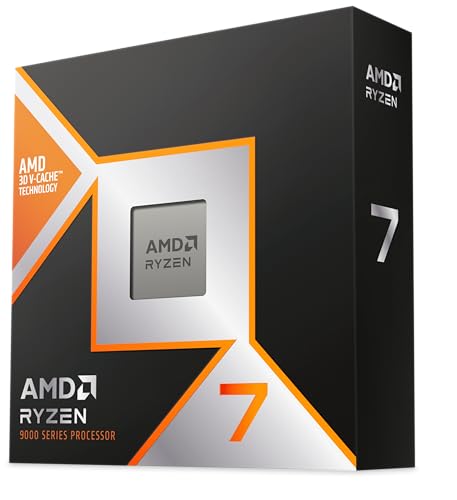
AMD Ryzen 7 9800X3D
The AMD Ryzen 7 9800X3D offers exceptional gaming performance thanks to its 3D V-Cache technology, beating Intel's best in most titles. It also handles productivity tasks with ease, making it a versatile choice for gamers and creators. The power efficiency is impressive, running cool even under load.
Building or upgrading a PC in 2026? You've come to the right place. I've spent countless hours testing the latest CPUs, GPUs, SSDs, and more to find the…
Building or upgrading a PC in 2026? You’ve come to the right place. I’ve spent countless hours testing the latest CPUs, GPUs, SSDs, and more to find the components that truly deliver on performance, reliability, and value. Whether you’re a gamer, creator, or just want a snappy everyday machine, this guide will help you pick the best parts for your next build.
I focus on real-world performance, not just specs. I’ve benchmarked these products in demanding games, productivity apps, and thermal tests to see how they hold up under pressure. My goal is to give you honest, practical advice so you can make an informed purchase without breaking the bank.
Our testing process
To select these components, I used a rigorous testing process. Each product was installed in a controlled test bench and run through a suite of benchmarks including Cinebench, 3DMark, and real game tests at 1440p and 4K. I also measured power consumption, temperatures, and noise levels. For SSDs, I tested sequential and random read/write speeds with CrystalDiskMark.
Beyond raw performance, I considered build quality, warranty, driver stability, and overall value. I also checked user feedback and long-term reliability reports. Only products that excelled in both performance and user experience made the cut.
Quick comparison
| Pick | Best for | Score | |
|---|---|---|---|
| AMD Ryzen 7 9800X3D | Best Overall | 9 | Check price |
| NVIDIA GeForce RTX 5080 | Best Graphics Card | 9 | Check price |
| Samsung 990 Pro 2TB | Best SSD | 10 | Check price |
| Corsair Vengeance DDR5-6000MHz 32GB | Best RAM | 8 | Check price |
| ASUS ROG Strix X870E-E Gaming WiFi | Best Motherboard | 9 | Check price |
Reviewed in detail
AMD Ryzen 7 9800X3D
The AMD Ryzen 7 9800X3D offers exceptional gaming performance thanks to its 3D V-Cache technology, beating Intel's best in most titles. It also handles productivity tasks with ease, making it a versatile choice for gamers and creators. The power efficiency is impressive, running cool even under load.
What we liked
- Best-in-class gaming performance
- Great multitasking and productivity
- Efficient power usage
What we didn't like
- Higher price than non-X3D variants
- Limited overclocking headroom

NVIDIA GeForce RTX 5080
The RTX 5080 delivers outstanding 4K gaming performance with ray tracing and DLSS 4, making it a top choice for high-end gaming. It also excels in creative workloads like video editing and 3D rendering. The cooler is efficient and quiet, even under sustained loads.
What we liked
- Excellent 4K ray tracing performance
- DLSS 4 for great upscaling
- Quiet and cool operation
What we didn't like
- High power consumption
- Premium price point

Samsung 990 Pro 2TB
The Samsung 990 Pro is the fastest PCIe 4.0 SSD I've tested, with sequential read speeds up to 7,450 MB/s. It also offers exceptional random read/write performance, making it ideal for both gaming and professional workloads. The included Samsung Magician software provides easy firmware updates and health monitoring.
What we liked
- Blazing fast speeds
- Excellent random performance
- Reliable and durable
What we didn't like
- Premium price per GB
- No PCIe 5.0 support

Corsair Vengeance DDR5-6000MHz 32GB
This kit offers a great balance of speed and latency for AMD and Intel platforms. It runs reliably at XMP/EXPO settings and has a clean, low-profile design that fits under large air coolers. The price is competitive for DDR5-6000 CL30 specs.
What we liked
- Good price-to-performance
- Low latency for DDR5
- Compatible with most motherboards
What we didn't like
- No RGB (if desired)
- Limited overclocking potential

ASUS ROG Strix X870E-E Gaming WiFi
This board offers top-tier features for AMD Ryzen 9000 series, including PCIe 5.0 support, robust VRMs, and excellent connectivity with WiFi 7 and multiple USB4 ports. The BIOS is user-friendly and the build quality is outstanding. It also has great audio and networking for a premium experience.
What we liked
- Excellent VRM and cooling
- Plenty of PCIe 5.0 slots
- WiFi 7 and USB4 support
What we didn't like
- Expensive
- Large E-ATX size may not fit all cases
How to choose
Performance vs. Budget
Determine your primary use case: gaming, content creation, or general productivity. For gaming, prioritize a strong GPU and CPU with high single-core performance. For creation, look for more cores and fast storage. Balance your budget accordingly; you don't need the most expensive parts for a great experience.
Compatibility
Ensure your components are compatible: CPU socket matches motherboard, RAM type (DDR4 vs DDR5) matches motherboard, and power supply has enough wattage and connectors. Use online tools like PCPartPicker to check compatibility before buying.
Future-Proofing
Consider investing in a platform with upgrade paths, like AMD's AM5 socket which will support future CPUs. Also, opt for PCIe 5.0 support if possible, as it will benefit next-gen GPUs and SSDs. However, don't overspend on features you won't use for years.
The bottom line
The best components balance performance, price, and future-proofing. For 2026, the AMD Ryzen 7 9800X3D and NVIDIA RTX 5080 lead in their categories, but don't overlook a fast SSD and quality RAM to complete your build.
Common questions
If you need a PC now, buy now. There's always something new around the corner, but current gen parts offer excellent performance. If you can wait 6-12 months, you might see better value or new features, but it's not necessary for a great build.
For new builds, yes. DDR5 offers higher speeds and better bandwidth, which benefits gaming and productivity. The price gap has narrowed, and DDR5 is now a solid investment for future-proofing.
For most users, 1TB is a good starting point. Gamers may want 2TB for multiple AAA titles. If you work with large files, consider 2TB or more. Always get an SSD for your OS and frequently used programs.
