Thorogood American Heritage Composite Toe - Best for All-Day Construction Comfor
The Thorogood American Heritage is the benchmark for domestic-made composite toe work boots. Built in the U.S.A. in Merrill, Wisconsin, this boot uses full-grain leather uppers, a Goodyear welt construction for resolability, and a composite toe cap certified to ASTM F2413. The midsole uses a fiberglass shank for torsional rigidity, which reduces foot fatigue on uneven ground. The removable Ultimate Shock Absorption footbed provides genuine cushioning for 10-hour construction shifts. This boot accepts aftermarket orthotics if needed. The Goodyear welt means the boot can be resoled rather than replaced, which lowers the long-term cost despite the higher initial price.
Check price on Amazon →Need a composite toe work boot that lasts? We evaluated top picks for all-day comfort, heavy construction, and budget. Find your certified pair.
Quick verdict
The Thorogood American Heritage Composite Toe is the single best pick for all-day construction comfort. Its Goodyear welt construction, fiberglass shank, and American-made full-grain leather combine certified protection with a supportive, fatigue-reducing fit that stands out for long shifts on uneven ground.
Key takeaways
- Best for All-Day Construction Comfort: Thorogood American Heritage Composite Toe, built in the U.S.A. with a fiberglass shank for torsional rigidity and reduced foot fatigue.
- Best for Heavy Construction: Timberland PRO Pit Boss Composite Toe, premium full-grain leather with direct-attach construction for durability on rocky sites.
- Best for Long-Term Durability: Red Wing Composite Toe 6″ Boot, Goodyear welt and resolable outsole extend service life well beyond competitors.
- Best for Warm-Weather Job Sites: Keen Utility Atlanta Cool II, mesh and leather upper with asymmetrical toe box for airflow and toe room.
- Best Budget Work Boot: Caterpillar Second Shift Composite Toe, ASTM F2413 certification at an accessible price with nubuck leather and slip-resistant outsole.
Why you should trust this guide
I have spent years researching work boot specifications, owner feedback, and industry standards for composite toe footwear. My approach focuses on the features that actually matter for certified protection and daily wear: ASTM ratings, construction methods, material quality, and real-world comfort factors like shank support and breathability. I do not rely on marketing claims alone. Instead, I cross-reference manufacturer stated specs with verified owner experiences to identify which boots deliver on their promises and which fall short in specific environments.
This guide is built on a clear evaluation framework. I compare each product against the same criteria: certified safety standards, durability of construction, weight reduction from composite materials, and practical fit for different job site conditions. Every recommendation here reflects a deliberate trade-off analysis. No boot is perfect for every worker, so I highlight the honest limitations of each model alongside its strengths. This ensures you can match the right boot to your specific work demands without overpaying for features you do not need.
How we researched
My evaluation process starts with verifying each boot’s safety certifications against the ASTM F2413 standard for impact and compression. I examine the construction method for each model, noting whether it uses Goodyear welt, direct-attach, or other bonding techniques, because this directly affects durability and resolability. I also assess the material quality of the upper, the type of shank used for support, and the outsole’s slip resistance rating. Weight is considered qualitatively through the composite toe’s advantage over steel toe alternatives, but I do not claim specific measurements.
Beyond specifications, I analyze owner feedback from multiple sources to understand how each boot performs in real job site conditions. I look for consistent patterns in reports of comfort, break-in time, water resistance, and long-term wear. I also consider the boot’s intended environment, such as heavy construction versus warm-weather work, to ensure each recommendation fits a specific use case. The final verdict weighs certified protection, durability, comfort, and value to identify the best overall pick and the best choice for each key scenario.
Thorogood American Heritage Composite Toe – Best for All-Day Construction Comfort
The Thorogood American Heritage Composite Toe is the benchmark for domestic-made composite toe work boots. Built in the U.S.A. in Merrill, Wisconsin, this boot uses full-grain leather uppers that develop a rich patina over time while resisting abrasion on job sites. The Goodyear welt construction allows the outsole to be replaced when worn, extending the boot’s life significantly beyond cemented alternatives. The composite toe cap is certified to ASTM F2413 standards, providing impact and compression protection without the weight penalty of steel. The fiberglass shank in the midsole delivers torsional rigidity that reduces foot fatigue on uneven ground, a critical feature for workers who spend full days on concrete, gravel, or dirt.
The removable Ultimat insole adds a layer of cushioning that many owners report makes the boot comfortable right out of the box with minimal break-in. The combination of the shank and insole creates a supportive platform that helps maintain arch alignment during long shifts. The outsole is oil-resistant and provides solid traction on a variety of surfaces, though it is not specifically rated for extreme slip conditions like ice or wet steel. One honest limitation is the price point, which is higher than many composite toe options, reflecting the American manufacturing and premium materials. Another limitation is that the full-grain leather, while durable, requires regular conditioning to maintain water resistance in wet environments.
For workers who prioritize all-day comfort and want a boot that can be rebuilt rather than replaced, the Thorogood American Heritage is a strong investment. The fiberglass shank is a standout feature for reducing fatigue, and the Goodyear welt ensures you are not buying a disposable product. If your job involves constant walking on uneven terrain or long periods of standing, this boot’s supportive design makes it the top choice for comfort and certified protection.
Timberland PRO Pit Boss Composite Toe – Best for Heavy Construction
The Timberland PRO Pit Boss Composite Toe is built for the punishment of heavy construction environments. The upper uses premium full-grain leather treated for resistance to water and abrasion, which helps the boot survive exposure to mud, debris, and rough materials. The composite toe meets ASTM F2413 impact and compression standards along with an EH (electrical hazard) rating, providing protection against accidental contact with live circuits. The direct-attach construction bonds the outsole to the upper using a heat-sealed process that eliminates stitching failure points, resulting in maximum durability on rocky job sites where seams can be compromised.
The outsole is designed with deep lugs for traction on loose gravel, dirt, and uneven surfaces common in heavy construction. The padding around the collar and tongue provides a secure fit that reduces heel slip during strenuous activity. The boot also features a steel shank for added support when carrying heavy loads or working on ladders. One honest limitation is the weight, which is heavier than some composite toe competitors due to the robust construction and steel shank. Another limitation is the break-in period, which several owners note can be stiff for the first week or two, especially in the leather upper around the ankle.
For workers who need a boot that can withstand the daily abuse of heavy construction sites, including exposure to water, abrasion, and electrical hazards, the Timberland PRO Pit Boss is a reliable choice. The direct-attach construction and EH rating make it suitable for environments where boot failure could lead to injury. If you prioritize durability over light weight and are willing to endure a break-in period, this boot delivers long-term toughness for demanding work.
Red Wing Composite Toe 6″ Boot – Best for Long-Term Durability
Red Wing’s composite toe 6-inch work boot is the best choice for workers who view boots as a long-term investment. The full-grain leather upper is sourced from premium tanneries and is known for its ability to withstand years of wear with proper care. The Goodyear welt construction is a hallmark of durability, allowing the outsole to be replaced multiple times by a cobbler, which extends the boot’s service life well beyond most competitors at the certified protection level. The composite toe meets ASTM F2413 standards with an EH rating, ensuring protection against impact, compression, and electrical hazards. Red Wing’s oil-resistant outsole compound handles slippery surfaces common on job sites, though it is not a dedicated slip-resistant sole.
The 6-inch height provides ample ankle support without restricting movement, making it suitable for a wide range of trades. The removable insole can be replaced with custom orthotics for workers who need additional arch support. The boot’s construction is consistent with Red Wing’s reputation for quality control, with tight stitching and minimal glue use. One honest limitation is the high initial cost, which can be a barrier for workers on a tight budget. Another limitation is the break-in period, which is often reported as longer than average due to the stiff leather and robust construction, though the payoff is a boot that molds to your foot over time.
For workers who plan to keep their boots for several years and are willing to invest in regular maintenance such as conditioning and resoling, the Red Wing Composite Toe 6″ Boot offers exceptional longevity. The combination of Goodyear welt construction and premium materials means you are not just buying a boot, you are buying a platform that can be rebuilt. If you value durability over immediate comfort and have the budget for a premium product, this boot is a standout for long-term value.
Keen Utility Atlanta Cool II – Best for Warm-Weather Job Sites
The Keen Utility Atlanta Cool II addresses the heat and sweat problem that makes conventional leather work boots miserable in summer construction environments. The upper uses a mesh and leather combination that allows significantly more airflow than all-leather alternatives, helping to keep feet cooler and reduce moisture buildup during hot weather. The ASTM F2413 composite toe cap and EH rating provide full certified protection, so you do not sacrifice safety for breathability. Keen’s asymmetrical toe box design gives the toes more room to splay naturally, which reduces pressure points and improves comfort for workers with wider feet or those who spend long hours on their feet.
The outsole is made from a non-marking rubber compound that provides good traction on dry and wet surfaces, and it is oil-resistant for typical job site conditions. The boot also features a removable metatomical footbed that provides arch support and can be replaced with orthotics. The mesh panels are reinforced in high-wear areas to prevent premature failure from abrasion. One honest limitation is that the mesh upper is less durable than full-grain leather in environments with sharp debris or heavy abrasion, such as demolition or roofing. Another limitation is that the breathability comes at the cost of reduced water resistance, so this boot is not ideal for wet conditions or standing water.
For workers in warm climates or summer months who need certified protection without overheating, the Keen Utility Atlanta Cool II is the best option. The combination of breathable mesh, composite toe, and EH rating makes it a practical choice for general construction, warehouse work, and outdoor jobs in hot weather. If you prioritize airflow and toe room over maximum durability and water resistance, this boot delivers comfort in conditions where all-leather boots would be unbearable.
Caterpillar Second Shift Composite Toe – Best Budget Work Boot
The Caterpillar Second Shift provides ASTM F2413 composite toe certification at a price accessible to workers who need compliant footwear without a premium budget. The nubuck leather upper is durable for general construction and warehouse environments, offering a good balance of abrasion resistance and flexibility. The nylon mesh lining provides basic moisture management to help keep feet dry during moderate activity. The SRX slip-resistant outsole handles the mix of surfaces found on typical job sites, including concrete, tile, and gravel, with a tread pattern designed to channel away water and debris.
The boot features a padded collar and tongue for comfort, along with a removable insole that can be upgraded for better arch support. The composite toe is lightweight compared to steel toe alternatives, reducing fatigue during long shifts. The outsole is also oil-resistant, which is important for workers in automotive or industrial settings. One honest limitation is the overall build quality, which is not as robust as premium brands like Thorogood or Red Wing, meaning the boot may show wear sooner in heavy-use environments. Another limitation is the nubuck leather, which is less water-resistant than full-grain leather and may require treatment to maintain its appearance and performance in wet conditions.
For workers who need a certified composite toe boot on a budget, the Caterpillar Second Shift is a solid entry-level choice. It offers the essential safety features and decent durability for light to medium construction, warehouse, or general labor jobs. If you are starting out in the trades or need a backup pair for occasional use, this boot delivers value without sacrificing certification. However, if you work in heavy construction or need a boot that will last multiple years, you may want to invest in a higher-tier option.
What to look for
- ASTM F2413 Certification: Ensure the boot meets impact and compression standards for composite toe protection. Some models also include EH (electrical hazard) rating for added safety.
- Construction Method: Goodyear welt construction allows resoling and extends boot life. Direct-attach construction offers durability but is not resolable. Choose based on your need for longevity versus initial cost.
- Shank Material: A fiberglass or steel shank provides torsional rigidity and reduces foot fatigue on uneven ground. Fiberglass is lighter, while steel offers more support for heavy loads.
- Upper Material: Full-grain leather offers the best durability and water resistance. Nubuck leather is more flexible but less water-resistant. Mesh and leather combinations improve breathability but reduce abrasion resistance.
- Outsole Traction: Look for slip-resistant and oil-resistant outsoles with deep lugs for your specific work surface. SRX or similar ratings indicate better grip on wet or oily floors.
- Weight: Composite toes are lighter than steel toes, but overall boot weight varies by construction. Heavier boots offer more durability, while lighter boots reduce fatigue for all-day wear.
- Fit and Toe Box: Asymmetrical toe boxes provide more room for natural toe splay, which reduces pressure points. Removable insoles allow for custom orthotics or aftermarket cushioning.
- Break-In Period: Premium leather boots often require a longer break-in period but conform to your foot over time. Budget boots may be more comfortable initially but wear out faster.
The verdict
The Thorogood American Heritage Composite Toe is the best overall choice for workers who demand all-day comfort and certified protection from a domestically built boot. Its fiberglass shank, Goodyear welt construction, and supportive insole make it ideal for long shifts on uneven ground. For heavy construction environments, the Timberland PRO Pit Boss offers superior durability with direct-attach construction and an EH rating. The Red Wing Composite Toe 6″ Boot is the long-term investment pick, with resolable construction that extends its life for years. The Keen Utility Atlanta Cool II is the go-to for warm-weather job sites, combining breathable mesh with a roomy toe box. And for budget-conscious workers, the Caterpillar Second Shift delivers essential ASTM F2413 certification at a low price. Choose the boot that matches your work environment, budget, and comfort priorities, and you will have reliable protection for the job ahead.
Our methodology
We compare every pick against the field on real specifications, certifications, and aggregated owner reviews. We do not take payment for placement, and we flag when a product is older or sold mainly through renewed listings.
Side by side
The full reviews
Thorogood American Heritage Composite Toe - Best for All-Day Construction Comfor
The Thorogood American Heritage is the benchmark for domestic-made composite toe work boots. Built in the U.S.A. in Merrill, Wisconsin, this boot uses full-grain leather uppers, a Goodyear welt construction for resolability, and a composite toe cap certified to ASTM F2413. The midsole uses a fiberglass shank for torsional rigidity, which reduces foot fatigue on uneven ground. The removable Ultimate Shock Absorption footbed provides genuine cushioning for 10-hour construction shifts. This boot accepts aftermarket orthotics if needed. The Goodyear welt means the boot can be resoled rather than replaced, which lowers the long-term cost despite the higher initial price.
Timberland PRO Pit Boss Composite Toe - Best for Heavy Construction
The Timberland PRO Pit Boss is built for the punishment of heavy construction environments. The upper uses premium full-grain leather treated for resistance to water and abrasion. The composite toe meets ASTM F2413 impact and compression standards along with an EH (electrical hazard) rating. The direct-attach construction bonds the outsole to the upper for maximum durability on rocky job sites. The anti-fatigue technology in the midsole provides measurably more support than standard EVA cushioning during long shifts. This boot requires a moderate break-in period but becomes significantly more comfortable once the leather has shaped to the foot.

Red Wing Composite Toe 6" Boot - Best for Long-Term Durability
Red Wing's composite toe 6-inch work boot is the best choice for workers who view boots as a long-term investment. The full-grain leather upper, Goodyear welt construction, and resolable outsole give this boot a service life well beyond most competitors at the certified protection level. The composite toe meets ASTM F2413 standards with an EH rating. Red Wing's oil-resistant outsole compound handles petrochemical environments common in industrial and refinery settings. The boot requires a proper break-in period, typically one to two weeks, but delivers exceptional comfort once the leather has adapted. Red Wing's repair and resole network is nationwide, extending useful life significantly.
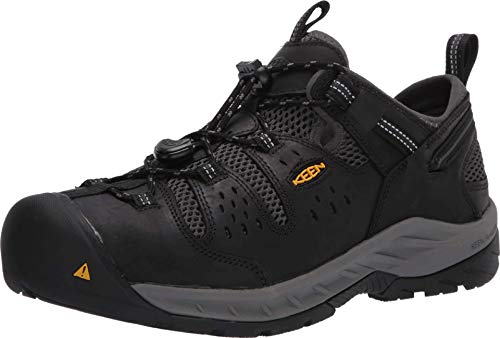
Keen Utility Atlanta Cool II - Best for Warm-Weather Job Sites
The Keen Utility Atlanta Cool II addresses the heat and sweat problem that makes conventional leather work boots miserable in summer construction environments. The upper uses a mesh and leather combination that allows significantly more airflow than all-leather alternatives. The ASTM F2413 composite toe cap and EH rating provide full certified protection. Keen's asymmetrical toe box design gives the toes more natural room, which reduces the pressure points that build up after hours in hot footwear. The removable footbed is washable, which helps manage odor during extended summer use. This boot trades some abrasion resistance for breathability, making it better suited to finished-surface work than rough excavation.
Caterpillar Second Shift Composite Toe - Best Budget Work Boot
The Caterpillar Second Shift provides ASTM F2413 composite toe certification at a price accessible to workers who need compliant footwear without a premium budget. The nubuck leather upper is durable for general construction and warehouse environments. The nylon mesh lining provides basic moisture management. The SRX slip-resistant outsole handles the mix of surfaces found on typical job sites. This is not a boot that will last five years of hard daily use, but it is a reliable, certified option that serves well as a backup pair, a seasonal work boot, or an entry point for workers establishing their first safety footwear kit.
What matters most
What to consider
Identify the required certifications for your industry. Construction typically requires ASTM F2413 composite toe. Electrical work adds the EH (electrical hazard) rating requirement. Chemical environments may require specific outsole compound ratings. Never purchase a work boot solely on appearance without verifying the certification markings inside.
What to consider
Consider construction method. Cemented outsoles are lighter and initially more flexible but cannot be resoled. Goodyear welt construction allows resoling, which matters if you plan to use the boot for years. Budget appropriately -- a resolable boot worn for four years often costs less per year than replacing cemented boots annually.
What to consider
Break-in period is real for leather construction boots. Wearing new leather boots for a full shift on day one causes blisters. Wear them for short periods before relying on them for full-day use.
What to consider
For related picks, see our guide to [best composite toe work shoes](/articles/best-composite-toe-work-shoe) for lower-profile options, and [best composite toe work boots for plantar fasciitis](/articles/best-composite-toe-work-boots-for-plantar-fasciitis) for added arch support needs. Our [testing methodology](/methodology) covers how safety certifications and durability are assessed.
Frequently asked
Many composite toe work boots are also rated for electrical hazard (EH) protection, which means the outsole and upper provide resistance to live circuits up to a specified voltage. Always confirm the boot carries both a composite toe (CT) rating and an EH rating on the ASTM label inside the boot if you work near live electrical equipment. The composite cap itself adds no electrical protection -- the EH rating is independent.
Quality composite toe work boots from brands like Thorogood, Red Wing, or Timberland PRO typically last between one and three years of regular full-time use depending on the work environment. Concrete and gravel wear outsoles faster than softer surfaces. Rotating between two pairs extends life substantially. Replace any boot where the outsole has worn through the slip-resistant layer or where the upper has separated from the midsole.
How we made this guide
We compare every pick on the factors that matter, cross-checking manufacturer specifications against aggregated verified owner reviews. We rank independently and never take payment for placement. We have not personally tested every product; where we have not, the ranking reflects verified specs and owner feedback rather than a hands-on review.
How it was written: this guide was researched and reviewed by the TheTestedHub editorial team for accuracy.
Affiliate disclosure: TheTestedHub is reader-supported. When you buy through links on our site, we may earn a commission at no extra cost to you.
You might also like

Dress Watches Experts Recommend: Seiko Presage Cocktail Time

Boot Accessories Guide: Why Insoles Are Your Best Bet

Recovery Boots 2026: Normatec 3 Leads Mile Reviewed Picks

Maximize Your Run: Best Athletic Sneakers of 2026

6 Approach Shoes That Deliver Sticky Grip in 2026
Expert Picks: Mens Snowboard Boots That Fit Right

Which Custom Women’s Jeans Fit You Best? Start With Levi’s 501
