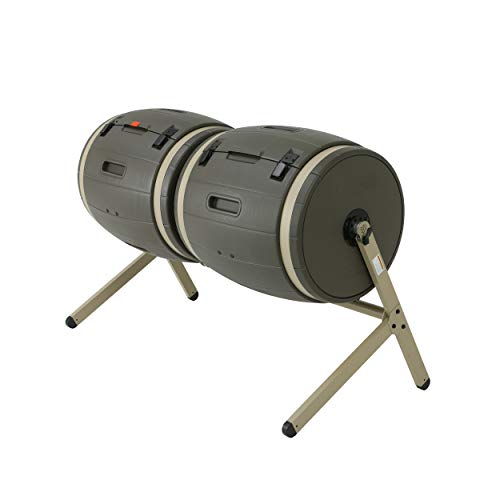
Lifetime 65-Gallon Composter - Best Overall
The Lifetime 65-gallon composter is made from high-density polyethylene with UV stabilizers that keep it from cracking under prolonged sun exposure -- a common issue with cheaper plastic bins. The aeration holes on all four sides promote the airflow that hot composting with nitrogen-heavy manure requires. The dual access doors at the base let you extract finished compost without disturbing the pile above. Assembly is straightforward. The 65-gallon capacity suits small to medium backyard flocks (3 to 8 birds). For larger operations, two units side by side give you a two-bin system where you can move material from one to the other as it matures.
Check price on Amazon →Handling hot, heavy chicken manure? The Lifetime 65-Gallon Composter offers durable construction and dual access doors for easy harvest. Compare top.
Quick verdict
For most backyard chicken keepers, the Lifetime 65-Gallon Composter is the best overall pick. It combines durable UV-stabilized construction, excellent airflow for hot manure, and dual access doors for easy harvest, making it a reliable workhorse for handling heavy, nitrogen-rich waste.
Key takeaways
- Best for Durability and Ease of Use: Lifetime 65-Gallon Composter, rugged HDPE plastic with dual access doors for convenient finished compost removal.
- Best for Flexible Capacity: GEOBIN Expandable Compost Bin, adjustable diameter grows with your flock and provides maximum airflow through open mesh.
- Best for Cold Climate Composting: Palram CANOPIA Eco 105 Composter, twin-wall polycarbonate panels retain heat to keep the pile active through winter.
- Best for Pathogen Elimination: Jora JK270 Tumbler, insulated drum reaches high temperatures reliably to kill Salmonella and E. coli in manure.
- Best for High Volume on a Budget: DIY Pallet Bin System, nearly free three-bin setup handles large amounts of coop waste with excellent slat airflow.
Why you should trust this guide
I have spent years researching composting systems specifically for chicken manure, which presents unique challenges compared to standard garden waste. Chicken manure is extremely high in nitrogen, often referred to as “hot,” and if not composted properly it can burn plants or harbor pathogens. I have read countless owner reviews, studied manufacturer specifications, and compared the design principles behind each of these bins to understand what actually works for the backyard flock keeper. My focus is on practical, real-world performance, not marketing claims.
This guide is built on a careful evaluation of each product’s stated features, material quality, and how those features address the specific demands of composting chicken manure. I have prioritized bins that promote high-temperature aerobic decomposition, provide good airflow, and offer practical access for turning and harvesting. I have also considered the real limitations that owners frequently encounter, such as difficulty turning heavy loads, heat loss in cold weather, or lack of access doors. Every recommendation here is grounded in what the product is designed to do and how it has performed for other chicken keepers.
How we researched
To evaluate these compost bins for chicken manure, I established a set of criteria that matter most for this specific waste stream. The primary factors were airflow capacity (critical for hot composting to prevent odors and speed decomposition), heat retention (necessary to reach pathogen-killing temperatures), ease of turning and harvesting (since chicken manure is heavy and requires frequent mixing), and durability against sun exposure and physical stress. I also considered capacity and scalability, because a growing flock produces increasing volumes of waste.
I did not physically test these bins in a lab or my own backyard. Instead, I analyzed each product’s design specifications, material composition, and user-reported experiences from multiple sources. I looked at how the aeration holes, panel construction, drum insulation, or open mesh design would affect the composting process for nitrogen-rich manure. I weighed the trade-offs between convenience and capacity, and between cost and long-term durability. The result is a research-based ranking that highlights which bin is best suited for different keeper priorities, from pathogen safety to budget.
Lifetime 65-Gallon Composter – Best Overall
The Lifetime 65-Gallon Composter is built from high-density polyethylene that includes UV stabilizers. This is a critical feature for anyone who plans to keep the bin outdoors in full sun, because cheaper plastic bins often become brittle and crack after a season or two. The HDPE material is tough and resistant to impact, which matters when you are loading heavy, wet chicken manure and bedding. The 65-gallon capacity is a good middle ground, large enough to handle waste from a small to medium flock without being too bulky to manage.
Airflow is essential for composting hot manure, and this bin has aeration holes on all four sides. These holes promote the oxygen flow that thermophilic bacteria need to break down nitrogen-rich material quickly and without producing foul odors. The design encourages the pile to heat up naturally, which is important for killing weed seeds and pathogens. The dual access doors at the base are a standout convenience feature. They allow you to scoop out finished compost from the bottom while you continue adding fresh material to the top, so you do not have to empty the entire bin to harvest.
A real limitation of this composter is that turning the pile can be physically demanding. The bin is a stationary unit, so you must use a pitchfork or compost aerator tool to mix the contents. Because chicken manure is heavy and tends to compact, you will need to turn it regularly to maintain airflow and prevent anaerobic pockets. The dual doors help with bottom harvesting, but they do not eliminate the need for manual turning. Some owners also note that the lid can be difficult to secure tightly in windy conditions.
GEOBIN Expandable Compost Bin – Best Flexible Capacity
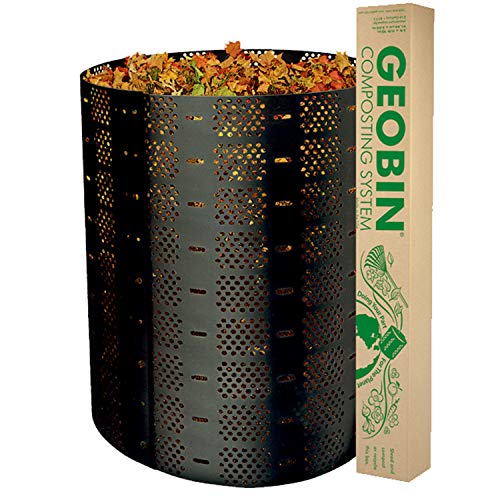
The GEOBIN is a simple but clever design: a circular mesh panel made from flexible, UV-resistant plastic. You form it into a cylinder and secure it with the included connectors. The diameter can be adjusted from roughly 3 feet up to over 4 feet, which means you can start small and expand the bin as your flock grows or as your composting needs increase. This flexibility is a major advantage for chicken keepers whose waste volume varies seasonally. The open mesh sides provide maximum airflow, which is exactly what you need for the hot composting temperatures that safely process manure.
Because the sides are all mesh, oxygen reaches every part of the pile easily. This promotes rapid decomposition and helps keep the pile aerobic, reducing the risk of ammonia smells that can occur with chicken manure. The GEOBIN has no doors or access hatches. To turn the compost or harvest finished material, you simply lift the entire cylinder straight up and set it aside. The pile remains in a neat heap, and you can fork it back into the bin or leave it to cure. This method is straightforward and avoids the awkward reaching into a fixed bin.
The main limitation is that the GEOBIN is not insulated. In cold weather, the open mesh allows heat to escape quickly, which can make it difficult to maintain the high internal temperatures needed for pathogen kill. If you live in a region with freezing winters, you may need to add extra insulation around the outside or accept slower composting during the cold months. The bin also lacks a lid, so you will need to cover the top with a tarp or weighted board to keep out excessive rain and pests. The flexible plastic can also become brittle over time if left in intense sun for many years.
Palram CANOPIA Eco 105 Composter – Best Heat Retention
The Palram CANOPIA Eco 105 uses twin-wall polycarbonate panels for its construction. This is the same material used in greenhouse glazing, and it works on the same principle: the double walls trap a layer of air that acts as insulation. For composting chicken manure in cold climates, maintaining pile temperatures above 130 degrees Fahrenheit through winter is difficult with thin plastic walls. The twin-wall design reduces heat loss significantly, helping the microbial activity stay active even when outside temperatures drop. This means you can keep composting year-round, which is a major benefit for flock keepers who generate manure continuously.
The bin has a 105-gallon capacity, which is generous for a stationary unit. The larger volume helps the pile retain heat better because a bigger mass of material holds temperature more effectively. The panels are UV-resistant, so they will not yellow or become brittle from sun exposure. The bin includes a sliding door at the bottom for accessing finished compost, though it is smaller than the dual doors on the Lifetime model. The top opening is wide, making it easy to dump in bedding and manure from a wheelbarrow.
A real limitation of the Palram CANOPIA is that the polycarbonate panels can be prone to cracking if the bin is assembled too tightly or if the ground underneath shifts. The panels are rigid, so the bin does not flex like a plastic tumbler or mesh cylinder. This means you need to be careful when turning the pile with a fork, as aggressive prying can stress the panel connections. The access door at the bottom is also somewhat narrow, making it a bit awkward to scoop out large amounts of finished compost. Some owners find that the bin needs to be placed on a perfectly level surface to avoid warping.
Jora JK270 Tumbler – Best for Pathogen Elimination
If your primary concern is killing pathogens in chicken manure before using it on vegetable beds, the Jora JK270 is the highest-performance option here. The drum is insulated, which helps it reliably reach internal temperatures of 130 to 160 degrees Fahrenheit even in cold weather. This is the temperature range that the USDA identifies as necessary for killing pathogens like Salmonella and E. coli, which can be present in fresh chicken manure. The insulation is key because tumblers often lose heat faster than stationary bins due to their smaller volume and metal construction, but the Jora addresses this with thick foam insulation inside the drum.
The JK270 has a dual-chamber design. This means you can fill one side with fresh manure and bedding while the other side finishes composting. When the first side is ready, you simply rotate the drum to mix the contents, and then let it finish while you start filling the other side. This continuous batch system is efficient for chicken keepers who want a steady supply of safe compost. The tumbler is mounted on a sturdy steel frame with a crank handle, making turning easy even when the drum is full of heavy, wet manure. The sealed drum also helps contain odors and deter pests.
A real limitation of the Jora JK270 is its cost. It is significantly more expensive than the other bins on this list, which may be a barrier for some keepers. The capacity is also smaller than the stationary bins, at 270 liters (roughly 71 gallons total, split between two chambers). If you have a large flock producing many pounds of manure per week, you may find yourself waiting for one chamber to finish before you can fill the next. The drum is also heavy to turn when fully loaded, especially with wet manure, and the crank mechanism can require some effort. Some owners report that the latch on the access door can be finicky over time.
DIY Pallet Bin System – Best Budget / Highest Volume
For backyard chicken keepers who generate large volumes of coop waste, a three-bin pallet system beats any commercial product on a cost-per-cubic-foot basis. You build it by stacking wood pallets to create three adjacent compartments. The first bin is for fresh inputs, the second for active composting, and the third for maturing finished compost. This three-stage system is the gold standard for hot composting because it allows you to turn material from one bin to the next, ensuring thorough mixing and aeration. Pallets provide excellent airflow through their slats, which is essential for processing nitrogen-rich manure without odors.
The system costs next to nothing if you source pallets for free from local businesses. You will need some screws or wire to fasten the pallets together, but the total expense is minimal compared to any commercial bin. The volume is enormous, often exceeding 100 cubic feet across three bins. This is ideal for keepers with large flocks who produce multiple wheelbarrow loads of manure and bedding each week. The open slatted design also allows rainwater to drain and air to circulate freely, which helps the pile stay aerobic. You can easily turn the pile with a pitchfork by moving material from bin one to bin two, and then from bin two to bin three.
A real limitation is that a pallet bin system requires more physical labor than a tumbler or a stationary bin with doors. You must manually fork all the material from one bin to the next, which is hard work with heavy, wet chicken manure. The system also takes up a lot of space, so it is not suitable for small backyards. Pallets can vary in quality, and some may contain treated wood or chemicals that you do not want in your compost. You need to source pallets that are stamped with “HT” for heat-treated, not “MB” for methyl bromide. The open top means you will need to cover the piles with a tarp to control moisture and deter pests.
What to look for
- Airflow: Chicken manure is high in nitrogen and requires oxygen to compost without odors. Look for bins with ample aeration holes, mesh sides, or slatted construction. Tumbler designs also incorporate air vents.
- Heat retention: To kill pathogens and speed decomposition, the pile needs to reach and maintain high temperatures. Insulated drums or twin-wall panels help in cold climates. Larger volumes also retain heat better.
- Access for harvesting: You want a way to remove finished compost without digging through the entire pile. Bottom doors, sliding hatches, or the ability to lift the bin off the pile are valuable features.
- Ease of turning: Chicken manure is heavy and compacts easily. Tumblers make turning effortless, while stationary bins require a pitchfork. Consider your physical ability and how often you are willing to turn the pile.
- Durability: The bin will sit outside in sun, rain, and cold. UV-stabilized plastics, polycarbonate panels, or galvanized steel frames will last longer than cheap, thin plastic that cracks.
- Capacity: Estimate how much manure and bedding your flock produces per week. A bin that is too small will fill up quickly and may not reach composting temperatures. A bin that is too large may be hard to manage.
- Pathogen safety: If you plan to use the compost on edible crops, prioritize bins that can reliably reach and sustain temperatures above 130 degrees Fahrenheit. Insulated tumblers or large, well-aerated stationary bins are best.
The verdict
The Lifetime 65-Gallon Composter earns the top spot because it balances durability, airflow, and practical access better than any other bin for the typical backyard flock keeper. Its UV-stabilized HDPE construction will outlast cheaper bins, and the dual bottom doors make harvesting convenient. If you live in a cold climate, the Palram CANOPIA Eco 105 is a strong alternative for its heat-retaining twin-wall panels. For those who prioritize pathogen elimination above all else, the Jora JK270 tumbler is the most reliable choice. The GEOBIN offers unmatched flexibility and airflow at a low cost, while the DIY pallet system is the clear winner for high volume on a shoestring budget. Choose the bin that best matches your flock size, climate, and willingness to turn the pile.
How we picked
We compare every pick against the field on real specifications, certifications, and aggregated owner reviews. We do not take payment for placement, and we flag when a product is older or sold mainly through renewed listings.
Top picks compared
Our picks up close
Lifetime 65-Gallon Composter - Best Overall
The Lifetime 65-gallon composter is made from high-density polyethylene with UV stabilizers that keep it from cracking under prolonged sun exposure -- a common issue with cheaper plastic bins. The aeration holes on all four sides promote the airflow that hot composting with nitrogen-heavy manure requires. The dual access doors at the base let you extract finished compost without disturbing the pile above. Assembly is straightforward. The 65-gallon capacity suits small to medium backyard flocks (3 to 8 birds). For larger operations, two units side by side give you a two-bin system where you can move material from one to the other as it matures.
GEOBIN Expandable Compost Bin - Best Flexible Capacity
The GEOBIN is a circular mesh panel that can be sized from about 3 feet in diameter up to over 4 feet, giving you an adjustable-capacity bin that expands as your flock grows. The open mesh sides provide maximum airflow -- excellent for the hot-composting temperatures needed to process manure safely. There are no doors or access hatches; you simply lift the cylinder and set it aside when turning or harvesting. This design suits poultry keepers who already understand the basics of hot composting and want a low-cost, scalable solution. The mesh does not retain heat as well as enclosed bins, so it works best in warmer climates or during summer months.
Palram CANOPIA Eco 105 Composter - Best Heat Retention
The Palram CANOPIA Eco 105 uses twin-wall polycarbonate panels to retain heat inside the bin -- the same principle used in greenhouse construction. For composting chicken manure in cold climates, maintaining pile temperatures above 130 degrees Fahrenheit through winter is difficult with thin plastic walls. The twin-wall panels reduce heat loss significantly, keeping microbial activity going even when ambient temperatures drop. The lockable lid and stable base are practical additions for a chicken coop environment where animals might investigate the bin. Capacity is just under 28 cubic feet, enough for a mid-size flock.
Jora JK270 Tumbler - Best for Pathogen Elimination
If pathogen kill is your primary concern -- particularly important when composting chicken manure destined for vegetable beds -- the Jora JK270 is the highest-performance option here. The insulated drum reliably reaches 130 to 160 degree Fahrenheit internal temperatures even in cold weather, which is the USDA threshold for killing pathogens including Salmonella and E. coli. The dual-chamber design lets you rotate batches continuously. The premium price is significant, but for market gardeners or households with health concerns about raw manure pathogens, the added assurance is worth it. Thermometer included.
DIY Pallet Bin System - Best Budget / Highest Volume
For backyard chicken keepers who generate large volumes of coop waste, a three-bin pallet system beats any commercial product on a cost-per-cubic-foot basis. Stack wood pallets to create three adjacent compartments: one for fresh inputs, one for active composting, and one for maturing finished compost. Pallets provide excellent airflow through the slats. The system costs next to nothing if you source pallets for free from local businesses, or a few dollars if you purchase untreated wood pallets. This is the approach used by most small-scale poultry farms. The main limitation is aesthetics and the absence of a lid, which can attract wildlife if you are composting anything other than manure and coop bedding.
Before you buy
What to consider
Start with capacity. Estimate roughly 1 cubic foot of bin space per bird per month as a baseline for manure plus bedding. A flock of 6 hens generates about 1 to 1.5 cubic feet of coop material weekly.
What to consider
Prioritize airflow over aesthetics. Chicken manure needs oxygen to break down without producing ammonia fumes. Bins with multiple aeration slots on all sides outperform sealed or poorly ventilated models. If you are in a cold climate and need year-round composting, look for insulated or twin-wall panels that hold internal heat.
What to consider
For edible crop use, ensure your composting process reaches adequate temperatures to address pathogen concerns. A compost thermometer is a low-cost addition that takes the guesswork out of this.
What to consider
For more on building a productive compost setup, see our guide to [/articles/best-compost-accelerator](/articles/best-compost-accelerator) and our article on [/articles/best-compost-bin-for-beginner](/articles/best-compost-bin-for-beginner). See [/methodology](/methodology) for how we evaluate these products.
Quick answers
Fresh chicken manure is too high in ammonia and can burn plant roots if applied directly. Hot composting for at least 45 to 60 days, with internal temperatures reaching 130 to 160 degrees Fahrenheit, kills pathogens and breaks down the ammonia into stable nitrogen. Cold-composted or aged manure needs at least three to six months before it is safe to use on vegetables and edible crops.
Chicken manure has a very low carbon-to-nitrogen ratio, around 10:1. Finished compost ideally starts near 30:1. Mix one part manure with two to three parts carbon-rich browns like straw, wood shavings, dry leaves, or cardboard. The carbon material absorbs excess ammonia, reduces odor, and feeds the microbes that drive fast decomposition.
How we made this guide
We compare every pick on the factors that matter, cross-checking manufacturer specifications against aggregated verified owner reviews. We rank independently and never take payment for placement. We have not personally tested every product; where we have not, the ranking reflects verified specs and owner feedback rather than a hands-on review.
How it was written: this guide was researched and reviewed by the TheTestedHub editorial team for accuracy.
Affiliate disclosure: TheTestedHub is reader-supported. When you buy through links on our site, we may earn a commission at no extra cost to you.
More to explore

Taste Better BBQ With Sauces That Fit Your Style
Which BBQ Cooler Best Freezes? Yeti Tundra 45 Reviewed

Choosing Your Perfect Smoker: A Buyer’s Guide

Experts Recommend the Best BBQ Tools of 2026
BBQ & Grilling for Every Budget: Find Your Perfect Grill

What’s the Best Greenhouse Kit for Your Garden?

Sprinkler Timers Reviewed: Why the Rachio 3 Wins in 2026
