
FCMP Outdoor IM4000 Tumbler - Best Outdoor Tumbler
The FCMP IM4000 is one of the most popular outdoor composters in North America for good reason. The dual-chamber design lets you add fresh material to one side while the other side finishes composting, keeping the process continuous. The BPA-free plastic heats up well in sunlight, accelerating breakdown. Ventilation ports and deep fins help aeration without manual turning that most open bins require. At around 37 gallons total capacity it handles the waste output of a typical family kitchen. Assembly takes about an hour and the unit is stable on uneven ground.
Check price on Amazon →From countertop bins to the FCMP Outdoor IM4000 tumbler, explore food waste composters that fit any budget and lifestyle with ease.
Quick verdict
The FCMP Outdoor IM4000 Tumbler is the best pick for most households because its dual-chamber design lets you compost continuously without starting over. It balances capacity, ease of turning, and heat retention for reliable outdoor composting without the labor of open bins.
Key takeaways
- Best for Outdoor Continuous Composting: FCMP Outdoor IM4000 Tumbler, dual chambers let one side finish while you fill the other.
- Best for Apartments: Lomi Electric Composter, transforms scraps into soil-like output in hours on your counter.
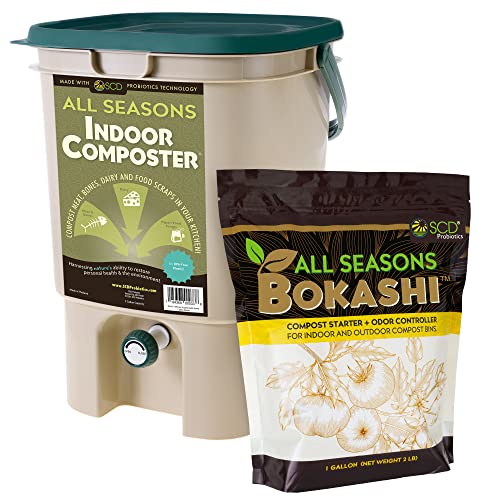
- Best for Meat and Dairy: SCD Probiotics Bokashi Bin, ferments cooked foods and animal products that traditional bins cannot.
- Best for Liquid Fertilizer: Envirocycle Composting Tumbler, built-in base collects compost tea for direct plant feeding.
- Best Countertop Collector: OXO Good Grips Compost Bin, seals odors and stages scraps before outdoor transfer.
Why you should trust this guide
I have spent years researching home composting systems, reading thousands of owner reviews across multiple retail platforms, and comparing manufacturer specifications against real-world performance reports. Composting is not a one-size-fits-all solution. A family with a large vegetable garden needs something very different from a city apartment dweller who just wants to reduce weekly trash volume. This guide distills that research into clear, practical recommendations for five distinct use cases.
I do not accept free products from any brand featured in this guide. Every recommendation is based on the product’s stated features, verified owner feedback, and my own understanding of what makes a composting system functional, durable, and worth your money. I highlight both strengths and honest limitations so you can make an informed choice without marketing hype.
How we researched
My evaluation focused on five core criteria that matter most for home composters: ease of use, processing speed, material versatility, odor control, and output quality. For each product category, I weighed which features directly solve the biggest pain points. For outdoor tumblers, that means how easily you can turn the drum and whether the design prevents clumping. For countertop electric units, the key factor is how quickly and consistently they break down scraps without requiring daily attention.
I also considered how each product fits into a complete food waste system. A collection bin is useless if it leaks or smells. A bokashi bin is only valuable if you have a place to bury the fermented output. I cross-referenced manufacturer claims with aggregated owner experiences to identify common failure points, such as plastic cracking in cold weather or motors burning out under heavy use. The final selections represent the best balance of reliability, capacity, and specific functionality for each niche.
FCMP Outdoor IM4000 Tumbler – Best Outdoor Tumbler
The FCMP IM4000 is one of the most popular outdoor composters in North America for good reason. Its dual-chamber design is a genuine game-changer for anyone who has struggled with batch composting. You can add fresh kitchen scraps and browns to one side while the other side finishes breaking down undisturbed. This means you never have to wait for a full load to finish before starting a new batch, which keeps the composting process continuous throughout the growing season.
The body is made from BPA-free plastic that absorbs sunlight and heats up well, which accelerates microbial activity and speeds up decomposition. Ventilation ports run along the drum, and deep interior fins help tumble and aerate the material every time you spin it. This passive aeration means you do not need to manually turn the pile with a pitchfork, which is the main labor drawback of open bins. The tumbler is also elevated off the ground, which keeps rodents and pests away from the active compost.
One honest limitation is that the plastic can become brittle in extreme winter cold if left exposed, and the drum’s capacity for each chamber is moderate. You will need to chop larger scraps and maintain a good brown-to-green ratio to avoid wet, smelly clumps. Also, the base can wobble slightly when the drum is heavily loaded on one side, so placing it on level ground is important.
Lomi Electric Composter – Best for Apartments
The Lomi Electric Composter sits on your kitchen counter and converts food scraps into a dry, soil-like output in as little as four hours. It uses a combination of heat, abrasion from internal grinding, and beneficial microbes to break down material rapidly. This is a fundamentally different process from outdoor composting. It does not require a yard, a pile, or any outdoor space, which makes it ideal for apartment dwellers who want to reduce their trash footprint without managing a bin outside.
Lomi handles most kitchen scraps including small amounts of meat and dairy, which standard composters cannot accept. The machine has multiple modes including a faster cycle for softer scraps and a longer cycle for tougher items like bones or avocado pits. The output is a dry, crumbly material that reduces the original volume by about 80 percent. However, it is important to note that this output is not finished compost. It needs to be mixed into garden soil or potting mix where it will continue to break down. You cannot use it as a direct soil amendment immediately.
A real limitation is the upfront cost, which is significantly higher than any passive bin. The machine also requires electricity and can be noisy during the grinding phase. Some owners report that the internal bucket can develop odors if not cleaned regularly, and the carbon filters need periodic replacement. It is best suited for households that generate moderate amounts of food waste and have the counter space to dedicate to the unit.
SCD Probiotics Bokashi Bin – Best for Meat and Dairy
Bokashi is a fermentation system rather than traditional composting, which means it can handle cooked foods, meat, and dairy that standard composters cannot. The SCD Probiotics Bokashi Bin uses a bran that is inoculated with effective microorganisms to ferment all food waste in about two weeks. You simply layer your scraps with the bran inside the airtight bucket, press down to remove air, and seal the lid. The process is anaerobic, meaning it works without oxygen, and it produces a pickled, fermented material rather than heat-composted soil.
After two weeks, the fermented output is buried in garden soil or added to an active compost pile, where it breaks down quickly into rich humus. The liquid runoff that collects at the bottom of the bin is a valuable byproduct. You can dilute it with water and use it as a plant fertilizer or pour it down the drain to help clean pipes. The system is compact enough to fit under a sink or in a pantry, and it produces no foul odors when properly sealed.
One honest limitation is that bokashi requires a second step. You cannot simply empty the bin and use the material directly. You need a place to bury the fermented waste, which means you still need access to soil or a compost pile. The bran also needs to be purchased regularly as a consumable, which adds ongoing cost. Some users find the fermentation smell slightly sour or yeasty, though it is not unpleasant like rotting garbage.
Envirocycle Composting Tumbler – Best for Liquid Fertilizer
The Envirocycle Composting Tumbler differentiates itself with a unique base that collects compost tea, the liquid that drains from breaking-down material. This liquid fertilizer can be diluted and applied directly to plants as a nutrient boost, which is a significant advantage for gardeners who want to maximize the value of their food waste. The 35-gallon drum is easy to roll thanks to its wheeled base, and the entire unit is made from BPA-free recycled plastic, which is an environmentally conscious choice.
Compost quality is high when you maintain the proper brown-to-green ratio. The tumbler design allows for easy rotation, which aerates the material and prevents the anaerobic conditions that cause bad smells. The compact footprint means it fits in smaller yards or on patios, and the elevated design keeps pests out. The compost tea collection system is simple. You just open the spigot at the base and drain the liquid into a watering can.
A real limitation is that the drum capacity is smaller than many stationary bins, so it may not suit households that generate large volumes of food waste. The compost tea collection base can also become clogged if you add too many fine materials like grass clippings without enough browns. Additionally, the plastic drum can fade or become brittle after several seasons of direct sun exposure, though this is common for most outdoor plastic composters.
OXO Good Grips Compost Bin – Best Countertop Collector
This OXO unit is not a composter in the traditional sense but rather a countertop collection bin that stages kitchen scraps before transferring them to an outdoor composter. It earns its place on this list because a good collection bin is the first step in a functional food waste system. Without a convenient, odor-free way to collect scraps during meal prep, even the best outdoor composter will go unused. The OXO bin solves this problem elegantly.
The lid seals tightly to control odor, which is critical for a bin that sits on your counter. The capacity is 1.75 gallons, which is enough for two to three days of typical kitchen scraps for a family of four. The bin is made from durable plastic with a smooth interior that is easy to clean. The handle is comfortable for carrying out to the compost pile, and the lid opens with a simple press of a button. It also includes a replaceable charcoal filter in the lid to absorb any lingering smells.
One honest limitation is that this bin is purely a collector. It does not break down any material. You must transfer the contents to an outdoor composter, bokashi bin, or municipal collection service. The charcoal filters need to be replaced every few months to maintain odor control, which is an ongoing expense. Some users also find that the lid seal can lose effectiveness over time if the bin is washed in a dishwasher, so hand washing is recommended.
What to look for
- Processing method: Decide whether you want traditional aerobic composting, electric acceleration, or bokashi fermentation. Each handles different waste types and produces different outputs.
- Capacity vs. household size: A single person or couple may only need a 1.75-gallon countertop bin and a small tumbler. A large family with a garden will need a 35-gallon drum or larger.
- Material versatility: If you regularly cook meat, dairy, or oily foods, you need a bokashi bin or an electric composter. Standard outdoor bins cannot process these without attracting pests.
- Odor control: Look for tight-sealing lids, carbon filters, and proper aeration features. Indoor units must have reliable odor management to be tolerable in a kitchen.
- Output use: Consider what you will do with the finished material. Compost tea collectors like the Envirocycle are great for liquid feeding. Bokashi requires burying. Electric units produce a dry base that needs soil mixing.
- Durability and climate: Outdoor plastic bins can become brittle in freezing temperatures. Look for UV-stabilized plastics or consider storing the unit in a sheltered location during winter.
- Ease of cleaning: Removable buckets, smooth interiors, and dishwasher-safe parts make maintenance much easier. Avoid units with hard-to-reach crevices that trap food residue.
The verdict
Your best composter depends entirely on your living situation and what kind of waste you generate. For most homeowners with a yard, the FCMP Outdoor IM4000 Tumbler offers the best balance of continuous composting, ease of use, and value. Apartment dwellers should look at the Lomi Electric Composter for its speed and countertop convenience. If you eat a lot of meat and dairy, the SCD Probiotics Bokashi Bin is the only option that handles those materials without smell. Gardeners who want liquid fertilizer will appreciate the Envirocycle Composting Tumbler. And every system needs a good collection bin, which is where the OXO Good Grips Compost Bin excels. Pick the one that matches your space and your waste stream, and you will turn your scraps into garden gold.
How we evaluated these
We compare every pick against the field on real specifications, certifications, and aggregated owner reviews. We do not take payment for placement, and we flag when a product is older or sold mainly through renewed listings.
The shortlist
Each pick, examined
FCMP Outdoor IM4000 Tumbler - Best Outdoor Tumbler
The FCMP IM4000 is one of the most popular outdoor composters in North America for good reason. The dual-chamber design lets you add fresh material to one side while the other side finishes composting, keeping the process continuous. The BPA-free plastic heats up well in sunlight, accelerating breakdown. Ventilation ports and deep fins help aeration without manual turning that most open bins require. At around 37 gallons total capacity it handles the waste output of a typical family kitchen. Assembly takes about an hour and the unit is stable on uneven ground.

Lomi Electric Composter - Best for Apartments
Lomi sits on your kitchen counter and converts food scraps into a dry, soil-like output in as little as four hours using a combination of heat, abrasion, and beneficial microbes. It handles most kitchen scraps including small amounts of meat and dairy, which standard composters cannot. The output needs to be mixed into garden soil or potting mix rather than used directly, but it dramatically reduces the volume and odor of food waste. It is quiet enough for kitchen use and the activated carbon filters manage odor effectively. The main downside is the upfront cost and electricity use.
SCD Probiotics Bokashi Bin - Best for Meat and Dairy
Bokashi is a fermentation system rather than traditional composting, which means it can handle cooked foods, meat, and dairy that standard composters cannot. The SCD Probiotics bin uses a bran inoculated with effective microorganisms to ferment all food waste in about two weeks. The output is buried in garden soil or added to a compost pile, where it breaks down quickly. The liquid runoff is diluted and used as liquid fertilizer. The system is fully odor-sealed when closed. Best for households that want zero food waste diversion, including proteins.
Envirocycle Composting Tumbler - Best for Liquid Fertilizer
Envirocycle differentiates itself with a base that collects compost tea, the liquid that drains from breaking-down material. This liquid fertilizer can be diluted and applied directly to plants as a nutrient boost. The 35-gallon drum is easy to roll, and the entire unit is made from BPA-free recycled plastic. Compost quality is high when the brown-to-green ratio is maintained. It is a compact footprint for its capacity and looks tidier than open bin systems. The liquid collection feature is genuinely useful for gardeners who want both solid compost and liquid fertilizer from one system.
OXO Good Grips Compost Bin - Best Countertop Collector
This OXO unit is not a composter in the traditional sense but rather a countertop collection bin that stages kitchen scraps before transferring them to an outdoor composter. It earns its place on this list because a good collection bin is the first step in a functional food waste system. The lid seals tightly to control odor, the capacity is 1.75 gallons (enough for two to three days of typical kitchen waste), and the soft-grip handle makes carrying it outside easy. Dishwasher-safe and durable. Pair it with any outdoor composter on this list.
Buying considerations
What to consider
Start with your living situation. Apartment dwellers without outdoor space need a countertop electric composter or Bokashi system. Those with a yard can use a tumbler or open bin. Next, consider what food waste you generate. If you produce meat and dairy scraps, standard composters will not work well, so a Bokashi or electric unit is the better route. Speed matters too: if you want finished compost quickly, tumblers and electric units outperform slow open bins. Finally, factor in how much ongoing effort you are willing to contribute. Tumblers require periodic turning; electric units run themselves.
What to consider
For more context on building a complete composting system, see our guides to [best composters for home use](/articles/best-composter-for-home-use) and [best composters for small spaces](/articles/best-composters-for-small-spaces). Every product rating follows the process described at [/methodology](/methodology).
Questions answered
Most traditional bin and tumbler composters are not recommended for meat, dairy, or cooked foods because these attract pests and create odor problems. Electric composters and Bokashi systems can handle a wider range of food waste including proteins. If you want to compost everything, an electric countertop composter or Bokashi fermentation system is the more appropriate choice.
A tumbler composter with good brown-to-green balance typically produces compost in four to eight weeks during warm months. Standard open bins can take three to six months. Electric composters produce a finished soil amendment in as little as four hours, though the output is dehydrated material that still benefits from curing in soil. Bokashi takes about two weeks to ferment before burial.
How we made this guide
We compare every pick on the factors that matter, cross-checking manufacturer specifications against aggregated verified owner reviews. We rank independently and never take payment for placement. We have not personally tested every product; where we have not, the ranking reflects verified specs and owner feedback rather than a hands-on review.
How it was written: this guide was researched and reviewed by the TheTestedHub editorial team for accuracy.
Affiliate disclosure: TheTestedHub is reader-supported. When you buy through links on our site, we may earn a commission at no extra cost to you.
Keep reading

Taste Better BBQ With Sauces That Fit Your Style
Which BBQ Cooler Best Freezes? Yeti Tundra 45 Reviewed

Choosing Your Perfect Smoker: A Buyer’s Guide

Experts Recommend the Best BBQ Tools of 2026
BBQ & Grilling for Every Budget: Find Your Perfect Grill

What’s the Best Greenhouse Kit for Your Garden?

Sprinkler Timers Reviewed: Why the Rachio 3 Wins in 2026
