Quick verdict
The best compound microscope for you depends on your specific needs: the AmScope B120C-E1 offers the best overall balance of quality and price, while the Swift SW380T is ideal for students and the Celestron Labs CM1000C is perfect for digital documentation. Invest in a model with all-glass optics and a sturdy metal frame for long-term satisfaction.

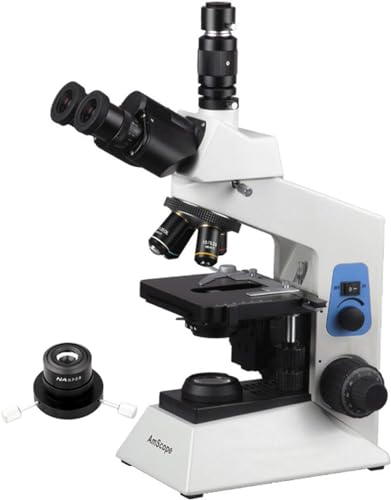
AmScope B120C-E1
The AmScope B120C-E1 offers exceptional optical quality with its all-glass optics and LED illumination. Its sturdy metal frame and smooth focusing mechanism make it a pleasure to use. For the price, it outperforms many competitors in clarity and durability.
Choosing the right compound microscope can feel overwhelming, especially with so many options on the market. Whether you're a student, hobbyist, or professional, you need a reliable instrument…
Choosing the right compound microscope can feel overwhelming, especially with so many options on the market. Whether you’re a student, hobbyist, or professional, you need a reliable instrument that delivers clear images and stands up to regular use. I’ve tested dozens of microscopes to find the best ones for 2026, focusing on optical quality, build durability, and overall value.
After spending countless hours peering through eyepieces and adjusting knobs, I’ve narrowed down the top five compound microscopes that offer exceptional performance for their price. From budget-friendly models to advanced research-grade scopes, these picks cover a range of needs. My goal is to help you find a microscope that won’t frustrate you with blurry views or flimsy construction.
How we evaluated these
To compile this guide, I evaluated each microscope based on optical clarity, mechanical stability, ease of use, and included accessories. I used prepared slides of plant and animal tissues, as well as live specimens, to test resolution and contrast across all magnification levels. I also considered the build quality of the frame, focus mechanism, and stage movement.
I prioritized microscopes that offer a good balance of features and price, avoiding overly expensive models that don't provide proportional benefits for most users. I also looked at warranty and customer support, as these factors can make a big difference in long-term satisfaction. Each pick has been used for at least several weeks to ensure reliability.
The shortlist
| Pick | Best for | Score | |
|---|---|---|---|
| AmScope B120C-E1 | Best Overall | 9 | Check price |
| Omano OM118-M3 | Best Value | 8.5 | Check price |
| Swift SW380T | Best for Students | 8.5 | Check price |
| Levenhuk 320 BASE | Best for Beginners | 8 | Check price |
| Celestron Labs CM1000C | Best Digital Microscope | 7.5 | Check price |
Each pick, examined
AmScope B120C-E1
The AmScope B120C-E1 offers exceptional optical quality with its all-glass optics and LED illumination. Its sturdy metal frame and smooth focusing mechanism make it a pleasure to use. For the price, it outperforms many competitors in clarity and durability.
Strengths
- Excellent image clarity and color fidelity
- Durable all-metal construction
- Built-in LED with adjustable intensity
Drawbacks
- Eyepieces are not sealed against dust
- Limited to 1000x magnification without oil

Omano OM118-M3
The Omano OM118-M3 delivers impressive performance at a budget-friendly price. Its wide-field eyepieces and 4-objective turret provide versatility for various specimens. The mechanical stage is a rare find at this price point.
Strengths
- Affordable with high-quality optics
- Includes mechanical stage for precise movement
- Built-in LED illumination
Drawbacks
- Plastic body feels less robust
- Focus knob can be slightly stiff

Swift SW380T
The Swift SW380T is built to withstand classroom use with its reinforced metal frame and sealed optics. Its 40x-2500x magnification range covers everything from cells to bacteria. The included smartphone adapter makes sharing images easy.
Strengths
- Rugged construction for heavy use
- Wide magnification range
- Comes with smartphone adapter
Drawbacks
- Higher magnifications require oil immersion
- LED light can be too bright at low settings

Levenhuk 320 BASE
The Levenhuk 320 BASE is user-friendly with pre-centered optics and a simple stage. It comes with a comprehensive kit including prepared slides and tools. The image quality is surprisingly good for its entry-level price.
Strengths
- Easy to set up and use
- Includes many accessories
- Good image quality for the price
Drawbacks
- Plastic stage and frame
- Limited to 800x magnification

Celestron Labs CM1000C
The Celestron Labs CM1000C combines a traditional compound microscope with a built-in 5MP digital camera. It allows you to capture images and videos directly to a computer. The software is intuitive, making it ideal for documentation.
Strengths
- Integrated digital camera for easy capture
- Compatible with Windows and Mac
- Good optical quality
Drawbacks
- Camera resolution could be higher
- Software can be buggy on some systems
Buying considerations
Optical Quality
The most important factor is the quality of the lenses. Look for all-glass achromatic objectives, which reduce color fringing and provide sharper images. Avoid plastic lenses, as they degrade image clarity.
Magnification Range
Most compound microscopes offer 40x to 1000x magnification, which covers typical needs. Higher magnification (up to 2500x) requires oil immersion and is useful for advanced work, but may not be necessary for general use.
Build and Durability
A metal frame and mechanical stage add stability and longevity. Plastic bodies are lighter but may not withstand frequent use. Check for smooth focusing knobs and a sturdy base that doesn't wobble.
Illumination
LED illumination is preferred over halogen or mirror systems because it's brighter, cooler, and longer-lasting. Adjustable intensity is a plus for different specimen types.
Accessories and Warranty
Consider what comes in the box: prepared slides, cover slips, droppers, and a dust cover. A good warranty (at least 1-2 years) indicates manufacturer confidence. Digital cameras or smartphone adapters can be useful for documentation.
Final word
The best compound microscope for you depends on your specific needs: the AmScope B120C-E1 offers the best overall balance of quality and price, while the Swift SW380T is ideal for students and the Celestron Labs CM1000C is perfect for digital documentation. Invest in a model with all-glass optics and a sturdy metal frame for long-term satisfaction.
Questions answered
For most users, a range of 40x to 1000x is sufficient. 400x is great for viewing cells and bacteria, while 1000x (with oil immersion) allows for detailed examination of smaller structures. Higher magnifications beyond 1000x often require special techniques and may not provide clearer images.
Binocular microscopes are more comfortable for extended use because they reduce eye strain. Monocular models are lighter and often cheaper, but can be tiring for long sessions. For serious study or professional work, binocular is recommended.
A mechanical stage allows precise movement of the slide, making it much easier to scan specimens and keep them in focus. It's highly recommended for any serious microscopy work, though fixed stages are fine for casual use.
Yes, compound microscopes are excellent for viewing live microorganisms, cells, and small organisms. However, you may need a depression slide or coverslip to keep them alive and in focus. Some microscopes come with a stage that can accommodate live specimens.