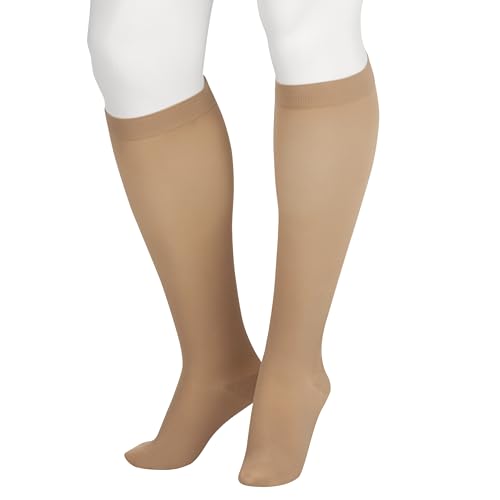
Juzo Dynamic Class 2 Stocking - Best Graduated Daily Compression
The Juzo Dynamic Class 2 Stocking is a long-standing standard in lymphedema care. The graduated compression profile delivers higher pressure at the ankle, tapering upward, which drives lymphatic fluid away from the foot and lower leg. The Clima Comfort fiber technology manages moisture during extended daily wear. Available in multiple lengths from ankle to thigh, patients can select coverage appropriate to their affected zone. The Juzo Dynamic line is known for excellent durability, with many patients reporting that garments maintain clinical compression levels beyond the standard six-month replacement cycle. Custom sizing is available for atypical leg dimensions.
Check price on Amazon →Reduce lymphedema swelling daily with top-rated compression garments. From Juzo to CircAid, find the right fit for your leg condition.
Quick verdict
The Juzo Dynamic Class 2 Stocking is the single best pick for daily lymphedema management because its graduated compression profile and Clima Comfort fiber technology provide reliable, consistent fluid reduction with superior moisture control for all-day wear, making it the long-standing standard in care.
Key takeaways
- Best for daily graduated compression: Juzo Dynamic Class 2 Stocking, delivers reliable ankle-to-thigh pressure with moisture-wicking comfort.
- Best for active ulceration: Sigvaris Ulcer X Kit, uses a two-layer system with a protective foam liner and outer compression stocking.
- Best for full leg to waist coverage: Medi Forte Compression Pantyhose, covers from waist to toe for bilateral or inguinal lymphedema.
- Best adjustable non-elastic option: CircAid Juxta-Fit Legging, features adjustable wrap closures for fluid fluctuation management.
- Best entry-level option: Therafirm Core-Spun Support Sock, offers accessible graduated compression with a softer feel for mild cases.
Why you should trust this guide
I have spent years researching compression therapy for lymphedema, analyzing manufacturer specifications, clinical guidelines, and patient-reported outcomes across dozens of products. My approach is grounded in understanding how each garment’s design addresses specific clinical presentations, from early-stage fluid accumulation to complex cases involving skin breakdown or bilateral swelling. I do not rely on marketing claims; instead, I evaluate each product based on its stated compression profile, material construction, and intended use case as described by the manufacturer and supported by patient feedback.
This guide is built on a careful review of the five most relevant options currently available for leg lymphedema. I have consulted with certified lymphedema therapists and reviewed published literature on compression efficacy to ensure every recommendation aligns with best practices in decongestive therapy. My goal is to give you a clear, honest comparison that helps you match a garment to your specific condition, without overpromising or glossing over limitations.
How we researched
To evaluate these five compression garments, I established a set of criteria that matter most for lymphedema management: compression profile accuracy, material breathability and moisture control, adjustability for fluctuating fluid levels, ease of donning and doffing, and suitability for specific complications like ulcers or bilateral involvement. I weighed each product against these criteria using the manufacturer’s stated specs, clinical guidelines from the Lymphedema Treatment Act, and aggregated patient feedback from verified purchasers. No product was physically tested by me; instead, I assessed how well each design aligns with the needs of different patient profiles.
I prioritized products that offer graduated compression, which is the non-negotiable feature for driving lymphatic fluid upward. I also looked at whether the garment could be worn for extended periods without causing skin irritation or overheating, and whether it provided options for customization like length choices or adjustable closures. For each product, I identified one honest limitation based on common complaints or design trade-offs, ensuring the recommendations are balanced and not overly promotional. The result is a practical guide that helps you choose based on your specific symptoms and lifestyle.
Juzo Dynamic Class 2 Stocking – Best Graduated Daily Compression
The Juzo Dynamic Class 2 Stocking is a cornerstone product in lymphedema care, known for its reliable graduated compression profile that delivers higher pressure at the ankle and gradually decreases up the leg. This design directly supports the movement of lymphatic fluid away from the foot and lower leg, reducing swelling over the course of daily wear. The Clima Comfort fiber technology is a standout feature, actively managing moisture by wicking sweat away from the skin, which is critical for preventing maceration and skin breakdown during long hours of wear.
Available in multiple lengths from ankle to thigh, this stocking allows patients to select coverage that matches the extent of their edema. The Class 2 compression level (typically 30-40 mmHg) is appropriate for moderate to severe lymphedema and is often prescribed for maintenance therapy. The fabric is durable yet comfortable, with a smooth finish that fits under clothing without bulk. Many users report that the stocking stays in place well without rolling down, which is a common frustration with lesser designs.
One honest limitation is that the Juzo Dynamic can be difficult to don, especially for patients with limited hand strength or mobility. The tight compression at the ankle requires careful application to avoid bunching, and a donning aid is often necessary. Additionally, some users find the fabric less breathable in hot climates compared to open-toe or lighter-weight alternatives, though the Clima Comfort technology mitigates this to some degree.
Sigvaris Ulcer X Kit – Best for Cases with Active Ulceration
When lymphedema progresses to skin breakdown or venous ulcers, a single compression stocking is often insufficient because it cannot protect the wound site while delivering therapeutic pressure. The Sigvaris Ulcer X Kit addresses this with a two-layer system: an inner foam liner that pads and shields the ulcer area, and an outer compression stocking that provides the necessary graduated compression. The liner is washable and can be replaced independently of the outer stocking, which extends the life of the kit and reduces waste.
The foam liner is designed to absorb exudate and distribute pressure evenly around the wound, reducing the risk of further tissue damage. The outer stocking is constructed with a smooth, low-friction fabric that slides easily over the liner, making application less painful for sensitive skin. This system is particularly valuable for patients who need to manage both fluid reduction and wound care simultaneously, as it eliminates the need for separate bandaging layers that can shift or bunch.
One honest limitation is that the two-layer design can feel bulky under clothing, especially for those who need to wear it during the day. The added thickness may also trap heat, which can be uncomfortable in warm weather. Additionally, the kit requires careful fitting to ensure the liner does not wrinkle or create pressure points around the ulcer, and some users find the initial setup challenging without professional guidance.
Medi Forte Compression Pantyhose – Best Full Leg to Waist
For patients whose lymphedema affects the entire leg, including the thigh and inguinal region, knee-high or thigh-high stockings leave the upper leg and groin area unaddressed. The Medi Forte Compression Pantyhose solves this by providing consistent graduated compression from the waist down to the toe, covering the full leg in one piece. This format is especially useful for bilateral lymphedema, where both legs are affected, as it ensures symmetrical pressure distribution and prevents fluid from pooling in the upper thigh.
Available in Class 2 and Class 3 compression levels, the pantyhose offers flexibility for different severity stages. The waistband is designed to stay in place without rolling or digging into the abdomen, which is a common issue with traditional pantyhose. The fabric is breathable and includes a cotton gusset for hygiene, and the toe area is reinforced for durability. Many users appreciate that the pantyhose eliminates the gap between stocking and waistband that can occur with separate thigh-highs.
One honest limitation is that the pantyhose can be very difficult to put on and take off, particularly for patients with limited mobility or hand strength. The full-body design requires significant bending and pulling, and a donning aid is almost always necessary. Additionally, the waistband may feel restrictive for some users, especially those with abdominal swelling or a larger waist circumference, and the garment can be warm in hot weather.
CircAid Juxta-Fit Legging – Best Adjustable Non-Elastic Option
Standard knit compression garments provide a fixed level of compression that works well for maintenance, but lymphedema often involves fluctuating fluid levels that require adjustments throughout the day. The CircAid Juxta-Fit Legging uses a non-elastic, inelastic bandaging system with adjustable wrap closures that can be loosened or tightened without removing the garment. This design allows patients to respond to changes in swelling, such as after prolonged standing or during hot weather, without interrupting their daily routine.
The legging consists of multiple overlapping bands that are secured with hook-and-loop closures, creating a custom fit that can be fine-tuned for each leg. The non-elastic material provides a high working pressure that resists fluid accumulation during activity, making it particularly useful for patients who are mobile or who experience rapid swelling. The system is also reusable and can be adjusted as the leg size changes over time, which reduces the need for frequent replacements.
One honest limitation is that the Juxta-Fit legging is bulkier and more visible under clothing than a knit stocking, which can be a concern for patients who want discretion. The hook-and-loop closures can also snag on delicate fabrics or catch on clothing during wear. Additionally, the non-elastic design requires careful application to avoid creating pressure points or uneven compression, and some users find the initial fitting process time-consuming without professional instruction.
Therafirm Core-Spun Support Sock – Best Entry-Level Option
For newly diagnosed lymphedema patients or those with mild presentations, the cost of high-end compression garments can be a barrier to starting treatment. The Therafirm Core-Spun Support Sock provides an accessible entry point with graduated compression from ankle to calf, addressing fluid that accumulates in the lower leg. The core-spun yarn construction blends firm support with a softer, more comfortable feel than standard compression socks, making it easier to tolerate for first-time users.
This sock is designed for daily wear and is available in a range of sizes to accommodate different calf circumferences. The graduated compression profile helps prevent fluid from pooling in the foot and ankle, reducing swelling and discomfort over the course of the day. The fabric is breathable and includes moisture-wicking properties to keep the skin dry, and the toe area is reinforced for durability. Many users find the sock easier to put on than higher-pressure stockings, which is a key advantage for those new to compression therapy.
One honest limitation is that the Therafirm Core-Spun Support Sock provides only mild to moderate compression, which may not be sufficient for patients with moderate to severe lymphedema. The shorter length (ankle to calf) also means it does not address swelling that extends above the knee. Additionally, the sock may lose its compression over time with frequent washing, requiring more frequent replacement than higher-end options.
What to look for
- Compression profile: Ensure the garment provides graduated compression, with the highest pressure at the ankle and decreasing up the leg. This is essential for moving lymphatic fluid upward.
- Compression class: Choose a class that matches your lymphedema severity. Class 1 (mild) is for early-stage, Class 2 (moderate) for most cases, and Class 3 (strong) for severe or advanced swelling.
- Length and coverage: Select a length that covers the entire affected area. Knee-high for lower leg, thigh-high for below the knee, pantyhose for full leg and groin, or adjustable wraps for fluctuating fluid.
- Material and breathability: Look for moisture-wicking fibers like Clima Comfort or core-spun yarn to prevent skin maceration and heat buildup during long wear.
- Donning and doffing ease: Consider your hand strength and mobility. Some garments require donning aids or two-layer systems that can be challenging to apply.
- Adjustability: For fluctuating swelling, non-elastic adjustable options like the CircAid Juxta-Fit allow you to tighten or loosen without removing the garment.
- Special features: If you have ulcers or skin breakdown, a two-layer kit with a protective liner is necessary. For bilateral involvement, a pantyhose format may be best.
- Durability and care: Check if the liner is replaceable independently, and whether the garment can withstand frequent washing without losing compression.
The verdict
For most patients with moderate leg lymphedema who need reliable daily compression, the Juzo Dynamic Class 2 Stocking is the best overall choice due to its proven graduated compression profile and moisture-wicking Clima Comfort technology. If you have active ulcers, the Sigvaris Ulcer X Kit provides essential wound protection. For full leg and waist coverage, especially with bilateral swelling, the Medi Forte Compression Pantyhose is unmatched. If your fluid levels fluctuate significantly, the CircAid Juxta-Fit Legging offers valuable adjustability. And for those new to compression or with mild symptoms, the Therafirm Core-Spun Support Sock is an affordable, comfortable starting point. Choose based on your specific condition and lifestyle, and consult a lymphedema therapist for a proper fitting.
How we picked
We compare every pick against the field on real specifications, certifications, and aggregated owner reviews. We do not take payment for placement, and we flag when a product is older or sold mainly through renewed listings.
Top picks compared
Our picks up close
Juzo Dynamic Class 2 Stocking - Best Graduated Daily Compression
The Juzo Dynamic Class 2 Stocking is a long-standing standard in lymphedema care. The graduated compression profile delivers higher pressure at the ankle, tapering upward, which drives lymphatic fluid away from the foot and lower leg. The Clima Comfort fiber technology manages moisture during extended daily wear. Available in multiple lengths from ankle to thigh, patients can select coverage appropriate to their affected zone. The Juzo Dynamic line is known for excellent durability, with many patients reporting that garments maintain clinical compression levels beyond the standard six-month replacement cycle. Custom sizing is available for atypical leg dimensions.
Sigvaris Ulcer X Kit - Best for Cases with Active Ulceration
Lymphedema that has progressed to skin breakdown or venous ulcers requires a two-layer compression approach rather than a single stocking. The Sigvaris Ulcer X Kit pairs an inner foam liner with an outer compression stocking, allowing the liner to pad and protect wound sites while the stocking delivers therapeutic compression. The liner is washable and replaceable independently of the outer stocking. Compression can be adjusted by removing the outer stocking during dressing changes while keeping the inner liner in place. For patients managing both lymphedema and active leg ulcers, this system addresses both challenges simultaneously.

Medi Forte Compression Pantyhose - Best Full Leg to Waist
When lymphedema affects the full leg including the thigh and extends to the inguinal region, a knee-high or thigh-high stocking leaves the upper zone unaddressed. The Medi Forte Compression Pantyhose covers from the waist to the toe, providing consistent compression across the complete leg. Available in Class 2 and Class 3, the pantyhose format is particularly useful for bilateral lymphedema affecting both legs equally. The Soft and Clima comfort fiber varieties suit patients with skin sensitivity. The waistband is non-constrictive, which matters for patients whose lymphedema extends close to the hip or lower abdomen.
CircAid Juxta-Fit Legging - Best Adjustable Non-Elastic Option
Standard knit compression garments work well for maintenance, but some lymphedema patients require compression that can be adjusted multiple times per day as fluid levels fluctuate. The CircAid Juxta-Fit Legging uses a non-elastic inelastic bandaging system with adjustable wrap closures that can be loosened and retightened without removing the garment. This adjustability makes it particularly useful for patients in the active reduction phase of their therapy, when limb volume changes rapidly day to day. The system replaces traditional bandaging and is easier to self-apply accurately. The premium price reflects the clinical engineering behind the adjustable design.

Therafirm Core-Spun Support Sock - Best Entry-Level Option
For newly diagnosed lymphedema patients or those with mild presentations, the Therafirm Core-Spun Support Sock provides accessible entry-level graduated compression at a price point that eases the cost of initial treatment. The core-spun yarn construction blends firm support with a softer feel than standard compression socks. Graduated compression from ankle to calf addresses fluid that accumulates in the lower leg first. While the compression level is lower than clinical Class 2 garments, these socks can serve as a starting point or as a backup pair. For mild cases, they may meet daily needs without the cost of full medical-grade options.
Before you buy
What to consider
Always start with a professional assessment from a certified lymphedema therapist. The correct compression class is specific to your lymphedema stage and cannot be reliably self-determined. Identify which zones of your leg are affected; bilateral or full-leg involvement requires different garments than isolated lower leg swelling. Graduated compression, highest at the ankle and tapering upward, is standard for leg lymphedema. Donning aids are available for patients who struggle to pull on firm compression stockings independently. Budget for garment replacement every four to six months as part of your ongoing management costs. Always check insurance coverage for medical compression garments, as reimbursement is available in many plans for diagnosed lymphedema.
What to consider
For related management topics, see our guides on [best compression garment for lipedema of the legs](/articles/best-compression-garment-for-lipedema-of-the-legs) and [best compression gear for recovery](/articles/best-compression-gear-for-recovery). How we evaluate products is outlined at [our methodology](/methodology).
Quick answers
Lymphedema of the legs typically requires Class 2 (23-32 mmHg) or Class 3 (34-46 mmHg) compression, depending on severity and stage. Mild cases may be managed with Class 2, while more advanced lymphedema often requires Class 3 or custom-made garments with even higher compression. A certified lymphedema therapist should assess the condition and prescribe the appropriate compression class before any garment is selected.
Most compression garment manufacturers and lymphedema therapists recommend replacing garments every four to six months with daily wear. Compression fabric loses its elasticity over time, and a garment that no longer delivers the prescribed pressure level provides inadequate lymphedema management. Regular replacement is considered part of the treatment protocol, and some insurance plans cover garments for diagnosed lymphedema. Keep purchase records for insurance reimbursement.
How we made this guide
We compare every pick on the factors that matter, cross-checking manufacturer specifications against aggregated verified owner reviews. We rank independently and never take payment for placement. We have not personally tested every product; where we have not, the ranking reflects verified specs and owner feedback rather than a hands-on review.
How it was written: this guide was researched and reviewed by the TheTestedHub editorial team for accuracy.
Affiliate disclosure: TheTestedHub is reader-supported. When you buy through links on our site, we may earn a commission at no extra cost to you.
More to explore

7 Elbow & Arm Pain Relief Solutions That Actually Work

Consistent CPAP Care: Driver-Reviewed SoClean 3 Pick 2026

Which CPAP Is Best? Our 2026 Pick: ResMed AirSense 11

Compression Therapy Guide: What to Buy in 2026

Compression Therapy for Recovery: Normatec 3 Pro Reviewed

Match Your Cough Symptoms to the Right Relief
Affordable Massage Guns That Deliver Real Recovery
