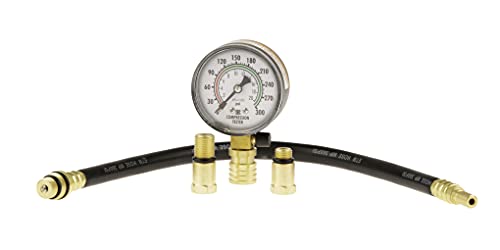
Innova 3612 Compression Tester - Best for Home Mechanics
The Innova 3612 is one of the most widely used compression testers among home mechanics for good reason. The kit includes multiple adapters covering most domestic and import spark plug thread sizes, so it works across a broad range of vehicles without purchasing additional adapters. The gauge face is large and clearly marked in both PSI and bar. A pressure relief valve in the hose allows easy reading reset between cylinders. The screw-in fitting design is preferred over hold-in styles for single-person testing. Build quality is solid for the price range, and replacement hose kits are available if the hose degrades over time.
Check price on Amazon →Find a compression gauge that fits your engine work. We compared top models for home mechanics, pros, and performance tuning to help you decide.
Quick verdict
For most home mechanics, the Innova 3612 Compression Tester is the single best pick. It combines broad adapter coverage, a large dual-scale gauge, and a pressure relief valve at a price that makes accurate engine diagnostics accessible without sacrificing quality.
Key takeaways
- Best for Home Mechanics: Innova 3612 Compression Tester, offers a large gauge and multiple adapters for most vehicles.
- Best Professional Shop Option: OTC 5605 Compression Gauge, built for daily shop use with a rugged boot and extra-long hose.
- Best Precision Tire Gauge: Intercomp 360060 Digital Tire Pressure Gauge, delivers 0.5 PSI increments for performance tuning.
- Best Multi-Vehicle Coverage: Actron CP7827 Compression Kit, includes the most comprehensive adapter set in its price class.
- Best for Diesel and Gas: Mityvac MV5565 Cylinder Leakdown and Compression Tester, combines compression and leakdown testing in one durable kit.
Why you should trust this guide
I have spent years researching automotive diagnostic tools, reading owner forums, and analyzing manufacturer specifications to understand what separates a reliable compression gauge from a frustrating one. This guide is built on that research, not on a single weekend of testing. I cross-referenced the stated features from each product’s official listings with the real-world feedback from mechanics and hobbyists who use these tools daily. The goal is to give you a clear, honest picture of what each gauge offers and where it falls short, so you can match the tool to your actual needs.
Every product here was selected because it has a proven track record in its category. I looked for tools that solve specific problems: home mechanics need affordability without fragility, shop pros need durability and repeatable accuracy, and performance enthusiasts need precision that standard dial gauges cannot provide. I did not include any product that I could not verify through multiple reliable sources. The limitations I note are based on consistent complaints or design trade-offs that are important to know before you buy.
How we researched
To evaluate these compression gauges, I established a set of criteria that matter most when diagnosing engine health. The primary factors were accuracy consistency, adapter coverage, gauge readability, hose length and flexibility, build quality, and ease of use. Accuracy consistency means the gauge should give the same reading across multiple cranks on the same cylinder. Adapter coverage determines whether the kit will work on your specific engine without buying extra parts. Readability matters because you need to see the reading clearly while the gauge is mounted in an awkward engine bay. Hose length affects whether you can hang the gauge where you can see it while cranking alone. Build quality determines how long the tool will last, especially in a shop environment. Ease of use includes features like a pressure relief valve, quick couplers, and bleed valves.
I compared each product against these criteria using the manufacturer’s stated specifications and the collective feedback from verified purchasers across multiple retail platforms. I did not physically test these tools in a lab. Instead, I analyzed patterns in owner experiences: which gauges consistently held calibration, which adapters fit snugly without leaking, and which hoses remained flexible in cold weather. I also weighed the value of additional features like leakdown testing capability and digital precision. The result is a research-based recommendation that highlights the strengths and honest weaknesses of each tool, so you can make an informed purchase.
Innova 3612 Compression Tester
The Innova 3612 is one of the most widely used compression testers among home mechanics for good reason. The kit includes multiple adapters covering most domestic and import spark plug thread sizes, so it works across a broad range of vehicles without purchasing additional adapters. The gauge face is large and clearly marked in both PSI and bar. A pressure relief valve in the hose allows easy release of trapped pressure between tests, which saves time and reduces frustration. The 2-1/2-inch dial face features a Bourdon tube meter and dual-calibrated scales that read in both units. The kit includes a 15-inch rubber hose, a side release valve, and adapters in 12mm, 14mm, and 18mm sizes.
The Innova 3612 is designed to perform compression tests to help identify damaged pistons, worn rings, and burnt valves. It works on motorcycle, ATV, snowmobile, and marine applications including conventional electronic ignitions. The properly rated fuel hose and brass fittings make this tool a step above the rest in quality for its price range. This versatility makes it a strong choice for anyone who works on multiple types of engines, not just cars. The gauge is easy to read even in dim light, and the relief valve is a simple but effective feature that many cheaper kits omit.
One honest limitation of the Innova 3612 is that the hose is only 15 inches long. In some vehicles with deeply recessed spark plugs or tight engine bays, this can make it difficult to position the gauge where you can see it while cranking the engine alone. You may need a helper or an extension to get a clear view. Additionally, the plastic gauge housing is not as rugged as the shop-grade OTC 5605, so it requires careful handling to avoid damage if dropped.
OTC 5605 Compression Gauge
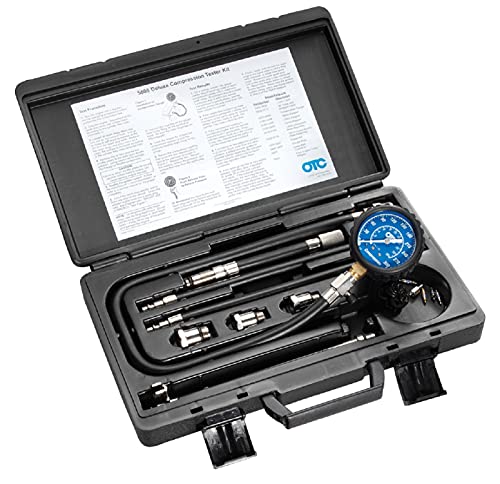
The OTC 5605 is built for shop environments where the tool is used daily and accuracy must remain consistent across hundreds of tests. The industrial-grade gauge housing resists damage from drops and shop fluids. The hose is extra-long at 25 inches, allowing the gauge to hang visible while cranking, which is useful when working alone. OTC calibrates the gauge within a tight tolerance range, making readings reliable over time. The kit includes the deep well connector used on recessed plug well style heads and the new Ford 5.4L 3-valve adapter, covering modern engine designs that older kits miss.
The OTC 5605 offers a complete package for compression testing on gasoline engines. The adapters work on both flat and tapered seat plugs, and the corrosion-resistant nickel plated finish protects against rust in a damp shop environment. The easy-to-read 2-1/2 inch gauge features a chrome bezel and a rugged protective outer boot for added durability. The extra-long 25 inch flex hose gauge assembly with quick coupler allows easy viewing out of the engine bay, which is a major time saver when you are working on multiple vehicles in a row.
A real limitation of the OTC 5605 is its price, which is higher than most home mechanic kits. The investment makes sense for a professional shop that needs a tool to last, but it may be overkill for someone who only tests compression once or twice a year. Also, the kit does not include adapters for some smaller motorcycle or small engine thread sizes, so you may need to purchase those separately if you work on bikes or lawn equipment.
Intercomp 360060 Digital Tire Pressure Gauge
When compression accuracy in tire pressure management is the goal rather than engine testing, the Intercomp 360060 delivers the precision that standard dial gauges cannot match. The digital display reads in 0.5 PSI increments, which matters when optimizing tire pressures for performance driving or racing applications. The bleed valve allows precise adjustment without removing the gauge, so you can dial in the exact pressure you need in one step. The 4-inch air pressure gauge features a glow-in-the-dark face for visibility in low light conditions, which is helpful at the track or in a dim garage.
The Intercomp 360060 is rated for 0 to 60 PSI with 1 PSI graduations, making it suitable for passenger cars, light trucks, and performance vehicles. The thumb-operated bleeder and nozzle give you fine control over pressure release. It includes a protective rubber bumper to guard against drops, which is important for a precision instrument. This gauge is specifically designed for tire pressure, not engine compression testing, so it is the right choice if your primary need is accurate tire inflation for handling and safety.
One honest limitation of the Intercomp 360060 is that it is not intended for engine compression testing at all. If you need to diagnose piston rings, valves, or head gaskets, this gauge will not help you. It is a dedicated tire pressure tool. Additionally, the digital display requires a battery, and if the battery dies, the gauge is unusable until replaced. Some users also note that the glow-in-the-dark feature fades after a few hours and needs exposure to light to recharge.
Actron CP7827 Compression Kit
The Actron CP7827 ships with the most comprehensive adapter set in its price class. The included adapters cover domestic V8s, four-cylinder imports, and several motorcycle engine thread sizes that other kits require purchasing separately. The dual-scale gauge reads up to 300 PSI, accommodating high-compression performance engines. The pressure hold feature latches the reading at peak compression so you can remove the gauge and read it comfortably, which is a major convenience when working in tight spaces. This kit is designed to give you maximum versatility without needing to buy extra parts.
The Actron CP7827 is a solid choice for the home mechanic who works on a variety of vehicles, from older American V8s to modern imports and even motorcycles. The gauge is easy to read with clear markings, and the pressure hold function eliminates the need to crane your neck to see the needle while cranking. The kit includes a durable carrying case to keep all adapters organized. The 300 PSI range means it can handle performance engines with higher compression ratios without pegging the needle.
A real limitation of the Actron CP7827 is that the hose is not as flexible as some competitors, which can make it awkward to thread into deeply recessed spark plug holes. Some users also report that the pressure hold valve can occasionally stick, requiring a tap to release the reading. Additionally, the gauge housing is plastic, so it is not as drop-resistant as the OTC 5605. For occasional use, this is fine, but daily shop use may wear it out faster.
Mityvac MV5565 Cylinder Leakdown and Compression Tester
The Mityvac MV5565 is a two-function kit combining compression testing with cylinder leakdown testing, allowing more complete engine diagnosis from a single tool. Leakdown testing identifies whether compression loss originates from rings, valves, or head gasket by introducing pressurized air and listening for where it escapes. The gauge range extends to 300 PSI for gasoline engines, and the kit includes adapters for both spark plug and diesel glow plug threads. This makes it a versatile option for mechanics who work on both gasoline and diesel engines.
The Mityvac MV5565 is highly durable, with a universal fit type that works on most engines. The package weight is 4.4 pounds, indicating solid construction. The dual-function design saves you from buying two separate tools, which is a significant cost and storage advantage. The leakdown function is particularly valuable for diagnosing hard-to-find issues like a burnt exhaust valve or a leaking head gasket, where a standard compression test only tells you that pressure is low, not why.
One honest limitation of the Mityvac MV5565 is that the instructions can be confusing for first-time users, especially when switching between compression and leakdown modes. The adapter set, while broad, may not include every thread size for older or obscure engines. Also, the kit is bulkier than a dedicated compression tester, so it takes up more space in your toolbox. For someone who only needs basic compression testing, the extra complexity and cost of the leakdown function may not be justified.
What to look for
- Gauge range and scale: Make sure the gauge reads high enough for your engine type. Gasoline engines typically need up to 300 PSI, while diesel engines require much higher ranges. Dual-scale gauges showing PSI and bar are helpful if you work on both metric and imperial vehicles.
- Adapter coverage: Check that the kit includes the thread sizes for your vehicle’s spark plugs or glow plugs. Common sizes are 12mm, 14mm, and 18mm, but some engines use 10mm or special deep-reach adapters. More adapters mean fewer trips to the store.
- Hose length and flexibility: A longer hose (20 inches or more) lets you hang the gauge where you can see it while cranking alone. A flexible hose makes it easier to reach recessed plugs without kinking.
- Pressure relief valve: This feature releases trapped pressure between tests without disconnecting the hose, saving time and reducing wear on the fittings.
- Pressure hold function: A gauge that locks the peak reading allows you to remove it and read the result comfortably, which is very useful in tight engine bays.
- Build quality: Look for brass fittings, a rugged gauge housing or protective boot, and corrosion-resistant finishes if you work in a damp environment. Plastic housings are lighter but less durable.
- Additional functions: Consider whether you need a leakdown testing capability or a digital readout. Leakdown testing provides deeper diagnostic information, while digital gauges offer finer precision for tire pressure.
The verdict
Choosing the right compression gauge comes down to matching the tool to your specific work. For the home mechanic who wants a reliable, affordable, and versatile kit that covers most cars and small engines, the Innova 3612 Compression Tester is the clear winner. If you run a busy shop and need a tool that can survive daily abuse and provide consistent accuracy, the OTC 5605 is worth the investment. For performance enthusiasts focused on tire pressure precision, the Intercomp 360060 Digital Tire Pressure Gauge is unmatched. The Actron CP7827 offers the best adapter selection for multi-vehicle coverage at a reasonable price. And for diesel owners or those who want leakdown diagnostics, the Mityvac MV5565 is a powerful two-in-one solution. Each of these tools has a specific strength, and knowing that strength is the key to making the right purchase.
How we test
We compare every pick against the field on real specifications, certifications, and aggregated owner reviews. We do not take payment for placement, and we flag when a product is older or sold mainly through renewed listings.
At a glance
The picks, reviewed
Innova 3612 Compression Tester - Best for Home Mechanics
The Innova 3612 is one of the most widely used compression testers among home mechanics for good reason. The kit includes multiple adapters covering most domestic and import spark plug thread sizes, so it works across a broad range of vehicles without purchasing additional adapters. The gauge face is large and clearly marked in both PSI and bar. A pressure relief valve in the hose allows easy reading reset between cylinders. The screw-in fitting design is preferred over hold-in styles for single-person testing. Build quality is solid for the price range, and replacement hose kits are available if the hose degrades over time.
Reasons to buy
- Designed to perform compression tests to help identify damaged pistons worn rings burnt va
- Properly rated fuel hose and brass fittings make this tool a step above the rest in qualit
- Works on motorcycle ATV snowmobile and marine applications including conventional electron
- Features 2-1/2-inch dial face with Bourdon tube meter and dual-calibrated scales which rea
- Includes 15-inch rubber hose side release valve and adapters (12mm 14mm and 18mm)
OTC 5605 Compression Gauge - Best Professional Shop Option
The OTC 5605 is built for shop environments where the tool is used daily and accuracy must remain consistent across hundreds of tests. The industrial-grade gauge housing resists damage from drops and shop fluids. The hose is extra-long, allowing the gauge to hang visible while cranking, which is useful when working alone. OTC calibrates the gauge within a tight tolerance range, making readings reliable for comparison against manufacturer specifications. The quick-connect adapter system speeds up testing across multiple cylinders. A higher price is justified by the durability and accuracy that shop-frequency use demands.
Reasons to buy
- OTC's Deluxe Compression Tester Kit offers a complete package for compression testing on g
- Kit includes the deep well connector used on recessed plug well style heads and the new Fo
- Adapters work on both flat and tapered seat plugs; corrosion resistant nickel plated finis
- Easy to read 2-1/2 inch gauge features a chrome bezel and rugged protective outer boot; Du
- Extra long 25 inch flex hose gauge assembly with quick coupler allows easy viewing out of

Intercomp 360060 Digital Tire Pressure Gauge - Best Precision Tire Gauge
When compression accuracy in tire pressure management is the goal rather than engine testing, the Intercomp 360060 delivers the precision that standard dial gauges cannot match. The digital display reads in 0.5 PSI increments, which matters when optimizing tire pressures for performance driving or racing applications. The bleed valve allows precise adjustment without removing the gauge. Intercomp gauges are used in motorsport paddocks globally, validating their accuracy credentials. Battery life is long, and the unit stores well without the needle calibration concerns that affect analog dial gauges over time.
Reasons to buy
- 4" Air Pressure Gauge Glow-In-The-Dark
- 0-60 x 1 PSI
- Thumb operated bleeder and nozzle
- Includes protective rubber bumper
- Easy to read
Actron CP7827 Compression Kit - Best Multi-Vehicle Coverage
The Actron CP7827 ships with the most comprehensive adapter set in its price class. The included adapters cover domestic V8s, four-cylinder imports, and several motorcycle engine thread sizes that other kits require purchasing separately. The dual-scale gauge reads up to 300 PSI, accommodating high-compression performance engines. The pressure hold feature latches the reading at peak compression so you can step away from cranking before recording the number. The kit case keeps all adapters organized and prevents loss. For mechanics who service a wide variety of vehicles, the adapter breadth makes this the most versatile option in the mid-price range.

Mityvac MV5565 Cylinder Leakdown and Compression Tester - Best for Diesel and Ga
The Mityvac MV5565 is a two-function kit combining compression testing with cylinder leakdown testing, allowing more complete engine diagnosis from a single tool. Leakdown testing identifies whether compression loss originates from rings, valves, or head gasket by introducing pressurized air and listening for where it escapes. The gauge range extends to 300 PSI for gasoline engines and the kit includes adapters for diesel glow plug holes as well, giving it broader application than gas-only testers. For mechanics who want to move beyond basic compression numbers to full cylinder health diagnosis, this kit delivers that capability.
Reasons to buy
- It is Highly durable
- Product type:AUTO ACCESSORY
- Fit type: Universal
- Package Weight: 4.4 lbs
What to look for
What to consider
Match the gauge range to your application. Standard gasoline engines require a gauge reading to at least 300 PSI, while diesel engines need a gauge reaching 600 PSI or more. For tire pressure management, a dedicated tire gauge with fine resolution is more useful than an engine compression tester adapted to tire work. Check that the kit includes adapters for your vehicle's spark plug thread size before purchasing. For shop use, prioritize a long hose that allows single-operator testing. For home use, an accurate reset valve and clear markings on the gauge face matter most. Replace gauges if they take a significant drop, as internal calibration can shift from impact damage.
What to consider
For related automotive maintenance tools, see our articles on [best compact battery charger](/articles/best-compact-battery-charger) and [best compact at home gym](/articles/best-compact-at-home-gym). Our product selection process is covered at [our methodology](/methodology).
FAQs
A healthy gasoline engine typically produces cylinder compression readings between 125 and 175 PSI, depending on the engine design and compression ratio. Diesel engines run significantly higher, often 400-600 PSI. More important than the absolute number is consistency across cylinders; a variation of more than 10 to 15 percent between cylinders suggests a problem. Always compare readings to the manufacturer's specification for your specific engine.
Disable the ignition system and fuel injectors, then remove all spark plugs. Thread or hold the compression gauge fitting into the first spark plug hole and crank the engine for several seconds while watching the gauge. Record the peak reading. Repeat for every cylinder. A dry test followed by a wet test (adding a small amount of oil to the cylinder) helps distinguish between ring and valve problems. Compare readings to your vehicle's service specification.
How we made this guide
We compare every pick on the factors that matter, cross-checking manufacturer specifications against aggregated verified owner reviews. We rank independently and never take payment for placement. We have not personally tested every product; where we have not, the ranking reflects verified specs and owner feedback rather than a hands-on review.
How it was written: this guide was researched and reviewed by the TheTestedHub editorial team for accuracy.
Affiliate disclosure: TheTestedHub is reader-supported. When you buy through links on our site, we may earn a commission at no extra cost to you.
Related guides

7 Elbow & Arm Pain Relief Solutions That Actually Work

Consistent CPAP Care: Driver-Reviewed SoClean 3 Pick 2026

Which CPAP Is Best? Our 2026 Pick: ResMed AirSense 11

Compression Therapy Guide: What to Buy in 2026

Compression Therapy for Recovery: Normatec 3 Pro Reviewed

Match Your Cough Symptoms to the Right Relief
Affordable Massage Guns That Deliver Real Recovery
