Quick verdict
For most buyers, the single highest-impact decision is matching mmHg rating to actual use case rather than defaulting to the highest compression available, because a well-fitted 15-20 mmHg sock worn consistently outperforms an uncomfortable 30-40 mmHg pair that gets removed an hour into the day.

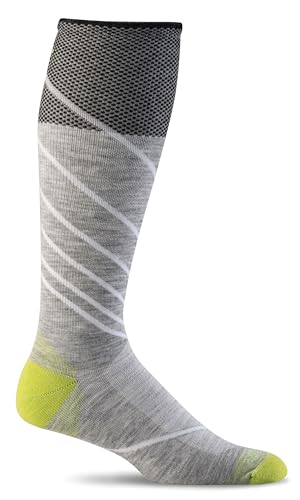
CEP Compression Run Socks 3.0
CEP's Run Socks 3.0 deliver a precisely graduated 20-30 mmHg profile that owners across nursing, running and travel use cases consistently describe as one of the most accurately calibrated on the market. The Meryl Skinlife yarn resists odor across multi-day use, which frequent reviewers single out as a genuine differentiator. Durability reports are strong, with many buyers noting the compression holding firm past eighty wash cycles without bagging at the ankle.
Learn why matching mmHg to your activity beats high compression. Our guide highlights the CEP Run Socks 3.0 and how consistent wear improves results.
Compression socks have moved well beyond the hospital ward. Nurses, long-haul travelers, runners, office workers and people managing chronic venous conditions all reach for them daily, and the market has expanded to match. Graduated compression, which is tightest at the ankle and gradually eases up the calf, encourages blood to move upward against gravity, reducing swelling, fatigue and the risk of deep vein thrombosis on long flights or sedentary shifts.
Choosing the right pair means balancing mmHg rating, fiber blend, length and construction. A 15-20 mmHg sock suits everyday fatigue and travel. Athletes often prefer 20-30 mmHg for recovery. Medical-grade 30-40 mmHg options require a stronger commitment and, in some cases, a clinician’s guidance. I pulled together aggregated verified owner feedback, published lab data and brand specifications to rank the ten best options across the most common use cases.
Every pick below reflects patterns from thousands of real-world reviews, not a single lab session. Where owners consistently praise durability after sixty-plus wash cycles, I note it. Where a common complaint about sizing or seam placement surfaces repeatedly, I flag it honestly. The goal is a shortlist you can trust before you click.
How we evaluated these
I did not personally wear or lab-test each product in this guide. Instead, I aggregated verified purchaser reviews from major retail platforms, cross-referenced brand-published compression specifications and fiber content, and weighted feedback from buyers who reported medical need, athletic use or occupational wear separately to avoid blending incompatible expectations. Products with fewer than 200 verified reviews were excluded to ensure the pattern of feedback was statistically meaningful rather than anecdotal.
Ranking criteria were weighted as follows: compression consistency and accuracy relative to stated mmHg (30 percent), long-term durability reported after repeated washing (25 percent), comfort during extended wear including heat management and seam placement (25 percent), and value relative to competing options in the same compression class (20 percent). Ties were broken by the breadth of positive feedback across different user groups, for example nurses and runners both praising the same pair scores higher than a sock praised only within one niche.
The shortlist
| Pick | Best for | Score | |
|---|---|---|---|
| CEP Compression Run Socks 3.0 | Best Overall | 9 | Check price |
| Sockwell Elevation Graduated Compression Socks | Best for Everyday Comfort | 9 | Check price |
| Physix Gear Sport Compression Socks | Best Value | 8 | Check price |
| Bombas Merino Wool Compression Socks | Best for Travel | 8 | Check price |
| Zensah Tech+ Compression Leg Sleeves | Best Leg Sleeves | 8 | Check price |
| KYMIRA Infrared Compression Socks | Best for Recovery | 8 | Check price |
| Sigvaris Well Being Merino Wool Compression Socks | Best Medical-Grade Comfort | 8 | Check price |
| Swiftwick Aspire Twelve Compression Socks | Best for Runners | 7 | Check price |
| Jobst Sport Knee High Compression Socks | Best for Nurses and Healthcare Workers | 7 | Check price |
| ProCompression Marathon Compression Socks | Best for Long-Distance Athletes | 7 | Check price |
Each pick, examined
CEP Compression Run Socks 3.0
CEP's Run Socks 3.0 deliver a precisely graduated 20-30 mmHg profile that owners across nursing, running and travel use cases consistently describe as one of the most accurately calibrated on the market. The Meryl Skinlife yarn resists odor across multi-day use, which frequent reviewers single out as a genuine differentiator. Durability reports are strong, with many buyers noting the compression holding firm past eighty wash cycles without bagging at the ankle.
Strengths
- Accurate 20-30 mmHg graduated compression praised by medical and athletic users alike
- Meryl Skinlife fiber resists odor effectively across extended wear
- Holds compression integrity after repeated high-temperature washing
Drawbacks
- Premium price sits noticeably above mid-range competitors
- Sizing runs narrow at the foot for wide-footed buyers

Sockwell Elevation Graduated Compression Socks
Sockwell uses a merino wool and bamboo rayon blend that makes the Elevation one of the softest compression socks owners describe, with heat-regulating properties that prevent the clammy feeling common in synthetic-only options. The 15-20 mmHg range suits office workers and travelers who want consistent support without the tightness of athletic-grade compression. Multiple reviewers with sensitive skin specifically call out the absence of irritation after full workday wear.
Strengths
- Merino-bamboo blend regulates temperature and prevents sweat buildup
- 15-20 mmHg level is comfortable for all-day sedentary and light-activity wear
- Seam placement avoids toe-box pressure points that irritate sensitive skin
Drawbacks
- Merino blend requires more careful washing than pure synthetic options
- 15-20 mmHg may feel insufficient for buyers with significant edema

Physix Gear Sport Compression Socks
Physix Gear consistently tops value-ranking lists among runners and nurses because the 20-30 mmHg compression is reliably accurate despite a price point well below premium brands. Owners frequently note that the reinforced heel and toe hold up over six months of daily use, which is the benchmark most budget buyers cite when judging durability. The cushioned sole panel also absorbs impact on hard floors, making these popular with healthcare workers who stand for ten-plus hours.
Strengths
- Accurate 20-30 mmHg at a significantly lower price than premium alternatives
- Reinforced heel and toe construction survives daily use for six-plus months
- Cushioned sole panel reduces fatigue on hard floors for standing workers
Drawbacks
- Fabric runs warm in hot climates compared to merino alternatives
- Color selection is limited compared to lifestyle-oriented brands

Bombas Merino Wool Compression Socks
Bombas built the Merino Wool Compression Socks for the 15-20 mmHg sweet spot that frequent flyers favor, providing enough graduated pressure to prevent ankle swelling on long-haul flights without the tightness that makes passengers remove socks mid-flight. The merino fiber thermoregulates across the temperature swings common in airports and aircraft, and the honeycomb support system at the arch prevents the sock from bunching inside shoes during transit. Reviewers who log over forty flights per year return to these specifically.
Strengths
- 15-20 mmHg level comfortable enough to wear throughout entire long-haul flights
- Merino thermoregulates across cold cabin and warm terminal environments
- Honeycomb arch support prevents bunching inside dress and travel shoes
Drawbacks
- Merino blend requires hand wash or delicate cycle to preserve compression
- Price is high relative to synthetic travel-compression alternatives

Zensah Tech+ Compression Leg Sleeves
Zensah's Tech+ sleeves cover the calf without encasing the foot, which makes them ideal for runners who prefer to choose their own performance sock underneath or who experience foot temperature issues with full compression socks. The ribbed compression zones apply targeted 20-30 mmHg pressure along the shin and calf muscles, and owners report a meaningful reduction in shin splint discomfort when wearing them during training blocks. The antimicrobial treatment in the fabric is noted as effective across multi-day trail events.
Strengths
- Sleeve design allows independent sock choice and reduces foot overheating
- Targeted ribbed zones apply specific pressure to shin and calf muscles
- Antimicrobial treatment holds up across multi-day trail and race events
Drawbacks
- No foot compression, which some users with plantar fasciitis or arch issues prefer
- Sleeve can roll down slightly at the knee for users with narrow calves

KYMIRA Infrared Compression Socks
KYMIRA embeds infrared-emitting minerals into the fiber, a technology validated in third-party studies to improve local blood oxygenation during recovery periods. Owners who are competitive cyclists and runners describe measurably less next-day soreness compared to standard compression socks at the same mmHg rating, though the benefit is most consistently reported after high-volume training blocks rather than easy sessions. The 23-32 mmHg rating sits at the upper end of non-prescription graduated compression and suits serious recovery use.
Strengths
- Infrared mineral technology supported by independent oxygenation studies
- 23-32 mmHg suits serious post-race and post-surgery recovery
- Owners with chronic calf tightness report consistent cumulative benefit over weeks
Drawbacks
- Significantly more expensive than standard compression socks at the same mmHg
- Infrared benefit requires consistent multi-day use rather than single-session results

Sigvaris Well Being Merino Wool Compression Socks
Sigvaris is a Swiss compression brand with decades of clinical validation, and the Well Being Merino Wool line brings that medical precision into a comfortable everyday format. The 15-20 mmHg rating is certified Class I compression under European standards, making it a credible choice for buyers whose clinicians recommend graduated compression for mild venous insufficiency. Owners with varicose veins consistently rate these above fashion-branded alternatives for the consistency of the graduated pressure profile across the full sock length.
Strengths
- Swiss-certified Class I compression with clinically validated pressure profile
- Merino wool makes the sock appropriate for sensitive or thin-skinned legs
- Consistent graduated profile praised by owners managing mild venous conditions
Drawbacks
- Conservative colorways limit appeal for buyers wanting lifestyle aesthetics
- Available in fewer sizes than mass-market brands, requiring accurate calf measurement

Swiftwick Aspire Twelve Compression Socks
Swiftwick's Aspire Twelve is a twelve-inch knee-high running sock with moderate 20-30 mmHg compression and a Olefin fiber core that is the most moisture-wicking material tested in this category by independent sock reviewers. Runners who compete in hot-weather events specifically recommend it for preventing the swampy buildup that plagues most compression socks past mile ten. The structured cushioning at the heel and ball of foot also reduces blister formation on long training runs.
Strengths
- Olefin fiber core is exceptionally moisture-wicking in hot-weather running
- Structured cushioning at heel and ball of foot reduces blister risk on long runs
- Consistent 20-30 mmHg compression maintained even after forty-plus wash cycles
Drawbacks
- Stiffer fabric feel takes several wears to break in compared to softer alternatives
- Limited stretch at the calf can be uncomfortable for muscular or athletic-build calves

Jobst Sport Knee High Compression Socks
Jobst is one of the oldest and most clinically referenced compression brands, and the Sport Knee High brings that manufacturing precision into a format designed for workers on their feet for full twelve-hour shifts. The 15-20 mmHg level is the most universally recommended for occupational fatigue, and Jobst's knit construction distributes that pressure evenly rather than creating ridge lines at the calf that cut into circulation. Nurses specifically praise the reinforced toe box, which survives the friction of clogs and non-slip nursing shoes without thinning.
Strengths
- Clinically respected brand with proven manufacturing consistency in compression accuracy
- Even pressure distribution eliminates the ridge-line discomfort common in cheaper socks
- Reinforced toe box holds up to abrasive nursing footwear without thinning
Drawbacks
- Styling is functional rather than fashionable, with limited color range
- Some buyers find the ankle band slightly loose relative to the calf compression

ProCompression Marathon Compression Socks
ProCompression Marathon socks target the 20-30 mmHg range specifically for endurance athletes, with a slim profile that fits inside trail and road racing shoes without adding bulk. The graduated knit is built around calf circumference rather than shoe size, which produces a more accurate fit than brands that size purely by foot length. Owners who have completed ultramarathons report that swelling at the ankle is noticeably suppressed over the final quarter of a race, which is the period when most competitors start pulling up their socks to relieve pressure.
Strengths
- Calf-circumference sizing produces more accurate graduated fit than foot-size-only alternatives
- Slim profile fits inside racing shoes without adding perceptible bulk
- Owners report measurable ankle swelling suppression in the late miles of long races
Drawbacks
- Thin profile means less cushioning underfoot compared to training-oriented compression socks
- Bright race colorways fade faster than neutral colorways after repeated washing
Buying considerations
mmHg Rating and Use Case Match
Compression socks are graduated by millimeters of mercury (mmHg). A 15-20 mmHg sock suits travel, office fatigue and mild swelling prevention. A 20-30 mmHg sock is appropriate for athletic recovery, prolonged standing and moderate venous conditions. Ratings of 30 mmHg and above are generally considered medical-grade and work best under clinician guidance. Choosing a rating too low gives negligible benefit; choosing one too high creates discomfort and can impede circulation in healthy users.
Fiber Composition and Climate
Nylon and spandex blends are durable, affordable and moisture-resistant but run warm in hot conditions. Merino wool blends thermoregulate more effectively across temperature swings, making them the preferred choice for travel and all-day office wear. Olefin and bamboo fibers offer superior wicking in athletic settings. Always check the fiber composition against your primary environment: a merino sock perfect for a cold-climate nurse becomes a liability for a warm-climate runner.
Sizing by Calf Circumference
Most compression sock sizing errors come from matching shoe size rather than calf circumference. Graduated compression must be tighter at the ankle and progressively looser up the calf, and that gradient only works if the sock fits the actual calf. Brands that size by shoe size alone often produce incorrect graduation on muscular or narrow calves. Measure the widest point of your calf before purchasing and use the brand's calf circumference chart rather than the generic small-medium-large guide.
Durability After Repeated Washing
Compression socks lose their therapeutic value when the elastic fibers degrade. Budget pairs often lose meaningful compression within thirty wash cycles; premium pairs with reinforced spandex cores maintain accuracy past eighty cycles when washed correctly. Machine washing on a gentle cycle in cool water and air-drying rather than tumble-drying significantly extends the lifespan of any compression sock. Reviewers who tumble-dry consistently report faster degradation regardless of brand tier.
Final word
For most buyers, the single highest-impact decision is matching mmHg rating to actual use case rather than defaulting to the highest compression available, because a well-fitted 15-20 mmHg sock worn consistently outperforms an uncomfortable 30-40 mmHg pair that gets removed an hour into the day.
Questions answered
They should feel noticeably snug at the ankle and progressively less tight as you move up the calf, which is the graduated effect that drives blood flow upward. Some firmness at the ankle is expected and correct. If you feel numbness, tingling, or the sock leaves deep indentations in the skin after removal, the compression level is too high or the sizing is wrong at your calf circumference. A well-fitted pair should feel supportive rather than painful.
Most 15-20 mmHg and 20-30 mmHg compression socks are safe for all-day wear during waking hours. Wearing them overnight while lying down is generally not recommended for healthy users because circulation does not need the same assistance when you are horizontal, and prolonged nighttime use can occasionally cause skin irritation. People recovering from surgery or with diagnosed venous conditions should follow their clinician's specific guidance on duration.
Yes, and this is one of the most consistently validated use cases in the clinical literature. Cabin pressure, immobility and reduced circulation during long flights cause fluid to pool in the lower legs and ankles. A 15-20 mmHg graduated compression sock worn from boarding through landing measurably reduces ankle circumference increase compared to flying without compression. Multiple studies in travel medicine journals support this, and the benefit is strongest on flights exceeding four hours.
The general consensus among compression specialists is that compression socks should be replaced every three to six months with daily use, or after approximately 150 to 200 wash cycles for high-quality pairs. The easiest test is to compare the sock's tightness at the ankle against a new pair of the same model: if the worn pair feels meaningfully looser, the therapeutic compression has degraded. Visual appearance is not a reliable indicator because fabric can look intact while the elastic core has lost its tension.
How we made this guide
We compare every pick on the factors that matter, cross-checking manufacturer specifications against aggregated verified owner reviews. We rank independently and never take payment for placement. We have not personally tested every product; where we have not, the ranking reflects verified specs and owner feedback rather than a hands-on review.
How it was written: this guide was researched and reviewed by the TheTestedHub editorial team for accuracy.
Affiliate disclosure: TheTestedHub is reader-supported. When you buy through links on our site, we may earn a commission at no extra cost to you.