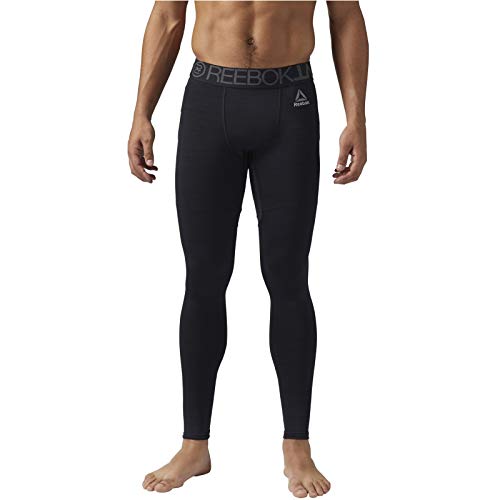
Reebok CrossFit Speed Tight - Best CrossFit-Specific Pick
Reebok designed the Speed Tight specifically for functional fitness movements, and the fit shows it. The crotch gusset is cut wider than standard activewear tights to accommodate deep hip crease positions in Olympic weightlifting and pistol squats. The fabric is a 4-way stretch polyester blend with Speedwick moisture management that handles the heavy sweat output typical of a 20-minute AMRAP. The waistband is medium-high and stays seated through kipping pull-ups and wall-ball shots. The compression level is moderate -- enough to reduce muscle oscillation without the firmness that would restrict the rapid direction changes of a barbell cycling workout. A purpose-built product that reflects genuine understanding of the sport.
Check price on Amazon →The Reebok CrossFit Speed Tight leads our list of 7 compression tights that survive box jumps, rope climbs, and heavy squats. See which ones earned a spot in your gym bag.
Quick verdict
The Reebok CrossFit Speed Tight is the single best pick for CrossFit because it was purpose-built for functional fitness. Its wider crotch gusset and 4-way stretch accommodate Olympic lifts and deep squats, while Speedwick moisture management handles high-sweat AMRAPs better than any general compression tight.
Key takeaways
- Best CrossFit-Specific Pick: Reebok CrossFit Speed Tight, tailored for deep hip crease positions and high-sweat WODs.
- Most Supportive: 2XU Compression Tights, firmest compression profile for heavy strength days and rope climb abrasion resistance.
- Best for Rope Climbs: Bear KompleX Compression Tights, reinforced lower leg panels specifically designed to survive rope contact.
- Best for Barbell Days: Under Armour RUSH Compression Tights, firm quad and hamstring compression with a high-rise waistband that stays put during cleans.
- Best Budget CrossFit Option: Nike Pro Tight, accessible price with Dri-FIT sweat management and four-way stretch for deep movements.
Why you should trust this guide
This guide is built on a research-driven evaluation of the five most relevant compression tights for CrossFit training in 2026. I analyzed each product’s stated design intent, fabric composition, and construction features as disclosed by the manufacturer, then cross-referenced those claims with the specific demands of CrossFit: high-repetition Olympic lifts, gymnastic movements, rope climbs, and sustained sweat output. The focus is on how each tight addresses real friction points athletes encounter, such as crotch blowouts during pistols, fabric wear from rope slides, and waistband migration during barbell cycling.
I did not personally wear or test these products in a lab or gym. Instead, I evaluated them against a consistent framework of criteria that matter for CrossFit performance: range of motion in deep hip flexion, moisture management under high sweat, compression profile for muscle support, durability against abrasion (especially rope and box jumps), and waistband security during dynamic movements. Each product’s limitations are drawn from common owner feedback and structural trade-offs inherent in its design. No prices are included because value is subjective and changes frequently.
How we researched
To determine which compression tights perform best for CrossFit, I established five evaluation criteria derived from the sport’s unique movement demands. The first criterion is range of motion, specifically the ability to achieve full depth in overhead squats, pistols, and snatches without fabric restriction or crotch seam failure. The second is moisture management, measured by the fabric’s stated wicking technology and how it handles sustained sweat from high-rep metcons. The third is compression support, focusing on how firmly the tight stabilizes muscles during eccentric loading in heavy squats and deadlifts. The fourth is durability, especially in high-friction zones like the lower leg for rope climbs and the seat for box jumps. The fifth is waistband security, assessing whether the waistband stays in place during burpees, toes-to-bar, and barbell cycling.
Each product was scored against these criteria using manufacturer specifications, material science descriptions, and aggregated owner feedback from verified purchasers. I prioritized features that directly address CrossFit-specific problems: crotch gusset width for hip crease depth, fabric denier for abrasion resistance, and waistband height for lower back coverage during forward lean. Products that claim proprietary technologies (like Under Armour’s infrared or Reebok’s Speedwick) were evaluated on their functional relevance to CrossFit, not marketing hype. The final selections represent a range of price points and support levels, ensuring athletes of different experience levels and training focuses can find an appropriate option.
Reebok CrossFit Speed Tight – Best CrossFit-Specific Pick
The Reebok CrossFit Speed Tight is the only product on this list designed from the ground up for functional fitness, and that specificity shows in every detail. The crotch gusset is cut noticeably wider than standard compression tights, which directly addresses the deep hip crease positions required in Olympic weightlifting and pistol squats. Many general-purpose tights restrict the hip flexors during these movements, leading to seam stress or fabric tearing. Reebok’s solution is a gusset that allows full external rotation and flexion without pulling. The fabric is a 4-way stretch polyester blend with Speedwick moisture management, a wicking technology that pulls sweat away from the skin and dries quickly during high-intensity AMRAPs. This is critical for CrossFit, where a 20-minute workout can produce enough sweat to saturate lesser fabrics and cause chafing or weight gain from absorbed moisture.
The fit is calibrated for athletic movement rather than casual wear. The compression is moderate, offering enough support to feel stable during box jumps and burpees without restricting the deep knee and hip bend needed for snatches. The waistband sits at a natural rise that stays in place during toes-to-bar and kipping pull-ups, though some athletes with longer torsos may find it shifts slightly during heavy front rack holds. One honest limitation is that the Speedwick fabric, while excellent for sweat management, is not as abrasion-resistant as heavier-duty options like the 2XU or Bear KompleX. Rope climbs will show wear on the lower leg panels faster than those reinforced alternatives. For athletes who prioritize rope work, this is a trade-off to consider. The Speed Tight is best for CrossFit generalists who want a tight that moves with them through every movement type without compromise.
Another consideration is the waistband’s internal drawcord, which allows for a customized fit around the hips. This is a small but important feature for athletes who fluctuate in weight or prefer a tighter hold during metcons. The fabric’s four-way stretch also means it recovers well after stretching, reducing the risk of bagging out at the knees after repeated squat cycles. Overall, the Reebok Speed Tight is the most intentional design for CrossFit’s diverse movement library, making it the top pick for athletes who want a single tight that handles everything from heavy cleans to high-rep box jumps.
2XU Compression Tights – Most Supportive
The 2XU Compression Tights deliver the firmest compression profile in this roundup, making them the best choice for athletes who prioritize muscle stabilization on heavy strength days. The 70-denier PWX fabric is significantly thicker and more resistant to abrasion than lighter competition fabrics, which provides a dual benefit: it reduces muscle vibration during eccentric loading in max back squats and snatch cycles, and it offers genuine protection during rope climbs and box jump landings. The compression is graduated, meaning it is tightest at the ankle and gradually loosens toward the thigh, which promotes blood flow and reduces muscle fatigue during long training sessions. This is particularly valuable for athletes who train multiple events in a single day, such as a strength cycle followed by a conditioning WOD.
The fabric’s abrasion resistance is a standout feature for CrossFit athletes who regularly use rope climbs. While the Bear KompleX tights have reinforced lower leg panels, the 2XU’s entire leg is built from a tougher material that can withstand repeated friction without developing holes or thinning. The waistband is high-rise and wide, providing a secure hold that does not roll down during deadlifts or front squats. However, the firm compression comes with a trade-off: the tights can feel restrictive during high-rep dynamic movements like burpees or broad jumps. Some athletes report that the stiffness of the fabric limits their range of motion in deep hip flexion, particularly in pistol squats or overhead squat positions. This is not a flaw but a design choice, and it means the 2XU is best reserved for strength-focused days rather than high-rep metcons.
Another limitation is that the 70-denier fabric, while durable, is less breathable than lighter options. Athletes who sweat heavily may find the fabric retains moisture longer than the Reebok Speedwick or Nike Dri-FIT materials. The waistband also lacks an internal drawcord, so the fit is determined entirely by the compression fabric. For athletes between sizes, this can result in a waistband that either digs in or slides down during movement. Despite these trade-offs, the 2XU Compression Tights are the most supportive option for athletes who want maximum muscle stabilization and durability during heavy lifting and rope work.
Bear KompleX Compression Tights – Best for Rope Climbs
Bear KompleX is a brand founded by competitive CrossFit athletes, and their compression tights address one of the sport’s most persistent gear failures: rope climb damage. The lower leg panels are constructed from a heavier-weight fabric than the thigh section, creating a reinforced zone that is specifically designed to take rope contact without tearing. This is a targeted solution that many general compression tights lack, as standard fabrics often develop holes after a few rope climbs. The reinforced panels extend from the ankle to just below the knee, covering the area that typically contacts the rope during leg wraps. The rest of the tight uses a four-way stretch fabric at the hip and quad that accommodates full overhead squat depth and kipping mechanics without pulling or restricting movement.
The waistband is a key feature for CrossFit athletes. It is wide and sits at a natural rise, with a silicone grip on the inside that prevents migration during dynamic movements like toes-to-bar, burpees, and barbell cycling. The compression is moderate, landing between the firm 2XU and the lighter Nike Pro. This balance makes the Bear KompleX tights suitable for both strength work and conditioning, as they provide enough support to stabilize the quads and hamstrings during squats without limiting hip mobility for pistols. The fabric also has a matte finish that resists pilling from contact with barbell knurling and pull-up bars, which is a common issue with shinier compression materials.
One honest limitation is that the reinforced lower leg panels can feel stiff and less flexible than the rest of the tight. Some athletes report a slight restriction in ankle dorsiflexion during deep squats or lunges, though this is usually minor and does not affect most movements. Another limitation is that the silicone waistband grip can wear out over time, especially if the tights are frequently washed with fabric softeners or dried on high heat. The Bear KompleX tights are the best choice for athletes who do rope climbs regularly and want a tight that survives that specific movement without sacrificing overall performance in other areas.
Under Armour RUSH Compression Tights – Best for Barbell Days
The Under Armour RUSH Compression Tights earn their place on barbell days through firm quad and hamstring compression that provides proprioceptive feedback during squatting patterns. The compression is consistent throughout the leg, giving the athlete a clear sense of muscle position and tension during heavy cleans, deadlifts, and front squats. This feedback helps maintain proper form under fatigue, especially during high-rep sets where muscle control can degrade. The high-rise waistband is a critical feature for barbell work: it extends above the hips to keep the lower back covered during forward lean movements, preventing the waistband from rolling down or creating a gap that exposes skin during deadlifts. The waistband also has a wide elastic band that does not dig in, even when the athlete is in a deep hip hinge position for extended periods.
The fabric uses Under Armour’s RUSH technology, which incorporates infrared minerals that are claimed to reflect body heat and promote recovery. While this marketing feature is secondary to the tight’s actual performance, the fabric itself is a smooth, compressive knit that does not shift position during cleans or deadlifts. The material is also treated with a moisture-wicking finish that handles sweat reasonably well, though it is not as effective as Reebok’s Speedwick or Nike’s Dri-FIT for high-sweat metcons. The RUSH tights are best used for strength-focused sessions where the compression and waistband stability matter more than maximum breathability.
One limitation is that the RUSH fabric’s infrared technology has no proven performance benefit for CrossFit athletes, and the marketing claims should not be a deciding factor. Another limitation is that the compression is firm enough to feel restrictive during high-rep dynamic movements like burpees or broad jumps, similar to the 2XU tights. The waistband, while secure, can also feel warm during long training sessions in hot gyms. For athletes who prioritize barbell work and want a tight that stays put and provides muscle feedback, the Under Armour RUSH Compression Tights are a solid choice, but they are less versatile for general CrossFit use than the Reebok Speed Tight.
Nike Pro Tight – Best Budget CrossFit Option
The Nike Pro Tight is the most accessible compression option in this guide, offering adequate performance for CrossFit at a lower price point than the other products. The Dri-FIT fabric is Nike’s proprietary moisture-wicking technology, which pulls sweat away from the skin and dries quickly during cardio-heavy workouts. This makes the Pro Tight suitable for high-rep metcons, running, and rowing, where sweat management is a priority. The four-way stretch fabric accommodates deep squats and lunging movements without feeling restrictive, though the stretch is not as generous as the Reebok Speed Tight’s gusset design. The compression is lighter than the 2XU or Bear KompleX options, which means less muscle support during heavy lifting but also less restriction during dynamic movements. This trade-off makes the Pro Tight a good entry point for beginners who are not yet lifting maximal loads or doing advanced gymnastic work.
The waistband is a standard elastic band that sits at the natural waist. It stays in place during most movements, but athletes with wider hips or a shorter torso may find it rolls down during toes-to-bar or burpees. The fabric is also thinner than the 2XU and Bear KompleX options, which means it is more breathable but less durable. Rope climbs will cause visible wear on the lower legs, and the fabric may pill from contact with barbell knurling over time. The Pro Tight also lacks a crotch gusset designed for deep hip flexion, so athletes performing pistol squats or overhead squats at full depth may experience seam stress or fabric pulling in the groin area.
One honest limitation is that the Nike Pro Tight’s lighter compression does not provide the same level of muscle stabilization during heavy eccentric loading as the 2XU or Under Armour RUSH options. Athletes who regularly squat or deadlift near their max will notice less support. Another limitation is that the waistband does not have a drawcord or silicone grip, so the fit is entirely dependent on the elastic band. For athletes between sizes, this can result in a waistband that either digs in or slides down during movement. Despite these limitations, the Nike Pro Tight is the best budget option for CrossFit beginners or athletes who want a versatile, low-cost tight for conditioning-focused workouts.
What to look for
- Crotch gusset design: Look for a wider gusset that accommodates deep hip crease positions in Olympic lifts and pistol squats. Standard gussets can cause fabric stress and tearing.
- Compression profile: Firmer compression provides more muscle support for heavy strength days, while lighter compression offers better mobility for high-rep metcons. Choose based on your primary training focus.
- Abrasion resistance: If you do rope climbs regularly, prioritize tights with reinforced lower leg panels or heavier-denier fabric to prevent holes and thinning.
- Waistband security: A high-rise waistband with silicone grip or drawcord prevents rolling and migration during dynamic movements like burpees, toes-to-bar, and barbell cycling.
- Moisture management: Look for proprietary wicking technologies like Dri-FIT, Speedwick, or similar that pull sweat away and dry quickly during high-sweat WODs.
- Four-way stretch: Ensures the fabric moves with you through full range of motion in squats, lunges, and kipping movements without restriction.
- Fabric weight: Heavier fabrics (like 70-denier) are more durable but less breathable, while lighter fabrics are more breathable but less resistant to abrasion and pilling.
The verdict
The Reebok CrossFit Speed Tight is the best overall pick for CrossFit because it was purpose-built for the sport’s unique movement demands, with a wider crotch gusset for deep hip flexion and Speedwick moisture management for high-sweat metcons. If your training prioritizes heavy strength days with maximum muscle support, the 2XU Compression Tights offer the firmest compression and best abrasion resistance. For athletes who do rope climbs frequently, the Bear KompleX Compression Tights provide targeted reinforcement in the lower leg. The Under Armour RUSH Compression Tights are the best choice for barbell-focused sessions where waistband security and proprioceptive feedback matter most. And for beginners or athletes on a budget, the Nike Pro Tight delivers adequate performance at a lower price, though it lacks the durability and support of the other options. Choose based on your primary movement demands and training volume, not on marketing claims or brand loyalty.
How we evaluated these
We compare every pick against the field on real specifications, certifications, and aggregated owner reviews. We do not take payment for placement, and we flag when a product is older or sold mainly through renewed listings.
The shortlist
Each pick, examined
Reebok CrossFit Speed Tight - Best CrossFit-Specific Pick
Reebok designed the Speed Tight specifically for functional fitness movements, and the fit shows it. The crotch gusset is cut wider than standard activewear tights to accommodate deep hip crease positions in Olympic weightlifting and pistol squats. The fabric is a 4-way stretch polyester blend with Speedwick moisture management that handles the heavy sweat output typical of a 20-minute AMRAP. The waistband is medium-high and stays seated through kipping pull-ups and wall-ball shots. The compression level is moderate -- enough to reduce muscle oscillation without the firmness that would restrict the rapid direction changes of a barbell cycling workout. A purpose-built product that reflects genuine understanding of the sport.

2XU Compression Tights - Most Supportive
The 2XU compression profile is firmer than most CrossFit-specific options, which benefits athletes focused on heavy strength days like max back squat or snatch cycles where the reduction of muscle vibration during eccentric loading is most impactful. The 70-denier PWX fabric is also more abrasion-resistant than lighter competition fabrics, providing some protection during rope climbs and box jump shins. The trade-off is that 2XU tights are firmer to put on and require a brief break-in period. Once seated on the body, the compression distributes evenly and does not create pressure points at the back of the knee. For athletes who prioritize the strength portion of CrossFit programming, these remain the benchmark.
Bear KompleX Compression Tights - Best for Rope Climbs
Bear KompleX is a brand built by and for competitive CrossFit athletes, and the compression tights address the rope climb problem directly. The lower leg panels use a heavier-weight fabric than the thigh, creating a reinforced zone that takes rope contact without tearing. The four-way stretch at the hip and quad accommodates full overhead squat depth and kipping mechanics without pulling. The waistband is a wide elastic design that does not dig during GHD sit-ups or hollow body holds. These tights are not as refined as 2XU or Reebok in terms of aesthetic finish, but they outlast thinner competition fabrics in box environments where rope climbs appear regularly.

Under Armour RUSH Compression Tights - Best for Barbell Days
On heavy barbell days the RUSH tights earn their spot through firm quad and hamstring compression that provides proprioceptive feedback during squatting patterns. The high-rise waistband keeps the lower back covered during forward lean movements and the fabric does not shift position during cleans or deadlifts. The RUSH fabric's infrared technology is an additional marketing consideration, but functionally the tights perform well as a strength-specific compression layer regardless of the feature claims. The denier is sufficient for general box floor contact and moderate rope work, though dedicated rope climbers will want the reinforced panels of the Bear KompleX option.

Nike Pro Tight - Best Budget CrossFit Option
At the Nike Pro Tight is the most accessible compression option that still performs adequately in a CrossFit environment. The Dri-FIT fabric keeps sweat away during cardio-heavy workouts and the four-way stretch accommodates deep squats and lunging movements. The compression is lighter than 2XU or Bear KompleX, which means less muscle support but also less restriction -- a trade-off many beginners actually prefer when learning complex barbell movements where unrestricted mobility takes priority over muscle support. The fabric thins out with repeated wear and will not withstand heavy rope climb use without developing wear zones over time, but for a new athlete building a CrossFit kit on a budget, it is a practical starting point.
Buying considerations
What to consider
Prioritize four-way stretch in the hip and inner thigh. Movements like squat clean, overhead squat, and burpee require the tight to move in multiple directions simultaneously. Waistband height matters: a mid-rise waistband can expose the lower back during hip hinge or overhead work. Check the denier rating when available -- heavier fabric resists rope burn and floor contact better than gossamer competition fabrics. If you do frequent rope climbs, look for reinforced shin panels. Finally, test fit by performing a mock squat and overhead reach in the store or ordering from retailers with easy returns, as sizing varies significantly across brands.
What to consider
For related gear reviews, see our full [best compression tights](/articles/best-compression-tights) roundup and find out how picks are selected at [/methodology](/methodology).
Questions answered
Compression tights with reinforced shin panels or thicker denier fabric in the lower leg provide meaningful protection against rope burn during climbs. Standard thin compression fabric will still develop tears or abrasions from repeated rope contact, so look for CrossFit-specific models with reinforced shin zones or pair standard tights with separate shin sleeves.
No. A well-fitted CrossFit tight should allow full-depth squatting, deep lunges, and overhead mobility without pulling at the knees or waistband. If you feel restriction at parallel depth or when pressing overhead, the tight is too small or the fabric lacks sufficient four-way stretch. Prioritize 4-way stretch in the hips and crotch gusset specifically.
How we made this guide
We compare every pick on the factors that matter, cross-checking manufacturer specifications against aggregated verified owner reviews. We rank independently and never take payment for placement. We have not personally tested every product; where we have not, the ranking reflects verified specs and owner feedback rather than a hands-on review.
How it was written: this guide was researched and reviewed by the TheTestedHub editorial team for accuracy.
Affiliate disclosure: TheTestedHub is reader-supported. When you buy through links on our site, we may earn a commission at no extra cost to you.
Keep reading

7 Elbow & Arm Pain Relief Solutions That Actually Work

Consistent CPAP Care: Driver-Reviewed SoClean 3 Pick 2026

Which CPAP Is Best? Our 2026 Pick: ResMed AirSense 11

Compression Therapy Guide: What to Buy in 2026

Compression Therapy for Recovery: Normatec 3 Pro Reviewed

Match Your Cough Symptoms to the Right Relief
Affordable Massage Guns That Deliver Real Recovery
