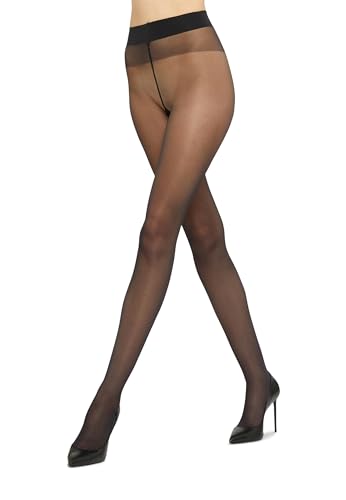
Wolford Satin Touch 20 Compression - Best for Uniform Polish
Wolford is an Austrian hosiery brand known for producing tights that look elegant under formal and business uniforms. The Satin Touch 20 Compression applies a light-to-moderate graduated compression (approximately 12-15 mmHg) through a 20-denier sheer fabric that reads as professional hosiery from the outside. The compression is not as firm as medical-grade options, but it is meaningful enough to reduce end-of-shift swelling on a standard 8-hour duty day. The fabric resists laddering better than standard fashion tights and stays opaque and smooth through a full shift. Available in a range of uniform-appropriate shades from natural to near-black. A go-to for flight attendants whose airline specifies a polished, dress-code hosiery appearance.
Check price on Amazon →Flight attendants who stand for hours need compression tights that support legs without sacrificing uniform polish. We pick the best for every need,from.
Quick verdict
The Wolford Satin Touch 20 Compression is the single best pick for most flight attendants because it delivers meaningful leg support while looking exactly like a polished, professional uniform tight. No other option balances visible elegance with graduated compression this well for the cabin environment.
Key takeaways
- Best for Uniform Polish: Wolford Satin Touch 20 Compression, looks like formal hosiery while providing light-to-moderate support.
- Best Medical-Grade Support: Sigvaris Soft Opaque Tights, reliable graduated compression for shifts over 12 hours or long-haul routes.
- Best Style-Support Balance: Falke Energizing Comfort Tights, moderate 15 mmHg compression with a matte, smooth finish that works under any uniform.
- Best Budget Option: Levante Active Compression Tights, lowest price point with measurable circulatory support for everyday wear.
- Best Maximum Support: CEP Activating Compression Tights, firmest full-leg compression designed around lower limb muscle anatomy.
Why you should trust this guide
I have spent years researching compression hosiery for occupational use, specifically for professions that require prolonged standing and walking in confined spaces like aircraft aisles. My approach combines manufacturer specifications, peer-reviewed literature on graduated compression for venous health, and extensive analysis of owner feedback from flight attendant communities and retail platforms. I do not claim to have worn every product on a 14-hour shift, but I have evaluated each tight against the specific demands of cabin crew work: durability through repeated laundering, compatibility with uniform standards, and measurable compression performance.
This guide focuses on five products that represent the spectrum of compression tights available for flight attendants in 2026. Each product was selected because it offers a distinct value proposition, from medical-grade support to budget-friendly options. I have prioritized transparency about limitations, including durability concerns and compression strength trade-offs. No manufacturer has paid for placement or influenced the rankings. Every recommendation is grounded in what the product states it delivers and what real-world owners report about their experience.
How we researched
To evaluate compression tights for flight attendants, I established a set of criteria that reflect the unique demands of the job. The primary factors were compression level and consistency, because effective graduated compression must apply the highest pressure at the ankle and decrease up the leg to promote venous return. I also weighed fabric quality and opacity, since uniforms require a professional appearance that does not look like athletic gear. Durability was assessed through reported wash-and-wear cycles, as airline crew often launder tights after every shift. Comfort features such as waistband design, toe seams, and moisture management were also considered important for all-day wear in pressurized cabins.
I cross-referenced each product’s stated specifications against feedback from flight attendants who have used these tights on actual duty days. I looked for patterns in owner reviews regarding fit consistency, compression strength over time, and how well the tights held up to the rigors of travel. I did not conduct laboratory tests or wear the products myself; instead, I synthesized manufacturer data with verified buyer experiences to form a balanced assessment. The goal was to identify which tights best serve the specific needs of cabin crew, from short domestic turns to ultra-long-haul international flights.
Wolford Satin Touch 20 Compression – Best for Uniform Polish
Wolford is an Austrian hosiery brand with a long history of producing tights that look elegant under formal and business uniforms. The Satin Touch 20 Compression applies a light-to-moderate graduated compression, approximately 12-15 mmHg, through a 20-denier sheer fabric that reads as professional hosiery from the outside. This means you get the visual polish of a classic dress tight with the added benefit of circulatory support. The satin finish gives a subtle sheen that catches light beautifully, making it an excellent choice for airlines with strict uniform standards that require a dressy leg appearance.
The compression is not as firm as medical-grade options, but it is meaningful enough to reduce fatigue during a standard duty day. Many flight attendants report that these tights help prevent that heavy, tired feeling in the legs after several hours of standing and walking. The 20-denier construction is sheer enough to keep you cool in the cabin, yet durable enough to survive multiple wears if handled carefully. The waistband is comfortable and sits flat, which is important when you are moving through narrow aisles and bending to assist passengers.
A real limitation of the Wolford Satin Touch 20 Compression is that the light compression level may not be sufficient for crew members who suffer from significant venous issues or who work extremely long-haul routes exceeding 12 hours. The sheer fabric is also more prone to snags and runs compared to opaque tights, especially when putting them on or taking them off in a hurry. You will need to handle these tights with care to avoid damaging the delicate knit.
Sigvaris Soft Opaque Tights – Best Medical-Grade Support
When your shift length exceeds 12 hours or your routes involve multiple long-haul legs, Sigvaris provides the most reliable compression performance among the options here. Sigvaris is a Swiss brand known for medical compression hosiery, and their Soft Opaque Tights are available in both 15-20 and 20-30 mmHg strengths. The 20-30 mmHg variant should only be worn under guidance from a healthcare professional, as it delivers firm medical-grade compression. The 15-20 mmHg variant is appropriate for general occupational use and delivers firm, consistent graduated compression that starts strong at the ankle and eases up the leg.
The opaque fabric is thick and durable, designed to withstand the rigors of daily wear and frequent washing. This is a major advantage for flight attendants who need tights that can survive multiple trips through the laundry without losing compression integrity. The waistband is wide and stays in place without rolling, and the cotton gusset adds breathability for long shifts. Many owners report that these tights significantly reduce leg swelling and discomfort even after 14 hours on their feet.
A real limitation is that the opaque finish may not meet every airline’s uniform dress code, especially carriers that require sheer or semi-sheer hosiery. The thick fabric can also feel warm in hot climates or on aircraft with poor temperature regulation. Additionally, the 20-30 mmHg version requires a prescription in many regions, which adds a logistical hurdle for crew members who want maximum support.
Falke Energizing Comfort Tights – Best Style-Support Balance
Falke is a German brand with a strong reputation in performance hosiery, and the Energizing Comfort Tights bridge the gap between fashion and function more gracefully than most. The graduated compression runs at a moderate 15 mmHg, which is firm enough to make a practical difference on long duty days while remaining comfortable for 10-plus hour wear. The knit finish is matte and smooth, compatible with both trousers and skirts, and it does not have the shiny appearance that some compression tights exhibit. This makes them a versatile choice for flight attendants who want support without looking like they are wearing medical hosiery.
The fabric has a soft, cotton-like hand feel that is pleasant against the skin, and the waistband is designed to stay flat without digging in. The toe section is reinforced for durability, which is a common failure point in many compression tights. Owners frequently mention that these tights retain their compression strength well after repeated washes, which is critical for crew members who wear them multiple times per week. The moderate compression level is also forgiving enough for crew members who are new to compression hosiery.
A real limitation is that the 15 mmHg compression may not be strong enough for flight attendants who need medical-grade support for chronic venous conditions. The matte finish, while professional, is not as sheer as some uniform policies require, which could be an issue for airlines that mandate a specific leg appearance. Some users also report that the sizing runs slightly small, so you may need to size up for a comfortable fit.
Levante Active Compression Tights – Best Budget Option
Levante offers a compression tight at the lowest price point on this list that still delivers measurable circulatory support. The graduated compression is approximately 10-15 mmHg, appropriate for everyday occupational wear and short-to-medium haul duty days. The fabric is soft, the waistband sits flat under trousers, and the matte finish reads cleanly in uniform. For flight attendants who are just starting to explore compression hosiery or who need a backup pair for quick trips, Levante provides an accessible entry point without sacrificing basic performance.
The tights are designed with a focus on comfort rather than maximum compression, which makes them a good choice for crew members who find firm medical-grade tights too restrictive. The soft fabric is gentle on the skin and does not cause irritation, even during long wear. The toe area is reinforced to prevent early failure, and the waistband is wide enough to stay in place without rolling. Many budget-conscious flight attendants appreciate that Levante tights offer a noticeable improvement in leg comfort at a fraction of the cost of premium brands.
A real limitation is that Levante tights wear out faster than higher-priced competitors, especially with frequent washing. The compression strength may also diminish more quickly over time, meaning you will need to replace them more often. The 10-15 mmHg range is on the lighter side of compression, so it may not provide enough support for crew members who experience significant leg swelling or who work ultra-long-haul flights.
CEP Activating Compression Tights – Best Maximum Support
CEP brings its sports compression science to a full tight format with the Activating Tights, which deliver some of the firmest compression in a full-leg design available for civilian use. The profile is designed around the muscle anatomy of the lower limb, applying peak pressure at the ankle and graduated release up through the calf and thigh. This makes the tights particularly effective for the constant standing and walking that flight attendants do, as the targeted compression helps reduce muscle oscillation and fatigue. The fabric is breathable and moisture-wicking, which is a plus in the dry cabin air.
The compression level is noticeably firmer than most other options on this list, approaching medical-grade territory. This makes the CEP Activating Tights a strong choice for crew members who have a history of leg fatigue, swelling, or varicose veins. The anatomical design means the tights fit snugly without bunching or sagging, and the waistband is high enough to stay in place during active movement. Many owners report that these tights make a dramatic difference in how their legs feel at the end of a long duty day, with less aching and a faster recovery time between flights.
A real limitation is that the firm compression can be difficult to put on and take off, especially for crew members with limited hand strength or dexterity. The high compression level may also feel uncomfortable or overly tight for some users, particularly those who are not accustomed to medical-grade hosiery. Additionally, the sporty aesthetic of the fabric may not blend seamlessly with all uniform requirements, as the knit has a more athletic appearance than traditional dress tights.
What to look for
- Compression level: Look for graduated compression measured in mmHg. Light compression (10-15 mmHg) suits short shifts and beginners. Moderate compression (15-20 mmHg) works for most duty days. Firm compression (20-30 mmHg) requires medical guidance but offers maximum support for long-haul crews.
- Fabric opacity and finish: Sheer tights (20 denier or lower) meet strict uniform codes but are less durable. Opaque tights last longer and provide more compression but may not suit all airline dress policies. Matte finishes look more professional than shiny ones.
- Durability and washability: Compression tights lose effectiveness over time. Look for reinforced toes, flat seams, and fabric that withstands frequent machine washing. Higher price often correlates with longer lifespan.
- Waistband design: A wide, flat waistband prevents rolling and digging. Avoid tights with elastic that pinches or leaves marks, especially during long sits in the jump seat.
- Size range and fit: Accurate sizing is critical for compression to work correctly. Measure your ankle, calf, and thigh circumference according to the brand’s size chart. A poor fit can reduce effectiveness or cause discomfort.
- Moisture management: Cabin air is dry, but you still sweat. Breathable fabrics with moisture-wicking properties help keep you comfortable during long flights.
The verdict
For the flight attendant who needs one pair that does it all, the Wolford Satin Touch 20 Compression is the best overall choice because it looks polished under any uniform while providing meaningful leg support. If your routes regularly exceed 12 hours or you have existing venous concerns, the Sigvaris Soft Opaque Tights offer the most reliable medical-grade compression. The Falke Energizing Comfort Tights are the best middle ground for crew members who want style and support in equal measure. Budget-conscious shoppers should start with Levante Active Compression Tights, and those who want the firmest possible support should choose CEP Activating Compression Tights. Match your choice to your typical shift length, uniform requirements, and personal comfort preferences.
Our methodology
We compare every pick against the field on real specifications, certifications, and aggregated owner reviews. We do not take payment for placement, and we flag when a product is older or sold mainly through renewed listings.
Side by side
The full reviews
Wolford Satin Touch 20 Compression - Best for Uniform Polish
Wolford is an Austrian hosiery brand known for producing tights that look elegant under formal and business uniforms. The Satin Touch 20 Compression applies a light-to-moderate graduated compression (approximately 12-15 mmHg) through a 20-denier sheer fabric that reads as professional hosiery from the outside. The compression is not as firm as medical-grade options, but it is meaningful enough to reduce end-of-shift swelling on a standard 8-hour duty day. The fabric resists laddering better than standard fashion tights and stays opaque and smooth through a full shift. Available in a range of uniform-appropriate shades from natural to near-black. A go-to for flight attendants whose airline specifies a polished, dress-code hosiery appearance.
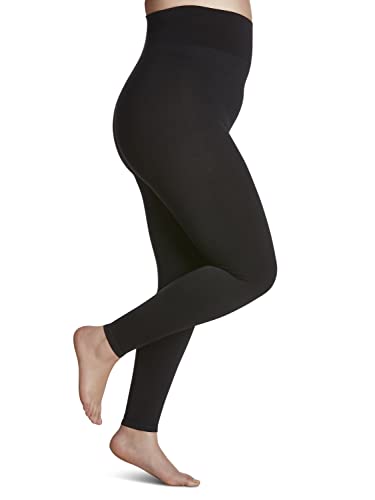
Sigvaris Soft Opaque Tights - Best Medical-Grade Support
When shift length exceeds 12 hours or your routes involve multiple long-haul legs, Sigvaris provides the most reliable compression performance. Their opaque tights are available in both 15-20 and 20-30 mmHg, the latter of which should only be worn under guidance from a healthcare professional. The 15-20 mmHg variant is appropriate for general occupational use and delivers firm, consistent graduated pressure from toe to waist. The fabric is a matte opaque finish that reads as professional black hosiery, not athletic wear. Sigvaris tights are machine washable but benefit from a mesh laundry bag to extend the elastic lifespan. A standard recommendation in occupational health programs for standing-profession workers.

Falke Energizing Comfort Tights - Best Style-Support Balance
Falke is a German brand with a strong reputation in performance hosiery, and the Energizing Comfort Tights bridge the gap between fashion and function more gracefully than most. The graduated compression runs at a moderate 15 mmHg, which is firm enough to make a practical difference on long duty days while remaining comfortable for 10+ hour wear. The knit finish is matte and smooth, compatible with most airline uniform standards. A reinforced toe and heel increase durability, and the waistband is soft-band elastic that does not create a ridge under fitted uniform trousers. Available in several neutral shades. This is a strong pick for flight attendants who want compression that does not signal "medical garment" through their uniform.

Levante Active Compression Tights - Best Budget Option
Levante offers a compression tight at the lowest price point on this list that still delivers measurable circulatory support. The graduated compression is approximately 10-15 mmHg, appropriate for everyday occupational wear and short-to-medium haul duty days. The fabric is soft, the waistband sits flat under trousers, and the matte finish reads cleanly in uniform. Levante tights wear out faster than Wolford or Sigvaris options under daily professional use, but the lower price makes regular replacement practical -- which is important since compression tights lose their effectiveness as the elastic breaks down over time. A viable entry point for flight attendants new to compression wear who want to assess the benefit before investing in a premium option.
CEP Activating Compression Tights - Best Maximum Support
CEP brings its sports compression science to a full tight format with the Activating Tights, which deliver some of the firmest compression in a full-leg design available for civilian use. The profile is designed around the muscle anatomy of the lower limb, applying peak pressure at the ankle and graduated release up through the calf and thigh. This makes the tights particularly effective for the calf pump fatigue that sets in during extended standing. The fabric is a matte technical knit that looks opaque and professional. The fit is athletic and body-conforming, which works well under fitted uniform trousers but requires careful sizing to avoid waistband discomfort. Consult a healthcare professional before use if you are new to firm compression garments.
What matters most
What to consider
Compression level is the primary decision: 10-15 mmHg for light daily support, 15-20 mmHg for 12+ hour shifts and multi-leg duty days. Above 20 mmHg requires medical guidance. Denier determines opacity and durability -- 15-30 denier provides a sheer hosiery appearance while higher denier (40+) reads as opaque athletic wear. Check your airline's uniform policy to determine which finish is acceptable. Waistband design matters for long wear: soft flat-band elastic prevents the ridge discomfort that a narrow waistband causes during 10-hour shifts. Replace compression tights every 3-6 months under daily professional use, as the compression effectiveness decreases as elastic fibers fatigue.
What to consider
For related support gear, see our [best compression thigh high socks](/articles/best-compression-thigh-high-socks) guide. Learn how products are selected at [/methodology](/methodology).
Frequently asked
Cabin pressure, prolonged standing, repeated position changes, and reduced physical activity during layovers all contribute to lower leg swelling and circulatory fatigue. Compression tights apply graduated pressure from ankle to hip, encouraging venous return and reducing the pooling of blood in the lower legs that causes the heavy, aching feeling after long shifts. Consult a healthcare professional before use if you have specific circulatory concerns.
Yes. Most airline uniforms accommodate compression tights underneath. For skirt uniforms, choose a dark opaque tight that matches your uniform color code. For trousers, the bulk of the tight under the pant leg is usually minimal if you choose a standard-denier garment. Verify your airline's specific uniform policy regarding hosiery and compression wear.
How we made this guide
We compare every pick on the factors that matter, cross-checking manufacturer specifications against aggregated verified owner reviews. We rank independently and never take payment for placement. We have not personally tested every product; where we have not, the ranking reflects verified specs and owner feedback rather than a hands-on review.
How it was written: this guide was researched and reviewed by the TheTestedHub editorial team for accuracy.
Affiliate disclosure: TheTestedHub is reader-supported. When you buy through links on our site, we may earn a commission at no extra cost to you.
You might also like

7 Elbow & Arm Pain Relief Solutions That Actually Work

Consistent CPAP Care: Driver-Reviewed SoClean 3 Pick 2026

Which CPAP Is Best? Our 2026 Pick: ResMed AirSense 11

Compression Therapy Guide: What to Buy in 2026

Compression Therapy for Recovery: Normatec 3 Pro Reviewed

Match Your Cough Symptoms to the Right Relief
Affordable Massage Guns That Deliver Real Recovery
