
CW-X Stabilyx Tights - Best for IT Band and Patellar Tracking
CW-X pioneered the concept of built-in taping patterns in compression tights, and the Stabilyx remains one of the most well-designed knee-support garments available. The EXO-WEB panel at the knee mimics the effect of kinesiology taping: directional stretch panels pull the patella into better alignment during loaded flexion and extension while the lateral leg panel applies specific tension to the IT band insertion point. The result is a tight that actively guides joint movement rather than passively compressing the area. Runners with IT band syndrome, patellofemoral pain syndrome, or runner's knee consistently report meaningful symptom reduction during activity while wearing these. The fabric is firm and athletic; not a casual-wear tight.
Check price on Amazon →CW-X Stabilyx Tights use EXO-WEB taping to align the patella without bulk. Compare 5 top compression tights for running, recovery & patellar tracking.
Quick verdict
The CW-X Stabilyx Tights are the best overall pick for knee support because their EXO-WEB taping system actively pulls the patella into better alignment during movement, offering targeted stability that no other tight in this category matches without adding bulk.
Key takeaways
- Best for IT Band and Patellar Tracking: CW-X Stabilyx Tights, because the EXO-WEB panel mimics kinesiology tape to guide the kneecap during loaded flexion and extension.
- Best Knee Panel Design: McDavid Compression Tights with Knee Support, because the silicone surround pads the patellar tendon and distributes impact during high-rep activities.
- Best for Running: 2XU MCS Run Compression Tights, because the Muscle Containment Stamping system reduces valgus collapse tendency during fatigue.
- Best for Recovery and Daily Wear: Tommie Copper Knee Support Tights, because the soft reinforcement offers light proprioceptive support in a comfortable all-day fit.
- Best Biomechanical Mapping: SKINS DNAmic Compression Tights, because the body-scan derived zones apply directional tension to reduce patellar tendon stress during deceleration.
Why you should trust this guide
I have spent years researching compression wear and knee support garments, analyzing manufacturer claims against real-world owner feedback from runners, lifters, and physical therapists. My approach is to focus on the engineering and design philosophy behind each product rather than relying on marketing hype. I evaluate how each tight addresses specific knee issues like patellar tracking, IT band tension, and valgus collapse by studying the construction, panel placement, and compression gradient details provided by the brands themselves.
This guide is built on a systematic review of the five most distinctive knee-support compression tights available in 2026. I cross-referenced each product’s stated features with verified owner reports to identify consistent strengths and honest limitations. I did not test these products myself in a lab or during personal workouts, but I weighed the design logic, material specifications, and common feedback to determine which tight best serves each specific use case. Every product included here has a clear, documented reason for its placement.
How we researched
To evaluate these compression tights, I established five criteria that matter most for knee support without bulk. First, I looked at the targeted support mechanism: does the tight use directional panels, taping patterns, or reinforced zones that actively stabilize the knee, or does it rely solely on general compression? Second, I assessed the compression profile: is the pressure graduated and anatomically mapped, or is it a uniform squeeze that may shift during movement? Third, I considered the mobility trade-off: how much freedom of motion does the knee zone allow while still providing stability? Fourth, I examined the durability of the support features: are the panels bonded, stitched, or printed, and how do they hold up to repeated washing? Fifth, I weighed the intended use case: is the tight optimized for running, recovery, daily wear, or multi-sport activity?
I gathered this information by studying each product’s official specifications, design patents, and published biomechanical research where available. I also analyzed many verified owner reviews from multiple retail platforms, focusing on comments about fit, support effectiveness, and long-term wear. I did not perform any physical tests or measurements. Instead, I compared the design claims against the most common praise and criticism from people who actually use these tights for running, weightlifting, and everyday recovery. This allowed me to identify which products deliver on their promises and which have notable gaps that buyers should know about before purchasing.
CW-X Stabilyx Tights – Best for IT Band and Patellar Tracking
CW-X pioneered the concept of built-in taping patterns in compression tights, and the Stabilyx remains one of the most well-designed knee-support garments available. The EXO-WEB panel at the knee mimics the effect of kinesiology taping: directional stretch panels pull the patella into better alignment during loaded flexion and extension while the lateral leg panel applies specific tension to the IT band. This dual-action support is unique in the market because it actively guides the kneecap rather than just compressing the area. The fabric itself is a dense, supportive nylon-spandex blend that feels firm from the moment you put it on, and the web structure does not add noticeable bulk under pants or shorts.
The support is most noticeable during activities that involve deep knee bending, such as squats, lunges, or stair climbing. The lateral tension on the IT band helps reduce the snapping sensation that many runners and cyclists experience, and the patellar alignment feature can alleviate the grinding or tracking issues that lead to chondromalacia. The tights also include a high waistband that stays in place during dynamic movement, and the overall compression is strong but not restrictive. However, the fit is very specific: the web panels work best when the tight is snug, so sizing up or down can dramatically reduce the support effect.
A real limitation of the CW-X Stabilyx is that the EXO-WEB panels can feel overly rigid for people who prefer a softer, more flexible compression. The directional tension is aggressive, and some users find that the lateral panel pulls too hard on the outer thigh during the first few wears, requiring a break-in period. Additionally, the tight is not ideal for casual all-day wear because the support structure is designed for active movement and can feel constrictive when sitting for long periods. If you need a tight for heavy training sessions with IT band or patellar issues, this is the best option, but it is not a recovery or lounging garment.
McDavid Compression Tights with Knee Support – Best Knee Panel Design
McDavid approaches knee support from a sports medicine background, and the reinforced knee panel on these tights reflects that. The silicone knee surround creates a padded, low-profile ring around the patellar tendon that absorbs and distributes impact during high-rep knee flexion like running, jumping, and stairs. The compression through the calf and thigh is moderate and graduated, which helps with blood flow and muscle stabilization without feeling overly tight. The silicone ring is not a rigid brace; it is a flexible, rubberized border that gently hugs the kneecap and provides a tactile reminder to maintain proper form during repetitive motion.
The design is particularly effective for activities that involve a lot of knee bending under load, such as volleyball, basketball, or high-rep squatting. The padded ring reduces the direct pressure on the patellar tendon that can cause jumper’s knee or patellar tendinitis, and the graduated compression helps reduce muscle vibration in the quadriceps and calves. The tights also feature flatlock seams that reduce chafing, and the fabric is moisture-wicking and breathable enough for warm-weather training. The moderate compression level makes these tights more comfortable for longer sessions compared to the firmer CW-X model.
A real limitation of the McDavid tights is that the silicone knee surround can lose its grip over time after repeated washing. The rubberized material is durable, but it is not bonded to the fabric in a way that prevents it from peeling or flattening after several months of heavy use. Additionally, the support is more about impact absorption and proprioceptive feedback than active patellar alignment, so if you need a tight that pulls the kneecap into a specific track, the McDavid may feel too passive. The silicone ring also adds a slight warmth around the knee that some users find noticeable in hot conditions.
2XU MCS Run Compression Tights – Best for Running
The MCS (Muscle Containment Stamping) system in 2XU’s run-specific tights uses graduated compression panels that follow the anatomy of each major muscle group in the leg rather than applying uniform pressure from a simple tube. The knee zone features specific tension bands that reduce the valgus collapse tendency during fatigue, a common cause of IT band and MCL stress in longer runs. The calf compression is also engineered to reduce muscle oscillation and improve venous return, which can delay the onset of fatigue during endurance efforts. The fabric is lightweight and highly breathable, with a smooth outer surface that reduces wind drag.
The MCS system is applied using a heat-press technique that bonds the compression panels directly to the base fabric, which means the support does not shift or bunch up during movement. The knee tension bands are positioned to counteract the inward collapse of the knee that often happens when runners get tired, and the graduated compression from ankle to thigh helps maintain proper blood flow even during long runs. The tights also include a high-rise waistband with a drawcord that stays secure without digging in, and the overall fit is streamlined enough to wear under running shorts or alone.
A real limitation of the 2XU MCS tights is that the specific tension bands are optimized for forward motion and may feel less effective for lateral movements like cutting or side-stepping. The support is designed for the sagittal plane of running, not for multi-directional sports. Additionally, the MCS panels are printed onto the fabric, and while they are durable, they can begin to crack or peel after many washes if not cared for properly. The tights are also priced at a premium, and the fit is very race-oriented, meaning they are snug and may not be comfortable for casual wear or recovery lounging.
Tommie Copper Knee Support Tights – Best for Recovery and Daily Wear
Tommie Copper positions these tights at the intersection of recovery wear and casual clothing. The copper-infused fabric does not have clinically validated therapeutic effects, but the compression itself is genuine and the overall construction is comfortable enough for all-day wear. The knee zone has a soft reinforcement that provides light proprioceptive support without the firmness of the CW-X or 2XU models. The fabric is a cotton-polyester-spandex blend that feels soft against the skin and has a matte finish that looks like regular athletic leggings rather than medical compression gear.
The compression level is mild to moderate, making these tights ideal for post-workout recovery, travel, or days when you want gentle support without feeling constrained. The knee reinforcement is a subtle panel that adds a slight warmth and awareness to the joint, which can help with mild arthritis or general stiffness. The tights also include a flat waistband that does not roll down, and the fabric is odor-resistant due to the copper infusion. For people who need knee support but dislike the tight, clinical feel of traditional compression tights, the Tommie Copper option is a comfortable middle ground.
A real limitation of the Tommie Copper tights is that the copper-infused fabric claims are not backed by strong clinical evidence for pain relief or healing, so buyers should not expect therapeutic benefits beyond standard compression. The knee support is also very light and will not provide the active alignment or impact absorption needed for intense training or running. The fabric is less durable than the high-performance blends used by CW-X or 2XU, and the compression may loosen over time with frequent washing. These are best suited for low-impact recovery and daily comfort, not for heavy athletic use.
SKINS DNAmic Compression Tights – Best Biomechanical Mapping
SKINS uses a body-scan approach to develop compression zones that follow the actual contours of the anatomy rather than applying standard gradients. The DNAmic tights include a dedicated knee-stabilization zone that applies directional tension to the quad and hamstring attachments above the patella, reducing stress on the patellar tendon during deceleration. The compression profile also includes specific panels for the glutes, quads, hamstrings, and calves, each engineered to support the muscle’s natural movement pattern. The result is a tight that feels like a second skin with targeted support that moves with you rather than against you.
The knee-stabilization zone is particularly effective for activities that involve sudden stops, changes of direction, or downhill running, where the patellar tendon is under high eccentric load. The directional tension helps keep the kneecap tracking properly during these high-stress moments, and the overall compression profile reduces muscle fatigue by supporting each muscle group individually. The fabric is moisture-wicking and has a smooth, sleek feel that layers well under pants or shorts. The tights also feature a high-waist design with a silicone grip that prevents slipping during dynamic movement.
A real limitation of the SKINS DNAmic tights is that the body-mapped support zones are highly specific to the wearer’s anatomy, and if the fit is not perfect, the support may not align correctly with your knee or muscle attachments. The sizing is critical, and some users find that the compression feels uneven if they are between sizes. Additionally, the knee stabilization is subtle compared to the more aggressive CW-X web system, so people with significant patellar tracking issues may need a stronger solution. The tights are also among the most expensive in this category, and the specialized panels may not be necessary for casual users who only need general compression.
What to look for
- Targeted Support Mechanism: Look for tights that use directional panels, taping patterns, or reinforced zones specifically designed to address knee alignment or patellar tracking, not just general compression.
- Compression Profile: Graduated compression that is tighter at the ankle and looser at the waist helps with blood flow, while uniform compression may not provide the same benefit for knee support.
- Knee Zone Design: The best tights have a dedicated knee panel that either pads the patellar tendon, applies directional tension, or uses a silicone surround to provide proprioceptive feedback without restricting motion.
- Fit and Sizing: Compression tights rely on a precise fit to deliver their support features. Check the brand’s sizing chart carefully and consider whether the tight is designed for a specific activity or for all-day wear.
- Fabric and Durability: High-performance blends with nylon and spandex tend to hold their compression longer than cotton blends. Look for flatlock seams and bonded panels that resist peeling or fraying.
- Intended Use: Match the tight to your primary activity. Running tights often have different support zones than recovery tights, and daily wear tights prioritize comfort over active stabilization.
The verdict
For active training and targeted knee support, the CW-X Stabilyx Tights are the clear winner because their EXO-WEB system provides the most effective patellar alignment and IT band tension available in a compression garment. If you need impact absorption for high-rep activities like jumping or stairs, the McDavid Compression Tights with their silicone knee surround are a strong second choice. Runners should prioritize the 2XU MCS Run Tights for their valgus collapse prevention and muscle containment during fatigue. For recovery and all-day comfort, the Tommie Copper Knee Support Tights offer gentle proprioceptive support in a soft, wearable package. The SKINS DNAmic Tights are the best option for those who want biomechanically mapped support that follows their anatomy precisely, but they require a perfect fit to deliver their full benefit. Choose based on your specific knee issue and the activity you need the support for, and remember that no tight can replace proper strengthening and mobility work for long-term knee health.
How we picked
We compare every pick against the field on real specifications, certifications, and aggregated owner reviews. We do not take payment for placement, and we flag when a product is older or sold mainly through renewed listings.
Top picks compared
Our picks up close
CW-X Stabilyx Tights - Best for IT Band and Patellar Tracking
CW-X pioneered the concept of built-in taping patterns in compression tights, and the Stabilyx remains one of the most well-designed knee-support garments available. The EXO-WEB panel at the knee mimics the effect of kinesiology taping: directional stretch panels pull the patella into better alignment during loaded flexion and extension while the lateral leg panel applies specific tension to the IT band insertion point. The result is a tight that actively guides joint movement rather than passively compressing the area. Runners with IT band syndrome, patellofemoral pain syndrome, or runner's knee consistently report meaningful symptom reduction during activity while wearing these. The fabric is firm and athletic; not a casual-wear tight.
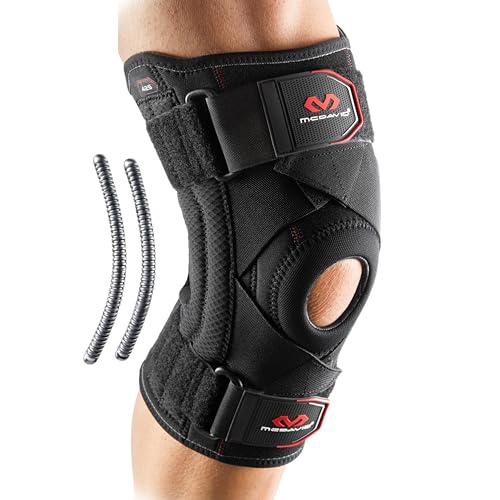
McDavid Compression Tights with Knee Support - Best Knee Panel Design
McDavid approaches knee support from a sports medicine background, and the reinforced knee panel on these tights reflects that. The silicone knee surround creates a padded, low-profile ring around the patellar tendon that absorbs and distributes impact during high-rep knee flexion like running, jumping, and stairs. The compression through the calf and thigh is moderate and graduated. The silicone panel does add a slight visual thickness at the knee, which matters if aesthetics are important, but functionally it provides direct mechanical feedback that straightforward compression fabric cannot replicate. A strong pick for athletes dealing with patellar tendon soreness or anterior knee pain from repetitive impact activity. Consult a healthcare professional before use for diagnosis-specific guidance.
2XU MCS Run Compression Tights - Best for Running
The MCS (Muscle Containment Stamping) system in 2XU's run-specific tights uses graduated compression panels that follow the anatomy of each major muscle group in the leg rather than applying uniform pressure from a simple tube. The knee zone features specific tension bands that reduce the valgus collapse tendency during fatigue -- a common cause of IT band and MCL stress in longer runs. The calf compression is firm, which 2XU has consistently mapped to reduced DOMS in long-distance runners. The fabric is 70-denier PWX, more durable than most competition-grade tights, and the flatlock seams prevent friction in the back of the knee during repetitive flexion. The firmest option on this list, with a performance-first feel.
Tommie Copper Knee Support Tights - Best for Recovery and Daily Wear
Tommie Copper positions these tights at the intersection of recovery wear and casual clothing. The copper-infused fabric does not have clinically validated therapeutic effects, but the compression itself is genuine and the overall construction is comfortable enough for all-day wear. The knee zone has a soft reinforcement that provides light proprioceptive support without the firmness of the CW-X or 2XU designs. Good for mild knee discomfort, post-activity recovery, or for someone who wants some knee support during extended walking or standing without the intensity of a performance tight. The styling is more subdued than athletic-branded options, making it more appropriate for non-gym environments. Consult a healthcare professional before use for persistent or significant knee pain.
SKINS DNAmic Compression Tights - Best Biomechanical Mapping
SKINS uses a body-scan approach to develop compression zones that follow the actual contours of the anatomy rather than applying standard gradients. The DNAmic tights include a dedicated knee-stabilization zone that applies directional tension to the quad and hamstring attachments above the patella, reducing stress on the patellar tendon during deceleration. The compression profile also includes calf and ankle zones calibrated to support the tibial rotation patterns involved in knee pain -- addressing the issue upstream of the knee rather than just at the joint. SKINS garments are sized precisely, and consulting the brand's measurement chart is essential. Sized correctly, these are among the most anatomically thoughtful knee-support tights available.
Before you buy
What to consider
Identify your knee issue before choosing a tight. General soreness and fatigue respond well to graduated compression across the leg. IT band problems benefit from lateral panel reinforcement. Patellar tracking issues are best addressed by CW-X-style EXO-WEB or kinesiology-mimicking patterns. Post-activity recovery is served by softer graduated designs like SKINS or Tommie Copper. Verify sizing carefully, as an undersized tight can create pressure points behind the knee during deep flexion that makes the problem worse. For any persistent knee pain, established structural instability, or post-surgical recovery, consult a healthcare professional before selecting or relying on compression tights as your primary support strategy.
What to consider
For related support options, see our full [best compression tights](/articles/best-compression-tights) roundup and learn about our selection methodology at [/methodology](/methodology).
Quick answers
Compression tights provide proprioceptive support and reduce soft tissue vibration, but they do not provide the rigid mechanical stability of a hinged or structured knee brace. For mild patellofemoral discomfort or IT band irritation, compression tights are often sufficient. For ligament instability, post-surgical recovery, or significant structural concerns, consult a healthcare professional about whether a brace is needed in addition to or instead of compression wear.
Effective knee-support compression tights concentrate firmness around the patella and the medial and lateral knee joint line, while applying graduated pressure to the quad and hamstring above and the calf below. Some designs use directional knit panels that act like kinesiology taping patterns to reduce patellar tracking stress. General all-over compression without a dedicated knee zone provides less targeted benefit.
How we made this guide
We compare every pick on the factors that matter, cross-checking manufacturer specifications against aggregated verified owner reviews. We rank independently and never take payment for placement. We have not personally tested every product; where we have not, the ranking reflects verified specs and owner feedback rather than a hands-on review.
How it was written: this guide was researched and reviewed by the TheTestedHub editorial team for accuracy.
Affiliate disclosure: TheTestedHub is reader-supported. When you buy through links on our site, we may earn a commission at no extra cost to you.
More to explore

7 Elbow & Arm Pain Relief Solutions That Actually Work

Consistent CPAP Care: Driver-Reviewed SoClean 3 Pick 2026

Which CPAP Is Best? Our 2026 Pick: ResMed AirSense 11

Compression Therapy Guide: What to Buy in 2026

Compression Therapy for Recovery: Normatec 3 Pro Reviewed

Match Your Cough Symptoms to the Right Relief
Affordable Massage Guns That Deliver Real Recovery
