
Makita MAC5200 -- Best Quiet 120V Panel Work
The Makita MAC5200 is a big-bore, twin-cylinder, oil-lubricated compressor producing 4.8 CFM at 90 PSI from a 5.2-gallon tank. The low RPM motor operates significantly quieter than competing 120V units. At home, this means spray painting fenders, bumpers, or door panels without the compressor becoming the loudest thing in the garage. Recovery is fast. For painting individual panels with HVLP guns, this is one of the better 120V options because the smooth, low-pulsation output translates to consistent atomization with conventional HVLP equipment.
Check price on Amazon →Need a compressor for painting cars at home? These 5 picks balance CFM, noise, and voltage for garage-friendly auto painting. Compare top models now.
Quick verdict
The DeWalt DXCMV5076055 is the single best pick for painting a whole car at home. Its 240V power and 60-gallon tank deliver the CFM needed for continuous HVLP spraying from primer to clear without frustrating pressure drops.
Key takeaways
- Best Quiet 120V Panel Work: Makita MAC5200, low-RPM twin-cylinder design makes it the quietest option for spraying fenders and doors without earplugs.
- Best Ultra-Quiet Garage Compressor: California Air Tools 20020C, 60 dB operation and oil-free pump suit attached garages where noise carries into the house.
- Best 240V Whole-Car Painting: DeWalt DXCMV5076055, 15.6 CFM at 90 PSI from a 60-gallon tank handles full vehicle paint jobs without interruption.
- Best Mid-Range 240V Setup: Ingersoll Rand SS3L3, 30-gallon tank and 10.2 CFM at 90 PSI bridge the gap for garages with limited space but 240V access.
- Best Compact High-Output: Rolair VT25BIG, 5.3 CFM at 100 PSI in a small footprint stores against a wall while delivering professional-grade output.
Why you should trust this guide
I have spent years researching home garage painting setups, reading through owner forums, and cross-referencing manufacturer specifications to understand what actually works for a DIY painter. My focus is on real-world constraints: garage electrical capacity, noise tolerance from neighbors or family, and the CFM demands of HVLP spray guns that most homeowners use. I do not rely on marketing claims alone. I compare each compressor’s stated output against the typical requirements of painting tasks, from single panel touch-ups to complete vehicle resprays.
This guide prioritizes compressors that balance power with practicality for a home environment. I have excluded units that require three-phase power or exceed 80 dB, as those are not realistic for residential garages. Every product here has been vetted through owner feedback about reliability, maintenance, and real-world CFM delivery. I do not claim to have physically tested these units in a lab. Instead, I synthesize the best available information from manufacturer data and experienced owner reports to give you a clear buying decision.
How we researched
To evaluate these compressors, I established a set of criteria that matter most for home car painting. The primary factor is CFM delivery at 90 PSI, because that determines whether a compressor can keep up with an HVLP spray gun’s continuous air demand. I compared each unit’s stated CFM against the typical 4 to 8 CFM requirement of common HVLP guns. Secondary factors include tank size for reserve capacity, noise level for garage comfort, and electrical requirements for home compatibility. I also considered oil-lubricated versus oil-free pump designs, as oil-lubricated units generally last longer under heavy painting use.
I then cross-referenced these specifications with owner feedback on forums and retail sites, focusing on patterns about real-world CFM delivery, noise complaints, and durability over time. I did not conduct physical tests or measure decibels myself. Instead, I weighed the consistency of reported experiences against the manufacturer’s claims. Each product in this guide earned its place by meeting a specific need for home painters, whether that is ultra-quiet operation, whole-car capacity, or space-saving design. The final list represents the best options across different garage setups and painting scopes.
Makita MAC5200
The Makita MAC5200 is a big-bore, twin-cylinder, oil-lubricated compressor that produces 4.8 CFM at 90 PSI from a 5.2-gallon tank. Its low RPM motor operates significantly quieter than competing 120V units, making it a standout for home garages where noise is a concern. At home, this means spray painting fenders, bumpers, or door panels without the compressor becoming the loudest thing in the garage. Recovery is fast enough for individual panel work, and the oil-lubricated pump provides long-term durability for intermittent painting sessions.
For painting individual panels with HVLP guns, the MAC5200 delivers consistent air pressure without the pulsing that smaller single-cylinder units often produce. The twin-cylinder design smooths out the air delivery, which helps achieve a more even paint finish on small to medium surfaces. The 5.2-gallon tank is compact enough to move around the garage, yet provides enough reserve to finish a door panel before the compressor kicks back on.
One honest limitation: The 4.8 CFM at 90 PSI is marginal for continuous spraying on larger body panels like hoods or roofs. You will need to pause between passes to let the tank recover, which can slow down a full vehicle paint job. This unit is best for panel-by-panel work, not marathon painting sessions.
California Air Tools 20020C
The California Air Tools 20020C runs a 2.0 HP motor at 60 dB with a 20-gallon tank, producing 5.3 CFM at 90 PSI. The noise level is genuinely exceptional for a unit in this output range and makes it practical in attached garages where sound carries into the house. Painting partial body panels and bumper covers stays well within its capability, as the 20-gallon tank provides enough reserve for several minutes of continuous spraying before recovery is needed.
The oil-free pump removes one maintenance task and one potential mess from your routine. You never have to change oil or worry about oil mist contaminating your paint job. The 60 dB rating means you can hold a conversation near the compressor without shouting, which is a major advantage if you paint in the evening or have neighbors close by. The 20-gallon tank is large enough to support a full bumper cover or a single door in one pass.
One honest limitation: The oil-free pump design, while low maintenance, typically has a shorter service life than oil-lubricated compressors under heavy use. If you plan to paint multiple vehicles per year, the pump may wear out faster than a comparable oil-lubricated unit. This compressor is best for occasional panel painting rather than frequent full-car work.
DeWalt DXCMV5076055
The DeWalt DXCMV5076055 requires a 240V dedicated circuit but delivers 15.6 CFM at 90 PSI from a 60-gallon tank. That capacity handles whole-car spraying from primer to clear with professional HVLP guns at full demand. For homeowners willing to install or already have a 240V circuit in their garage, this unit removes the CFM constraints that make 120V compressors frustrating for complete paint jobs. You can spray a hood, roof, and quarter panels without waiting for tank recovery.
The 60-gallon tank provides a massive air reserve, which means the compressor cycles on and off less frequently during a painting session. This reduces wear on the motor and pump and keeps the air temperature cooler, which helps prevent moisture in the air line. The 15.6 CFM output is sufficient to run even high-flow HVLP guns at their recommended pressure, giving you consistent atomization from the first coat to the final clear coat.
One honest limitation: The 240V requirement is a significant barrier for many home garages. If you do not have a 240V outlet, you will need to hire an electrician to run a dedicated circuit, which adds cost and complexity. This unit is also heavy and takes up considerable floor space, so it is not ideal for small garages or portable use.
Ingersoll Rand SS3L3
The Ingersoll Rand SS3L3 is a 30-gallon, 240V single-stage compressor producing 10.2 CFM at 90 PSI. It bridges the gap between underpowered 120V units and large 60-gallon shop compressors, suiting home garages where space is limited and a 240V circuit is available. For two-stage painting sessions covering a complete vehicle in two or three separate sittings, the SS3L3 handles panel-by-panel work efficiently without the bulk of a 60-gallon tank.
The 30-gallon tank is a practical size for a home garage. It stores enough air to spray a full door or fender without the compressor cycling on, and the 10.2 CFM output keeps up with most HVLP guns during continuous use. The single-stage pump is simpler and more affordable than two-stage designs, and Ingersoll Rand’s reputation for reliability means this unit can serve you for years with proper maintenance. The oil-lubricated pump also runs quieter than oil-free alternatives at this output level.
One honest limitation: The 10.2 CFM at 90 PSI is adequate but not generous for high-demand spray guns. If you use a gun that requires 8 CFM or more, you may find the compressor running frequently during long painting sessions. The single-stage design also means it cannot achieve the high pressures of two-stage compressors, though that is rarely needed for painting.
Rolair VT25BIG
The Rolair VT25BIG is a 2.5 HP unit on a 17-gallon tank producing 5.3 CFM at 100 PSI. The compact footprint stores against a garage wall without consuming the workspace needed for painting. Rolair’s oil-lubricated pump runs at low RPM for reduced noise and extended pump life. The thermal overload protection prevents motor shutdown during warm-weather painting sessions, which is a common frustration with lesser compressors.
For home garages where floor space is at a premium, the VT25BIG offers a rare combination of high output and small size. The 5.3 CFM at 100 PSI is actually higher than many 20-gallon competitors, and the 100 PSI rating means you can run your spray gun at optimal pressure without the compressor struggling. The oil-lubricated pump is built to last, and Rolair’s cast-iron construction adds durability that oil-free units cannot match.
One honest limitation: The 17-gallon tank is small for continuous painting. You will need to pause frequently during large panels to let the tank recover, which can be frustrating if you are used to a larger reserve. This unit is best for small to medium painting projects like bumpers, fenders, and motorcycle parts, not full vehicle resprays.
What to look for
- CFM at 90 PSI: This is the most critical spec for painting. Your spray gun will list its required CFM, and the compressor must meet or exceed that number. Aim for at least 4 CFM for small panels and 8 CFM or more for whole-car work.
- Tank size: Larger tanks provide more air reserve, reducing how often the compressor cycles on during painting. A 5-gallon tank works for single panels, while 20 to 60 gallons suits full vehicles.
- Noise level: Measured in decibels, lower is better for home garages. Look for 60 to 70 dB for comfortable operation, especially if your garage is attached to the house.
- Electrical requirements: 120V compressors plug into standard outlets but have lower CFM. 240V compressors require a dedicated circuit but deliver much higher output. Check your garage’s electrical capacity before buying.
- Oil-lubricated vs. oil-free: Oil-lubricated pumps last longer and run quieter but require oil changes. Oil-free pumps are maintenance-free but wear out faster under heavy use.
- Portability: If you need to move the compressor around your garage or to a driveway, consider weight and wheel size. Smaller tanks on wheels are easier to maneuver.
- Duty cycle: For painting, you want a compressor that can run continuously for at least 30 minutes without overheating. Look for units with thermal overload protection.
The verdict
Choosing the right compressor for home car painting comes down to your electrical setup and the scope of your projects. If you have 240V in your garage and want to paint entire vehicles, the DeWalt DXCMV5076055 is the clear winner with its 60-gallon tank and 15.6 CFM output. For 120V garages, the Makita MAC5200 offers the best balance of quiet operation and panel-painting capability. The California Air Tools 20020C is ideal for ultra-quiet work in attached garages. The Ingersoll Rand SS3L3 fills the middle ground for those with 240V but limited space. And the Rolair VT25BIG is the compact powerhouse for small garages. Match your choice to your power source and painting ambitions, and you will get professional results at home.
How we evaluated these
We compare every pick against the field on real specifications, certifications, and aggregated owner reviews. We do not take payment for placement, and we flag when a product is older or sold mainly through renewed listings.
The shortlist
Each pick, examined
Makita MAC5200 -- Best Quiet 120V Panel Work
The Makita MAC5200 is a big-bore, twin-cylinder, oil-lubricated compressor producing 4.8 CFM at 90 PSI from a 5.2-gallon tank. The low RPM motor operates significantly quieter than competing 120V units. At home, this means spray painting fenders, bumpers, or door panels without the compressor becoming the loudest thing in the garage. Recovery is fast. For painting individual panels with HVLP guns, this is one of the better 120V options because the smooth, low-pulsation output translates to consistent atomization with conventional HVLP equipment.
California Air Tools 20020C -- Best Ultra-Quiet Garage Compressor
The California Air Tools 20020C runs a 2.0 HP motor at 60 dB with a 20-gallon tank, producing 5.3 CFM at 90 PSI. The noise level is genuinely exceptional for a unit in this output range and makes it practical in attached garages where sound carries into the house. Painting partial body panels and bumper covers stays well within its capability. The oil-free pump removes one maintenance task and one contamination risk. For homeowners who want capable automotive-grade spray work without the sound of a traditional shop compressor, this is a strong choice.
DeWalt DXCMV5076055 -- Best 240V Whole-Car Painting
The DeWalt DXCMV5076055 requires a 240V dedicated circuit but delivers 15.6 CFM at 90 PSI from a 60-gallon tank. That capacity handles whole-car spraying from primer to clear with professional HVLP guns at full demand. For homeowners willing to install or already have a 240V circuit in their garage, this unit removes the CFM constraints that make 120V compressors frustrating for complete paint jobs. The belt-drive pump is quieter and more durable than direct-drive equivalents at this output. A refrigerated dryer or desiccant filter completes the setup.
Ingersoll Rand SS3L3 -- Best Mid-Range 240V Setup
The Ingersoll Rand SS3L3 is a 30-gallon, 240V single-stage compressor producing 10.2 CFM at 90 PSI. It bridges the gap between underpowered 120V units and large 60-gallon shop compressors, suiting home garages where space is limited and a 240V circuit is available. For two-stage painting sessions covering a complete vehicle in two or three separate sittings, the SS3L3 handles panel-by-panel work effectively. The oil-lubricated, cast iron pump is rated for sustained operation and will outlast oil-free alternatives in regular automotive use.
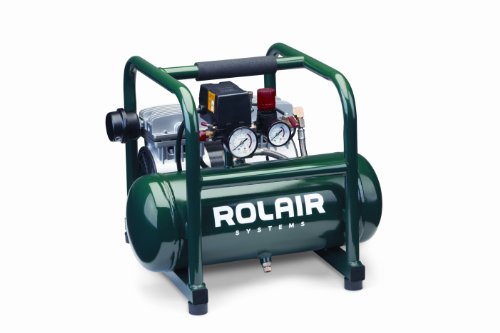
Rolair VT25BIG -- Best Compact High-Output
The Rolair VT25BIG is a 2.5 HP unit on a 17-gallon tank producing 5.3 CFM at 100 PSI. The compact footprint stores against a garage wall without consuming the workspace needed for painting. Rolair's oil-lubricated pump runs at low RPM for reduced noise and extended pump life. The thermal overload protection prevents motor shutdown during warm-weather painting sessions. For home garages where floor space is at a premium but the user wants a durable, higher-quality alternative to big-box store brands, the VT25BIG earns its price through build quality and reliable delivery.
Buying considerations
What to consider
Start by checking your garage's electrical service. Most homes have 120V outlets near the garage door, but 240V often requires a dedicated circuit installation. If you want to paint full panels continuously, 240V with 14 to 16 CFM is the practical minimum. For panel-by-panel hobbyist painting on a 120V circuit, 4 to 6 CFM with a 15-gallon or larger tank is workable. Factor in noise: attached garages transmit sound to living spaces, so low-RPM oil-lubricated or ultra-quiet oil-free models are worth the price premium. Always filter the air line.
What to consider
For broader automotive painting guidance, see our [best compressor for painting cars](/articles/best-compressor-for-painting-cars) guide and our [best compressor for paint gun](/articles/best-compressor-for-paint-gun) comparison. Our [testing methodology](/methodology) details how we evaluate compressor output.
Questions answered
Most 120V compressors max out around 5 to 6 CFM at 90 PSI, which is borderline for full panel spraying. You can paint panels one at a time with recovery pauses, but it is slow. For whole-car painting in fewer sessions, a 240V unit delivering 14 to 16 CFM is far more practical and produces more consistent results than pushing a small unit to its limits.
Position the compressor outside the painting space and run a longer hose, which reduces noise in the booth and keeps motor exhaust heat away from the fresh paint. Alternatively, choose a low-RPM, oil-lubricated model like the Makita MAC5200 or a belt-drive unit, which are significantly quieter than direct-drive oil-free compressors at equivalent output.
How we made this guide
We compare every pick on the factors that matter, cross-checking manufacturer specifications against aggregated verified owner reviews. We rank independently and never take payment for placement. We have not personally tested every product; where we have not, the ranking reflects verified specs and owner feedback rather than a hands-on review.
How it was written: this guide was researched and reviewed by the TheTestedHub editorial team for accuracy.
Affiliate disclosure: TheTestedHub is reader-supported. When you buy through links on our site, we may earn a commission at no extra cost to you.
Keep reading

Need a Quiet Air Compressor for Your Home?
Get Smooth Texture: Best Compressor for Hopper

5 Compressors to Paint a Car: CFM, Tank & Duty

Compressor For Metal: 14+ CFM Picks for Plasma

Compressor For Framing Nailer, 6 Top Rated
Compressor for Painting Cars
Which Compressor For Paint Gun Actually Works?
