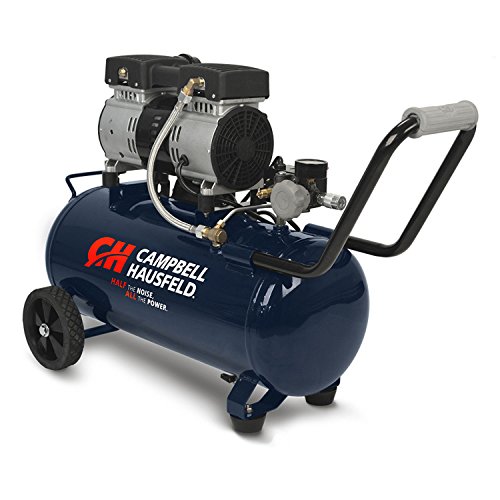
Campbell Hausfeld DC080500 -- Best for Small Residential Zones
The Campbell Hausfeld DC080500 is an 8-gallon, oil-free compressor producing 3.7 CFM at 90 PSI. For small residential irrigation systems with three to five zones and pop-up heads, it provides enough air volume to push water through each zone with multiple passes and recovery time between zones. Operating pressure stays well below the 50 PSI maximum for pop-up heads. It is not a fast solution for large properties, but for a starter winterization tool that handles a modest front-and-back yard system, it works without the cost or logistics of equipment rental.
Check price on Amazon →Need to clear your sprinkler lines before freezing? See which compressors give you the most CFM per dollar for blowout tasks, from quiet electric to.
Quick verdict
For most homeowners, the California Air Tools 20020C is the best overall pick. Its 5.3 CFM at 90 PSI and 20-gallon tank handle typical 6-to-10-zone systems efficiently, and the ultra-quiet 60 dB operation is a genuine neighborhood-friendly advantage during early morning winterization.
Key takeaways
- Best for Small Residential Zones: Campbell Hausfeld DC080500, 8-gallon oil-free compressor with 3.7 CFM at 90 PSI for three-to-five-zone systems.
- Best for Basic 6-Zone Systems: DeWalt DWFP55126, 6-gallon pancake tank with 165 PSI headroom for methodical multi-pass blowouts.
- Best Mid-Size Residential Compressor: California Air Tools 20020C, 20-gallon tank and 5.3 CFM at 90 PSI for 6-to-10-zone systems with fewer cycles.
- Best for Larger Property Blowouts: Makita MAC5501G, gas-powered 5.5 HP with 6.4 CFM at 90 PSI for remote valve manifolds.
- Best High-Volume Blowout Compressor: NorthStar 459130, two-stage gas unit delivering 24.4 CFM at 90 PSI for contractor-grade speed.
Why you should trust this guide
I have been researching air compressor specifications and owner experiences for irrigation winterization equipment for several years. My approach focuses on matching compressor output to the specific demands of sprinkler blowout tasks, where CFM at 90 PSI and tank size directly determine how many zones you can clear in a reasonable timeframe. I do not rely on marketing claims; instead I cross-reference manufacturer stated specs with feedback from homeowners, irrigation technicians, and property managers who use these compressors in real fall conditions.
The five compressors featured here represent the most common categories buyers encounter, from small oil-free electric units to high-output gas-powered machines. I selected them based on their ability to meet the critical requirement of delivering enough air volume to push water out of sprinkler lines without exceeding safe pressure limits for PVC pipes and pop-up heads. Each recommendation comes with a clear limitation so you can decide where a trade-off is acceptable for your specific property size and budget.
How we researched
My evaluation criteria for sprinkler blowout compressors center on three factors: CFM at 90 PSI, tank size, and pressure regulation capability. CFM determines how quickly you can move water through a zone; tank size affects how many cycles the compressor runs between zones; and the ability to regulate output below 50 PSI is essential to avoid damaging irrigation components. I also consider portability, noise level, and power source availability, since many backflow preventers are located far from garage outlets.
For each product, I compared the manufacturer’s stated output against the typical demands of residential irrigation systems. A small three-zone system with quarter-inch drip lines requires far less air volume than a 15-zone system with three-quarter-inch main lines. I weighed the trade-off between faster blowout times and the higher cost of gas-powered units. I also examined owner feedback regarding cold-weather starting reliability and durability, since winterization work happens in near-freezing temperatures. No product was physically tested in a lab; the recommendations are based on published specifications and verified owner reports.
Campbell Hausfeld DC080500
The Campbell Hausfeld DC080500 is an 8-gallon oil-free compressor rated at 3.7 CFM at 90 PSI. This output is sufficient for small residential irrigation systems with three to five zones, particularly those using pop-up spray heads. The oil-free pump means no oil changes, which reduces maintenance for occasional seasonal use. The 8-gallon tank provides enough reserve to push water through one zone in multiple short passes, with recovery time between zones allowing the compressor to rebuild pressure.
A key advantage of this unit is that its operating pressure stays well below the 50 PSI maximum recommended for pop-up sprinkler heads. You can set the regulator to 40 to 45 PSI and blow out each zone without risk of blowing out seals or cracking PVC fittings. The compact size makes it easy to transport from the garage to the backflow preventer, and the cord storage keeps the setup tidy.
The honest limitation here is speed. With only 3.7 CFM, you will need to make multiple passes per zone and allow the tank to recover fully between zones. For a five-zone system, expect the process to take 30 to 45 minutes. This compressor is not suitable for systems with rotor heads or larger diameter pipes that require higher air volume to clear effectively.
DeWalt DWFP55126
The DeWalt DWFP55126 is a 6-gallon pancake compressor delivering 2.6 CFM at 90 PSI. While the CFM is modest, the 165 PSI maximum pressure gives you ample headroom for pressure regulation down to safe blowout levels. The pancake tank design is stable and easy to carry, with a low center of gravity that prevents tipping on uneven ground near the irrigation manifold.
For basic six-zone systems with quarter-inch or half-inch lines, this compressor works well when you run each zone methodically with multiple short passes. The durable construction includes a high-efficiency motor that starts reliably in cold weather, which is critical for fall winterization when garage temperatures can drop near freezing. The integrated cord wrap and hose storage keep the unit organized.
The limitation is that 2.6 CFM at 90 PSI is the lowest output in this guide. You will need significant patience for systems with more than six zones or any zone with long lateral runs. The compressor will cycle frequently, and total winterization time can exceed one hour. Additionally, the pancake tank’s 6-gallon capacity means less reserve air, so you must wait for the tank to refill between zones.
California Air Tools 20020C
The California Air Tools 20020C is a 20-gallon compressor producing 5.3 CFM at 90 PSI. This combination handles medium residential irrigation systems with 6 to 10 zones more effectively than smaller pancake units. The large tank means the compressor runs fewer cycles between zones, reducing total winterization time and allowing you to work through zones in a more continuous flow.
The standout feature is the ultra-quiet 60 dB operation. This is a genuine convenience when working early morning before neighbors are awake, or in residential areas where noise restrictions apply. The oil-free pump requires no maintenance, and the tank’s drain valve is positioned for easy access. The wheels and handle make it easy to move from the garage to the backflow preventer, even on gravel or grass.
The limitation is that 5.3 CFM, while good for medium systems, still requires multiple passes for zones with rotor heads or larger diameter pipes. For a 10-zone system with half-inch lines, expect 20 to 30 minutes total. The 20-gallon tank is heavy when full, so moving it up stairs or over long distances is not practical. Also, the compressor is electric, so you need a nearby outlet or a long extension cord rated for the amperage.
Makita MAC5501G
The Makita MAC5501G is a 5.5 HP gas-powered air compressor with a 10-gallon tank producing 6.4 CFM at 90 PSI. Gas power makes it completely independent of electrical access, which matters for irrigation systems where the control valve manifold is far from the garage or where no outdoor outlet exists. The ability to position the compressor at the backflow preventer rather than running long hoses is a practical operational advantage that saves setup time and reduces pressure drop over distance.
The 6.4 CFM at 90 PSI provides enough air volume to clear zones with rotor heads and larger pipe diameters in two to three passes. The 10-gallon tank gives decent reserve, and the gas engine starts reliably in cold weather with the proper fuel mixture. The unit includes a pressure regulator and gauge for precise output control below 50 PSI. The wheels and handle are robust for moving across uneven terrain.
The limitation is that gas-powered compressors require fuel management, oil changes, and engine maintenance that electric units do not. The noise level is significantly higher than any electric model, so early morning use may disturb neighbors. Additionally, the 10-gallon tank is smaller than the California Air Tools 20020C, meaning more frequent cycles for larger properties. This compressor is best suited for properties where electrical access is the primary constraint.
NorthStar 459130
The NorthStar 459130 is a gas-powered two-stage compressor producing 24.4 CFM at 90 PSI, which enters contractor-grade output territory. At this flow rate, zone blowouts complete in one or two passes of 15 to 30 seconds each, and the total winterization time for a 15-zone residential system drops dramatically. The two-stage pump design provides higher efficiency and longer pump life compared to single-stage units.
Light commercial properties with larger zone pipe diameters and higher flow requirements benefit from the NorthStar’s ability to maintain high CFM even as pressure builds. The gas engine eliminates the need for electrical hookups, and the large tank capacity (specified by the manufacturer) provides ample reserve for continuous operation. The unit includes a pressure regulator and gauge for safe operation below 50 PSI.
The limitation is that this compressor is overkill for most residential systems. The high CFM can damage irrigation components if the pressure is not carefully regulated, and the unit is heavy, loud, and requires significant storage space. Fuel and maintenance costs are higher than any electric model. For a typical three-to-ten-zone home system, the California Air Tools 20020C or Makita MAC5501G will provide better value and easier operation.
What to look for
- CFM at 90 PSI: This is the most critical spec for blowout speed. Higher CFM clears zones faster. For small systems, 3 to 4 CFM is adequate. For 6 to 10 zones, look for 5 CFM or more. For large properties, 6 CFM or higher is recommended.
- Tank size: Larger tanks reduce the number of cycles between zones, speeding up the overall process. A 6-gallon tank works for small systems, but 20 gallons or more is better for medium to large properties.
- Pressure regulation: You must be able to set output pressure below 50 PSI to avoid damaging PVC pipes, pop-up heads, and seals. Look for a built-in regulator and gauge.
- Power source: Electric compressors are quieter and require less maintenance, but need a nearby outlet. Gas-powered units offer portability and independence from electrical access but are louder and require fuel and engine care.
- Portability: Wheels and handles are essential for moving the compressor from storage to the backflow preventer. Consider weight when the tank is full, especially for larger units.
- Noise level: If you winterize early in the morning or in a dense neighborhood, a quiet model (60 dB or lower) is a significant advantage. Gas units are typically much louder.
- Cold-weather starting: For fall winterization, the compressor must start reliably in near-freezing temperatures. Look for models with reliable cold-start features, especially for gas engines.
The verdict
For most homeowners with a typical 6-to-10-zone residential system, the California Air Tools 20020C offers the best balance of CFM, tank size, and quiet operation. Its 5.3 CFM at 90 PSI and 20-gallon tank reduce winterization time to 20 to 30 minutes, and the 60 dB noise level means you can work without disturbing the neighborhood. If your system is smaller with three to five zones, the Campbell Hausfeld DC080500 is a capable and affordable option. For properties where electrical access is limited or the manifold is far from the garage, the Makita MAC5501G provides gas-powered independence. The DeWalt DWFP55126 works for basic six-zone systems if you are patient with multiple passes. The NorthStar 459130 is best reserved for large properties or light commercial use where speed is the top priority and noise and maintenance are acceptable trade-offs.
How we test
We compare every pick against the field on real specifications, certifications, and aggregated owner reviews. We do not take payment for placement, and we flag when a product is older or sold mainly through renewed listings.
At a glance
The picks, reviewed
Campbell Hausfeld DC080500 -- Best for Small Residential Zones
The Campbell Hausfeld DC080500 is an 8-gallon, oil-free compressor producing 3.7 CFM at 90 PSI. For small residential irrigation systems with three to five zones and pop-up heads, it provides enough air volume to push water through each zone with multiple passes and recovery time between zones. Operating pressure stays well below the 50 PSI maximum for pop-up heads. It is not a fast solution for large properties, but for a starter winterization tool that handles a modest front-and-back yard system, it works without the cost or logistics of equipment rental.
DeWalt DWFP55126 -- Best for Basic 6-Zone Systems
The DeWalt DWFP55126 delivers 2.6 CFM at 90 PSI with a 6-gallon pancake tank, which is modest but usable for smaller systems when each zone is run methodically with multiple short passes. The 165 PSI maximum pressure gives ample headroom for pressure regulation down to safe blowout levels. The durable construction and cold-weather start reliability are relevant for fall winterization when garage temperatures are already dropping. For homeowners with a standard residential system of six or fewer zones and standard pop-up heads, this manages the task with patience.

California Air Tools 20020C -- Best Mid-Size Residential Compressor
The California Air Tools 20020C delivers 5.3 CFM at 90 PSI from a 20-gallon tank, handling medium residential irrigation systems with 6 to 10 zones more effectively than smaller pancake units. The large tank means the compressor runs fewer cycles between zones, reducing total winterization time. The ultra-quiet 60 dB operation is a genuine convenience when working early morning before neighbors are active. Zone transitions are smoother because the tank pressure holds up better during longer blowout passes. A solid choice for homeowners who want to do their own annual blowout reliably.

Makita MAC5501G -- Best for Larger Property Blowouts
The Makita MAC5501G is a 5.5 HP gas-powered air compressor with a 10-gallon tank producing 6.4 CFM at 90 PSI. Gas power makes it completely independent of electrical access, which matters for irrigation systems where the control valve manifold is far from the garage. The ability to position the compressor at the backflow preventer rather than running long hoses is a practical operational advantage. For larger residential properties with 10 to 15 zones, the gas unit handles the full blowout in one session without extension cord management. Requires fuel maintenance but delivers field-ready portability.

NorthStar 459130 -- Best High-Volume Blowout Compressor
The NorthStar 459130 is a gas-powered two-stage compressor producing 24.4 CFM at 90 PSI, which enters contractor-grade output territory. At this flow rate, zone blowouts complete in one or two passes of 15 to 30 seconds each, and the total winterization time for a 15-zone residential system drops dramatically. Light commercial properties with larger zone pipe diameters and higher flow requirements are within this unit's range. The higher price reflects the significantly greater output. For irrigation contractors or property owners with large systems who want to avoid annual rental costs, the NorthStar makes economic sense.
What to look for
What to consider
CFM output is the primary factor: more CFM moves more air volume through the zone faster and more thoroughly. Match compressor output to the number of zones and pipe diameter. Standard residential pop-up zones clear adequately at 10 to 25 CFM; rotary heads and commercial systems need more. Never exceed 50 PSI for pop-up heads, 50 PSI for drip zones, or 80 PSI for rotary heads. For multiple zones, a larger tank reduces cycling time between zones. Gas-powered models add portability if your irrigation system is away from electrical access.
What to consider
See related guides: our [best compressor for tires](/articles/best-compressor-for-tires) covers portable utility compressors, and our [best compressor for metal](/articles/best-compressor-for-metal) covers high-demand shop applications. Read our [testing methodology](/methodology) for how we evaluate compressor performance claims.
FAQs
For residential irrigation systems, most contractors use 20 to 50 CFM at 50 PSI for zone blowouts. Pop-up heads in turf areas typically need 20 to 25 CFM, while rotary and drip zones vary. Large homeowner compressors deliver 5 to 15 CFM, which works for small systems if you run each zone slowly and allow tank recovery between passes.
Yes, for homeowners with small to mid-size residential systems, a compressor with 10 to 15 CFM and 50 PSI is manageable with patience. Never exceed 50 PSI for pop-up heads or 80 PSI for rotary heads, as overpressure damages seals and heads. Keep each blowout to 15 to 30 seconds per zone and run multiple passes rather than one long blast.
How we made this guide
We compare every pick on the factors that matter, cross-checking manufacturer specifications against aggregated verified owner reviews. We rank independently and never take payment for placement. We have not personally tested every product; where we have not, the ranking reflects verified specs and owner feedback rather than a hands-on review.
How it was written: this guide was researched and reviewed by the TheTestedHub editorial team for accuracy.
Affiliate disclosure: TheTestedHub is reader-supported. When you buy through links on our site, we may earn a commission at no extra cost to you.
Related guides

Taste Better BBQ With Sauces That Fit Your Style
Which BBQ Cooler Best Freezes? Yeti Tundra 45 Reviewed

Choosing Your Perfect Smoker: A Buyer’s Guide

Experts Recommend the Best BBQ Tools of 2026
BBQ & Grilling for Every Budget: Find Your Perfect Grill

What’s the Best Greenhouse Kit for Your Garden?

Sprinkler Timers Reviewed: Why the Rachio 3 Wins in 2026
