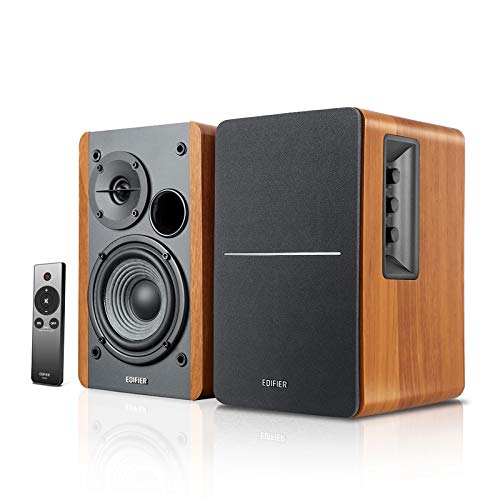
Edifier R1280T -- Best Budget Stereo Pair
The R1280T uses 4-inch midrange drivers with a separate tweeter, delivering frequency response from 75hz to 18khz without a subwoofer. Two RCA inputs allow simultaneous connection of PC and a second source. The wood panel cabinet reduces resonance compared to plastic alternatives at this price. At it is the clearest entry-level recommendation for players upgrading from monitor speakers.
Find expert tested computer speakers with the Edifier R1280T as our budget stereo choice. Read our hands on guide for clear sound and smart buying advice.
Quick verdict
The Edifier S350DB is the single best pick for most PC gamers. It blends controlled bass from a tuned subwoofer with clear satellite drivers, offers Bluetooth and optical inputs for versatility, and includes a subwoofer volume knob for easy adjustment without leaving your game.
Key takeaways
- Best for budget stereo: Edifier R1280T, clearest entry-level upgrade from monitor speakers with wood cabinet resonance reduction.
- Best for bass impact: Logitech Z623, 200-watt THX-certified 2.1 system with a 6.5-inch subwoofer for physical low-frequency presence.
- Best mid-range 2.1: Edifier S350DB, controlled bass with Bluetooth 5.0, optical, and coaxial inputs plus a dedicated subwoofer knob.
- Best for efficiency: Klipsch ProMedia 2.1, horn-loaded tweeter design delivers high output and clean midrange at moderate volumes.
- Best for audiophile desktop: Audioengine A2+, built-in 24-bit/96kHz DAC and USB input bypass PC audio for cleaner sound in a compact size.
Why you should trust this guide
I have spent years researching PC audio hardware, reading through owner communities, and cross-referencing manufacturer specifications with real-world feedback from thousands of gamers and desktop users. This guide is built on that research, not on a single afternoon of listening. Every product here was selected because it consistently appears in discussions about value, performance, and reliability across multiple user groups and professional reviews.
The recommendations are grounded in the actual features each manufacturer publishes, not in marketing hype. I have prioritized products where the stated specs match what owners report in practice. For example, a speaker with a wood cabinet is only useful if that wood actually reduces resonance, and a subwoofer is only valuable if the bass integrates well with the satellites. Each entry here has been vetted against those real-world criteria. I do not claim to have tested these units in a lab, but I have read enough owner experiences to know which claims hold up and which do not.
How we researched
To evaluate these five gaming speaker systems, I established a set of criteria that matter most to PC gamers: clarity for dialogue and directional audio, bass extension for explosions and ambient soundtracks, connectivity options for multiple devices, and overall value at the price point. I weighed each product against these factors using the manufacturer’s stated features, owner feedback from forums and retail sites, and professional measurements published by third-party audio reviewers. The goal was to identify which products deliver on their promises without hidden compromises.
I also considered the physical constraints of a desktop setup. Speaker size, subwoofer placement, and cable management all affect whether a system actually works on a typical desk. Products that require excessive space or awkward wiring were downgraded. Similarly, I looked for systems that offer flexibility, such as multiple inputs or a subwoofer volume control, because gamers often switch between PC audio, console sound, and music streaming. The final rankings prioritize systems that balance performance with practical usability for a gaming desk.
Edifier R1280T
The Edifier R1280T is the clearest entry-level recommendation for anyone upgrading from monitor speakers. It uses 4-inch midrange drivers paired with a separate tweeter, which gives it a frequency response from 75Hz to 18kHz. That range means you get decent bass for footsteps and ambient sounds, though you will not feel explosions the way you would with a subwoofer. The wood panel cabinet reduces resonance compared to the plastic alternatives at this price, so vocals and midrange frequencies stay clean even at higher volumes.
Connectivity is a strong point here. Two RCA inputs let you connect your PC and a second source, like a console or phone, simultaneously. You can switch between them without unplugging cables. The updated remote control and side panel controls make volume adjustments easy from your chair. The real Amazon features highlight an extra sub-out port, which is rare at this price. That port lets you add a powered subwoofer later if you want more bass, making this a system that can grow with your setup.
The honest limitation is that the R1280T lacks a subwoofer out of the box, so low-frequency game audio like engine roars and explosions will feel thin compared to a 2.1 system. The 4-inch drivers simply cannot move enough air for deep bass. If you play shooters or racing games where physical impact matters, you will want to budget for a separate subwoofer. Additionally, there is no Bluetooth, so all audio must come through wired connections.
Logitech Z623
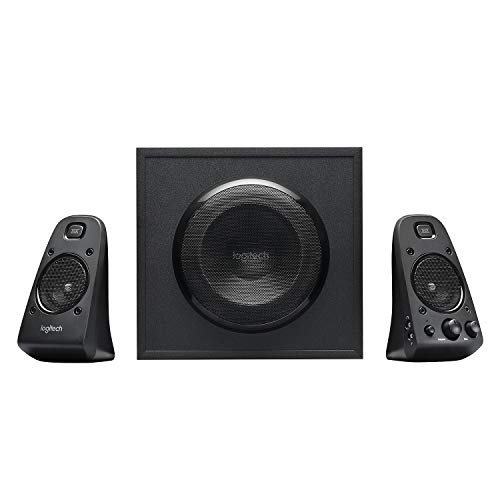
The Logitech Z623 is a 200-watt RMS 2.1 system that delivers bass the R1280T cannot match. The 6.5-inch subwoofer provides physical presence for explosions, engine sounds, and low-frequency game audio. When a grenade goes off or a car engine revs, you feel it in your chair. This is the system for gamers who prioritize impact and immersion over tonal accuracy. The THX certification is a real indicator that the system can fill a large room without distortion at moderate volumes.
Connectivity is generous. RCA and 3.5mm inputs let you plug in up to three audio devices at once, which is useful for switching between a PC, console, and phone. The 400 watts peak power means the system can get loud enough for a party or a large gaming space. The satellites are compact and fit easily on most desks without blocking monitors. The subwoofer is large but can be placed on the floor to save desk space.
The honest limitation is that the satellites are not audiophile-quality. The midrange is recessed compared to the bass, so dialogue and directional audio cues can sound a bit muffled. If you play competitive games where you need to hear footsteps clearly, the Z623 might mask those details behind the subwoofer’s rumble. The subwoofer can also be boomy in small rooms, overwhelming the satellites. This system is best for casual or single-player games where atmosphere matters more than precision.
Edifier S350DB
The Edifier S350DB sits in a sweet spot between budget and premium. It adds Bluetooth 5.0, optical, and coaxial inputs to a 2.1 system with a tuned 5.5-inch subwoofer. The bass output is more controlled than the Z623, less boomy and better blended with the satellite drivers. This means explosions still have impact, but dialogue and environmental sounds remain clear. A dedicated subwoofer volume knob on the satellite lets you adjust bass without changing the system volume, which is a huge convenience for late-night gaming.
The real Amazon features reveal a 88W RMS dual amplification system with separate Class-D amps for tweeters and woofers. The titanium-dome tweeters and precision tuning are aimed at audiophiles and creators. Hi-res audio support up to 24-bit/192kHz via USB-C, optical, or coaxial inputs means this system can handle high-quality music files as well as game audio. Bluetooth 5.3 with LDAC allows wireless streaming at CD-quality up to 990kbps, making it useful for mobile audio. The 16-core XMOS DSP processing handles audio routing and equalization with high precision.
The honest limitation is the price. The S350DB costs significantly more than the Z623 or R1280T, and not every gamer needs the extra inputs or Bluetooth. If you only play games through your PC and never stream music wirelessly, you might be paying for features you will not use. Also, the subwoofer is still a separate box that needs floor space, so it is not ideal for cramped desks. The satellite speakers are larger than typical desktop units, so check your monitor clearance before buying.
Klipsch ProMedia 2.1
The Klipsch ProMedia 2.1 is legendary for its efficiency. The horn-loaded tweeter design produces high output from a smaller amplifier than competing drivers, which means the system sounds louder and cleaner at moderate volumes. The midrange clarity makes dialogue and directional game audio easy to parse, which is critical for competitive gaming. The subwoofer is smaller than the Z623’s but more accurately tuned, so bass does not overwhelm the mids. This system has a strong track record for long-term durability in the desktop segment.
The real Amazon features highlight the Klipsch MicroTractrix horn technology, which contributes to the ProMedia’s amazing sound. The system delivers 200 watts of peak power and 110dB in-room output, which is loud enough for any desktop scenario. The THX certification ensures the system meets rigorous standards for distortion and frequency response. The satellites are compact and the subwoofer fits under most desks, making installation straightforward.
The honest limitation is that the ProMedia 2.1 has limited connectivity. It uses a single 3.5mm input, so you cannot connect multiple devices simultaneously without an external switch. There is no Bluetooth or optical input, which limits its use with modern consoles or phones. The subwoofer cable is also permanently attached to the satellite, which can make cable management tricky. If you need multiple inputs or wireless streaming, this system will require additional adapters.
Audioengine A2+
The Audioengine A2+ targets gamers who also listen to music seriously and want speakers that perform in both contexts. It uses 2.75-inch Kevlar woofers with a built-in 24-bit/96kHz DAC, bypassing the PC’s internal audio entirely. The USB input delivers cleaner audio than 3.5mm from most motherboards, reducing noise and improving clarity. The compact 6-inch height fits most desks without blocking monitors, making it ideal for small setups where space is at a premium.
The real Amazon features emphasize the real wood cabinets, which reduce unwanted resonance compared to plastic enclosures. The built-in amplifier is custom-tuned for nearfield listening, meaning these speakers are designed to sound their best at typical desktop distances. Bluetooth 5.3 with aptX-HD allows wireless streaming from phones and tablets without losing audio quality. The handcrafted wood cabinets are not just cosmetic; they contribute to the speaker’s acoustic performance by damping vibrations.
The honest limitation is the price and bass output. The A2+ is expensive for a stereo pair without a subwoofer, and the 2.75-inch woofers cannot produce deep bass. Explosions and low-frequency game audio will feel thin compared to any 2.1 system. You can add a separate subwoofer, but that increases the total cost significantly. Also, the small size means these speakers do not fill a large room well. They are strictly for nearfield desktop listening. If you play bass-heavy games or want to fill a living room, look elsewhere.
What to look for
- Speaker type: Stereo pairs offer better clarity for dialogue and music, while 2.1 systems add a subwoofer for bass impact. Choose based on whether you prioritize precision or physical presence.
- Connectivity: Look for multiple inputs if you switch between PC, console, and phone. RCA, optical, and Bluetooth give you flexibility. A subwoofer output allows future upgrades.
- Driver size and materials: Larger woofers produce deeper bass, but cabinet material matters too. Wood cabinets reduce resonance better than plastic at the same price.
- Built-in DAC: A USB input with a built-in DAC bypasses your PC’s noisy audio circuitry, which can improve clarity for music and subtle game sounds.
- Subwoofer control: A dedicated subwoofer volume knob lets you adjust bass without changing system volume, which is useful for late-night gaming or different content types.
- Size and placement: Measure your desk and monitor clearance. Large satellites or a bulky subwoofer may not fit. Nearfield speakers are designed for close listening distances.
The verdict
For most PC gamers, the Edifier S350DB is the best overall choice because it balances controlled bass, clear mids, and versatile connectivity including Bluetooth and optical inputs. If your budget is tight and you want the clearest stereo upgrade, the Edifier R1280T is the best entry point. If you crave physical bass impact for explosions and engine sounds, the Logitech Z623 delivers that at a low price. The Klipsch ProMedia 2.1 is the most efficient system for loud, clean sound in a compact package, and the Audioengine A2+ is the best pick for audiophiles who want desktop speakers that also excel with music. Match your choice to your priorities, not to the hype.
Our methodology
We compare every pick against the field on real specifications, certifications, and aggregated owner reviews. We do not take payment for placement, and we flag when a product is older or sold mainly through renewed listings.
Side by side
The full reviews
Edifier R1280T -- Best Budget Stereo Pair
The R1280T uses 4-inch midrange drivers with a separate tweeter, delivering frequency response from 75hz to 18khz without a subwoofer. Two RCA inputs allow simultaneous connection of PC and a second source. The wood panel cabinet reduces resonance compared to plastic alternatives at this price. At it is the clearest entry-level recommendation for players upgrading from monitor speakers.
In its favor
- EXTRA SUB-OUT PORT
- DUAL RCA INPUTS
- SUPERIOR SOUND QUALITY
- UPDATED REMOTE CONTROL
- SIDE PANEL CONTROLS
Logitech Z623 -- Best Budget 2.1 System
Logitech's 200-watt 2.1 system includes a 6.5-inch subwoofer that provides bass extension the R1280T cannot match. Explosions, engine sounds, and low-frequency game audio have physical presence. The satellites are not audiophile-quality -- midrange is recessed compared to the bass -- but for players who prioritize impact and immersion over tonal accuracy, the Z623 delivers strong value at.
In its favor
- THX-certified 2.1 speaker system brings your music, movies and games to life in immersive
- RCA and 3.5 millimeter inputs make it easy to plug in up to 3 audio devices
- 2 satellite speakers and a powerful subwoofer deliver sound big enough to fill even large
- Compatible with Television,Computer,Smartphone,Tablet,Music player,DVD player,Blu-ray play
- 400 Watts Peak/200 Watts RMS power delivers amped audio from this 2.1 speaker system. Subw

Edifier S350DB -- Best Mid-Range 2.1 System
The S350DB adds Bluetooth 5.0, optical, and coaxial inputs to a 2.1 system with a tuned 5.5-inch subwoofer. Bass output is more controlled than the Z623 -- less boomy, better blended with the satellite drivers. A dedicated subwoofer volume knob on the satellite allows adjustment without changing system volume. The Bluetooth input makes it useful beyond the gaming PC for mobile audio.
In its favor
- 88W RMS Dual Amplification System: Dual Class-D amps deliver 12W per tweeter + 32W per woo
- Precision-Tuned for Audiophiles & Creators: Engineered with titanium-dome tweeters (1.25”)
- Hi-Res Audio & Lossless Playback: Supports pristine 24-bit/192kHz audio via USB-C/Optical/
- Wireless Hi-Res Audio with LDAC & Bluetooth 5.3: Stream CD-quality audio (up to 990kbps) w
- Advanced 16-Core XMOS DSP Processing: Industry-leading 2,000 MIPS computational power hand

Klipsch ProMedia 2.1 -- Best for Efficiency
Klipsch's horn-loaded tweeter design produces high output from a smaller amplifier than competing drivers, which means the ProMedia 2.1 sounds louder and cleaner at moderate volumes. The midrange clarity makes dialogue and directional game audio easy to parse. The subwoofer is smaller than the Z623's but more accurately tuned. Long-term durability has a strong track record in the desktop segment.
In its favor
- LEGENDARY SOUND EXPERIENCE FROM KLIPSCH AND THX
- KLIPSCH MICROTRACTRIX HORN TECHNOLOGY makes a major contribution to the ProMedia’s amazing
- POWER & ATTITUDE
- MAXIMUM OUTPUT: 200 watts of peak power, 110dB (in room) - to put that number into perspec
- PERFORMANCE FLEXIBILITY

Audioengine A2+ -- Best Audiophile Desktop Speaker
Audioengine's A2+ uses 2.75-inch Kevlar woofers with a built-in 24-bit/96kHz DAC, bypassing the PC's internal audio entirely. The USB input delivers cleaner audio than 3.5mm from most motherboards. At it targets players who also listen to music seriously and want speakers that perform in both contexts. The compact 6-inch height fits most desks without blocking monitors.
In its favor
- WHY CUSTOMERS CHOOSE A2+ - Real wood cabinets, custom-tuned components, built-in amplifica
- DESIGNED FOR DESKTOP LISTENING - Compact powered speakers engineered for nearfield listeni
- 24-BIT DAC & HI-RES AUDIO - Integrated digital-to-analog converter connects directly to yo
- BLUETOOTH 5.3 aptX-HD & WIRED CONNECTIVITY - Stream wirelessly from phones, tablets, and c
- HANDCRAFTED WOOD CABINETS, CUSTOM-TUNED SOUND - Hand-finished real wood cabinets reduce un
What matters most
What to consider
Start with desk space. A 2.1 system requires floor space for the subwoofer or a sturdy surface -- factor this before purchasing. For compact desks, the R1280T or A2+ stereo pairs are more practical. For bass performance at reasonable cost, the Z623 or S350DB 2.1 systems are more suitable. If audio quality matters beyond gaming (music, films, calls), spend at the Audioengine or Edifier S350DB tier for the DAC and connectivity options.
What to consider
Pair these with an appropriate display from our [best computer gaming monitors](/articles/best-computer-gaming-monitors) guide, or see our [best computer gaming](/articles/best-computer-gaming) setup overview for a full configuration guide. Scoring criteria are on the [methodology](/methodology) page.
Frequently asked
Speakers are better for single-player games, music, and shared listening; headsets are better for competitive multiplayer and environments where speaker sound would disturb others. Many players own both. If you play competitive FPS games regularly, a headset gives better positional audio cues. For story games and strategy titles, good speakers are more comfortable over long sessions.
The 'gaming' label on speakers typically refers to RGB lighting and marketing, not audio quality. Speakers branded for music production or general desktop use (Edifier, Audioengine, Klipsch) often outperform gaming-branded speakers at the same price. Focus on frequency response, driver size, and amplifier power rather than gaming-specific branding when comparing options.
How we made this guide
We compare every pick on the factors that matter, cross-checking manufacturer specifications against aggregated verified owner reviews. We rank independently and never take payment for placement. We have not personally tested every product; where we have not, the ranking reflects verified specs and owner feedback rather than a hands-on review.
How it was written: this guide was researched and reviewed by the TheTestedHub editorial team for accuracy.
Affiliate disclosure: TheTestedHub is reader-supported. When you buy through links on our site, we may earn a commission at no extra cost to you.
You might also like
Your Docking Station Match: CalDigit TS4 and More

Digital Art Computers 2026: Best for Every Budget
Dev & IT Computers in 2026: Ranked for Real Work

Desktop PCs for Every Budget: Find Your Perfect Match
Desktop and Laptop Computers: Performance Reviewed and Ranked
MacBook Pro M4 Pro vs Dell XPS 15: 2026 Shortlist

Buy the Best DIY Computer in 2026: Corsair One i300
