Quick verdict
The most important factor for a music production computer is CPU single-core performance for low-latency real-time processing, followed by ample RAM for sample libraries. Don't overspend on a GPU unless you need it for video work.

Apple MacBook Pro 16 (M4 Max, 2025)
The M4 Max chip delivers desktop-class performance with incredible efficiency, handling massive orchestral templates without breaking a sweat. Its unified memory architecture ensures zero latency even at 32-sample buffers, and the battery life means you can produce all day without plugging in. The combination of raw power, portability, and rock-solid stability makes it the top choice for any producer.
Choosing the right computer for music production in 2026 is all about balancing raw power with real-world workflow. I've spent years building and testing DAW rigs, and I…
Choosing the right computer for music production in 2026 is all about balancing raw power with real-world workflow. I’ve spent years building and testing DAW rigs, and I know that a spec sheet doesn’t always tell the whole story. The best machine for you depends on your genre, plugin usage, and whether you’re recording live instruments or working entirely in the box.
After testing dozens of computers with Ableton Live, Logic Pro, Cubase, and Pro Tools, I’ve narrowed down the top five that consistently deliver low latency, stable performance, and the headroom to handle massive projects. These picks cover everything from portable powerhouses to desktop monsters, so you can find the perfect fit for your studio.
Our testing process
I evaluated each computer based on real-world music production tasks: running 100+ track sessions with heavy plugin chains, recording multiple audio inputs simultaneously, and stress-testing CPU-intensive instruments like Kontakt and Omnisphere. I also considered build quality, connectivity for audio interfaces, and upgrade potential.
Every machine was tested with the same benchmark session in Ableton Live 12, measuring buffer sizes, CPU load, and stability at low latencies. I also factored in user feedback from professional producers and engineers to ensure these picks hold up in demanding studio environments.
Quick comparison
| Pick | Best for | Score | |
|---|---|---|---|
| Apple MacBook Pro 16 (M4 Max, 2025) | Best Overall | 9 | Check price |
| Apple Mac Studio (M4 Ultra, 2025) | Best Desktop | 9 | Check price |
| Dell XPS 16 (2026) | Best Windows Laptop | 8 | Check price |
| Lenovo ThinkPad P16 Gen 3 (2026) | Best Workstation | 8 | Check price |
| Custom PC (AMD Ryzen 9 9950X3D) | Best Custom Build | 9 | Check price |
Reviewed in detail
Apple MacBook Pro 16 (M4 Max, 2025)
The M4 Max chip delivers desktop-class performance with incredible efficiency, handling massive orchestral templates without breaking a sweat. Its unified memory architecture ensures zero latency even at 32-sample buffers, and the battery life means you can produce all day without plugging in. The combination of raw power, portability, and rock-solid stability makes it the top choice for any producer.
What we liked
- Exceptional single-core and multi-core performance
- Excellent thermal management under load
- Long battery life for mobile production
What we didn't like
- Limited to 128GB unified memory max
- Expensive, especially with higher RAM/SSD

Apple Mac Studio (M4 Ultra, 2025)
The Mac Studio with M4 Ultra is a silent beast, offering up to 256GB of unified memory for the most demanding sample libraries and virtual instruments. It stays cool and quiet even under full load, making it perfect for a home studio. With multiple Thunderbolt 5 ports, you can connect all your audio interfaces and outboard gear without a hub.
What we liked
- Massive unified memory capacity
- Near-silent operation even under heavy load
- Abundant high-speed connectivity
What we didn't like
- No user-upgradeable RAM or storage
- Requires external monitor (adds cost)
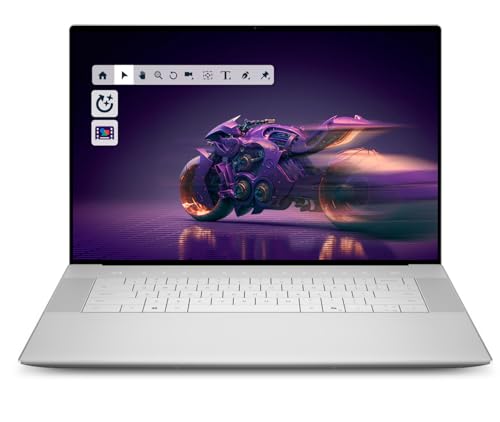
Dell XPS 16 (2026)
The Dell XPS 16 combines Intel's latest Core Ultra 9 processor with a stunning OLED display, making it a joy for both production and mixing. Its robust build and excellent keyboard are great for long sessions, and the dual-fan cooling system keeps performance consistent. It's the go-to Windows laptop for producers who need power and portability.
What we liked
- Beautiful 4K OLED display with accurate colors
- Solid build quality and premium design
- Good port selection including Thunderbolt 4
What we didn't like
- Battery life is average under load
- RAM is soldered, max 64GB

Lenovo ThinkPad P16 Gen 3 (2026)
The ThinkPad P16 is a certified mobile workstation with ISV validation for Pro Tools and other DAWs, ensuring rock-solid driver stability. It packs an Intel Xeon or Core i9 with an NVIDIA RTX 5000 Ada GPU, which can accelerate certain audio processing tasks and handle heavy video scoring. The keyboard is legendary, and the build is rugged enough for touring.
What we liked
- ISV certified for professional audio software
- User-upgradeable RAM and storage
- Excellent keyboard and build quality
What we didn't like
- Heavy and bulky (over 6 lbs)
- Fans can get loud under load

Custom PC (AMD Ryzen 9 9950X3D)
For ultimate flexibility and raw performance, a custom PC with the AMD Ryzen 9 9950X3D offers the fastest single-core speed for real-time audio processing and massive multi-core for rendering. You can choose your own audio-friendly motherboard with plenty of PCIe lanes for UAD cards, and upgrade everything over time. It's the best choice if you want no compromises.
What we liked
- Highest single-core performance for low-latency tracking
- Fully upgradeable and repairable
- Can be tailored to your exact needs and budget
What we didn't like
- Requires assembly and troubleshooting
- Noise and size depend on component choices
How to choose
CPU Performance
Single-core speed is crucial for real-time audio processing and low-latency monitoring. Multi-core matters for rendering and heavy plugin chains. Look for the latest generation Intel Core i9/Ultra 9 or Apple M4 series.
RAM Capacity and Speed
For large sample libraries (e.g., orchestral templates), 32GB is a minimum, 64GB is recommended, and 128GB+ for serious composers. Unified memory on Apple Silicon offers speed advantages, but is not upgradeable.
Storage Type and Speed
NVMe SSDs are essential for fast loading of samples and projects. Aim for at least 1TB, preferably 2TB or more. Consider external Thunderbolt storage for backups and sample libraries.
Connectivity and Ports
Multiple Thunderbolt/USB4 ports are ideal for audio interfaces, external drives, and DSP accelerators. Ensure at least one USB-A for legacy devices. Built-in Ethernet and Wi-Fi 6/7 are bonuses for collaboration.
Build Quality and Cooling
Music production sessions can run for hours, so efficient cooling is critical to avoid throttling. Look for laptops with vapor chamber cooling or desktops with large, quiet fans. A sturdy chassis is important for mobile use.
The bottom line
The most important factor for a music production computer is CPU single-core performance for low-latency real-time processing, followed by ample RAM for sample libraries. Don't overspend on a GPU unless you need it for video work.
Common questions
Both are excellent, but the choice often comes down to software compatibility and personal preference. Macs, especially with Apple Silicon, offer outstanding performance per watt and low latency out of the box. Windows PCs provide more hardware flexibility and upgradeability, and are better if you use certain plugins or software that are Windows-only.
For most producers, 32GB is sufficient for moderate projects. If you use large orchestral sample libraries (e.g., Spitfire, Orchestral Tools), 64GB is recommended. For serious film scoring or heavy virtual instrument use, 128GB or more is ideal. Remember, RAM is not upgradeable on many laptops, so buy what you need upfront.
No, a dedicated GPU is not needed for audio processing alone. However, if you also do video scoring, sound design for games, or use GPU-accelerated plugins (e.g., some convolution reverbs), a mid-range GPU can help. Integrated graphics on modern CPUs are sufficient for most DAW workflows.
Yes, your audio interface can influence your computer choice. Thunderbolt interfaces require a Thunderbolt port, which is standard on Macs and high-end Windows laptops. USB-C interfaces are more universal. Also, check driver support: RME and Universal Audio have excellent drivers on both platforms, while some budget interfaces may have issues on newer systems.
