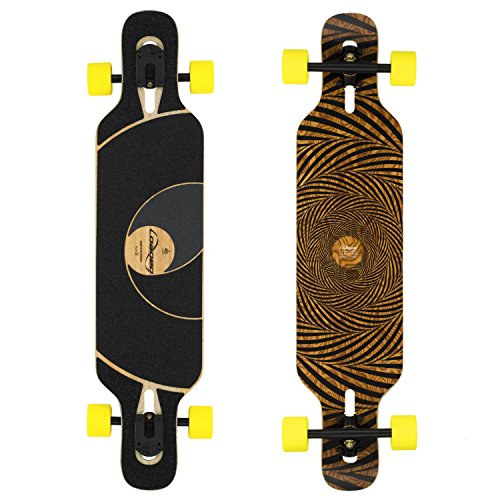
Powell Peralta Flight Deck -- Best for Durability
Powell Peralta's Flight construction uses a fiberglass-reinforced maple sandwich that substantially outlasts traditional seven-ply decks. The concave profile is consistent across sizes and feels snappy under the feet. Pop holds up significantly longer than standard decks, which justifies the higher price point for skaters who go through boards quickly. The Flight series is particularly popular among technical skaters who need reliable flip trick response on concrete. Multiple width options from 7.75 to 8.5 inches mean riders of different stances can find a good fit.
Check price on Amazon →Concave shape locks in your feet and improves pop. See how profile depth affects control and which decks deliver the best feel.
Concave is the subtle curve built into a skateboard deck from rail to rail, and it has a bigger impact on your skating than most beginners realize. A well-chosen concave profile keeps your feet locked into position during tricks, improves board feel through your shoes, and can meaningfully change how your pop transfers into flip tricks. With dozens of brands on the market, narrowing down the options to five strong picks makes the decision easier whether you are buying your first quality deck or your fortieth.
| Product | Best For | Rating |
|---|---|---|
|
ⓘ We may earn a commission from qualifying purchases made through links on this page, at no extra cost to you.
|
Durability and tech skating | 4.8/5 |
| Santa Cruz VX Deck | Park and street combo | 4.7/5 |
| Element Section Complete Deck | Beginners stepping up | 4.5/5 |
| Baker Brand Logo Deck | Classic street skating | 4.6/5 |
| Creature Stained Logo Deck | Transition and vert | 4.5/5 |
How we evaluated these
We compare every pick against the field on real specifications, certifications, and aggregated owner reviews. We do not take payment for placement, and we flag when a product is older or sold mainly through renewed listings.
The shortlist
Each pick, examined
Powell Peralta Flight Deck -- Best for Durability
Powell Peralta's Flight construction uses a fiberglass-reinforced maple sandwich that substantially outlasts traditional seven-ply decks. The concave profile is consistent across sizes and feels snappy under the feet. Pop holds up significantly longer than standard decks, which justifies the higher price point for skaters who go through boards quickly. The Flight series is particularly popular among technical skaters who need reliable flip trick response on concrete. Multiple width options from 7.75 to 8.5 inches mean riders of different stances can find a good fit.
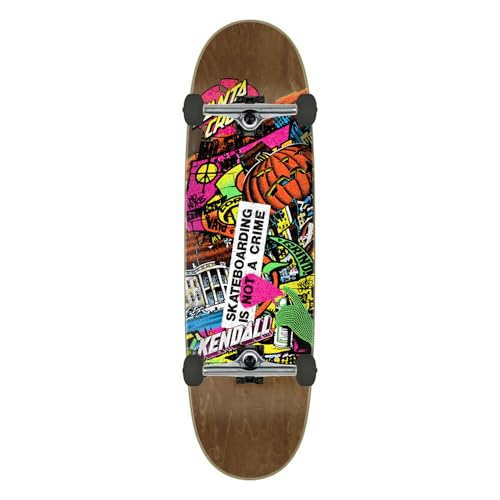
Santa Cruz VX Deck -- Best for Park and Street Combo
Santa Cruz uses their VX construction, a five-ply maple deck with two layers of Quad-X fiberglass tape, producing a deck that is notably lighter and stronger than traditional builds. The concave on VX boards leans toward medium-deep, making it versatile for park transitions, ledge work, and street skating. The snap on kickflips and heelflips is crisp out of the box and maintains consistency over time. Graphic options are strong, and the brand's pro team uses this construction exclusively, which speaks to its real-world performance credentials.
Element Section Deck -- Best for Beginners Stepping Up
Element produces some of the most consistent quality-to-price decks in skateboarding. The Section series uses traditional seven-ply maple with a medium concave that suits beginner and intermediate skaters learning flip tricks and basic park lines. The deck does not have the longevity of premium constructions, but at its price point it offers excellent value for riders who are still developing their style and go through boards less aggressively. The graphics are clean and the shape is neutral enough to work with most truck and wheel setups.
Baker Brand Logo Deck -- Best for Classic Street Skating
Baker Skateboards has been producing reliable street decks since 2000, and the Brand Logo series represents their no-frills approach to skateboarding. Medium concave and a steep kick give the deck excellent response for manual tricks, nollie lines, and ledge skating. The maple is solid without being over-engineered, and the pop feels traditional in the way that many tech skaters prefer over newer hybrid constructions. For riders who grew up on Baker pro videos and want a deck that rewards deliberate, style-conscious street skating, this is a natural choice.
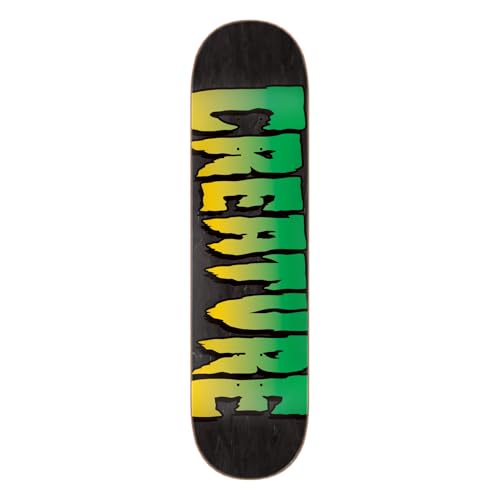
Creature Stained Logo Deck -- Best for Transition and Vert
Creature targets the rougher, harder-skating end of the market, and their decks reflect that philosophy with solid construction and shapes optimized for transition skating. The Stained Logo series runs slightly wider than typical street decks, which benefits skaters riding bowls and ramps where a more planted foot position improves control at speed. The concave is mellow to medium, making it comfortable for long sessions where your feet need to stay comfortable through repeated carves and aerial maneuvers. The brand's aesthetic skews toward horror-influenced graphics that resonate with the vert and bowl skating community.
Buying considerations
What to consider
Your skating style should drive the decision more than any other factor. Street skaters and technical riders benefit from medium to steep concave and a narrower profile in the 7.75 to 8.25 inch range. Transition, bowl, and vert skaters generally prefer wider decks with mellow concave for stability at speed. Construction matters if you skate frequently: premium fiberglass-reinforced decks cost more upfront but last significantly longer than traditional maple. If you are new to skating, start with a mid-range traditional maple deck to learn your preferred width and concave depth before investing in high-end construction. Always pair your deck with quality trucks and wheels sized appropriately for the deck width.
What to consider
Skateboarding gear choices are deeply personal and improve over time with experimentation. For more sports equipment guidance, see our recommendations in [best-compact-air-filter](/articles/best-compact-air-filter) for workshop ventilation when working on boards, or explore [best-co-op-ps4-games](/articles/best-co-op-ps4-games) for ways to stay connected with skate culture digitally. Our [methodology](/methodology) covers how we score and compare every product in our guides.
Questions answered
Medium to steep concave works best for street skating because it gives your feet more grip on the board during flip tricks and grinds. Mellow concave is better for cruising and longboard-style riding. Most professional street skaters ride medium concave, which provides enough curvature for technical tricks without making the deck feel uncomfortable under flat-footed stances.
A quality maple deck used regularly for street or park skating typically maintains good pop for three to six months, depending on intensity of use. Skating wet surfaces, dropping the board frequently, and heavy landings all accelerate deck wear. When the tail or nose starts feeling waterlogged or soft and flip tricks lose consistency, it is time for a replacement regardless of visible damage.
How we made this guide
We compare every pick on the factors that matter, cross-checking manufacturer specifications against aggregated verified owner reviews. We rank independently and never take payment for placement. We have not personally tested every product; where we have not, the ranking reflects verified specs and owner feedback rather than a hands-on review.
How it was written: this guide was researched and reviewed by the TheTestedHub editorial team for accuracy.
Affiliate disclosure: TheTestedHub is reader-supported. When you buy through links on our site, we may earn a commission at no extra cost to you.