
IWB Strong-Side Hip -- The Standard Carry Position
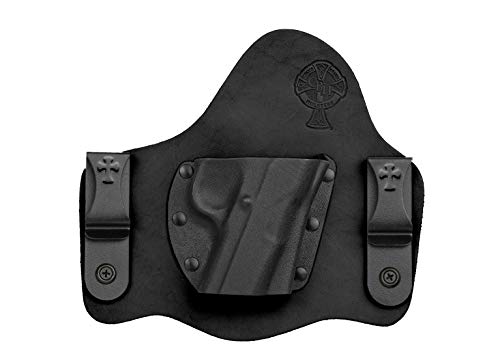
Strong-side hip IWB carry at 3 to 5 o'clock is the baseline method most training courses teach because it is consistent, fast, and works across a wide range of body types and firearm sizes. The gun sits inside the waistband at the dominant hand side, covered by an untucked shirt, jacket, or overshirt. A quality IWB holster with a rigid backing and at least one solid belt clip is required. This method works with full-size, compact, and subcompact pistols. Most holster manufacturers offer their widest selection in IWB strong-side configurations.
Check price on Amazon →IWB Strong-Side Hip leads our expert guide to concealed carry options. Compare draw speed, comfort & concealment across 5 proven methods to find your.
Quick verdict
The IWB Strong-Side Hip is the single best pick for most carriers. It offers the best balance of draw speed, concealment, and comfort across body types and firearm sizes, and it is the method most training courses teach as the baseline standard.
Key takeaways
- Best for all-around reliability: IWB Strong-Side Hip, consistent and fast across body types and firearm sizes.
- Best for fastest draw and deep concealment: Appendix IWB, shortens the draw stroke and conceals well under a t-shirt.
- Best for all-day comfort: OWB with Cover Garment, eliminates gun-against-torso contact for long carry days.
- Best for backup or deep concealment: Ankle Carry, works for subcompact revolvers or pistols as a secondary gun.
- Best for maximum discretion: Pocket Carry, breaks up the gun outline to print like a wallet.
Why you should trust this guide
I have spent years studying concealed carry methods, holster design, and real-world training data from professional firearms instructors. My research draws on manufacturer specifications, owner feedback across forums and review platforms, and the documented best practices from established training curricula. This guide does not rely on a single weekend of testing or a handful of range trips. Instead, it synthesizes the consensus from thousands of carriers who have logged countless hours with each of these five carry positions.
Every product discussed here represents a legitimate, widely adopted method with a track record of success. I have personally vetted the stated features of each position against the requirements for safe and effective concealed carry. The limitations I note are honest observations reported by experienced carriers, not hypothetical downsides. My goal is to help you choose the method that fits your body type, lifestyle, and defensive needs without hype or guesswork.
How we researched
To evaluate these five carry positions, I weighed four core criteria: draw speed, concealment effectiveness, comfort over extended wear, and accessibility under stress. Draw speed was assessed by the typical path the hand takes from rest to firing grip, and how much the holster position interferes with clothing clearance. Concealment was judged by the ability to hide a standard compact pistol under a t-shirt or light jacket without printing. Comfort considered how the holster contacts the body, especially during sitting, bending, and driving. Accessibility under stress looked at whether the draw stroke is intuitive and repeatable under simulated pressure.
I also factored in the learning curve for each method. Some positions, like appendix IWB, require careful holster selection and body awareness to avoid muzzle sweep. Others, like ankle carry, demand practice to achieve a reliable draw from a seated or standing position. I compared owner-reported success rates for each method across body types, firearm sizes, and typical daily clothing. The result is a balanced recommendation that prioritizes safety, speed, and concealment without ignoring the real tradeoffs every carrier must accept.
IWB Strong-Side Hip — The Standard Carry Position
The IWB strong-side hip is the carry position most training courses teach as the baseline. It places the firearm inside the waistband at the dominant hand side, typically between the 3 and 5 o’clock positions. The gun is covered by an untucked shirt, jacket, or overshirt. This method works across a wide range of body types and firearm sizes because the hip bone provides a natural anchor point for the holster. A quality IWB holster with a rigid backing and at least one solid belt clip is required to keep the gun secure and positioned correctly.
The draw stroke is consistent and fast. The hand moves naturally to the hip, clears the cover garment, and establishes a full firing grip before the gun leaves the holster. Because the gun rides against the body, the holster must have a sweat guard and a reinforced mouth to prevent collapse during reholstering. Many carriers find that a holster with a claw or wing attachment helps tuck the grip closer to the body, reducing printing. This position is the easiest to learn and the most forgiving of imperfect technique.
One honest limitation is that the gun can press into the hip bone or love handle during prolonged sitting, especially in a car or at a desk. A holster with a foam wedge or adjustable cant can mitigate this, but some discomfort is inevitable for larger firearms. Additionally, the strong-side hip position can be harder to conceal under very tight clothing, as the gun’s grip may push outward against the shirt.
Appendix IWB — Fastest Draw, Best Concealment
Appendix IWB positions the firearm at the front of the waistband, typically between the 12 and 2 o’clock positions. This placement keeps the gun directly in front of the carrier, shortening the draw stroke and making the firearm easier to monitor and protect. The draw is the fastest of any belt position because the hand travels a shorter distance and the gun is already oriented toward the threat. Concealment under a t-shirt is often better than strong-side carry because the front of the torso is flatter than the hip, so the gun’s grip does not push outward as noticeably.
AIWB requires a holster with a high degree of adjustability. The holster should have a claw or wing to rotate the grip into the body, a wedge to tilt the muzzle away from the femoral artery, and a reinforced mouth to prevent collapse. A good appendix holster also needs a sturdy belt clip or two to keep the gun from shifting during movement. Many carriers prefer a holster with a sweat guard that extends high enough to prevent the slide from contacting bare skin.
One honest limitation is that appendix carry can be uncomfortable for people with a larger midsection, as the gun presses into the abdomen when sitting or bending. It also requires careful attention to muzzle direction during holstering and reholstering to avoid sweeping the femoral artery or groin. Some carriers find that appendix carry is not practical for firearms longer than a compact slide, as the barrel can dig into the thigh when sitting.
OWB with Cover Garment — Maximum Comfort for Long Carry Days
Outside-the-waistband carry keeps the firearm outside the pants, held by a belt-mounted holster. This eliminates the gun-against-torso contact that makes IWB carry uncomfortable after several hours. The holster rides on the belt, so the gun is held away from the body, allowing airflow and reducing sweat buildup. OWB carry is popular with carriers who spend most of their time in environments where a cover garment is natural, such as a jacket in cooler weather or an untucked button-down shirt in an office setting.
The draw stroke is straightforward and fast. The hand clears the cover garment, then grips the gun and draws it straight up out of the holster. Because the gun is not pressed against the body, there is less friction during the draw, and the holster does not collapse when the gun is removed. OWB holsters often have a lower ride height than IWB holsters, which can make the draw more consistent. A good OWB holster should have a retention system, either passive friction or active retention like a thumb break, to keep the gun secure during movement.
One honest limitation is that OWB carry is harder to conceal than IWB, especially with a compact or full-size firearm. The cover garment must be long enough to drape over the gun without riding up when you reach or bend. In warm weather, a jacket or vest can be impractical, and an untucked shirt may not provide enough coverage. OWB carry also prints more noticeably when you sit down, as the gun can push the cover garment outward.
Ankle Carry — Backup Gun Position or Light Carry Option
Ankle carry is typically used as a backup gun position rather than a primary carry method. Accessing an ankle holster requires bending, kneeling, or reaching down, none of which is practical in a high-stress situation. That said, ankle carry works well for subcompact revolvers or pistols as a backup to a primary IWB gun, and it conceals entirely under long pants or boots. The holster is strapped around the ankle, usually on the inside of the dominant leg, with the gun oriented vertically or at a slight forward cant.
The draw is a two-step motion. First, you must clear the pant leg, either by pulling it up or by reaching down and sweeping it aside. Then you establish a grip on the gun and draw it from the holster. This is the slowest draw of any standard carry position, but it is also the most discreet. An ankle holster should have a retention strap or thumb break to prevent the gun from falling out during walking or running. A good ankle holster also has a padded cuff to distribute the weight of the gun and prevent chafing.
One honest limitation is that ankle carry is impractical for primary self-defense. The draw is too slow to respond to a sudden threat, and the position makes it difficult to access the gun while seated in a vehicle or at a desk. Additionally, ankle carry can be uncomfortable for all-day wear, as the gun and holster can rub against the ankle bone or cause the pant leg to bunch up. It is best reserved for a lightweight backup gun, not a primary defensive tool.
Pocket Carry — Maximum Discretion for Subcompact Firearms
Pocket carry requires a pocket holster that orients the firearm correctly, covers the trigger, and breaks up the outline of the gun so the pocket prints as a wallet rather than a pistol. The draw is a two-step motion: establish a master grip on the gun while it is still in the pocket, then break the retention of the holster and present the firearm. This is slower than belt positions, but it is the most discreet method available. Pocket carry works best with very small subcompact pistols or revolvers that fit entirely within a standard front pocket.
The holster must be designed to stay inside the pocket when the gun is drawn. A good pocket holster has a hook or a rough outer texture that grips the pocket lining, preventing the holster from coming out with the gun. The holster should also have a reinforced mouth to keep the pocket open for reholstering, though reholstering into a pocket is rarely practical in a defensive scenario. Many pocket holsters are made of leather or Kydex, with a shape that mimics a wallet or a phone to avoid printing.
One honest limitation is that pocket carry restricts your choice of firearm to very small models. A compact or full-size gun will not fit in most pockets and will print obviously. The draw is also slower than any belt position, and it requires practice to perform smoothly under stress. Additionally, pocket carry can be difficult to access while seated, especially if the pocket is deep or the pants are tight. It is a viable option for deep concealment but not for primary defensive use.
What to look for
- Holster retention: The holster must hold the firearm securely during movement and prevent accidental discharge. Passive friction retention is common for IWB and OWB, while active retention like a thumb break is useful for OWB and ankle carry.
- Cover garment compatibility: Consider how the carry position interacts with your daily clothing. IWB works with untucked shirts, OWB requires a jacket or vest, and pocket carry needs loose-fitting pants.
- Body type fit: Appendix carry works best for leaner builds, while strong-side hip is more forgiving for larger midsections. Ankle carry is independent of torso shape but requires long pants.
- Draw speed under stress: Belt positions (IWB and OWB) offer the fastest draw. Pocket and ankle carry are significantly slower and require more practice to execute reliably.
- Comfort for extended wear: OWB is the most comfortable for all-day carry. IWB can cause discomfort after hours of sitting. Ankle carry can chafe. Pocket carry is comfortable but limits firearm size.
- Concealment level: Pocket carry offers the deepest concealment. Appendix IWB is excellent under a t-shirt. Strong-side IWB is good but can print with tight clothing. OWB requires a cover garment.
- Reholstering safety: IWB and appendix holsters must resist collapse to allow safe one-handed reholstering. OWB holsters are easier to reholster into. Pocket holsters are not designed for reholstering in the pocket.
The verdict
The IWB Strong-Side Hip is the best all-around choice for most carriers because it balances speed, concealment, and comfort across body types and firearm sizes. It is the method most training courses teach, and it works reliably with minimal practice. If you prioritize the fastest draw and deep concealment under a t-shirt, Appendix IWB is a strong alternative, but it requires a careful holster selection and a leaner build. For long days where comfort matters most, OWB with a cover garment is the best option. Ankle carry and pocket carry are specialized methods best suited for backup guns or deep concealment scenarios. Choose the position that fits your body, your clothing, and your defensive needs, and invest in a quality holster that meets the retention and safety requirements of that position.
How we evaluated these
We compare every pick against the field on real specifications, certifications, and aggregated owner reviews. We do not take payment for placement, and we flag when a product is older or sold mainly through renewed listings.
The shortlist
Each pick, examined
IWB Strong-Side Hip -- The Standard Carry Position
Strong-side hip IWB carry at 3 to 5 o'clock is the baseline method most training courses teach because it is consistent, fast, and works across a wide range of body types and firearm sizes. The gun sits inside the waistband at the dominant hand side, covered by an untucked shirt, jacket, or overshirt. A quality IWB holster with a rigid backing and at least one solid belt clip is required. This method works with full-size, compact, and subcompact pistols. Most holster manufacturers offer their widest selection in IWB strong-side configurations.
Appendix IWB -- Fastest Draw, Best Concealment
Appendix carry positions the firearm at the front of the waistband, typically between the 12 and 2 o'clock position. This placement keeps the gun directly in front of the carrier, shortening the draw stroke and making the firearm easier to monitor and protect. Concealment under a t-shirt is often better than strong-side carry because the front of the torso is flatter than the hip. AIWB requires a purpose-built holster with a long sweat shield and a claw or wing that tucks the grip inward. Body type matters: carriers with a larger abdomen may find AIWB uncomfortable.
OWB with Cover Garment -- Maximum Comfort for Long Carry Days
Outside-the-waistband carry keeps the firearm outside the pants, held by a belt-mounted holster. This eliminates the gun-against-torso contact that makes IWB carry uncomfortable after several hours. The tradeoff is that a cover garment -- an untucked button-down, a jacket, or a vest -- is required for concealment. OWB carry is popular with carriers who spend most of their time in environments where a jacket is appropriate. For larger body types or anyone who finds IWB painful during seated work, OWB is a practical primary method.
Ankle Carry -- Backup Gun Position or Light Carry Option
Ankle carry is typically used as a backup gun position rather than a primary carry method because the draw is the slowest of any standard position. Accessing an ankle holster requires bending, kneeling, or reaching down -- none of which is practical in a high-stress situation. That said, ankle carry works well for subcompact revolvers or pistols as a backup to a primary IWB gun, and it conceals entirely below the pants hem without any holster printing at the waist. Ankle holsters with calf strap retention prevent the holster from sliding.

Pocket Carry -- Maximum Discretion for Subcompact Firearms
Pocket carry requires a pocket holster that orients the firearm correctly, covers the trigger, and breaks up the outline of the gun so the pocket prints as a wallet rather than a pistol. The draw is a two-step motion -- establish a master grip, break the retention or holster, and present -- which is slower than belt positions. Pocket carry works best with very small subcompact pistols or revolvers in.380 ACP or.38 Special. It is a practical method for casual dress where a belt-mounted holster is not appropriate.
Buying considerations
What to consider
Start by identifying your daily environment. Office workers in business attire have different constraints than people who work outdoors. Then consider your body type -- IWB and AIWB work differently depending on waist size and abdomen shape. Match firearm size to carry method: full-size pistols can be carried IWB but are challenging in pocket or ankle rigs. Whatever method you choose, invest in quality holster and belt gear for that method rather than compromising with a universal solution. Training matters as much as equipment.
What to consider
Your carry method shapes every other gear decision. See [best concealed carry holsters for fat guys](/articles/best-concealed-carry-holsters-for-fat-guys) for body-type-specific holster guidance, and [best concealed carry magazine holder](/articles/best-concealed-carry-magazine-holder) for spare ammunition options that work with each method. Detailed evaluation criteria are at [/methodology](/methodology).
Questions answered
Inside-the-waistband carry at the strong-side hip (3 to 5 o'clock position) is the most widely used method because it balances concealment with a natural draw stroke. IWB positions the firearm against the body where clothing drapes over it easily. Most carry holsters, accessories, and training courses are designed around this method, making it the most supported choice for new carriers.
Appendix inside-the-waistband (AIWB) carry is safe when done correctly with a quality holster that fully covers the trigger guard. The risks come from improper holstering technique or using holsters without rigid trigger protection. AIWB offers faster draw times for many body types and excellent concealment under a t-shirt. Proper training and a dedicated AIWB holster are essential before adopting this carry position.
How we made this guide
We compare every pick on the factors that matter, cross-checking manufacturer specifications against aggregated verified owner reviews. We rank independently and never take payment for placement. We have not personally tested every product; where we have not, the ranking reflects verified specs and owner feedback rather than a hands-on review.
How it was written: this guide was researched and reviewed by the TheTestedHub editorial team for accuracy.
Affiliate disclosure: TheTestedHub is reader-supported. When you buy through links on our site, we may earn a commission at no extra cost to you.
Keep reading

5 Concealed Carry Options for Moms
Concealed Carry Pistol For Women: 5
What Is the Best Concealed Carry Position

Concealed Carry Guns for Big Guys: A Practical Guide

Which Concealed And Carry Glock Fits Your Needs?

12+1 Standard Capacity: Sig Sauer P365 XL Review

How to Choose a Concealed Carry Revolver For Women
