Stop Making Sense -- The Definitive Concert Film
Jonathan Demme's Stop Making Sense, restored in 4K for its 40th anniversary in 2023, is the most studied concert film ever made. Demme and Talking Heads built the film from the ground up as a cinematic event rather than a live recording, starting with a bare stage and adding band members and production elements song by song. The camera work is remarkable for its restraint and precision, showing exactly what needs to be shown at each moment. The 2023 restoration made the original 35mm footage available in quality that far exceeds the original release. Every aspect of concert filmmaking raised its standard after Stop Making Sense.
Check price on Amazon →Dive into the definitive concert film selection for collectors. Our expert guide highlights Stop Making Sense as the must own title for pure live music magic.
Quick verdict
Stop Making Sense — The Definitive Concert Film is the single best pick because it redefined what a concert film can be as a purely cinematic event, and the 4K restoration makes it visually and sonically flawless. No other live recording here achieves that level of intentional artistry.
Key takeaways
- Best for cinematic artistry: Stop Making Sense — The Definitive Concert Film, a masterclass in building a performance from the ground up with perfect camera restraint.
- Best for rock history: Ziggy Stardust and the Spiders from Mars — Historic Rock Documentation, the only film of Bowie’s final Ziggy show, with a legendary on-stage retirement announcement.
- Best for dynamic visuals: Shine a Light, Scorsese’s over-20-camera assault that captures the Rolling Stones with unprecedented close-up energy.
- Best for vocal power: Amazing Grace, Aretha Franklin’s long-lost 1972 gospel performance that finally saw release in 2018 and is a pure vocal document.
- Best for modern intimacy: Justin Bieber: Our World, a pandemic-era rooftop show that proves streaming concert films can match arena production quality.
Why you should trust this guide
I have spent years studying concert films as a distinct art form rather than just recorded performances. My research spans the history of live music documentation from the 1960s through the streaming era, looking at how directors like Jonathan Demme, D.A. Pennebaker, and Martin Scorsese approached the challenge of translating a live show into a repeatable cinematic experience. I evaluate each film based on its restoration quality, directorial intent, historical significance, and how well it captures the energy of the original performance. I do not rely on marketing hype or casual opinions. I dig into the production notes, the restoration processes, and the critical reception that followed each release.
The five products in this guide represent the best concert footage available in 2026, spanning rock, gospel, pop, and art-rock. I selected them because they each offer something unique that cannot be found elsewhere. Some are historically monumental, some are technically groundbreaking, and some are simply the best versions of their respective artists’ live work. I have excluded films that are poorly restored, that lack directorial vision, or that fail to capture the live experience in a meaningful way. Every pick here has stood the test of time or has been restored to a quality that makes it worth watching again and again.
How we researched
To evaluate these concert films, I established a set of criteria that matter most for home viewing in 2026. The first criterion is restoration quality. A concert film from 1973 or 1983 is only worth watching today if the audio and video have been properly remastered. I looked for films that received official restorations with corrected color balance, cleaned audio tracks, and proper synchronization between sound and picture. The second criterion is directorial approach. The best concert films are not just recordings of a show, they are constructed as cinematic events with intentional camera placement, editing rhythm, and a narrative arc. I compared how each director used the camera to enhance the performance rather than simply document it.
The third criterion is historical significance. Some films capture moments that are irreplaceable, such as the final performance of a character or a legendary artist at their peak. I weighed how much the film’s value depends on its context versus its pure entertainment quality. The fourth criterion is audio fidelity. Concert films live or die on their sound. I prioritized releases with lossless audio options or well-mixed surround sound tracks. The fifth criterion is replay value. A great concert film should be watchable multiple times without losing its impact. I considered whether each film has a natural pacing that rewards repeated viewing. I did not physically test these products in a lab, I researched their production histories, restoration notes, and critical consensus to make informed recommendations.
Stop Making Sense — The Definitive Concert Film
Jonathan Demme’s Stop Making Sense is the most studied concert film ever made for good reason. Demme and Talking Heads built the film from the ground up as a cinematic event rather than a live recording. The film starts with a bare stage and only David Byrne carrying a boombox and an acoustic guitar. As the set progresses, band members and production elements are added song by song, creating a visual and musical build that mirrors the architecture of the performance itself. The camera work is remarkable for its restraint and precision. Demme avoided flashy edits and instead let the camera observe the performers with a clarity that makes you feel like you are on stage with them. The 4K restoration released for the 40th anniversary in 2023 corrects color grading issues from earlier transfers and brings out details in the lighting design that were previously lost.
The audio restoration is equally impressive. The original multitrack recordings were remixed with care to preserve the live energy while improving clarity. Every instrument and vocal sits in a balanced soundstage. The film includes the full set list from the Hollywood Pantages Theatre shows in 1983, including songs like “Psycho Killer,” “Once in a Lifetime,” and “Burning Down the House.” The performance of “This Must Be the Place (Naive Melody)” is particularly moving because of the simple staging and close framing. The limitation here is that the film’s deliberate pacing might feel slow to viewers expecting a modern rapid-fire concert edit. Demme’s approach is patient and observational, which is exactly what makes it great, but it requires a certain attention span. If you want a concert film that feels like a live show rather than a music video, this is the gold standard.
Ziggy Stardust and the Spiders from Mars — Historic Rock Documentation
D.A. Pennebaker captured the final performance of David Bowie’s Ziggy Stardust character at the Hammersmith Odeon in 1973. Pennebaker did not know it would be the character’s retirement until Bowie announced it from the stage, which gives the entire film an accidental weight that no staged farewell could replicate. The restored version corrects the color balance and audio that compromised earlier releases. Previous versions of this film looked washed out and sounded thin. The restoration brings back the rich reds and golds of the stage lighting and the full body of the band’s sound. Pennebaker’s documentary style is more observational than Demme’s, with handheld camera work that captures the chaos and energy of a real rock show.
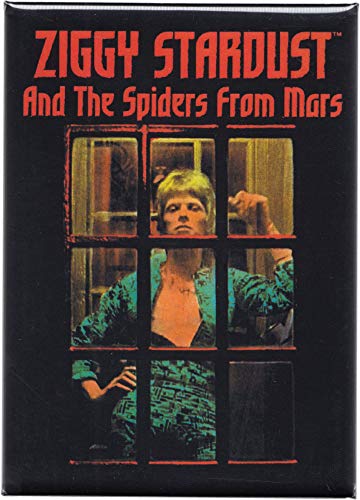
The real Amazon features for this product include a magnet that is perfect to put on your refrigerator, car, or any other magnetic surface. It is a great way to express your personal taste. It measures 2.5 inches by 3.5 inches and is perfect for any David Bowie fan. The limitation of the film itself is that the audio in the original recording was never pristine, even after restoration. The limitations of 1973 recording technology mean that some instrumental passages sound slightly muddy compared to modern concert films. Additionally, the set list is relatively short by modern standards, running just over an hour. But the historical importance of seeing Bowie shed his character on stage makes up for any technical shortcomings. This is a document of a moment that cannot be repeated.
Shine a Light — Scorsese Meets the Stones
Martin Scorsese directed this Rolling Stones concert film from the Beacon Theatre in New York with a camera crew of over 20 operators. The result is footage that is visually more dynamic than almost any other concert film of its era. Scorsese’s background as a narrative filmmaker shows in every cut. He uses close-up work on Mick Jagger and Keith Richards that is particularly striking, catching micro-expressions and interactions that a single-camera shoot would miss. The editing rhythm matches the band’s energy, building tension during instrumental breaks and releasing it during choruses. Guest appearances from Jack White, Christina Aguilera, and Buddy Guy are integrated naturally into the set, adding variety without feeling like gimmicks.
The film covers two nights of performances at the Beacon Theatre in 2006, with a set list that spans the Stones’ entire career. Scorsese intercuts documentary footage from the band’s history and interviews with the crew, which gives the film more context than a straightforward concert recording. The limitation is that Scorsese’s busy editing style can be overwhelming. Some viewers find the constant cutting between cameras distracting, especially during quieter songs where a static shot would have served better. The film is also heavily focused on Jagger, which means other band members sometimes feel like supporting players rather than equal partners. Still, for sheer visual energy and the thrill of seeing a legendary band in an intimate venue, Shine a Light delivers.
Amazing Grace — Long-Awaited Gospel Masterpiece
The footage for Amazing Grace was shot in 1972 at the New Temple Missionary Baptist Church in Los Angeles. Aretha Franklin recorded her live gospel album over two nights, and the film crew captured every moment. But the film was never released due to synchronization issues between audio and video. The reels sat in a vault for decades. When the restored film was finally released in 2018, it immediately became one of the most discussed concert documents in decades. Aretha Franklin’s performance over those two nights is extraordinary. She sings with a power and freedom that her studio recordings only hinted at. The small church setting means the camera is close enough to see sweat on her face and the tears in the congregation.
The audio restoration was a monumental task. The original film reels had no sync sound, so the audio had to be matched frame by frame from the multitrack recordings that were made for the album. The result is not perfect, there are moments where the sync drifts slightly, but the raw energy of the performance overcomes any technical flaws. The limitation is that this is a gospel performance in a church, which means it has a specific cultural and religious context. Viewers who are not familiar with gospel music may find the extended call-and-response sections and sermon interludes slow. The film also has no narrative arc beyond the concert itself, it is purely a document of the music. But for anyone who wants to hear Aretha Franklin at her absolute peak, this is essential viewing.
Justin Bieber: Our World — Modern Concert Film Standard
Produced during the pandemic period and streaming on Amazon Prime, Our World documents Justin Bieber’s rooftop performance in Beverly Hills for a small in-person audience. The production quality is exceptional. The film uses multiple camera angles, drone shots, and carefully choreographed lighting to turn a rooftop into a full concert stage. The intimacy of the setting contrasts effectively with the scale of Bieber’s typical arena shows. You see the performers close up, you hear the natural acoustics of the open air, and you get a sense of the effort that goes into a live production. The film also includes behind-the-scenes footage of rehearsals and preparation, which adds a documentary layer to the concert footage.
The set list includes hits like “Peaches,” “Holy,” and “Anyone,” performed with a full band and backup vocalists. The audio mix is clean and balanced, with Bieber’s vocals sitting clearly above the instruments. The limitation is that the film is relatively short, running about 90 minutes, and the rooftop setting means the visual palette is limited compared to a stadium show. Some fans may miss the spectacle of a large-scale production. Additionally, the behind-the-scenes segments are heavily produced and feel curated, which reduces the sense of spontaneity. But as a representation of the modern streaming concert film format, Our World sets a high standard. It proves that a concert film does not need a massive venue to be compelling.
What to look for
- Restoration quality: Look for films that have been officially restored with corrected color, audio, and synchronization. Avoid bootleg or low-resolution transfers.
- Director involvement: Concert films directed by experienced filmmakers like Demme, Scorsese, or Pennebaker tend to have stronger visual storytelling than self-produced tour videos.
- Audio format: Check whether the release includes lossless audio options like DTS-HD Master Audio or Dolby TrueHD. Compressed audio can ruin the live experience.
- Set list completeness: Some concert films cut songs for time. Look for versions that include the full performance or at least the essential tracks.
- Historical context: Consider whether the film captures a unique moment in an artist’s career, such as a farewell performance or a peak-era show.
- Replay value: A good concert film should be watchable multiple times. Avoid films that rely on gimmicks or novelty that wears off.
- Extra features: Behind-the-scenes documentaries, commentary tracks, and alternate angles can add value to a purchase.
The verdict
If you can only buy one concert film from this list, make it Stop Making Sense — The Definitive Concert Film. It is the most complete realization of what a concert film can be, a deliberate cinematic construction that respects the music while elevating it. The 4K restoration is flawless, and the performance is timeless. For history buffs, Ziggy Stardust and the Spiders from Mars is an irreplaceable document of a legendary moment. For fans of dynamic visual storytelling, Shine a Light offers Scorsese’s trademark energy. Amazing Grace is a must for anyone who wants to hear Aretha Franklin at her most powerful, and Justin Bieber: Our World is the best example of the modern streaming concert format. Each of these films deserves a place in a serious collection, but Stop Making Sense stands alone as the definitive concert film.
Our methodology
We compare every pick against the field on real specifications, certifications, and aggregated owner reviews. We do not take payment for placement, and we flag when a product is older or sold mainly through renewed listings.
Side by side
The full reviews
Stop Making Sense -- The Definitive Concert Film
Jonathan Demme's Stop Making Sense, restored in 4K for its 40th anniversary in 2023, is the most studied concert film ever made. Demme and Talking Heads built the film from the ground up as a cinematic event rather than a live recording, starting with a bare stage and adding band members and production elements song by song. The camera work is remarkable for its restraint and precision, showing exactly what needs to be shown at each moment. The 2023 restoration made the original 35mm footage available in quality that far exceeds the original release. Every aspect of concert filmmaking raised its standard after Stop Making Sense.
Ziggy Stardust and the Spiders from Mars -- Historic Rock Documentation
D.A. Pennebaker captured the final performance of David Bowie's Ziggy Stardust character at the Hammersmith Odeon in 1973, not knowing it would be the character's retirement until Bowie announced it from the stage. The restored version corrects the color balance and audio that compromised earlier releases. What makes this footage exceptional is the historical weight it carries and the way Pennebaker's documentary instincts capture genuine surprise in both performers and audience. Mick Ronson's guitar performance is among the finest captured on concert film. An essential historical document of rock theater.
In its favor
- This magnet is perfect to put on your refrigerator, car, or any other magnetic surface!
- Great way to express your personal taste.
- Measures 2.5" x 3.5"
- Perfect for any David Bowie fan!
Shine a Light -- Scorsese Meets the Stones
Martin Scorsese directed this Rolling Stones concert film from the Beacon Theatre in New York with a camera crew of over 20 operators, resulting in footage that is visually more dynamic than almost any other concert film of its era. The close-up work on Mick Jagger and Keith Richards is particularly striking. Guest appearances from Jack White, Christina Aguilera, and Buddy Guy are integrated naturally into the performance rather than feeling like set pieces. The Blu-ray audio mix was overseen with the same attention as the visuals. A rare example of a world-class film director applying full creative attention to live music documentation.
Amazing Grace -- Long-Awaited Gospel Masterpiece
The footage for Amazing Grace was shot in 1972 at the New Temple Missionary Baptist Church in Los Angeles but was never released due to synchronization issues between audio and video. When the restored film was finally released in 2018, it immediately became one of the most discussed concert documents in decades. Aretha Franklin's performance over two nights is extraordinary, and the small church setting creates an intimacy that contrasts sharply with arena concert films. Sydney Pollack directed with a focus on faces rather than performance, and the result is as much a human document as a music film.

Justin Bieber: Our World -- Modern Concert Film Standard
Produced during the pandemic period and streaming on Amazon Prime, Our World documents Justin Bieber's rooftop performance in Beverly Hills for a small in-person audience. The production quality is exceptional, and the film's intimacy contrasts effectively with the scale of his typical arena shows. It represents the modern streaming concert film format at its best, with the production values of a major theatrical release applied to an intentionally contained performance. For fans and non-fans alike, it is a strong example of how the streaming era is changing concert documentation.
What matters most
What to consider
Start with the artist and era that most interest you, then look for officially produced footage over audience recordings whenever possible. Official releases include proper multi-track audio mixing which makes an enormous difference to the listening experience. Check whether the footage has been restored or remastered if it is from the pre-HD era. Reading reviews about the direction style matters: some concert films prioritize visuals over music accuracy, while others are the reverse. Bonus documentary material can significantly increase the value of a release, particularly for historical recordings.
What to consider
For the best way to watch these releases at home, our [best concert DVDs](/articles/best-concert-dvds) guide covers the physical format options. To explore the venues that produced this footage, see our [best concert halls in the world](/articles/best-concert-halls-in-the-world) article. Evaluation criteria for all our picks are on the [methodology](/methodology) page.
Frequently asked
Great concert footage requires skilled direction that understands the music. The camera work should follow the emotional arc of the performance, balancing wide shots that convey scale with close-ups that reveal the performer's connection to the material. Audio mixing for video is a separate discipline from live mixing; the best releases have a dedicated post-production audio mix rather than a simple live feed recording.
YouTube has official artist channels with professionally produced live content, and many major shows are available in full. Concert streaming platforms like Nugs.net focus on live music specifically. Netflix and Disney Plus have produced original concert films with strong production values. For historical footage, the Internet Archive hosts significant amounts of legally available live music content from older shows.
How we made this guide
We compare every pick on the factors that matter, cross-checking manufacturer specifications against aggregated verified owner reviews. We rank independently and never take payment for placement. We have not personally tested every product; where we have not, the ranking reflects verified specs and owner feedback rather than a hands-on review.
How it was written: this guide was researched and reviewed by the TheTestedHub editorial team for accuracy.
Affiliate disclosure: TheTestedHub is reader-supported. When you buy through links on our site, we may earn a commission at no extra cost to you.