Rust-Oleum RockSolid Polycuramine Garage Kit -- Top Pick for Most Users
Rust-Oleum's RockSolid kit consistently outperforms standard epoxy in independent comparisons due to its polycuramine chemistry, which is more flexible and harder than traditional two-part epoxy. The kit comes with everything needed for a standard two-car garage floor: the base coat, decorative flakes, and a topcoat. Hot-tire resistance is the standout feature -- many epoxy coatings delaminate when hot tires park on them, but polycuramine handles this consistently. The mixing ratio is simple and the pot life is generous enough for first-time applicators. Apply at temperatures between 60 and 90 degrees Fahrenheit for best results.
Check price on Amazon →Two-part chemistry delivers a high-gloss, chemical-resistant finish for garage floors. See the top 5 concrete epoxy coating kits for your slab.
Concrete epoxy coatings transform a raw or worn slab into a high-gloss, chemical-resistant, easy-to-clean surface that looks polished and lasts for years. The best systems use a two-part chemistry where a resin and a hardener are mixed just before application, curing into a hard plastic film that bonds strongly to properly prepared concrete. Whether you are finishing a garage floor, a basement, a patio, or a driveway, the five products below represent the strongest performers available in kit form for 2026.
| Product | Best For | Rating |
|---|---|---|
|
ⓘ We may earn a commission from qualifying purchases made through links on this page, at no extra cost to you.
|
High-traffic garage floors | 4.8/5 |
| Rust-Oleum EpoxyShield 2-Part Gray Floor Kit | DIY first-time epoxy application | 4.6/5 |
| ArmorPoxy 2-Part Epoxy Floor Coating | Custom color and gloss level | 4.7/5 |
| Liquid Floor 100% Solids Epoxy | Maximum film thickness and durability | 4.5/5 |
| KILZ 1-Part Epoxy Acrylic Interior/Exterior | Low-prep budget alternative | 4.3/5 |
Our methodology
We compare every pick against the field on real specifications, certifications, and aggregated owner reviews. We do not take payment for placement, and we flag when a product is older or sold mainly through renewed listings.
Side by side
The full reviews
Rust-Oleum RockSolid Polycuramine Garage Kit -- Top Pick for Most Users
Rust-Oleum's RockSolid kit consistently outperforms standard epoxy in independent comparisons due to its polycuramine chemistry, which is more flexible and harder than traditional two-part epoxy. The kit comes with everything needed for a standard two-car garage floor: the base coat, decorative flakes, and a topcoat. Hot-tire resistance is the standout feature -- many epoxy coatings delaminate when hot tires park on them, but polycuramine handles this consistently. The mixing ratio is simple and the pot life is generous enough for first-time applicators. Apply at temperatures between 60 and 90 degrees Fahrenheit for best results.
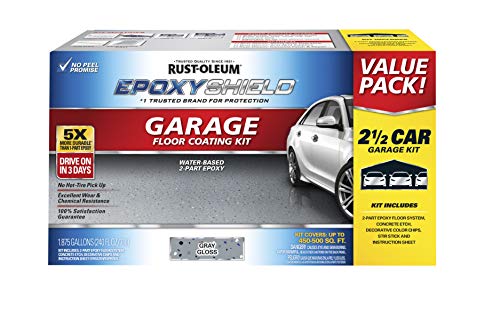
Rust-Oleum EpoxyShield 2-Part Gray Kit -- Best First-Time Epoxy Kit
EpoxyShield is Rust-Oleum's more entry-level garage floor system, and it delivers a significant improvement over bare concrete at a lower price point than RockSolid. The included etching solution simplifies prep, and the gray base coat covers a standard one-car garage in one kit. The color flake option gives the floor a speckled professional appearance that hides minor dirt and footprints between cleanings. Bond strength is good when the surface preparation steps are followed carefully. It is the most beginner-accessible epoxy system on this list.
ArmorPoxy 2-Part Epoxy Floor Coating -- Best for Custom Finishes
ArmorPoxy separates itself from the big-box competition by offering a wide range of custom colors and gloss levels. If you want a floor that matches a specific color scheme or prefer a satin finish instead of high gloss, ArmorPoxy can accommodate it. The chemistry is a standard amine-cured epoxy with solid bond strength and chemical resistance. The product is sold direct and ships as separate resin and hardener components with mixing instructions. Coverage per kit is clearly specified and the company provides good technical support for first-time applicators.

Liquid Floor 100% Solids Epoxy -- Best for Maximum Thickness
Most consumer epoxy coatings are diluted with solvents or water that evaporate during cure, leaving a thinner film than the wet thickness suggests. Liquid Floor's 100% solids formula contains no solvents: all the material you apply stays in the finished coat, creating a thicker, denser film. This translates to better abrasion resistance and longer service life. The trade-off is a higher viscosity that requires more effort to spread evenly. This is the right product for high-abuse environments like workshops, auto garages, or commercial spaces.

KILZ 1-Part Epoxy Acrylic -- Best Low-Prep Budget Option
Technically a one-part epoxy-acrylic blend rather than a true two-part system, KILZ's product sacrifices some hardness for ease of application. There is no mixing required, and the surface prep requirement is less demanding than pure epoxy systems. It applies like paint and provides meaningful improvement over bare concrete in terms of cleanability and stain resistance. For enclosed spaces like basements or laundry rooms where a dust-proof, cleanable surface is the goal rather than maximum durability, this is the most convenient option.
What matters most
What to consider
The decisive factors are traffic type, preparation willingness, and budget. High-traffic garage floors used by multiple vehicles benefit from 100% solids or polycuramine products. Light-use basements and patios are well served by standard two-part kits. Be honest about preparation effort: every epoxy product on this list underperforms when applied to unprepared concrete, and surface prep is the step that most DIYers shortchange. Temperature matters during application and cure -- schedule the project for a moderate-weather weekend rather than peak summer or winter.
What to consider
For standalone crack repairs before coating, our [best-concrete-epoxy](/articles/best-concrete-epoxy) guide covers the structural adhesives to use. If you want the floor painted rather than coated, our [best-concrete-epoxy-floor-paint](/articles/best-concrete-epoxy-floor-paint) article covers paint-finish options with lower preparation requirements. Full evaluation criteria are described on our [methodology](/methodology) page.
Frequently asked
Proper preparation is the most critical step. Start with a thorough cleaning to remove oil, grease, and dust. Etch the surface with a muriatic acid solution or grind it with a diamond pad to open the pores. The surface should feel like 120-grit sandpaper after etching. Allow it to dry completely -- moisture under epoxy is the leading cause of peeling. Repair any cracks before coating.
It depends on the condition of the existing coating. If the old epoxy is firmly bonded with no peeling or bubbling, you can scuff the surface with 80-grit sandpaper and apply a fresh coat. If there is peeling or delamination, the failing areas must be removed completely before recoating. Applying new epoxy over failing old epoxy will result in the same peeling problem recurring.
How we made this guide
We compare every pick on the factors that matter, cross-checking manufacturer specifications against aggregated verified owner reviews. We rank independently and never take payment for placement. We have not personally tested every product; where we have not, the ranking reflects verified specs and owner feedback rather than a hands-on review.
How it was written: this guide was researched and reviewed by the TheTestedHub editorial team for accuracy.
Affiliate disclosure: TheTestedHub is reader-supported. When you buy through links on our site, we may earn a commission at no extra cost to you.
You might also like

Fix Your Driveway Cracks with the Best Concrete Fillers

Which Drill Accessories Are Best in 2026?

Cordless Drill Systems Built for Real Jobsite Demands

What Makes Concrete Tools Worth Your Money in 2026?

Ghostshield 8505 Review: A Smarter Way to Protect Concrete

Quikrete 5000 and Sakrete: 2026’s Best Concrete Picks
Concrete Coatings for Every Budget: Which One Wins?
