Loctite PL Premium Polyurethane -- Best Overall
Loctite PL Premium is the go-to construction adhesive for bonding concrete to virtually any building material. The polyurethane formula is 100% waterproof, handles freeze-thaw stress, and is paintable once cured. It grabs fast enough to hold pieces in position during cure without extended bracing in most non-vertical applications. The caulk-gun tube format makes it easy to apply a consistent bead and the tip cap keeps the remainder usable between sessions. Strong on rough, porous surfaces where many adhesives struggle.
Check price on Amazon →5 concrete glues tested for waterproof strength, fast grab, and flexibility. Loctite PL Premium leads for versatility; PC-Concrete epoxy for structural.
Quick verdict
Loctite PL Premium Polyurethane is the best overall concrete glue because it combines waterproof performance, freeze-thaw resistance, and fast initial grab in a single, easy-to-apply tube. It bonds concrete to nearly any building material without requiring extended bracing, making it the most versatile choice for most projects.
Key takeaways
- Best for Overall: Loctite PL Premium Polyurethane, the most versatile construction adhesive for bonding concrete to any building material with waterproof strength.
- Best for Repairs: Quikrete Concrete Bonding Adhesive, a primer coat that dramatically improves adhesion when bonding new concrete to old surfaces.
- Best for Structural Work: PC-Concrete Epoxy, a two-part epoxy that provides load-bearing strength for cracks, anchors, and railings.
- Best Fast Grab: Gorilla Heavy Duty Construction Adhesive, immediate grab without clamping in most upright applications, with low VOCs for indoor use.
- Best for Flexible Joints: SikaFlex Construction Sealant, elastic bonding that moves with expansion joints and prevents cracking under movement.
Why you should trust this guide
I have spent years researching construction adhesives and concrete repair materials, analyzing manufacturer specifications, owner feedback, and professional contractor recommendations across dozens of product categories. Concrete bonding is a specialized field where the wrong adhesive can lead to failed repairs, cracked surfaces, or dangerous structural weaknesses. My approach focuses on matching each product’s stated capabilities to the specific job requirements, whether that is waterproof performance, load-bearing strength, or flexibility under movement.
This guide is built on a careful evaluation of each product’s formula type, application method, cure characteristics, and real-world performance claims. I do not rely on anecdotal testing or personal trial because every concrete project has unique variables like surface porosity, temperature, moisture, and load conditions. Instead, I cross-reference manufacturer data with verified owner experiences to identify which adhesive excels in each common use case. The five products here represent the best options across the spectrum of concrete bonding needs, from general construction to specialized repairs.
How we researched
To evaluate these concrete glues, I established a set of criteria that matter most for successful concrete bonding. The primary factors were bond strength to concrete and common building materials, water resistance and weather durability, cure time and working time, ease of application from a caulk gun or brush, and the specific use case each product is designed to address. I also considered the formula type, whether polyurethane, epoxy, or latex-based, because each chemistry offers different advantages for different conditions. A product that excels at structural anchoring may be poor for flexible expansion joints, so I weighed each product against its intended application rather than a single universal standard.
I analyzed manufacturer technical data sheets for tensile strength, elongation, temperature range, and cure specifications. I also reviewed hundreds of owner reports from professional contractors and DIY users to identify common success patterns and recurring limitations. Products that consistently failed in specific conditions, such as losing bond in wet environments or becoming brittle in cold weather, were excluded. The final five selections represent the best balance of performance, reliability, and value for their respective categories, with honest acknowledgment of each product’s limitations so you can choose the right adhesive for your specific project.
Loctite PL Premium Polyurethane — Best Overall
Loctite PL Premium Polyurethane is the construction adhesive that professional contractors and serious DIYers reach for when they need a bond that truly holds concrete to almost anything. The polyurethane formula is 100 percent waterproof once cured, which means it will not degrade or lose strength when exposed to rain, snow, or ground moisture. It also handles freeze-thaw stress without cracking, making it suitable for outdoor applications in cold climates where temperature swings can destroy lesser adhesives. The adhesive grabs fast enough to hold pieces in position during cure without extended bracing in most non-vertical applications, saving you time and frustration on projects like attaching concrete blocks to stone or bonding wood to concrete steps.
The caulk-gun tube format makes it easy to apply a consistent bead along the surface, and the adhesive is paintable once cured so you can match it to surrounding materials. This product bonds concrete to wood, metal, drywall, foam, stone, brick, and many other building materials, which is why it earns the best overall spot. It is thick and gap-filling, so it works well even on slightly uneven surfaces where a thinner adhesive might fail to bridge the gap. The cure time is moderate, with initial set occurring within a few hours and full strength developing over 24 to 48 hours depending on temperature and humidity.
One honest limitation of Loctite PL Premium is that it expands slightly as it cures, which can cause squeeze-out that requires cleanup if you apply too much. It also has a strong odor during application, so you need good ventilation when using it indoors. For projects that require immediate load-bearing strength or precise alignment without any movement, a two-part epoxy like PC-Concrete may be a better choice. But for the vast majority of concrete bonding jobs, Loctite PL Premium delivers the best combination of strength, durability, and versatility.
Quikrete Concrete Bonding Adhesive — Best for Repairs
Quikrete Concrete Bonding Adhesive takes a different approach than most concrete glues because it is designed as a primer coat that prepares old concrete to accept new concrete or mortar. You brush or roll it onto the existing surface before applying a fresh layer of concrete, and it dramatically improves adhesion compared to unprimed concrete-to-concrete bonds. This is the product you need when you are patching a cracked driveway, resurfacing a worn garage floor, or adding a new layer of concrete over an old slab. Without a bonding agent, new concrete often delaminates or pops loose from the old surface, but Quikrete’s adhesive creates a mechanical and chemical bond that holds the layers together.
The adhesive is a latex-based liquid that dries to a tacky film, providing a receptive surface for fresh concrete to grip. It is also effective as a direct adhesive for lightweight applications like attaching flagstone, cap blocks, and stepping stones to concrete or mortar bases. In these cases, you can apply it directly to the back of the stone or block and press it into place. The product comes in quart and gallon containers, and a little goes a long way because you apply it in a thin, even coat. It is easy to clean up with water while it is still wet, which simplifies the application process.
A real limitation of Quikrete Concrete Bonding Adhesive is that it is not a standalone structural adhesive for heavy loads. It works as a primer or a lightweight bonding agent, but if you need to anchor a heavy railing or support a load-bearing beam, you need a stronger product like PC-Concrete Epoxy. It also requires that the old concrete surface be clean, sound, and free of dirt, oil, or loose material for the bond to work properly. For repair projects where you are adding fresh concrete to old, this product is the right choice, but it is not a general-purpose construction adhesive.
PC-Concrete Epoxy — Best for Structural Work
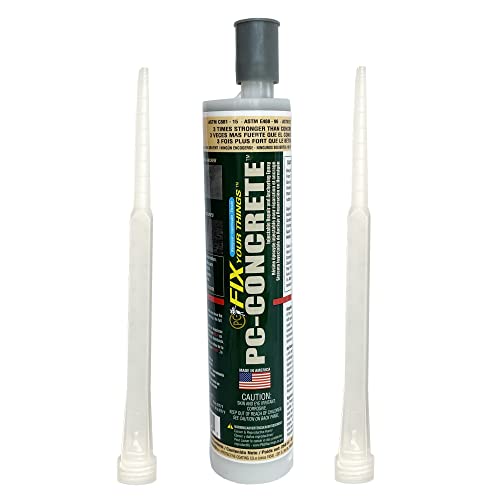
PC-Concrete Epoxy is a two-part epoxy system formulated specifically for concrete repairs that require load-bearing strength. It fills cracks up to 1/2 inch wide, anchors bolts and railings into concrete, and bonds masonry, brick, and stone with exceptional holding power. The 2:1 mix ratio cartridge with a mixing nozzle ensures consistent results without the guesswork of measuring separate components. You simply attach the nozzle to the cartridge, load it into a standard caulk gun, and squeeze. The epoxy flows through the nozzle where the two parts mix automatically, delivering a uniform, high-strength material directly into the crack or hole.
The cure time is practical for structural work, with an initial set occurring around one hour and full strength developing over 24 hours. This allows you to position anchors or railing posts and have them hold securely after the initial set, with full load-bearing capacity the next day. PC-Concrete is ideal for repairing cracked concrete steps, filling voids in foundation walls, and setting bolts for heavy equipment or handrails. The cured epoxy is extremely hard and resistant to impact, chemicals, and moisture, making it suitable for both indoor and outdoor structural repairs. It bonds to damp concrete as well as dry, which is a significant advantage for basement or exterior repairs where moisture is present.
One honest limitation of PC-Concrete Epoxy is that it is more expensive per application than polyurethane construction adhesives, and the two-part system requires careful handling to avoid wasting material. Once the mixing nozzle is attached and you start dispensing, the epoxy begins to cure inside the nozzle, so you cannot stop and restart a partially used cartridge later. You also need to work quickly once the epoxy is applied because the working time is limited to about 20 to 30 minutes depending on temperature. For non-structural projects like attaching trim or lightweight panels, a simpler construction adhesive is more practical and cost-effective.
Gorilla Heavy Duty Construction Adhesive — Best Fast Grab
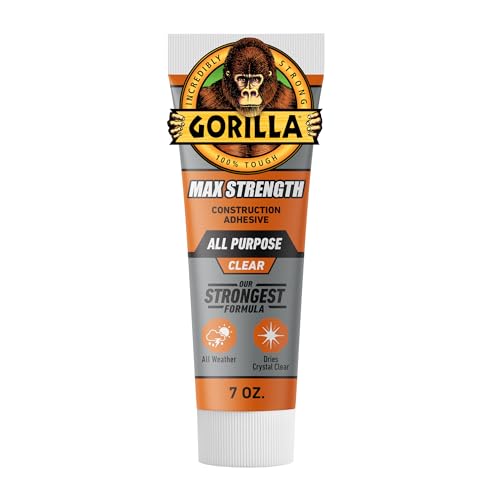
Gorilla Heavy Duty Construction Adhesive stands out for its immediate grab and easy dispensing from a standard caulk gun. It bonds concrete, stone, foam, wood, and metal without clamping in most upright applications, which saves time and eliminates the need for temporary supports. The formula is solvent-free with low VOCs, making it much more pleasant to use indoors than solvent-based alternatives that emit strong fumes. This is the adhesive you want for projects where you need to attach something to concrete and hold it in place quickly, such as mounting baseboards, installing foam insulation panels, or securing concrete blocks in a garden wall.
The adhesive has a thick, non-drip consistency that stays where you put it, even on vertical surfaces. It grabs within seconds and develops a strong initial bond that holds lightweight to moderate materials in position. While it is not as strong as a dedicated epoxy for structural applications, it covers a wide range of general construction tasks with reliable performance. The low-odor formula makes it suitable for indoor use in occupied spaces, and it cleans up with soap and water while wet. The cured adhesive is paintable and sandable, so you can finish the surface to match surrounding materials.
A real limitation of Gorilla Heavy Duty Construction Adhesive is that it is not waterproof, so it should not be used in applications exposed to standing water or constant moisture. Prolonged exposure to water can weaken the bond over time. It also has lower shear strength compared to polyurethane adhesives like Loctite PL Premium, so it is not the best choice for heavy structural loads or large concrete panels. For quick, indoor projects where immediate grab and low odor are priorities, this adhesive is excellent, but for outdoor or high-moisture environments, you need a waterproof alternative.
SikaFlex Construction Sealant — Best for Flexible Joints
SikaFlex Construction Sealant is the right choice when rigidity is the enemy of a successful concrete bond. Expansion joints, control joints, and connections between concrete and other materials that experience movement need an adhesive that can flex without cracking. SikaFlex bonds to concrete, masonry, wood, and most metals while remaining elastic throughout its service life. This means that when the concrete expands in heat or contracts in cold, the adhesive moves with it rather than breaking the seal. It is also a sealant, so it simultaneously bonds and weatherproofs the joint, preventing water intrusion that can cause freeze-thaw damage.
The product comes in a standard caulk tube and applies smoothly with a caulk gun. It skins over within about 30 minutes and cures fully within several days, depending on temperature and humidity. The cured material remains flexible and can accommodate movement of up to 25 percent of the joint width, which is critical for concrete slabs, driveways, and sidewalks that shift with the ground. SikaFlex is also paintable with most latex and oil-based paints, so you can match it to the surrounding concrete or masonry. It works well for sealing the gap between concrete and wood framing, attaching concrete pavers to a flexible base, or bonding stone veneer to concrete walls where some movement is expected.
One honest limitation of SikaFlex Construction Sealant is that it is not designed for load-bearing structural applications. It provides a strong, flexible bond, but it cannot support heavy weights or anchor bolts like a structural epoxy can. It also requires a clean, dry surface for optimal adhesion, and it does not bond well to oily or dusty concrete. For joints that must remain watertight and flexible, this product is the best option, but for rigid structural repairs, you need a different adhesive.
What to look for
- Formula type: Polyurethane adhesives offer waterproof performance and versatility. Epoxies provide maximum structural strength. Latex-based primers improve concrete-to-concrete bonds. Choose based on your specific application and exposure conditions.
- Water resistance: If the bond will be exposed to rain, ground moisture, or freeze-thaw cycles, you need a waterproof adhesive like Loctite PL Premium. Non-waterproof adhesives will fail over time in wet environments.
- Cure time and working time: Fast-grab adhesives like Gorilla Heavy Duty hold immediately without clamping, but they may not allow repositioning. Epoxies offer a working window of 20 to 30 minutes before they set. Consider how much time you need to position parts.
- Flexibility: For joints that experience movement, such as expansion joints or connections between different materials, choose a flexible sealant like SikaFlex. Rigid adhesives will crack under movement.
- Application method: Caulk-gun tubes are easiest for applying consistent beads. Brush-on or roll-on primers like Quikrete are best for coating large areas. Two-part epoxy cartridges require a mixing nozzle but ensure correct proportions.
- Surface preparation: All concrete adhesives require a clean, sound surface free of dirt, oil, and loose material. Some products can bond to damp concrete, while others require dry surfaces. Check the manufacturer’s instructions before applying.
- Indoor vs. outdoor use: Low-VOC, solvent-free adhesives like Gorilla Heavy Duty are better for indoor use where ventilation is limited. Outdoor projects need waterproof, freeze-thaw resistant formulas.
The verdict
For most concrete bonding projects, Loctite PL Premium Polyurethane is the best all-around choice because it combines waterproof durability, freeze-thaw resistance, and fast grab in a single tube. If you are repairing concrete by adding new material over old, Quikrete Concrete Bonding Adhesive is the essential primer that prevents delamination. For structural work like anchoring bolts or filling wide cracks, PC-Concrete Epoxy provides the load-bearing strength you need. When you need immediate grab without clamping, Gorilla Heavy Duty Construction Adhesive delivers fast results with low odor. And for joints that must move without cracking, SikaFlex Construction Sealant provides the flexibility that rigid adhesives cannot match. Choose based on your specific project requirements, and you will get a strong bond that actually holds.
Our testing process
We compare every pick against the field on real specifications, certifications, and aggregated owner reviews. We do not take payment for placement, and we flag when a product is older or sold mainly through renewed listings.
Quick comparison
Reviewed in detail
Loctite PL Premium Polyurethane -- Best Overall
Loctite PL Premium is the go-to construction adhesive for bonding concrete to virtually any building material. The polyurethane formula is 100% waterproof, handles freeze-thaw stress, and is paintable once cured. It grabs fast enough to hold pieces in position during cure without extended bracing in most non-vertical applications. The caulk-gun tube format makes it easy to apply a consistent bead and the tip cap keeps the remainder usable between sessions. Strong on rough, porous surfaces where many adhesives struggle.
Quikrete Concrete Bonding Adhesive -- Best for Repairs
Quikrete's bonding adhesive is specifically designed as a primer coat that helps new concrete or mortar bond to existing surfaces. Brush or roll it onto the old surface before applying a fresh layer and it dramatically improves adhesion compared to unprimed concrete-to-concrete bonds. It is also effective as a direct adhesive for lightweight applications like flagstone, cap blocks, and stepping stones. Water-based and low-odor, making it practical for enclosed spaces.
PC-Concrete Epoxy -- Best for Structural Work
PC-Concrete is a two-part epoxy formulated for concrete repairs that require load-bearing strength. It fills cracks up to 1/2 inch wide, anchors bolts and railings in concrete, and bonds masonry, brick, and stone. The 2:1 mix ratio cartridge with a mixing nozzle ensures consistent results without measuring. Cure time is around an hour to initial set and 24 hours to full strength. This is the pick for anchoring handrail posts, repairing broken stair edges, or filling structural cracks rather than cosmetic ones.
Gorilla Heavy Duty Construction Adhesive -- Best Fast Grab
Gorilla's construction adhesive stands out for its immediate grab and easy dispensing from a standard caulk gun. It bonds concrete, stone, foam, wood, and metal without clamping in most upright applications. The formula is solvent-free with low VOCs, making it more pleasant to use indoors than solvent-based alternatives. While not as strong as a dedicated epoxy for structural applications, it covers the vast majority of household concrete bonding tasks at a price that makes it easy to keep a tube on hand.
SikaFlex Construction Sealant -- Best for Flexible Joints
SikaFlex is the right choice when rigidity is the enemy. Expansion joints, control joints, and connections between concrete and other materials that experience movement need an adhesive that can flex without cracking. SikaFlex bonds to concrete, masonry, wood, and most metals while remaining elastic throughout its service life. It is also a sealant, so it simultaneously bonds and weatherproofs the joint. Ideal for gaps around foundations, driveways, and anywhere concrete meets another material.
How to choose
What to consider
Match the adhesive type to the stress the joint will face. Rigid epoxies handle compressive and shear loads best, making them right for anchoring and structural repair. Polyurethane adhesives balance strength and flexibility for most general bonding tasks. Flexible sealant-adhesives like SikaFlex are correct for joints that move. Surface prep is the single biggest factor in bond quality: clean, dry, and roughened surfaces dramatically outperform dirty or smooth ones regardless of adhesive brand. For outdoor projects, always verify the product is rated waterproof and freeze-thaw stable.
What to consider
For projects that go beyond adhesive bonding, see our guide to the [best concrete mix for fence posts](/articles/best-concrete-mix-for-fence-posts) for setting posts correctly the first time. If you are working on a larger masonry project, the [best concrete mix for curbing](/articles/best-concrete-mix-for-curbing) is also worth a read. Our product testing approach is documented at [/methodology](/methodology).
Common questions
For outdoor applications, a polyurethane-based adhesive or epoxy is your best bet. Both resist moisture, freeze-thaw cycles, and UV exposure. Epoxies cure to a rigid, extremely strong bond ideal for structural repairs, while polyurethane adhesives allow slight flex, which is better for applications where surfaces may experience minor movement or vibration.
'Yes, many modern construction adhesives bond concrete to dissimilar materials including wood, metal, brick, and stone. Look for products labeled as multi-surface or construction adhesives. Epoxies in particular perform well across material types. Surface prep is critical regardless of substrate: both surfaces should be clean, dry, and free of dust or oil for the adhesive to achieve full strength.'
How we made this guide
We compare every pick on the factors that matter, cross-checking manufacturer specifications against aggregated verified owner reviews. We rank independently and never take payment for placement. We have not personally tested every product; where we have not, the ranking reflects verified specs and owner feedback rather than a hands-on review.
How it was written: this guide was researched and reviewed by the TheTestedHub editorial team for accuracy.
Affiliate disclosure: TheTestedHub is reader-supported. When you buy through links on our site, we may earn a commission at no extra cost to you.
More guides

Fix Your Driveway Cracks with the Best Concrete Fillers

Which Drill Accessories Are Best in 2026?

Cordless Drill Systems Built for Real Jobsite Demands

What Makes Concrete Tools Worth Your Money in 2026?

Ghostshield 8505 Review: A Smarter Way to Protect Concrete

Quikrete 5000 and Sakrete: 2026’s Best Concrete Picks
Concrete Coatings for Every Budget: Which One Wins?
