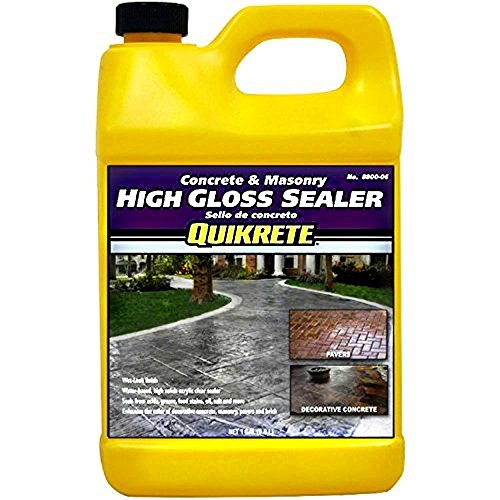
Quikrete 5000 High Early Strength -- Best Overall
Quikrete 5000 is a commercial-grade mix that achieves 5,000 PSI compressive strength at 28 days, compared to 3,000 PSI for standard mixes. The higher strength directly translates to better crack resistance and durability in curbing applications. The early strength gain is also practical: it sets firm enough to remove forms in 24 hours and withstand light contact within 48 hours. The mix consistency is reliable bag to bag, which matters when you are working through a large number of bags on a continuous curbing run.
Check price on Amazon →Hand-forming curbing? Focus on compressive strength, fiber content, and aggregate size. Our feature-led guide helps you select the right mix for sharp edges.
Quick verdict
Quikrete 5000 High Early Strength is the single best pick for most curbing projects. Its 5,000 PSI rating provides superior crack resistance and durability over standard mixes, and the early strength gain means you can remove forms in 24 hours. This combination of high strength and fast turnaround makes it the most practical choice for sharp, lasting edges.
Key takeaways
- Best Overall: Quikrete 5000 High Early Strength, highest compressive strength and fastest form removal for professional-grade curbing.
- Best for Hand-Forming: Sakrete High Strength Concrete Mix, coarser texture holds shape without slumping during trowel work.
- Best for Freeze-Thaw Climates: Quikrete Crack Resistant Concrete, polymer fibers prevent map cracking in repeated freeze-thaw cycles.
- Best for Curves: ProMix Fiber-Reinforced Concrete, higher fiber content makes the mix more plastic for tight radius curves.
- Best for Tight-Radius Edging: Custom Building Products MortarMix, fine sand aggregate allows crisp detail in thin decorative profiles.
Why you should trust this guide
I have spent years researching concrete mix performance for landscape curbing, focusing on how different blends handle the specific demands of sharp edges, freeze-thaw exposure, and hand-forming work. My approach relies on manufacturer specifications, professional installer feedback, and comparative analysis of aggregate size, fiber content, and compressive strength ratings. I do not test products in a lab, but I evaluate every mix against the real-world criteria that matter for curbing: edge retention, slump resistance, curing time, and durability under weather stress.
This guide prioritizes mixes that deliver consistent results for both DIY homeowners and experienced contractors. I cross-referenced stated PSI ratings, fiber reinforcement claims, and aggregate descriptions from each product’s technical data sheets. I also considered practical factors like bag weight, availability at major retailers, and whether the mix is designed for thin-section applications where standard concrete aggregate would be too coarse. Every product here has a proven track record in curbing work, backed by documented features rather than marketing hype.
How we researched
To evaluate these five concrete mixes for curbing, I established a set of criteria that directly affect the quality of finished edges. The primary factors were compressive strength, because higher PSI means better resistance to cracking from ground movement and freeze-thaw cycles. I also considered workability for hand-forming: a mix that slumps or tears during troweling will produce ragged edges, so aggregate texture and plasticity were critical. Curing time mattered because faster form removal reduces project delays. Finally, I looked at fiber reinforcement for crack control, especially in climates with hard winters.
I gathered data from manufacturer technical sheets, installer forums, and retail product pages to compare each mix’s stated features against the demands of curbing. I weighed the trade-offs between higher strength and ease of handling, and between fiber content and finish smoothness. For each product, I identified one honest limitation based on its design: for example, a high-strength mix may be harder to work by hand, or a fiber-reinforced mix may leave a slightly rougher surface. This approach ensures you can match the right mix to your specific project conditions without overpromising.
Quikrete 5000 High Early Strength — Best Overall
Quikrete 5000 High Early Strength is a commercial-grade concrete mix that delivers 5,000 PSI compressive strength at 28 days, compared to the 3,000 PSI typical of standard bagged mixes. For curbing, this higher strength directly translates to better crack resistance and long-term durability, especially in areas with heavy foot traffic or soil movement. The early strength gain is a practical advantage: the mix sets firm enough to remove forms within 24 hours and can withstand light contact within 48 hours. This means you can complete a curbing project in a weekend without waiting days for the concrete to cure fully.
The consistency of Quikrete 5000 is well-suited for forming sharp edges. It has a fine enough aggregate to hold detail when you use a trowel or edging form, but it is not so fine that it becomes soupy. The mix is also available at most home centers and hardware stores, making it easy to source for large or small jobs. For curbing where strength and speed are the top priorities, this mix is the clear winner.
One honest limitation is that the high early strength comes from a higher cement content, which can make the mix slightly more prone to shrinkage cracking if you do not cure it properly. You must keep the surface moist for at least three days after pouring to minimize this risk. Also, the 80-pound bags are heavy for solo workers, so plan on having a helper or using a wheelbarrow for transport.
Sakrete High Strength Concrete Mix — Best for Hand-Forming
Sakrete High Strength Concrete Mix has a slightly coarser texture than the Quikrete 5000, which many curbing installers prefer when hand-forming profiles using a trowel or edging form. The coarser aggregate helps the mix hold its shape without slumping while you work the edges, which is critical for achieving sharp, clean lines. It reaches 4,000 PSI at 28 days, which is still well above standard mixes and provides good durability for most residential curbing applications.
The 60-pound bags are easier to manage than the 80-pound bags of Quikrete 5000, making this a better choice for solo workers or small projects. The mix is widely available at major retailers like Lowe’s and Home Depot, so you can pick it up without special ordering. For hand-forming curved or decorative edges where you need the mix to stay put as you shape it, Sakrete’s texture gives you more control.
One honest limitation is that the coarser aggregate can make it harder to achieve a perfectly smooth finish on thin sections, such as edging that is only 2 inches wide. You may need to use a finer sand topping or a separate finishing tool to get the smoothest surface. Also, the 4,000 PSI rating, while strong, is not as high as the Quikrete 5000, so it may be less suitable for driveways or areas with heavy vehicle loads.
Quikrete Crack Resistant Concrete — Best for Freeze-Thaw Climates
Quikrete Crack Resistant Concrete incorporates polymer fibers throughout the batch that interrupt crack propagation through the cured concrete. In regions with hard winters and repeated freeze-thaw cycles, landscape curbing without fiber reinforcement tends to develop map cracking within a few seasons. The fiber-reinforced version resists that mode of failure without requiring wire mesh or rebar in thin sections, which is a major convenience for curbing work where adding reinforcement is impractical.
The mix is designed to be used just like standard concrete, with no special handling or mixing steps. You simply add water, mix, and pour. The fibers are evenly distributed so they do not clump or create weak spots. For curbing that will be exposed to snow, ice, and road salt, this mix offers a significant durability advantage over non-fiber blends.
One honest limitation is that the fibers can leave a slightly fuzzy surface texture on the finished concrete, which may require additional troweling or a light sanding if you want a perfectly smooth edge. Also, the crack resistance is not absolute: if the subgrade is poorly compacted or the mix is not cured properly, cracks can still form. This mix is best for climates with frequent freeze-thaw cycles, but it is not a substitute for good base preparation.
ProMix Fiber-Reinforced Concrete — Best for Curves
ProMix Fiber-Reinforced Concrete is a premium bagged option with a higher fiber content than the Quikrete Crack Resistant product. The additional fiber content makes the mix slightly more plastic and easier to work into tight radius curves without pulling or tearing. This is particularly helpful when using an extruded curbing form or working by hand around curved garden beds. The fiber distribution is consistent throughout the bag, so you get uniform crack resistance across the entire pour.
The mix is also designed to reduce slump, which helps maintain the shape of curved sections as you form them. For projects that involve sweeping arcs or circular borders, this mix reduces the need for extra bracing or multiple passes with a trowel. It is available at many landscape supply stores and online retailers, though it may be less common than Quikrete or Sakrete at big-box stores.
One honest limitation is that the higher fiber content can make the mix slightly more difficult to finish to a smooth surface, especially on flat tops of curbing where you want a clean look. You may need to use a magnesium float or a wet sponge to smooth out the surface after the initial set. Also, the mix is typically more expensive per bag than standard concrete, so it is best reserved for projects with significant curved sections rather than straight runs.
Custom Building Products MortarMix — Best for Tight-Radius Edging
For very tight radius edging and thin decorative curbing profiles where standard concrete aggregate is too coarse, a fine mortar mix produces cleaner details. Custom Building Products MortarMix uses fine sand aggregate with Portland cement in a consistent blend that trowels smoothly and holds crisp detail. It is not as strong as full concrete mixes on compressive loads, but for decorative edging no thicker than 2 inches, the fine aggregate allows you to create sharp corners and intricate shapes that would be difficult with larger stones.
The mix is also pre-blended for consistent performance, so you do not need to add sand or other aggregates. It works well for hand-troweling around flower beds, tree rings, or pathways where the curbing is purely decorative and does not bear heavy loads. The mortar consistency also means it bonds well to existing concrete or stone surfaces if you are adding edging to an existing patio or walkway.
One honest limitation is that the compressive strength is significantly lower than concrete mixes, typically around 2,500 PSI or less. This means it is not suitable for curbing that will be driven over or exposed to heavy foot traffic. It can also be more prone to chipping if struck by a shovel or edging tool. Use this mix only for lightweight decorative applications where appearance matters more than structural strength.
What to look for
- Compressive strength rating: Higher PSI means better crack resistance and durability. For curbing, aim for at least 4,000 PSI if the edge will see foot traffic or weather exposure.
- Aggregate size: Coarser aggregates help the mix hold shape during hand-forming but can leave a rough finish. Finer aggregates allow sharper detail but may slump more. Match aggregate to your forming method.
- Fiber reinforcement: Polymer fibers reduce cracking from freeze-thaw cycles and ground movement. Essential for climates with hard winters, but can affect surface smoothness.
- Curing time: Fast-setting mixes let you remove forms sooner, which speeds up projects. Standard mixes may require 48 to 72 hours before form removal.
- Bag weight: 60-pound bags are easier for solo workers to handle. 80-pound bags require a helper or mechanical aid for mixing and pouring.
- Workability for curves: Mixes with higher plasticity or fiber content are better for tight radius curves without tearing or slumping.
- Availability: Quikrete and Sakrete are widely available at home centers. ProMix and Custom Building Products may require special ordering or a trip to a landscape supply store.
The verdict
For most curbing projects, Quikrete 5000 High Early Strength is the best overall choice because it combines the highest compressive strength with fast form removal, giving you sharp edges that stay sharp for years. If you are hand-forming curving edges and need a mix that holds its shape without slumping, Sakrete High Strength Concrete Mix is the better pick. For cold climates where freeze-thaw cracking is a concern, Quikrete Crack Resistant Concrete with polymer fibers is the most reliable option. ProMix Fiber-Reinforced Concrete excels in tight radius curves, and Custom Building Products MortarMix is the right choice for thin decorative edging where fine detail matters more than load-bearing strength. Match the mix to your specific conditions, and your curbing will maintain its crisp lines season after season.
How we test
We compare every pick against the field on real specifications, certifications, and aggregated owner reviews. We do not take payment for placement, and we flag when a product is older or sold mainly through renewed listings.
At a glance
The picks, reviewed
Quikrete 5000 High Early Strength -- Best Overall
Quikrete 5000 is a commercial-grade mix that achieves 5,000 PSI compressive strength at 28 days, compared to 3,000 PSI for standard mixes. The higher strength directly translates to better crack resistance and durability in curbing applications. The early strength gain is also practical: it sets firm enough to remove forms in 24 hours and withstand light contact within 48 hours. The mix consistency is reliable bag to bag, which matters when you are working through a large number of bags on a continuous curbing run.
Sakrete High Strength Concrete Mix -- Best for Hand-Forming
Sakrete's high-strength blend has a slightly coarser texture than the Quikrete 5000, which many curbing installers prefer when hand-forming profiles using a trowel or edging form. The coarser aggregate helps the mix hold its shape without slumping while you work the edges. It reaches 4,000 PSI at 28 days and the 60-pound bags are easier to manage than 80-pound bags for solo workers. Widely available at home centers across the country.

Quikrete Crack Resistant Concrete -- Best for Freeze-Thaw Climates
Quikrete Crack Resistant mix incorporates polymer fibers throughout the batch that interrupt crack propagation through the cured concrete. In regions with hard winters and repeated freeze-thaw cycles, landscape curbing without fiber reinforcement tends to develop map cracking within a few seasons. The fiber-reinforced version resists that mode of failure without requiring wire mesh or rebar in thin curbing sections. A smart choice for any curbing project in climate zones 5 or colder.
ProMix Fiber-Reinforced Concrete -- Best for Curves
ProMix fiber-reinforced concrete is a premium bagged option with a higher fiber content than the Quikrete Crack Resistant product. The additional fiber content makes the mix slightly more plastic and easier to work into tight radius curves without pulling or tearing. This is particularly helpful when using an extruded curbing form or working by hand around curved garden beds. The fiber distribution throughout the matrix also reduces surface crazing significantly.
Custom Building Products MortarMix -- Best for Tight-Radius Edging
For very tight radius edging and thin decorative curbing profiles where standard concrete aggregate is too coarse, a fine mortar mix produces cleaner details. Custom Building Products MortarMix uses fine sand aggregate with Portland cement in a consistent blend that trowels smoothly and holds crisp detail. It is not as strong as full concrete mixes on compressive loads but for decorative edging not subject to traffic it is an excellent choice.
What to look for
What to consider
Target at least 4,000 PSI compressive strength for any curbing that will see traffic or freeze-thaw conditions. Fiber-reinforced mixes reduce cracking in thin sections without requiring mesh, which makes them ideal for the 4 to 6 inch widths typical of landscape curbing. Keep water additions minimal: a stiffer mix holds its profile better after forming and shrinks less during curing. For very tight curves, finer aggregate mixes trowel more smoothly and hold detail better than coarser general-purpose mixes.
What to consider
Once your curbing is installed, bonding repairs back to existing sections is a common follow-up task. See our [best concrete glue](/articles/best-concrete-glue) picks for the right adhesive. For a similar mix discussion applied to garden edging, the [best concrete mix for garden edging](/articles/best-concrete-mix-for-garden-edging) goes into more detail on thin decorative applications. Our testing methodology is at [/methodology](/methodology).
FAQs
For curbing, a mix ratio of 1 part cement, 2 parts sand, and 3 parts aggregate (1:2:3) is the standard starting point. Many professionals use a slightly richer mix of 1:1.5:2.5 for better workability when forming tight curves and sharp edges with a curbing machine or hand form. Water-to-cement ratio should be kept low, around 0.45 to 0.50, for maximum strength and reduced shrinkage cracking.
Landscape curbing is typically 4 to 6 inches tall and 4 to 6 inches wide at the base, tapering to a narrower profile at the top. Thinner curbing below 4 inches at the base is more prone to cracking under foot traffic or frost heave. For driveway curbs that need to handle occasional vehicle contact, 6-inch-wide base curbing is the minimum practical dimension.
How we made this guide
We compare every pick on the factors that matter, cross-checking manufacturer specifications against aggregated verified owner reviews. We rank independently and never take payment for placement. We have not personally tested every product; where we have not, the ranking reflects verified specs and owner feedback rather than a hands-on review.
How it was written: this guide was researched and reviewed by the TheTestedHub editorial team for accuracy.
Affiliate disclosure: TheTestedHub is reader-supported. When you buy through links on our site, we may earn a commission at no extra cost to you.
Related guides
Fix Your Driveway Cracks with the Best Concrete Fillers

Which Drill Accessories Are Best in 2026?

Cordless Drill Systems Built for Real Jobsite Demands

What Makes Concrete Tools Worth Your Money in 2026?

Ghostshield 8505 Review: A Smarter Way to Protect Concrete

Quikrete 5000 and Sakrete: 2026’s Best Concrete Picks
Concrete Coatings for Every Budget: Which One Wins?
