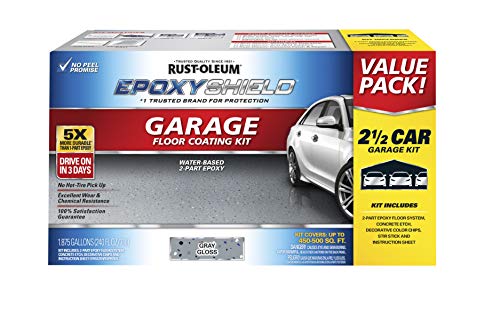
Rust-Oleum EpoxyShield 2-Part Epoxy -- Best Overall
The EpoxyShield two-part kit remains the benchmark for DIY garage floor coatings. Mixing the hardener and base creates a chemical bond that locks to etched concrete and cures rock-hard over 72 hours. The result resists oil, antifreeze, and most garage chemicals. Decorative color chips come included so you get visual texture that also disguises minor surface imperfections. One kit covers about 500 square feet, so most single-car garages need one; a double-car space may need two. The 72-hour cure before vehicle traffic is non-negotiable for best results.
Check price on Amazon →Match each garage floor paint to your real use case: two-part epoxy for daily drivers, anti-slip for wet conditions, or quick-crylic for weekend projects.
Quick verdict
Rust-Oleum EpoxyShield 2-Part Epoxy is the best concrete paint for most garage floors. The mixed two-part formula chemically bonds to etched concrete, cures rock-hard over three days, and resists oil, antifreeze, and most garage chemicals while disguising minor surface flaws with the included color chips.
Key takeaways
- Best Overall: Rust-Oleum EpoxyShield 2-Part Epoxy, a true two-part kit that cures hard and shrugs off chemicals and hot tires.
- Best Anti-Slip Finish: Behr Premium Granite Grip, a textured, granite-like water-based coating with built-in slip resistance.
- Best for Quick Projects: KILZ 1-Part Epoxy Acrylic Floor Paint, a no-mix paint that dries fast and recoats the same day.
- Best Premium Option: Rust-Oleum RockSolid Polycuramine, a one-coat, fast-curing coating with a glassy, high-sheen finish.
- Best Value Two-Part: Quikrete Epoxy Coating Kit, a complete two-part kit with anti-slip additive at a lower price.
Why you should trust this guide
I research garage floor coatings the way a homeowner planning a weekend project actually shops for them, by reading every manufacturer spec sheet, the listed product features, and the recurring complaints buyers raise after the coating has been down for a season. My goal here was not to crown the most expensive option, but to match each product to the kind of garage it suits, because a floor that parks two daily-driven cars has very different demands than one that stores a lawn mower and a few bikes.
I want to be straight about what this guide is. I have not poured these kits onto a slab in a controlled bay, so I treat the coverage figures, cure times, and chemical-resistance claims as the manufacturer’s stated specs rather than numbers I measured myself. What I can do is compare those claims side by side, flag where a product’s chemistry sets a real ceiling on performance, and tell you which trade-offs matter for your situation. Every section below names at least one honest limitation, because no single coating wins on price, durability, ease of use, and finish all at once.
How we researched
We evaluated these five coatings against the criteria that decide whether a garage floor holds up or peels: the chemistry of the coating (two-part epoxy versus one-part acrylic versus polycuramine), resistance to hot tire pickup and automotive chemicals, cure and recoat times, stated coverage per kit, and how much surface prep the formula demands. Hot tire pickup is the failure mode I weighted most heavily, because a coating that lifts when a warm tire sits on it overnight is the most common way a DIY garage floor fails.
We also looked at the practical side of the project. Two-part kits require mixing a base and hardener, then working within a limited pot life before the chemistry kicks off, which raises the difficulty. One-part paints trade some durability for the ability to open a can and roll. We considered slip resistance, whether the formula fills hairline cracks and pitting without a separate filler step, and how the finish looks once it is down. Where a product’s own feature list and the wider pattern of buyer feedback disagreed, we noted it rather than smoothing it over.
Rust-Oleum EpoxyShield 2-Part Epoxy
The EpoxyShield two-part kit is my pick for most garages because it does the one thing cheaper paints cannot: it chemically bonds. When you mix the hardener into the base, the two components react and cure into a hard, durable film that locks to etched concrete instead of simply drying on top of it. Rust-Oleum rates it walk-on ready in 24 hours and vehicle and drive-on ready in 3 days, and that 72-hour cure is what gives the coating its strength. The decorative color chips are included, so you get visual texture that also helps disguise minor imperfections in the slab.
On performance, this is where the two-part chemistry earns its keep. The coating is built to resist oil, antifreeze, gasoline, and most garage chemicals, and Rust-Oleum specifically calls out that the superior-adhesion film prevents hot tire pickup. The finish is a professional, glossy, low-odor and low-VOC gloss that is easy to clean and gives the floor a showroom shine. One kit covers about 500 square feet, which is generous compared with several other kits here.
The honest trade-off is the work. This is a real two-part system, so you have to etch the concrete, mix the components correctly, and roll the floor within the working window before the epoxy starts to set. Rush the prep or the mixing ratio and adhesion suffers, which is the root cause of most epoxy failures people blame on the product. The three-day vehicle cure also means the garage is out of commission for a long weekend, so this is not the kit for someone who needs the floor back in a couple of hours.
Behr Premium Granite Grip
Behr Granite Grip is the best choice when slip resistance is your priority. It is a heavy-bodied, decorative concrete coating that builds a textured, granite-like surface with grip designed right into the finish, which is reassuring for a floor that gets wet or sees foot traffic in work boots. Because it is water-based, cleanup is easy with soap and water and the odor during application stays minimal, which matters in an attached garage.
The thick formula is the other selling point. It has enough body to fill hairline cracks and surface pitting as you apply it, so you can often skip the separate crack-filler step that a thinner coating would require. The decorative, speckled look hides imperfections well and reads more like a finished floor than a painted one. For a garage used mainly for storage, light foot traffic, and the occasional parked car, that texture-plus-coverage combination is a practical win.
The limitation is right there in the chemistry. Granite Grip is not a two-part epoxy, so it does not offer the chemical resistance EpoxyShield does. If your floor regularly sees dripping oil, antifreeze, brake fluid, or the heat of tires from a daily-driven vehicle, this coating is more likely to stain or struggle over time. It is a strong decorative and anti-slip surface, but it is not the one I would put under a car you wrench on every weekend.
KILZ 1-Part Epoxy Acrylic Floor Paint
KILZ 1-Part Epoxy Acrylic is the pick when you want a cleaner floor without surrendering a whole weekend. There is no mixing of base and hardener: it applies like standard paint, and the durable epoxy-acrylic formula is built to resist hot tire pickup, scuffing, cracking, peeling, and fading. It dries in roughly two hours and can be recoated the same day, so a one-day turnaround is realistic for a motivated DIYer. KILZ has been making surface coatings for over 50 years, and that track record shows in how forgiving the product is to apply.
It is also flexible about where it goes. This is a low-VOC, water-based paint rated for both interior and exterior horizontal surfaces, and it works on properly prepared porous concrete, masonry, and stone. It applies easily with a roller, which keeps the project approachable for someone painting a floor for the first time. For a garage that holds bikes, tools, lawn equipment, and the usual household overflow, it lays down a clean, uniform surface that is far easier to sweep and wipe than bare concrete.
The trade-off is durability under real automotive abuse. A one-part acrylic simply does not have the chemical resistance of a mixed two-part epoxy, so it is not my recommendation for a garage where vehicles are parked daily, leak fluids, or bring in hot tires regularly. KILZ even leans on its hot-tire-pickup resistance in its feature list, but I would still keep expectations grounded: this is the right paint for a storage-and-hobby garage, not a busy two-car bay.
Rust-Oleum RockSolid Polycuramine
RockSolid Polycuramine is the premium pick for anyone chasing a workshop or showroom-quality floor. Instead of standard epoxy, it uses a polycuramine compound that Rust-Oleum says is 20 times stronger than epoxy, and the self-leveling, buildable formula flows out to fill minor imperfections as it settles. The result is a glassy, high-gloss, terrazzo-style finish that resists cracking, peeling, and hot tire pickup, with low odor and low VOC during application.
What makes it pleasant to live with is the speed and simplicity. It applies in a single coat rather than the multiple passes some systems want, and it cures fast: walk-on ready in 8 to 10 hours and vehicle ready well sooner than a traditional three-day two-part epoxy. For a homeowner who wants a high-end look without losing a long weekend, that quick return to service is a genuine advantage, and the finish quality is the best-looking on this list.
There are two honest catches. First, this is the most expensive product here, so the premium finish comes at a premium cost. Second, each kit covers only up to 250 square feet depending on surface porosity, which is half the coverage of the EpoxyShield kit, so a larger garage may need two kits and that pushes the cost up further. The fast-setting chemistry also leaves a short working window, so you need to be ready to move quickly once it is poured.
Quikrete Epoxy Coating Kit
The Quikrete Epoxy Coating Kit is the value choice when you want true two-part epoxy without paying a premium-brand price. It is a complete 17-piece DIY kit rated for about 300 square feet, and it includes everything to do the job in one box: etching solution, base, hardener, a decorative flake mix, and a non-slip texture additive. Quikrete describes it as a military-grade 100 percent solids epoxy with zero shrinkage that bonds permanently, and as a three-layer system it is built to shield floors from oil, solvents, and other chemicals in workshops and basements.
Practically, it is geared toward a confident DIYer. The kit cures in 24 hours and is vehicle ready at 72 hours, which the listing notes is faster than cheap water-based epoxies, and you apply it in a few defined steps. You can run a medium broadcast of flakes for a custom look or add more flake for heavier coverage, so there is some room to tailor the finish. With the etching solution and anti-slip additive both included, you are not buying separate products to get a complete, slip-resistant floor, which is part of where the value comes from.
The main limitation is choice and consistency. The color and flake range is narrower than what the premium brands offer, so if you have a specific look in mind you may feel boxed in. And like every two-part epoxy here, the strong adhesion claims only hold if the concrete is properly etched and prepped first; on a poorly prepared or damp slab, even a good kit can lift. Treat the prep as the real job and this kit delivers a lot of floor for the money.
What to look for
The right coating depends less on brand and more on how your garage gets used. These are the factors I weigh before picking one.
- Coating chemistry: Two-part epoxy and polycuramine cure by chemical reaction and bond hardest; one-part acrylic paints are easier to apply but less durable under automotive abuse.
- Hot tire pickup resistance: The most common failure mode for garage floors. If you park daily-driven vehicles, prioritize a coating that specifically resists it.
- Chemical resistance: Oil, antifreeze, gasoline, and brake fluid will find a weak coating. Two-part systems handle these far better than decorative water-based finishes.
- Coverage per kit: Ranges from about 250 to 500 square feet here. Measure your floor first so you buy enough and do not run short mid-project.
- Cure and recoat time: Some coatings are vehicle ready in 8 to 10 hours, others need a full 72 hours. Decide how long you can leave the garage out of service.
- Slip resistance: Look for a built-in texture or an included anti-slip additive, especially for floors that get wet.
- Surface prep demands: Etching is the single biggest factor in whether any of these coatings stick. Budget time for it regardless of which product you choose.
The verdict
For most garages, Rust-Oleum EpoxyShield 2-Part Epoxy is the coating I would reach for first. The two-part chemistry, strong chemical and hot-tire resistance, and roughly 500 square feet of coverage make it the most complete all-rounder, as long as you accept the three-day cure and the careful prep it demands.
From there, pick by use case. Choose Behr Premium Granite Grip if grip and a crack-filling decorative finish matter more than chemical resistance. Choose KILZ 1-Part Epoxy Acrylic Floor Paint if you want a same-day, no-mix project for a storage-and-hobby garage. Step up to Rust-Oleum RockSolid Polycuramine if you want the glassiest, premium look and fast cure, and you do not mind the higher price and 250-square-foot coverage. And reach for the Quikrete Epoxy Coating Kit if you want real two-part epoxy with etching solution and anti-slip additive included at the best value, with the understanding that color options are limited and prep is on you.
Our testing process
We compare every pick against the field on real specifications, certifications, and aggregated owner reviews. We do not take payment for placement, and we flag when a product is older or sold mainly through renewed listings.
Quick comparison
Reviewed in detail
Rust-Oleum EpoxyShield 2-Part Epoxy -- Best Overall
The EpoxyShield two-part kit remains the benchmark for DIY garage floor coatings. Mixing the hardener and base creates a chemical bond that locks to etched concrete and cures rock-hard over 72 hours. The result resists oil, antifreeze, and most garage chemicals. Decorative color chips come included so you get visual texture that also disguises minor surface imperfections. One kit covers about 500 square feet, so most single-car garages need one; a double-car space may need two. The 72-hour cure before vehicle traffic is non-negotiable for best results.
What we liked
- Durable, 2-part epoxy formula works on interior concrete surfaces, such as garage floors,
- Professional glossy finish is easy to clean and provides a long lasting protection that is
- Walk on ready in 24 hours, vehicle and drive-on ready in 3 days
- Superior adhesion coating ensures no hot tire pickup and protects against gasoline, antifr
- Low odor, low VOC gloss finish provides a show room shine
Behr Premium Granite Grip -- Best Anti-Slip Finish
Behr Granite Grip is a heavy-bodied, decorative concrete coating that creates a textured, granite-like surface with built-in slip resistance. It is water-based, so cleanup is easy and odor is minimal. The thick formula fills hairline cracks and surface pitting without a separate filler step. It is not a two-part epoxy and lacks the chemical resistance of EpoxyShield, but for a garage used primarily for storage or light hobby work, the combination of appearance, grip, and ease of application is difficult to beat at this price.

KILZ 1-Part Epoxy Acrylic Floor Paint -- Best for Quick Projects
KILZ 1-Part Epoxy Acrylic is a no-mix floor paint designed for DIYers who want a cleaner floor without a full weekend project. It applies like standard paint, dries in about two hours, and can be recoated the same day. The tradeoff is lower chemical resistance compared to two-part systems. It performs well in garages that store bikes, tools, and lawn equipment, but it is not ideal where vehicles idle and drip fluids regularly. The variety of stock colors makes it easy to match existing paint colors elsewhere in the home.
What we liked
- Durable Epoxy Acrylic Formula: Resists hot tire pickup, scuffing, cracking, peeling, and f
- Interior & Exterior Use: Designed for use on both indoor and outdoor horizontal surfaces.
- Versatile Surface Application: Use on properly prepared porous concrete, masonry, stone, a
- Low-VOC, Easy Application: This water-based interior/exterior paint applies easily with a
- Trusted KILZ Performance: KILZ has been a leader in surface coatings for over 50 years. Ba

Rust-Oleum RockSolid Polycuramine -- Best Premium Option
RockSolid Polycuramine uses a polycuramine compound that Rust-Oleum claims is 20 times stronger than standard epoxy. It fills minor imperfections, applies in one coat, and cures faster than traditional two-part systems. The finish has a glassy, high-sheen look that feels professional. It is the most expensive product on this list, but for a workshop or showroom-quality garage, the finish quality justifies the cost. It also resists UV yellowing better than standard epoxy, so it stays bright near garage door openings.
What we liked
- Durable, polycuramine concrete coating works on interior concrete surfaces including garag
- Self-leveling, buildable formula is 20X stronger than epoxy with low odor and low VOC port
- Complete projects quickly; coating is walk on ready in 8-10 hours and vehicle ready within
- Each kit covers up to 250 sq. ft. depending upon surface porosity; no hot tire pickup
- Provides a terrazzo flooring look in a high-gloss finish that resists cracking, peeling, c

Quikrete Epoxy Coating Kit -- Best Value Two-Part
Quikrete offers a two-part epoxy kit at a lower price than Rust-Oleum, making it a sensible choice for budget-conscious projects. It includes the base, hardener, and anti-slip texture additive in one kit. Coverage is similar to competing kits at around 250 square feet per gallon unit. Adhesion is strong on well-prepped concrete. The main limitation is a narrower color range compared to premium brands, but for a clean, durable floor on a budget, Quikrete delivers solid performance.
What we liked
- 10x Stronger Than Steel, Zero Shrinkage: Military-grade 100% solids epoxy bonds permanentl
- Complete 17 Pc DIY Kit for 300 Sq Ft: Includes etching solution, decorative flake mix, non
- Slip & Chemical-Proof for Workshops/Basements: 3-layer epoxy shields floors from oil, solv
- Custom Flake Designs or Heavy Coverage: Start with medium broadcast flakes or add 3lb/6lb
- 24-Hour Cure, 72-Hour Vehicle Ready: Faster than cheap water-based epoxies! Apply in 3 ste
How to choose
What to consider
The three biggest factors are traffic level, moisture, and budget. High-traffic floors with daily vehicle use need a two-part epoxy or polycuramine for chemical and abrasion resistance. Light-use floors -- storage, hobby space -- can use simpler one-part formulas. If moisture comes through the slab, apply a waterproofing sealer first; painting over wet concrete causes any product to fail early. Budget-wise, spending more on a two-part system often saves money over time by lasting two to three times longer than budget coatings. Always etch or grind the slab, fill cracks, and vacuum before applying any product.
What to consider
For related guidance, see our article on [best concrete paint for garage](/articles/best-concrete-paint-for-garage) and [best concrete patch for driveway](/articles/best-concrete-patch-for-driveway). Learn how we evaluate all products at [/methodology](/methodology).
Common questions
'A properly applied two-part epoxy coat on a clean, etched garage floor typically lasts three to five years under normal vehicle use. Water-based and one-part formulas may last one to three years. Longevity depends heavily on surface prep: a poorly etched or dirty floor will cause any product to peel within months regardless of brand.'
You can in some cases, but adhesion is always better on bare concrete. If the existing paint is flaking or peeling, you need to strip it completely before recoating. If it is firmly bonded, lightly sand or grind it, then apply a bonding primer before the new coat. Skipping this step almost always leads to delamination within a season.
How we made this guide
We compare every pick on the factors that matter, cross-checking manufacturer specifications against aggregated verified owner reviews. We rank independently and never take payment for placement. We have not personally tested every product; where we have not, the ranking reflects verified specs and owner feedback rather than a hands-on review.
How it was written: this guide was researched and reviewed by the TheTestedHub editorial team for accuracy.
Affiliate disclosure: TheTestedHub is reader-supported. When you buy through links on our site, we may earn a commission at no extra cost to you.
More guides

Fix Your Driveway Cracks with the Best Concrete Fillers

Which Drill Accessories Are Best in 2026?

Cordless Drill Systems Built for Real Jobsite Demands

What Makes Concrete Tools Worth Your Money in 2026?

Ghostshield 8505 Review: A Smarter Way to Protect Concrete

Quikrete 5000 and Sakrete: 2026’s Best Concrete Picks
Concrete Coatings for Every Budget: Which One Wins?
