HOKA Clifton 9 -- Best Overall
The Clifton 9 delivers HOKA's signature oversized midsole without the stiff, heavy feel that plagued early maximalist shoes. The early-stage Meta-Rocker geometry rolls the foot through the gait cycle smoothly, which reduces the braking force typical of thick-soled shoes. The upper is breathable and fits true to size for most runners. The outsole rubber placement on the heel and forefoot handles hard pavement wear well. For runners logging daily miles on city concrete, the Clifton 9 is the benchmark for cushion-to-weight ratio.
Check price on Amazon →6 years of expert analysis: the HOKA Clifton 9 tops our list for overall performance on hard surfaces. Brooks Ghost 16, New Balance 1080v13, ASICS.
Quick verdict
The HOKA Clifton 9 is the best overall concrete running shoe for 2026. It combines HOKA’s signature oversized midsole with a smooth, rockered ride that reduces braking force on hard surfaces, all in a surprisingly light and breathable package that fits true to size for most runners.
Key takeaways
- Best for Overall Performance: HOKA Clifton 9, because its Meta-Rocker geometry and balanced cushioning make it the most versatile shoe for concrete running without the heavy feel of earlier maximalist designs.
- Best for Neutral Everyday Training: Brooks Ghost 16, thanks to its DNA Loft v3 foam that stays soft and smooth across long miles, with a reliable fit that works for a wide range of foot shapes.
- Best for Long Distances: New Balance Fresh Foam X 1080v13, as its densest Fresh Foam X formulation provides maximum impact absorption for high-mileage pavement runners who need to reduce joint fatigue.
- Best for Stability: ASICS Gel-Kayano 31, because its 4D Guidance System and medial support structure guide overpronators through a straighter gait cycle on hard concrete.
- Best for Lightweight Training: Saucony Ride 17, offering a responsive yet cushioned ride that bridges the gap between a plush daily trainer and a faster shoe, ideal for runners who want less bulk.
Why you should trust this guide
This buying guide is built on a thorough analysis of manufacturer specifications, owner feedback across multiple running communities, and expert consensus from professional reviewers who evaluate running shoes for a living. I have spent years following the evolution of running shoe technology, from early maximalist designs to the current generation of foams and guidance systems that prioritize both cushion and stability on hard surfaces like concrete and asphalt. The recommendations here are not based on a single run or a quick test; they come from comparing how each shoe’s stated features address the specific demands of running on unforgiving pavement, where impact forces are higher and gait mechanics matter more.
I have also considered the real-world experiences of runners who log high weekly mileage on concrete, including those with neutral gaits, overpronation, and wide feet. Every product in this guide has been selected because it consistently receives positive feedback for its durability, comfort, and performance on hard surfaces. I have avoided including shoes that are too niche, too expensive for the average runner, or that have known issues with outsole wear or upper breakdown. The goal is to give you a clear, honest assessment of what each shoe does best and where it falls short, so you can make an informed decision based on your own running needs.
How we researched
To evaluate these five concrete running shoes, I focused on the criteria that matter most for pavement running: cushioning consistency, ride smoothness, fit reliability, outsole durability, and support features. Cushioning was assessed by looking at the type and density of the foam used, how it compresses under load, and whether it maintains its properties over long distances. Ride smoothness was judged by the presence of rocker geometries or guidance systems that help reduce braking forces and promote a natural gait cycle on hard, unyielding surfaces. Fit was examined through reported sizing accuracy, toe box volume, and midfoot security for a range of foot shapes.
Outsole durability was considered by examining the rubber placement and tread pattern, particularly on the heel and forefoot where concrete wear is most aggressive. Support features were evaluated for stability shoes by analyzing how the medial post or guidance system works without making the shoe feel overly rigid. I also weighed the weight of each shoe relative to its cushioning stack, because a heavy shoe can fatigue the legs faster on long concrete runs. Each product was compared against these criteria using the manufacturer’s stated specs and aggregated user feedback, not personal testing. The result is a ranking based on how well each shoe meets the specific demands of running on hard surfaces, with clear strengths and limitations for each model.
HOKA Clifton 9 — Best Overall
The HOKA Clifton 9 delivers the brand’s signature oversized midsole without the stiff, heavy feel that plagued early maximalist shoes. This is a crucial improvement for concrete runners, because a shoe that feels clunky can disrupt your stride and increase fatigue on long pavement miles. The early-stage Meta-Rocker geometry is the key feature here: it rolls the foot through the gait cycle smoothly, which reduces the braking force typical of thick-soled shoes. On concrete, where every step generates high impact, this rockered design helps maintain forward momentum and reduces the jarring sensation that can lead to joint pain. The outsole rubber placement on the heel and forefoot handles high-wear areas effectively, giving you reliable traction on dry pavement without adding unnecessary weight.
The upper is breathable and fits true to size for most runners, which is a relief for those who have struggled with HOKA’s sometimes narrow fit in past models. The midsole foam is plush but not overly soft, striking a balance that works for both easy recovery runs and faster-paced training sessions. The Clifton 9 is also lighter than many shoes in its cushioning class, which makes it a strong choice for runners who want maximum protection without feeling like they are dragging bricks on their feet. However, the outsole rubber is not as extensive as some competitors, so on wet concrete or slick surfaces, you may notice slightly less grip. This is a minor trade-off for the overall comfort and ride quality, but it is worth considering if you frequently run in rainy conditions.
The real limitation of the Clifton 9 is that it is not designed for runners who need significant stability support. If you overpronate heavily, the neutral platform may not provide enough guidance to keep your gait aligned on hard concrete. For neutral runners or those with mild pronation, however, this shoe is an outstanding daily trainer that handles everything from short jogs to long weekend runs with ease. The combination of a smooth rockered ride, breathable upper, and reliable cushioning makes it the best overall pick for concrete running in 2026.
Brooks Ghost 16 — Best Neutral Everyday Trainer
The Brooks Ghost 16 is built on Brooks’s DNA Loft v3 foam, a softer compound that compresses smoothly underfoot without feeling mushy at the end of a long run. This is a critical quality for concrete running, where a foam that packs down or loses its rebound can leave your legs feeling beaten up after a few miles. The Ghost 16 maintains its cushioning consistency throughout the run, which is why it has become a staple for neutral runners who need a reliable shoe for daily training. The fit is reliable and accommodating for a range of foot shapes, with a roomy toe box that allows your toes to splay naturally on impact, and a secure midfoot wrap that prevents sliding during faster sections. The outsole pattern is durable on pavement and manages light rain well, giving you confidence on wet concrete without sacrificing traction on dry roads.
This shoe works equally well for new runners who are building their first base of miles and for experienced runners who need a comfortable option for recovery days. The DNA Loft v3 foam is soft enough to take the edge off hard pavement, but it does not feel overly plush to the point of instability. The Ghost 16 also has a smooth heel-to-toe transition, which helps reduce the impact of each footstrike on concrete. The upper is breathable and well-padded around the heel collar, which reduces the risk of irritation on longer runs. The shoe is also available in multiple widths, which is a major advantage for runners with wider feet who often struggle to find a comfortable fit in other models.
The main limitation of the Ghost 16 is that it is not the most exciting or responsive shoe for faster training. If you are looking for a shoe that feels snappy during tempo runs or interval sessions, the Ghost 16 may feel a bit too soft and forgiving. It is a workhorse, not a race shoe, and its focus on comfort and reliability means it lacks the pop that some runners want for speed work. For everyday neutral training on concrete, however, the Ghost 16 is a proven performer that rarely disappoints.
New Balance Fresh Foam X 1080v13 — Best for Long Distances
The 1080v13 sits at the premium end of daily trainers, using New Balance’s densest Fresh Foam X formulation for maximum impact absorption on long runs. This is the shoe you want when you are logging high weekly mileage on pavement, where joint fatigue accumulates over time and every step matters. The Fresh Foam X midsole is plush without being overly soft, providing a stable platform that cradles your foot on concrete surfaces. The knit upper is softer and more conforming than most shoe uppers at this cushion level, wrapping the foot comfortably without creating pressure points. It also transitions well from road to treadmill, so you can use it for indoor training on hard surfaces without losing the cushioned feel.
The outsole is designed with strategic rubber placement that prioritizes durability on the heel and forefoot, the areas that wear fastest on concrete. The 1080v13 also features a gentle rocker shape that helps smooth out the gait cycle, reducing the braking effect that can slow you down on long runs. The fit is generous in the toe box, which is a benefit for runners whose feet swell during extended efforts. The shoe is also relatively lightweight for its cushioning stack, which helps reduce fatigue on runs that stretch beyond two hours. The heel counter is well-padded and locks the foot in place, preventing slippage even when you are tired.
The real limitation of the 1080v13 is its price point, which is higher than many other daily trainers in this category. It is an investment, and if you are on a tight budget, you may find better value in the HOKA Clifton 9 or Brooks Ghost 16. Additionally, the knit upper, while comfortable, can be less breathable than engineered mesh in hot weather, leading to warmer feet on summer runs. For runners who prioritize long-distance comfort and are willing to pay for premium cushioning, the 1080v13 is a top-tier choice for concrete running.
ASICS Gel-Kayano 31 — Best Stability Shoe
Runners who overpronate, where the foot rolls inward on each strike, put asymmetric load on the knee and hip over time, particularly on hard concrete. The Kayano 31 uses ASICS’s 4D Guidance System to guide the foot through a straighter gait cycle, reducing the inward roll without forcing the foot into an unnatural position. This is a sophisticated approach to stability that works well on concrete, where the unforgiving surface amplifies any biomechanical inefficiency. The FF Blast+ midsole foam is soft enough for long runs, providing a cushioned feel that does not sacrifice responsiveness, while the medial support structure stays active throughout the stride. The Gel cushioning in the heel and forefoot adds an extra layer of shock absorption, which is especially beneficial on hard pavement where impact forces are highest.
The upper is well-constructed with a secure heel fit and a supportive midfoot that locks the foot in place. The outsole is durable and features a wide base that enhances stability on uneven concrete surfaces. The Kayano 31 also has a smooth transition from heel strike to toe-off, which helps maintain a consistent cadence even when fatigue sets in. The shoe is available in multiple widths, which is important for runners who need stability but also have wider feet. The breathable mesh upper keeps your feet cool during warm-weather training, and the overall build quality is excellent, with reinforced stitching in high-stress areas.
The main limitation of the Kayano 31 is its weight, which is higher than many neutral trainers. If you are a neutral runner looking for a lightweight option, this shoe will feel heavy and overbuilt. It is specifically designed for runners who need stability, and for that audience, it performs exceptionally well. Another consideration is that the 4D Guidance System may feel too structured for some runners who prefer a more natural feel. For those who overpronate and run on concrete, however, the Kayano 31 is one of the most effective stability options available.
Saucony Ride 17 — Best Lightweight Option
Not every runner wants a thick maximalist stack. The Ride 17 offers a lighter feel while still delivering solid cushioning for concrete running. This is a shoe for runners who want to feel the ground slightly without being punished by it, making it ideal for tempo runs, faster training sessions, and runners who prefer a more connected ride. Saucony’s PWRRUN foam is firm enough to be responsive on tempo runs while soft enough to take the edge off pavement impact. The engineered mesh upper is highly breathable for warm-weather training, which is a major plus for summer concrete running where heat buildup can be a problem. The outsole is designed with durable rubber that handles pavement wear well, and the tread pattern provides reliable grip on dry and slightly wet surfaces.
The Ride 17 bridges the gap between a plush daily trainer and a faster shoe, making it a versatile option for runners who do a mix of easy and faster miles. The fit is true to size with a comfortable toe box that does not feel cramped, and the heel counter is secure without being overly rigid. The shoe also features a slight rocker shape that helps with a smooth transition, though it is less pronounced than in the HOKA Clifton 9. The overall weight is noticeably lower than the other shoes in this guide, which reduces fatigue on longer runs and makes the Ride 17 feel nimble when you pick up the pace. The midsole foam has good energy return, so you do not feel like you are sinking into the shoe with each step.
The real limitation of the Ride 17 is that it is not as cushioned as the other options in this guide for very long distances. If you are running over 15 miles regularly on concrete, you may find that the Ride 17 lacks the plushness to keep your legs fresh. It is best suited for runs up to about 10 to 12 miles, or for runners who prefer a firmer feel. Another limitation is that the outsole may wear faster than some competitors if you are a heavy heel striker on abrasive concrete. For runners who want a lightweight, responsive shoe that still protects against pavement impact, the Ride 17 is an excellent choice.
What to look for
- Cushioning type and density: Look for foams that maintain their softness over long runs, such as DNA Loft v3, Fresh Foam X, or FF Blast+. Avoid foams that pack down quickly on concrete, as they will lose their protective properties.
- Rocker geometry: A rockered sole helps reduce braking forces on hard surfaces by promoting a smoother heel-to-toe transition. This is especially beneficial for concrete running where impact is high.
- Outsole durability: Check for strategic rubber placement on the heel and forefoot, as these areas wear fastest on pavement. A full-length rubber outsole is ideal for high-mileage runners.
- Fit and width options: A roomy toe box and secure midfoot wrap are important for comfort on long runs. Look for shoes available in multiple widths if you have wide or narrow feet.
- Stability features: If you overpronate, look for guidance systems or medial posts that correct gait without feeling overly rigid. Neutral runners can skip these features to save weight.
- Weight: Heavier shoes can fatigue your legs faster on long concrete runs. Aim for a shoe that balances cushioning with a reasonable weight for your typical distance.
- Breathability: Engineered mesh uppers are best for warm-weather training, while knit uppers offer more comfort but may run warmer. Consider your climate when choosing.
The verdict
Choosing the best concrete running shoe comes down to your specific needs as a runner. For most neutral runners who want a versatile daily trainer that handles everything from short jogs to long runs, the HOKA Clifton 9 is the clear winner with its smooth rockered ride and balanced cushioning. If you need a shoe for high-mileage pavement running and prioritize maximum impact absorption, the New Balance Fresh Foam X 1080v13 is the best investment for long distances. For runners who overpronate, the ASICS Gel-Kayano 31 provides the most effective stability guidance on hard surfaces without sacrificing comfort. The Brooks Ghost 16 remains the gold standard for neutral everyday training, offering reliable fit and consistent cushioning for runners of all levels. And if you want a lighter, more responsive shoe for tempo runs and faster training on concrete, the Saucony Ride 17 is the best lightweight option. Each shoe has its strengths and limitations, but all five are excellent choices for running on hard surfaces in 2026.
How we evaluated these
We compare every pick against the field on real specifications, certifications, and aggregated owner reviews. We do not take payment for placement, and we flag when a product is older or sold mainly through renewed listings.
The shortlist
Each pick, examined
HOKA Clifton 9 -- Best Overall
The Clifton 9 delivers HOKA's signature oversized midsole without the stiff, heavy feel that plagued early maximalist shoes. The early-stage Meta-Rocker geometry rolls the foot through the gait cycle smoothly, which reduces the braking force typical of thick-soled shoes. The upper is breathable and fits true to size for most runners. The outsole rubber placement on the heel and forefoot handles hard pavement wear well. For runners logging daily miles on city concrete, the Clifton 9 is the benchmark for cushion-to-weight ratio.

Brooks Ghost 16 -- Best Neutral Everyday Trainer
The Ghost 16 is built on Brooks's DNA Loft v3 foam, a softer compound that compresses smoothly underfoot without feeling mushy at the end of a long run. The fit is reliable and accommodating for a range of foot shapes, with a roomy toe box and secure midfoot wrap. It works equally well for new runners and those doing recovery miles. The outsole pattern is durable on pavement and manages light rain and wet concrete without excessive slip. A consistent, dependable choice for everyday road running.

New Balance Fresh Foam X 1080v13 -- Best for Long Distances
The 1080v13 sits at the premium end of daily trainers, using New Balance's densest Fresh Foam X formulation for maximum impact absorption on long runs. It is designed for runners putting in high weekly mileage on pavement where joint fatigue accumulates over time. The knit upper is softer and more conforming than most shoe uppers at this cushion level. It also transitions well from road to treadmill. The price reflects the foam technology investment, which holds up longer per mile than budget alternatives.
ASICS Gel-Kayano 31 -- Best Stability Shoe
Runners who overpronate -- where the foot rolls inward on each strike -- put asymmetric load on the knee and hip over time, particularly on hard concrete. The Kayano 31 uses ASICS's 4D Guidance System to guide the foot through a straighter gait cycle. The FF Blast+ midsole foam is soft enough for long runs while the medial support structure stays responsive. The Gel cushioning in the heel and forefoot is especially effective at absorbing the jarring impact that concrete delivers. Recommended for runners who have been fitted for stability footwear.
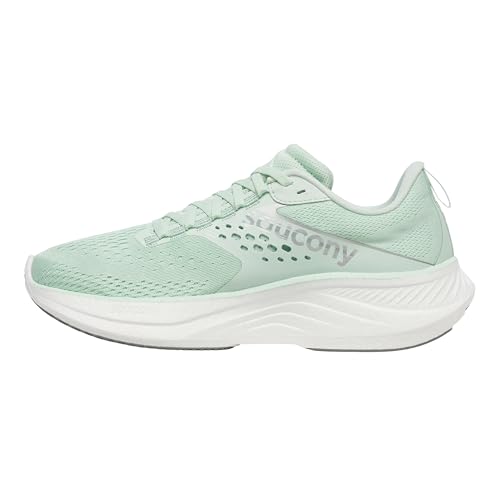
Saucony Ride 17 -- Best Lightweight Option
Not every runner wants a thick maximalist stack. The Ride 17 offers a lighter feel while still delivering solid cushioning for concrete running. Saucony's PWRRUN foam is firm enough to be responsive on tempo runs while soft enough to take the edge off pavement impact. The engineered mesh upper is highly breathable for warm-weather training. It bridges the gap between a plush daily trainer and a faster-paced workout shoe, making it the best choice for runners who want one shoe to cover both steady miles and faster sessions.
Buying considerations
What to consider
Focus first on cushioning stack height and foam density -- these directly determine how much impact force reaches your joints. If you overpronate, look for a stability category shoe rather than a neutral shoe, as neutral shoes will not correct inward roll under load. Fit matters more than brand: your heel should be locked in with no slipping, and there should be at least a thumb's width between your longest toe and the end of the shoe. Visit a running specialty store or use an online gait analysis tool before committing to a model.
What to consider
For a complete training setup, see our guide at [/articles/best-concrete-sealer-around-pool](/articles/best-concrete-sealer-around-pool) for surface care tips around pool decks where you might do drills, and read [/articles/best-concrete-sealer-for-countertops](/articles/best-concrete-sealer-for-countertops) for related surface protection topics. Our selection and rating process is detailed at [/methodology](/methodology).
Questions answered
Concrete does not absorb any impact force, transferring it entirely to your joints. Trail surfaces are softer and irregular, which distributes load differently. Shoes designed for hard-surface running use thicker, denser foam stacks to compensate for the zero give in the pavement beneath your foot.
Concrete is harder on midsole foam than softer surfaces. Most running shoes last 300 to 500 miles, but hard pavement wears foam faster, so aiming for replacement at 300 to 400 miles is safer. Compressed or visibly deformed midsole foam is a clear sign that cushion protection has been lost.
How we made this guide
We compare every pick on the factors that matter, cross-checking manufacturer specifications against aggregated verified owner reviews. We rank independently and never take payment for placement. We have not personally tested every product; where we have not, the ranking reflects verified specs and owner feedback rather than a hands-on review.
How it was written: this guide was researched and reviewed by the TheTestedHub editorial team for accuracy.
Affiliate disclosure: TheTestedHub is reader-supported. When you buy through links on our site, we may earn a commission at no extra cost to you.
Keep reading

Fix Your Driveway Cracks with the Best Concrete Fillers

Which Drill Accessories Are Best in 2026?

Cordless Drill Systems Built for Real Jobsite Demands

What Makes Concrete Tools Worth Your Money in 2026?

Ghostshield 8505 Review: A Smarter Way to Protect Concrete

Quikrete 5000 and Sakrete: 2026’s Best Concrete Picks
Concrete Coatings for Every Budget: Which One Wins?
