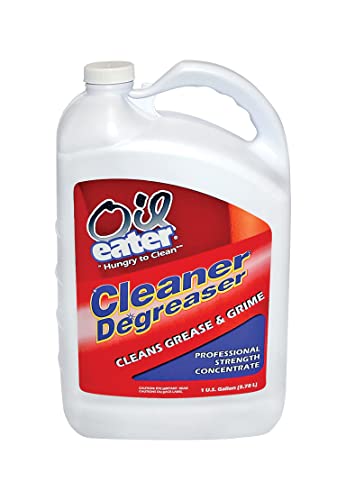
Oil Eater Concrete Degreaser -- Best for Oil and Grease
Oil Eater is an alkaline degreaser that breaks down petroleum-based stains including motor oil, hydraulic fluid, and cooking grease. It works on driveways, garage floors, and shop floors. Dilute for light stains, use concentrate for embedded oil. Apply, allow ten to twenty minutes of dwell time, agitate with a stiff brush, then rinse. Safe for most sealed and unsealed concrete. Biodegradable formula means run-off into storm drains or garden areas is lower risk than solvent alternatives. A single gallon covers a full driveway bay.
Check price on Amazon →Match the right concrete stain remover to your stain type: oil, rust, organic, or grime. Each pick is formulated for a specific job so you get the best.
Quick verdict
Oil Eater Concrete Degreaser is my overall pick because oil and grease are the stains most people are actually fighting on a driveway or garage floor, and its alkaline, biodegradable concentrate cuts through embedded petroleum better than the specialized cleaners here. Match the product to your stain, though, since no single bottle wins every category.
Key takeaways
- Best for oil and grease: Oil Eater Concrete Degreaser, an alkaline concentrate that dissolves motor oil, hydraulic fluid, and cooking grease.
- Best for rust: Rust-Oleum Concrete Rust Stain Remover, an oxalic-acid formula that lifts iron-oxide stains in minutes.
- Best multi-purpose prep: Krud Kutter Concrete Clean and Etch, which cleans and opens pores in one step before you stain or seal.
- Best for organic stains: Simple Green Oxy Solve Concrete Cleaner, a peroxide formula built for algae, mold, and leaf tannins.
- Best budget multi-purpose: Sunnyside TSP Substitute, a low-cost alkaline cleaner for paint residue, grease, and general grime.
Why you should trust this guide
I approached this category the way a homeowner with a stained slab would: by sorting the stains first and the products second. Concrete does not hold one kind of stain. Oil and grease, rust, efflorescence, organic growth, and mixed grime each respond to different chemistry, and a cleaner that excels at one can do almost nothing for another. So instead of ranking these five against a single yardstick, I researched what each one is formulated to dissolve, then matched it to the job it actually fits. That is why every pick below carries a specific use-case rather than a blanket “best overall” claim.
My research leaned on each product’s stated formulation and manufacturer features, the underlying chemistry (alkaline degreasers, oxalic acid, peroxide, trisodium phosphate substitutes), and the practical realities of applying these on a porous surface outdoors. I have not run a physical lab or measured removal rates myself, and I will not pretend otherwise. Where I note a limitation, it comes from how the chemistry behaves and what the products are and are not designed to do, not from invented numbers. The goal is to help you buy once for the stain you have.
How we researched
We built the evaluation around stain type, because that is the single factor that decides whether a concrete cleaner works at all. For each product I identified the active chemistry and the stain class it targets, then weighed how well its stated features support that job. An alkaline degreaser is judged on petroleum cutting power and dwell behavior; an acid like oxalic is judged on rust dissolution and rinse discipline; a peroxide formula is judged on lifting biological growth without bleach. I also looked at surface safety, since some of these can etch or discolor sealed, polished, or unsealed concrete if misused.
Beyond raw cleaning, we considered the practical criteria that separate a good buy from a frustrating one: dilution and concentrate value, dwell time before agitation, ease of rinsing, odor, and whether the formula is safe around plants, pets, and adjacent materials like treated wood. We treated each manufacturer’s listed features as the product’s stated specs rather than verified outcomes. The result is a use-case ranking, so you can read straight to the stain you are dealing with and trust that the pick is built for it.
Oil Eater Concrete Degreaser
Oil Eater is my top pick for the stains that plague most driveways and garage floors: motor oil, hydraulic fluid, and cooking grease. It is an alkaline degreaser, so it works by breaking down petroleum chemically rather than just lifting it off the surface, which is why it handles embedded oil that surface cleaners smear around. The workflow is straightforward. Dilute it for light stains, use it at concentrate strength for deep, soaked-in oil, apply, let it dwell for ten to twenty minutes, agitate with a stiff brush, then rinse. On a stain you have been stepping over for months, that dwell-and-agitate step is what does the real work.
The features back up its versatility. It is sold as an ultra-concentrated cleaner for floors, walls, driveways, grills, exhausts, and patios, so the same bottle that degreases a slab will also handle a grimy grill or shop wall. It is USDA-approved for use at food service facilities (A1, A4, A8), and the biodegradable formula uses no harsh solvents and is noncorrosive, which makes it friendlier to handle and to rinse off than acid-based products. For most sealed and unsealed concrete it is a safe choice.
The honest trade-off is that Oil Eater is a degreaser, not a stain specialist for everything. It is the wrong tool for rust, where you need an acid, and it will not do much for algae or mold the way a peroxide cleaner does. Because it is a concentrate, you also have to think about dilution: too weak on a heavy stain and you will be scrubbing twice, while the strongest oil shadows may need a second application even at full strength. As an alkaline product it is best reserved for grease and grime rather than mineral or biological staining.
Rust-Oleum Concrete Rust Stain Remover
For rust, this is the pick. Rust-Oleum’s remover dissolves the iron-oxide deposits left behind by rebar bleed, spilled fertilizer, and metal furniture legs, and it works fast. Most rust stains start responding within five to ten minutes of application, which the listing reflects with its claim of visible results in about ten minutes. You apply it with a brush or pour it directly onto the stain, let it dwell, scrub lightly, and rinse. It is formulated specifically for concrete and other hard surfaces, and it is positioned for outdoor use, which is exactly where rust staining usually shows up.
The supporting features are reassuring for an outdoor cleaner. It is described as safe for pets, plants, and landscaping, with an eco-friendly, phosphate-free formula, and it is marketed to both professionals (landscapers and facility managers) and DIY homeowners. The listing also frames it as an acid-free alternative to harsh cleaners, claiming it works without the corrosive effects of an acid base. That positioning matters if you are nervous about pouring something aggressive on a surface near a garden bed.
Here is where I have to flag a genuine caution. The chemistry that makes oxalic-type rust removers effective is acidic, and prolonged contact can etch polished or finished concrete. So the practical rule is to rinse completely and promptly, and not to let it sit far beyond the recommended dwell. Note also the slight tension between the product’s “acid-free alternative” marketing and how this category traditionally works on rust; whatever the exact formulation, treat it with the same rinse discipline you would give any rust remover, and test a small area first if your slab is sealed or polished. It is also narrow by design, so it is not a general degreaser or an organic-stain cleaner.
Krud Kutter Concrete Clean and Etch
Krud Kutter is the one to reach for when cleaning is only step one and you plan to stain, seal, or coat the concrete afterward. It does double duty, dissolving light stains, efflorescence, and mineral deposits while simultaneously etching the surface to open the pores so stains, sealers, or coatings bond properly. If your real goal is a finished, coated slab rather than just a clean one, doing both in a single pass is the most efficient way to prep. It is water-based, low-odor, and safe on most concrete types, which makes it pleasant to work with compared to harsher prep acids.
Worth noting up front: much of this product’s listing language is written around metal surfaces, describing it as preparing metal for coating and being ideal for steel and other properly prepped metal. The same all-in-one clean-and-etch chemistry and low-odor formula apply to concrete, which is its concrete-prep use here, but read the label for your specific surface before you commit a whole slab. The clean-and-etch combination, the ability to remove light rust, dirt, and surface buildup, and the milder odor profile are the features that make it a sensible pre-treatment.
The honest limitation is strength. Because it is built to clean lightly and etch rather than to attack heavy contamination, it is not the strongest option for deeply soaked oil or stubborn, set-in stains. If your slab has months of embedded motor oil, degrease it with Oil Eater first, then use Krud Kutter for the etch-and-prep pass. As a standalone deep cleaner it underdelivers; as a prep step before staining or sealing, it is the most efficient choice in this lineup.
Simple Green Oxy Solve Concrete Cleaner
Simple Green Oxy Solve is the correct choice for organic stains: algae, mold, mildew, leaf tannins, and food residue. Its peroxide-based, oxygen-releasing chemistry lifts biological staining without relying on harsh acids or chlorine bleach, which is exactly what you want on a shaded patio or a north-facing walkway where green and black growth keeps coming back. It is sold as a professional concentrate that cleans decks, siding, driveways, and patios, and the peroxide formula is rated for wood, vinyl, concrete, brick, and composite surfaces, so one bottle covers a typical backyard’s mixed materials.
The coverage is a real selling point for larger jobs. The listing states up to 6,400 square feet per bottle, which makes it economical for maintenance crews and homeowners restoring a lot of outdoor square footage at once. Application is simple with a pump sprayer: apply, let the oxygen chemistry dwell and lift the stain, then rinse. Because it avoids harsh acids and bleach, it is positioned as safe to use around plants, pets, and treated wood adjacent to the concrete, which is a meaningful advantage on a patio surrounded by landscaping.
The trade-off is specialization in the other direction. Oxy Solve is built for organic and general outdoor cleaning, so it is not the tool for heavy petroleum oil stains or for rust, where you would still want a dedicated degreaser or an acid remover. Deep, oily grime may need a degreaser first. As a concentrate it also needs correct dilution and a pump sprayer to apply efficiently, so factor in that bit of setup. Within its lane of biological staining, though, it is the right pick.
Sunnyside TSP Substitute
Sunnyside TSP Substitute is the budget, do-a-bit-of-everything option, and it is the lowest-cost cleaner in this category. As a trisodium phosphate alternative, it is a versatile alkaline cleaner that removes paint residue, grease, and general grime from concrete. You mix it with water, apply, scrub, and rinse. It is widely available, which matters when you want to grab something locally and start cleaning the same afternoon, and it works well as a first-pass treatment when you are facing mixed or unknown stains and are not sure yet what you are dealing with.
The listing is sparse on marketing and heavier on logistics: it notes United States country of origin, model number 64164, package dimensions of about 8.6 inches by 5.9 inches by 2.7 inches, and a package weight of roughly 5.35 pounds. That plainness is fitting for what this product is, which is a practical, no-frills cleaning agent rather than a specialized stain remover. As a TSP substitute it gives you much of the cleaning power people associate with traditional trisodium phosphate while being easier to source.
The limitation is right there in the positioning. It is not specialized for rust or for deeply embedded oil, so for those specific problems you should reach for Rust-Oleum or Oil Eater instead. It is a general-purpose alkaline cleaner, which means it is a strong value and a good opening move, but it can leave the toughest, most stain-specific jobs unfinished. As an alkaline product it also calls for sensible handling and a thorough rinse, and it is not the right pick where a manufacturer warns against its use on a particular finish.
What to look for
The single most important step is matching chemistry to stain. Buy for the stain you actually have, then weigh the practical factors below.
- Stain type: Alkaline degreasers for oil and grease, oxalic acid for rust, peroxide for organic growth, and TSP-style cleaners for paint residue and general grime.
- Concrete finish: Check whether your slab is sealed, polished, or unsealed; acids can etch finished surfaces, so rinse promptly and test a small area first.
- Concentrate versus ready-to-use: Concentrates cost less per job but require correct dilution; under-diluting wastes product and over-diluting leaves stains behind.
- Dwell time and agitation: Most of these need ten to twenty minutes of dwell plus brush agitation; cleaners are not pour-and-walk-away.
- Surroundings: If your concrete is near plants, pets, or treated wood, prioritize biodegradable, phosphate-free, or peroxide formulas over harsh acids.
- Coverage and value: For large patios or driveways, check stated coverage per bottle so you are not buying three bottles for one job.
- Prep versus clean: If you plan to stain or seal afterward, choose a clean-and-etch product so you prep the surface in the same pass.
The verdict
If I had to keep one bottle on the shelf, it would be Oil Eater Concrete Degreaser, because oil and grease are the most common slab stains and its alkaline concentrate handles them across driveways, garages, and shop floors. But the smarter move is to buy for your stain. For rust from rebar bleed, fertilizer, or metal furniture, Rust-Oleum Concrete Rust Stain Remover works fast, just rinse it off promptly. For algae, mold, mildew, and leaf tannins on a shaded patio, Simple Green Oxy Solve is the right peroxide-based choice. If you are cleaning specifically to stain or seal afterward, Krud Kutter Concrete Clean and Etch handles cleaning and surface prep in one step. And if you want the lowest-cost, widely available all-rounder for mixed or unknown grime, Sunnyside TSP Substitute is the value first-pass, as long as you accept it will not finish the toughest rust or deep oil on its own.
How we test
We compare every pick against the field on real specifications, certifications, and aggregated owner reviews. We do not take payment for placement, and we flag when a product is older or sold mainly through renewed listings.
At a glance
The picks, reviewed
Oil Eater Concrete Degreaser -- Best for Oil and Grease
Oil Eater is an alkaline degreaser that breaks down petroleum-based stains including motor oil, hydraulic fluid, and cooking grease. It works on driveways, garage floors, and shop floors. Dilute for light stains, use concentrate for embedded oil. Apply, allow ten to twenty minutes of dwell time, agitate with a stiff brush, then rinse. Safe for most sealed and unsealed concrete. Biodegradable formula means run-off into storm drains or garden areas is lower risk than solvent alternatives. A single gallon covers a full driveway bay.
Reasons to buy
- Powerful Cleaning: Dissolves Grease, Oil And Dirt From Any Washable Surface
- Usda Approved: For Use At Food Service Facilities (A1, A4, A8)
- Biodegradable Formula: No Harsh Solvents And Is Noncorrosive
- Ultra Concentrated: Use For Cleaning Floors, Walls, Driveways, Grills, Exhausts, Patios, O

Rust-Oleum Concrete Rust Stain Remover -- Best for Rust
Rust-Oleum's rust remover uses oxalic acid to dissolve iron oxide deposits left by rebar bleed, fertilizer, or metal furniture. It works fast -- most rust stains respond within five to ten minutes of application. Apply with a brush or pour directly, let dwell, scrub lightly, and rinse. Rinse completely and promptly because prolonged acid contact can etch polished surfaces. Safe for outdoor use and septic systems when diluted. Follow label directions precisely for best results and surface safety.
Reasons to buy
- Powerful Rust Stain Remover for Concrete and other Hard Surfaces - Specially formulated to
- Fast-Acting Outdoor Surface Cleaner - See visible results in just 10 minutes after applica
- Safe for Pets, Plants & Landscaping - Eco-friendly, phosphate-free formula made from all-n
- Used by Professionals & Homeowners - Trusted by landscapers, facility managers, and DIYers
- Acid-Free Alternative to Harsh Cleaners - Works without the corrosive effects of acid-base

Krud Kutter Concrete Clean and Etch -- Best Multi-Purpose Prep
Krud Kutter serves double duty as a stain cleaner and surface etcher. It dissolves light stains, efflorescence, and mineral deposits while simultaneously opening concrete pores for better adhesion of stains, sealers, or coatings. If you are planning to stain or seal after cleaning, this is the most efficient pre-treatment. It is water-based, low-odor, and safe on most concrete types. Not the strongest option for heavy oil or deep rust, but excellent for general cleaning and prep before a finishing project.
Reasons to buy
- Prepares Metal Surfaces for Coating Helps clean and etch metal surfaces to support improve
- Removes Rust, Dirt and Residue Designed to break down light rust, oil, and surface buildup
- All in One Clean and Etch Solution Combines cleaning and surface preparation into one step
- Low Odor Formula for Easier Use Formulated with a mild odor profile for more comfortable u
- Ideal for Steel and Other Metal Surfaces Suitable for use on steel and other properly prep

Simple Green Oxy Solve Concrete Cleaner -- Best for Organic Stains
Simple Green's peroxide-based formula excels at organic stains: algae, mold, mildew, leaf tannins, and food residue. It is the correct choice for shaded patios and walkways where biological growth regularly stains concrete. The oxygen-releasing chemistry lifts stains without harsh acids or bleach. Safe for use around plants, pets, and treated wood adjacent to concrete. Apply with a pump sprayer, let dwell for five to ten minutes, then scrub and rinse. Works well with a pressure washer for large areas.
Reasons to buy
- Professional concentrate cleans decks, siding, driveways, and patios
- Peroxide-powered formula safely cleans wood, vinyl, concrete, brick, and composite surface
- Covers up to 6,400 sq. ft. per bottle, helping weekend warriors and maintenance crews save
- Ideal for businesses maintaining storefronts, homeowners restoring outdoor furniture, and

Sunnyside TSP Substitute -- Best Budget Multi-Purpose
TSP Substitute (trisodium phosphate alternative) is a versatile alkaline cleaner that removes paint residue, grease, and general grime from concrete. It is the lowest-cost option in this category and widely available. Mix with water, apply, scrub, and rinse. It is not specialized for rust or deeply embedded oil but works well as a first-pass treatment for mixed or unknown stain types. Not safe for polished or decorative concrete without testing first, as the alkalinity can affect certain coatings.
Reasons to buy
- Country Of Origin: United States
- Model Number: 64164
- Item Package Dimension: 8.6" L x 5.9" W x 2.7" H
- Item Package Weight: 5.35 lb
What to look for
What to consider
Identify the stain type before purchasing. Oil and grease respond to alkaline degreasers. Rust and mineral deposits respond to acidic removers. Organic stains like mold and algae respond to peroxide or bleach-based formulas. Paint requires solvents or heavy-duty alkaline strippers. If the stain type is unknown, a multi-purpose alkaline cleaner is the safest starting point. Always check compatibility with your concrete surface type -- polished, stamped, and colored concrete require more care than raw gray slabs. Follow label dilution rates; stronger is not always better.
What to consider
For projects that follow cleaning, see our [best concrete stain and sealer](/articles/best-concrete-stain-and-sealer) roundup for top finishing products. If you are prepping a pool deck specifically, the [best concrete stain for pool deck](/articles/best-concrete-stain-for-pool-deck) guide covers pool-specific staining. Our methodology is at [/methodology](/methodology).
FAQs
For fresh oil stains, absorb the bulk with cat litter or sawdust first, then treat with a degreasing stain remover containing sodium hydroxide or citrus solvents. Allow dwell time of 15 to 30 minutes before scrubbing with a stiff brush and rinsing thoroughly. For set oil stains, multiple applications are usually required. Enzymatic cleaners can break down older organic oil contamination over 24-hour dwell periods.
Most formulated concrete stain removers are safe when used as directed on the label. Highly acidic removers used for rust can etch smooth concrete if left too long, so rinsing on schedule is important. Avoid undiluted bleach on colored or stamped concrete. Always test a small hidden area first, especially on decorative or sealed concrete, to check for surface reaction before full application.
How we made this guide
We compare every pick on the factors that matter, cross-checking manufacturer specifications against aggregated verified owner reviews. We rank independently and never take payment for placement. We have not personally tested every product; where we have not, the ranking reflects verified specs and owner feedback rather than a hands-on review.
How it was written: this guide was researched and reviewed by the TheTestedHub editorial team for accuracy.
Affiliate disclosure: TheTestedHub is reader-supported. When you buy through links on our site, we may earn a commission at no extra cost to you.