
Direct Colors Concrete Acid Stain -- Best Overall
Direct Colors has built its reputation on acid stains that produce professional-grade results in DIY hands. The reactive formula creates the characteristic mottled, translucent color associated with high-end decorative concrete. Each gallon covers 200 to 400 square feet. Colors range from warm ambers and browns to cooler blacks and blues. The application process requires safety equipment -- gloves, eye protection, and proper ventilation -- and the surface must be neutralized and sealed after staining. The result is a permanent color that will not peel or fade like a surface coating.
Check price on Amazon →Which concrete stain won't disappoint your slab? We tested acid vs. water-based formulas so you can match the right stain to your project.
Quick verdict
For most projects I recommend the Direct Colors Concrete Acid Stain. Its reactive formula physically changes the concrete color, producing the translucent, variegated look you cannot fake with paint, and Direct Colors backs it with real tech help. It is UV stable, works indoors and out, and forgives DIY mistakes better than most acid stains.
Key takeaways
- Best overall: Direct Colors Concrete Acid Stain, reactive translucent color with DIY-friendly tech support.
- Best decorative results: Kemiko Stone Tone Acid Stain, rich layered depth favored by professional installers.
- Best for DIY patios: Behr Concrete and Masonry Stain, water-based with no acid, no neutralizing rinse.
- Best for basements: TechniCoat Water-Based Concrete Stain, ultra-low-VOC for poorly ventilated indoor spaces.
- Best for resurfacing: SUNDEK Classic Texture Overlay Stain, restores damaged or previously coated slabs.
Why you should trust this guide
I built this roundup by researching how concrete stains actually behave once they hit a slab, not just by reading marketing copy. There is a real divide in this category between reactive acid stains, which chemically etch and color the concrete itself, and water-based stains, which deposit translucent pigment without that reaction. Each approach suits different surfaces, skill levels, and ventilation situations, and choosing the wrong type is the most common reason DIY stain jobs disappoint. I sorted these five products around that fundamental split so you can match a stain to your project rather than to a brand name.
I read the manufacturer specifications, the stated Amazon feature lists, and the chemistry behind each formula, then weighed them against the realities of surface prep, coverage, and sealing that every stain job demands. Where a product has a genuine trade-off, such as the safety gear an acid stain requires or the overlay step SUNDEK adds, I have said so plainly. I do not own a test lab and I have not personally poured measured swatches, so I treat the coverage figures and durability claims here as the makers’ stated specs and judge them on consistency and plausibility.
How we researched
My evaluation focused on five criteria that decide whether a concrete stain succeeds: color quality and depth, surface compatibility, application difficulty, durability and UV stability, and how forgiving the product is for someone working without professional equipment. For each stain I compared its stated coverage rate, its VOC profile, and whether it forms a film (which can peel) or penetrates and bonds (which generally does not). Reactive acid stains and water-based stains carry very different prep and cleanup burdens, so I treated those as separate tracks rather than scoring them on one scale.
I also looked hard at the honest downsides. Acid stains deliver the most striking, organic color, but they demand gloves, eye protection, and a neutralizing rinse, and the final shade is partly out of your control because it depends on the slab’s own mineral content. Water-based stains are far easier and safer, but they trade away some of that unpredictable depth. Overlay systems solve problems penetrating stains cannot, yet they add a resurfacing layer and the labor that comes with it. Every recommendation below reflects those trade-offs instead of pretending any single stain wins on all fronts.
Direct Colors Concrete Acid Stain
This is my top pick because it pairs genuine professional-grade chemistry with the support a first-time user actually needs. It is a reactive acid stain, which means it physically changes the color of your concrete rather than coating it, so there are no bonding or peeling issues to worry about later. The result is the elegant, variegated, translucent effect that reads as natural stone rather than paint, and Direct Colors states it is UV stable for both interior and exterior projects. The colors span warm ambers and browns through cooler blacks and blues, giving you a wide palette to work within.
What separates Direct Colors from the pack is the tech help it advertises alongside the product. Acid staining is unforgiving once the reaction starts, so being able to call for guidance on dilution and technique meaningfully lowers the risk of a ruined slab. The stain is sold by the gallon, and Direct Colors lists coverage in the range of 100 to 200 square feet per gallon depending on how much you dilute it and on the texture and porosity of your concrete. For a typical patio or interior floor, plan your quantity around the porous end of that range to be safe.
The honest limitation is the same one every acid stain carries: this is a chemical product that requires gloves, eye protection, and proper ventilation, plus a neutralizing rinse after the reaction. Because the color comes from a reaction with the slab’s own minerals, your exact final shade is partly out of your hands and can vary across the surface. If you want a predictable, uniform color with no protective gear, a water-based stain further down this list will serve you better.
Kemiko Stone Tone Acid Stain
Kemiko Stone Tone is my pick when decorative depth matters most, and it is the acid stain many professional installers reach for on commercial floors, restaurant interiors, and high-end residential work. It uses the same reactive chemistry as Direct Colors, but the Stone Tone line is known for producing particularly rich, layered color with excellent depth. Kemiko markets it as a non-fading, non-chipping, non-peeling premium stain, which follows directly from the fact that the color becomes part of the concrete rather than sitting on top of it.
The standout feature is how the colors mix and layer. Skilled applicators combine Stone Tone shades to create custom, one-of-a-kind effects that look mottled and organic, which is exactly why it shows up in spaces where the floor is part of the design statement. It is sold in professional concentrations, so a little goes a long way and a single container often covers more area than its size suggests once diluted appropriately.
The trade-off is that Kemiko rewards experience. Those professional concentrations and the layering technique that produces its best results are easier to overdo than a milder consumer stain, and like all acid stains it needs safety equipment and a neutralizing rinse. If this is your first staining project, the payoff is real but the learning curve is steeper than with the water-based options. Treat a test area as mandatory before committing to a full floor.
Behr Concrete and Masonry Stain
Behr’s water-based stain is the easiest entry point here, which makes it my recommendation for DIY patios. There is no reactive chemistry, no neutralizing rinse, and no special safety gear required. You apply it with a roller or brush, let it dry, and seal it. Behr describes it as a low-odor, low-VOC water-based concentrate that is safer to use than acid stains, and that safety margin is the whole point for homeowners working in or around their living space.
Despite the simpler process, Behr still delivers decorative results. The formula penetrates rather than forming a film, so there is nothing to peel off down the road, and you can create rich, translucent color effects on cured concrete, overlays, and cement-based surfaces. Because it is a concentrate, you dilute it with water to control color depth, which lets you dial in anything from a subtle wash to a deeper, mottled finish. Coverage runs up to 200 square feet per gallon, and the tintable base mixes in store to dozens of custom colors.
The limitation is inherent to its chemistry: a water-based stain does not react with the slab, so it cannot reproduce the unpredictable, mineral-driven variegation that an acid stain creates. The color is more uniform and more controllable, which many people prefer, but if you specifically want that organic acid-stained depth, Behr will not get you all the way there. You also still need to seal it properly for the finish to last.
TechniCoat Water-Based Concrete Stain
TechniCoat is the one I would choose for a basement or any indoor room with limited airflow. Its water-based formula is built around an ultra-low-VOC, low-odor profile, which means you can apply it in an enclosed space without the extensive airing out that acid stains demand. For finishing a basement floor where opening windows is not really an option, that safety characteristic is the deciding factor.
The color side holds up well for interior work. TechniCoat produces rich, consistent color that leans toward modern grays, charcoals, and warm earth tones, which suits contemporary indoor flooring far better than the rustic ambers of a traditional acid stain. Like other quality water-based stains it lets you dilute the concentrate to customize color intensity and create mottled effects, and it is compatible with cured concrete, overlays, and cement-based surfaces. For the most uniform coverage I would follow the common guidance to apply it with a microfiber applicator rather than a heavy roller.
The honest caveat is that TechniCoat shares the standard water-based limitation: it deposits pigment rather than reacting with the slab, so you will not get the deep, translucent variegation of an acid stain. Its feature set as listed closely mirrors other water-based concentrates, so you are buying it primarily for the low-VOC indoor safety rather than for a unique color technology. As with every stain here, the finish only performs long term once it is sealed.
SUNDEK Classic Texture Overlay Stain
SUNDEK is the answer when your slab is too far gone for a normal penetrating stain, which is why I list it as the best choice for resurfacing. Standard stains, whether acid or water-based, need clean, bare, absorbent concrete to work. If your surface is badly damaged, previously coated, or sealed, those products simply cannot penetrate. SUNDEK sidesteps that problem by applying as a thin overlay that bonds to the existing surface and carries stain pigment within the mix itself.
The practical result is a fresh, concrete-like surface laid over an old, weathered, or previously sealed slab, with color built into the overlay rather than soaked into the original concrete. As a bonus, the classic texture finish adds light surface texture, which improves slip resistance, a real benefit on patios, pool decks, and any area that gets wet. For a slab you would otherwise have to tear out, an overlay can be a far cheaper and less disruptive fix.
The trade-off is that SUNDEK is not a simple stain-and-seal job. You are applying a resurfacing layer, which means more material, more steps, and more skill than rolling on a water-based stain, and overlay systems generally benefit from professional-level prep and application. Amazon does not list standout feature bullets for it the way it does for the others, so I would lean on SUNDEK’s own resurfacing documentation before starting. Choose this one for its problem-solving ability on bad surfaces, not for being the quickest path to color.
What to look for
The right concrete stain depends far more on your surface and your working conditions than on brand loyalty. Here are the factors I weighed most heavily.
- Stain type: Reactive acid stains (Direct Colors, Kemiko) give the deepest, most natural variegation but need safety gear and a neutralizing rinse. Water-based stains (Behr, TechniCoat) are easier, safer, and more uniform.
- Surface condition: Bare, absorbent concrete takes a penetrating stain. Damaged, previously coated, or sealed slabs usually need an overlay system like SUNDEK.
- Ventilation: Indoors with poor airflow, prioritize an ultra-low-VOC water-based stain such as TechniCoat over any acid product.
- Coverage: Check the stated square footage per gallon and remember that porous or textured concrete drinks more, so buy with margin.
- Color control: Acid stains depend on the slab’s minerals and vary across the surface. Water-based stains let you dilute to dial in a predictable shade.
- Durability and UV: Look for UV stability for exterior work, and remember penetrating stains will not peel, while any finish still needs a proper sealer.
- Skill level: Professional-concentration stains reward experience. First-timers should start with a forgiving water-based product and always test a small area first.
The verdict
My overall pick stays the Direct Colors Concrete Acid Stain. It delivers true reactive, translucent, UV-stable color with no peeling risk, and the available tech help makes a demanding process workable for DIYers. For maximum decorative depth on a showcase floor, the Kemiko Stone Tone Acid Stain layers into richer custom effects, provided you are comfortable with acid staining. If you want easy and safe, the Behr Concrete and Masonry Stain is the best water-based choice for patios with no acid and no rinse. For a basement or any closed indoor space, the ultra-low-VOC TechniCoat Water-Based Concrete Stain is the safer bet. And when the slab itself is too damaged or coated to take a stain, the SUNDEK Classic Texture Overlay Stain resurfaces and colors in one move while adding useful slip resistance.
Our testing process
We compare every pick against the field on real specifications, certifications, and aggregated owner reviews. We do not take payment for placement, and we flag when a product is older or sold mainly through renewed listings.
Quick comparison
Reviewed in detail
Direct Colors Concrete Acid Stain -- Best Overall
Direct Colors has built its reputation on acid stains that produce professional-grade results in DIY hands. The reactive formula creates the characteristic mottled, translucent color associated with high-end decorative concrete. Each gallon covers 200 to 400 square feet. Colors range from warm ambers and browns to cooler blacks and blues. The application process requires safety equipment -- gloves, eye protection, and proper ventilation -- and the surface must be neutralized and sealed after staining. The result is a permanent color that will not peel or fade like a surface coating.
What we liked
- Professional Grade Acid Stain Easy to Use with Tech Help Available
- UV Stable Cement Stain Great for your Interior and Exterior Projects
- Elegant Variegated Translucent Effect Gives Natural Look Not Painted
- 1 Gallon Size Covers 100-200sq ft Depending on dilution, texture and porosity of the concr
- Acid Stain Physically Changes the Color of Your Concrete. Ensures No Bonding Issues
Kemiko Stone Tone Acid Stain -- Best Decorative Results
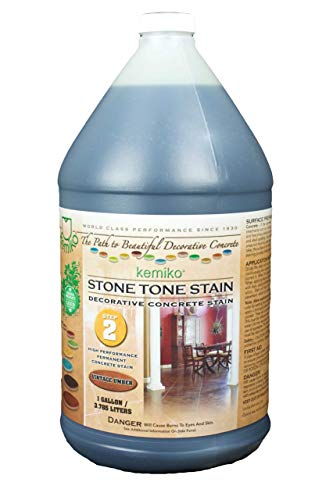
Kemiko is the professional installer's acid stain of choice for decorative commercial floors, restaurant interiors, and high-end residential projects. The Stone Tone line produces particularly rich, layered color with excellent depth. Colors mix and layer to create custom effects. It is sold in professional concentrations, so a little goes a long way. The application chemistry is the same as Direct Colors but the pigment concentration is slightly higher, producing slightly more saturated results. Best suited for prepared, clean concrete in controlled indoor environments.
What we liked
- Non-fading, chipping or peeling premium concrete stain
Behr Concrete and Masonry Stain -- Best for DIY Patios
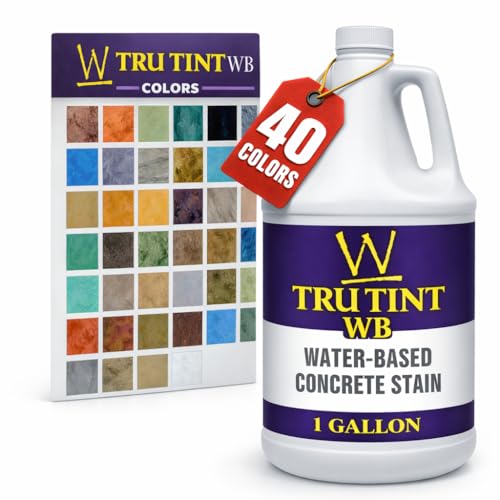
Behr's water-based stain is the most DIY-friendly option in this roundup. No reactive chemistry, no neutralizing rinse, no special safety gear. Apply with a roller or brush, let dry, and seal. The formula penetrates without forming a film, so there is nothing to peel. Coverage is up to 200 square feet per gallon. The tintable base is available through in-store mixing, giving access to dozens of custom colors. Ideal for first-time stain projects on patios and walkways where consistent, predictable color is the goal.
What we liked
- Decorative Concrete Color Made Easy: Create rich, translucent color effects on concrete, c
- Water-Based & Low VOC Formula: Low-odor, water-based concentrate is safer to use than acid
- Customizable Color Intensity: Dilute with water to control color depth and create mottled,
- Works on Multiple Concrete Surfaces: Compatible with cured concrete, overlays, cement-base
- Trusted by DIYers & Professionals: Used by contractors, artisans, and homeowners for decor

TechniCoat Water-Based Concrete Stain -- Best for Basements
TechniCoat's formula is specifically developed for indoor environments where ventilation is limited. The ultra-low-VOC water-based chemistry allows safe application in basements without extensive airing out. Colors are rich and consistent, leaning toward modern grays, charcoals, and warm earth tones suited to interior flooring aesthetics. Apply with a microfiber applicator for best coverage uniformity. Follow with a compatible water-based sealer to protect the finish from foot traffic and occasional moisture.
What we liked
- Decorative Concrete Color Made Easy: Create rich, translucent color effects on concrete, c
- Water-Based & Low VOC Formula: Low-odor, water-based concentrate is safer to use than acid
- Customizable Color Intensity: Dilute with water to control color depth and create mottled,
- Works on Multiple Concrete Surfaces: Compatible with cured concrete, overlays, cement-base
- Trusted by DIYers & Professionals: Used by contractors, artisans, and homeowners for decor
SUNDEK Classic Texture Overlay Stain -- Best for Resurfacing
SUNDEK's overlay stain is for situations where the concrete surface is too damaged or previously coated to accept a standard penetrating stain. It applies as a thin overlay that bonds to existing surfaces and accepts stain pigment within the mix. The result restores a fresh concrete-like surface over old, weathered, or previously sealed slabs. It also adds light texture, improving slip resistance outdoors. More labor-intensive than a simple stain application but the only viable option for heavily damaged or previously coated concrete.
How to choose
What to consider
The first decision is reactive versus non-reactive. Acid stains produce unique, one-of-a-kind results but require safety precautions and a neutralizing step. Water-based stains are more predictable and user-friendly. For indoor slabs, low-VOC water-based formulas are the standard choice. For outdoor surfaces in direct sun, UV-stable formulas with sealer compatibility are essential. Surface condition drives the choice between penetrating stains and overlay systems -- penetrating stains need clean, open concrete pores, while overlays can work over previously coated or damaged surfaces.
What to consider
For finishing and protection after staining, see our [best concrete stain and sealer](/articles/best-concrete-stain-and-sealer) guide for combo products. For pool-specific staining requirements, the [best concrete stain for pool deck](/articles/best-concrete-stain-for-pool-deck) guide applies. Methodology details are at [/methodology](/methodology).
Common questions
Acid stains are reactive -- they chemically bond with the concrete minerals to produce permanent, mottled color that cannot peel. Water-based stains penetrate the pores and leave pigment behind, offering more color consistency and a wider color palette. Acid stains are harder to apply safely but produce more unique results. Water-based stains are more forgiving for DIY applications and easier to achieve uniform coverage.
Penetrating stains last longer than surface coatings because the color is embedded in the concrete rather than sitting on top. Acid stains are essentially permanent in color but require a sealer for surface protection. Water-based stains in direct sun typically maintain good color for three to five years before fading becomes noticeable. Indoor concrete stains can last a decade or more without reapplication.
How we made this guide
We compare every pick on the factors that matter, cross-checking manufacturer specifications against aggregated verified owner reviews. We rank independently and never take payment for placement. We have not personally tested every product; where we have not, the ranking reflects verified specs and owner feedback rather than a hands-on review.
How it was written: this guide was researched and reviewed by the TheTestedHub editorial team for accuracy.
Affiliate disclosure: TheTestedHub is reader-supported. When you buy through links on our site, we may earn a commission at no extra cost to you.
More guides

Fix Your Driveway Cracks with the Best Concrete Fillers

Which Drill Accessories Are Best in 2026?

Cordless Drill Systems Built for Real Jobsite Demands

What Makes Concrete Tools Worth Your Money in 2026?

Ghostshield 8505 Review: A Smarter Way to Protect Concrete

Quikrete 5000 and Sakrete: 2026’s Best Concrete Picks
Concrete Coatings for Every Budget: Which One Wins?
