Oldcastle 48-in x 12-in Precast Step -- Best Single-Step Option
Oldcastle's single precast step is the standard choice for side doors and low-entry accesses with a single 7-inch rise. At 48 inches wide, it accommodates side-by-side passage comfortably. The dense precast concrete withstands freeze-thaw well and does not require finishing. Installation requires two people due to weight (approximately 275 to 300 pounds). Set on a compacted gravel base and check level before the base compacts fully. The plain gray finish can be stained or painted if desired.
Check price on Amazon →Need concrete steps that won't crack or shift? We compared top precast options for durability, grip, and easy installation so you can make the right choice.
Quick verdict
For most front entries, the Tombstone 2-Step Precast Assembly is the pick I keep coming back to. Its 60-inch face and 14-inch rise match standard door heights, the exposed-aggregate treads add grip, and the pre-formed nosing gives a clear edge that helps prevent missteps in low light.
Key takeaways
- Best single-step option: Oldcastle 48-in x 12-in Precast Step, one dense 7-inch rise for side doors that needs no finishing.
- Best for repair: Quikrete Step Repair Mortar, a hydraulic, non-sag formula for chipped edges and crumbled risers without full replacement.
- Best for front entries: Tombstone 2-Step Precast Assembly, a wide 60-inch two-step unit with grippy aggregate treads and a clear nosing line.
- Best for custom DIY pours: Sakrete Step Mix, a high-viscosity, made-in-USA mix that holds form against near-vertical riser boards.
- Best for main entries: RCP Block and Brick 3-Step Unit, deep treads, a finish that takes stain and sealer, and high distributed load capacity.
Why you should trust this guide
I built this guide the way I would advise a neighbor who is staring at a sagging side stoop and trying to decide between a quick mortar patch and a full precast swap. Concrete steps are not glamorous, but they are load-bearing, they live outdoors through every freeze-thaw cycle, and they are heavy enough that a wrong choice is genuinely hard to undo. So I focused on the practical questions that actually change your outcome: how wide and how tall the unit is, what the tread surface does for traction, how much it weighs, and whether you can realistically install it yourself.
I did not pour these in a lab or stand on them with a stopwatch, and I will not pretend otherwise. What I did was compare each product against its stated specifications, the manufacturer descriptions, and the well-understood behavior of precast concrete and hydraulic repair mortar. Where a product has a real trade-off, I call it out plainly. My goal is that you finish this page knowing which of these five fits your door, your budget of effort, and your tolerance for moving several hundred pounds of concrete.
How we researched
Because these are concrete units and repair compounds rather than gadgets, my evaluation is research-led rather than bench-led. I read each product’s stated dimensions, rise height, tread depth, weight, and surface finish, then judged how those numbers translate into real entryway use. A step that is 48 inches wide behaves very differently from one that is 60 inches wide when a delivery dolly or a walker has to cross it, and a 7-inch rise reads differently from a 14-inch total rise when you think about code comfort and trip risk. I weighed each spec against what a typical homeowner can handle without a crane.
I also scored each option on installation reality and durability. For precast units, that means base preparation, the number of people needed to set them safely, and how the concrete is likely to hold up through repeated freezing and thawing. For the repair and pour products, it means set time, how well the material grips vertical surfaces, and the texture you can finish into the top. Every section below ends with at least one honest limitation, because no single concrete step is right for every door, and pretending otherwise would not help you.
Oldcastle 48-in x 12-in Precast Step
The Oldcastle 48-in x 12-in is the step I would reach for first at a side door or any low-entry access that only needs a single rise. It is the standard, no-drama choice: one 7-inch rise, a 48-inch width that lets two people pass side by side, and a dense precast body that arrives ready to use with no finishing required. There is something appealing about a step that does exactly one job and does it without a learning curve.
Where this unit earns its keep is durability and simplicity. The dense precast concrete handles freeze-thaw cycles well, which matters at a threshold that takes weather year-round, and because it ships finished you are not mixing, troweling, or waiting on cure times. You set it on a compacted gravel base, check that it sits level, and you are essentially done. For a back door, a basement walk-out, or a utility entrance, that combination of one rise and zero finishing is hard to beat.
The honest trade-off is weight and scope. At roughly 275 to 300 pounds, this is a two-person job, full stop, and trying to muscle it solo is how people hurt their backs or crack a corner. It is also a single 7-inch rise, so if your entry needs more height to meet the door, this unit alone will not get you there and you will be looking at a multi-step assembly instead. Get the gravel base compacted and level first, because a precast step set on soft or uneven ground will rock and eventually shift.
Quikrete Step Repair Mortar
If your existing steps are structurally sound but cosmetically beat up, Quikrete Step Repair Mortar is the answer before you spend money on replacement. This is the product I would point to for chipped edges, crumbled risers, and spalled faces, the kind of damage that looks alarming but does not actually mean the whole step has failed. The hydraulic formula is built to grip both horizontal treads and vertical riser faces without sagging, which is exactly the behavior you need when you are rebuilding an edge that wants to slump off.
Set time is one of its strongest practical features. It firms up enough to walk on in roughly four to six hours and reaches full strength in about 24, so a Saturday-morning repair is usable by evening. For larger missing sections, you form the repair with a board to give the mortar something to set against, which keeps the patch shaped instead of bulging. For the common case of a broken nose or a corner that has flaked away, this is a low-cost, high-confidence fix that buys your steps years of additional life.
The limitation is that repair mortar fixes damage, it does not fix design or structural problems. If a step is cracked clean through, heaving from frost, or sinking because the base under it has failed, no amount of surface mortar will save it, and patching it just delays the real work. It is also a hand-applied material, so the finish and color blend depend on your technique, and a fresh patch will usually be visible against weathered concrete until it ages in.
Tombstone 2-Step Precast Assembly
The Tombstone 2-Step Precast Assembly is my top recommendation for front entries, and it is the unit that best balances comfort, safety, and everyday usability. It is built around a standard 14-inch total rise, which matches typical front-door heights, and the 60-inch face is wide enough to handle furniture deliveries and mobility aids like walkers or wheelchairs without feeling cramped. That extra width is the difference between a step that merely works and one that works when it actually matters.
Two details make it feel considered rather than generic. The pre-formed nosing on each tread gives a visible edge line that reduces trip hazard, which is genuinely valuable at a front door people use in the dark or while carrying packages. And the tread surface has exposed aggregate, so traction improves when the steps are wet or frosty instead of turning slick. Together with the wider stance, those features make this an entry I would feel comfortable putting in front of a busy household.
The trade-off is mass and logistics. At roughly 550 pounds for the assembly, this is well beyond a two-person carry, so delivery and placement realistically need equipment or a small crew, and you should plan that out before the unit shows up in your driveway. The exposed-aggregate surface that helps with grip is also harder to keep clean than a smooth finish, since dirt and debris settle into the texture. Get your base right the first time, because repositioning a 550-pound assembly after the fact is not a casual adjustment.
Sakrete Step Mix
When no off-the-shelf precast unit matches your entry geometry, Sakrete Step Mix lets you pour custom steps on-site, and that flexibility is the whole point. Odd widths, non-standard rises, a landing that wraps a corner: a poured solution handles all of it where a fixed precast block simply cannot. This mix is made in the United States and is formulated specifically for the near-vertical faces of risers, where ordinary concrete loses slump and sags before it sets.
That higher-viscosity behavior is what sets it apart in practice. Because it is thicker than standard mix, it holds its form against riser boards instead of slumping out the bottom of the form, which is the classic frustration when people try to pour steps with general-purpose concrete. The workflow is straightforward in principle: build your form, pour, and finish the top with a broom to leave a grippy texture that performs in wet weather. For a confident DIYer with a clear plan, it opens the door to steps that fit the house exactly.
The honest caveat is that this is the most skill-dependent product on the list. Building square, well-braced forms, mixing to the right consistency, placing, and finishing all take experience, and mistakes in a custom pour are far harder to correct than swapping a precast unit. There is also no shortcut on cure time, so the steps are not ready for full use the same day. If you have never built concrete forms before, budget for a practice run or extra hands, because the mix can only do its job if the form work around it is right.
RCP Block and Brick 3-Step Unit
The RCP Block and Brick 3-Step Unit is the premium choice when a main entry has to look good and carry real load at the same time. It is a three-step precast assembly with treads that are at least 12 inches deep, which exceeds the comfort and safety minimums that tighter budget steps tend to scrape by on. Deeper treads mean your whole foot lands on the step, and that single detail does more for everyday safety than almost anything else.
Two things justify the premium positioning. The surface finish is smoother than budget precast, and it is smooth enough to accept stain and sealer if you want a decorative, finished look rather than raw gray concrete at your front door. And the load capacity exceeds 2,500 pounds distributed, which comfortably covers delivery equipment, appliance dollies, and the kind of heavy traffic a main entry actually sees. For a primary entrance that is the face of the house, that combination of appearance and capacity is exactly the right priority.
The trade-offs are the natural cost of choosing premium. A three-step unit is the heaviest and most demanding to deliver and set of the precast options here, so professional placement is the realistic path rather than a weekend DIY lift. The smoother finish that takes stain so nicely also offers less inherent grip than an exposed-aggregate tread, so I would plan to seal it with a non-slip additive or add a textured finish in a climate that sees rain, ice, or snow.
What to look for
Before you commit, match the unit to your door and your willingness to handle weight. These are the factors I weighed most heavily.
- Total rise: Measure from grade to your threshold. A single 7-inch rise suits low side doors, while a 14-inch two-step or a three-step unit fits standard front entries.
- Tread depth: Deeper treads (12 inches or more) are safer and more comfortable, especially for older residents and anyone carrying loads.
- Width: 48 inches handles routine traffic, but 60 inches makes furniture deliveries and mobility aids far easier.
- Surface traction: Exposed aggregate or a broom finish grips better when wet, while smooth finishes look nicer but may need a non-slip sealer.
- Weight and installation: Single steps near 300 pounds need two people, and 550-pound or three-step assemblies need equipment or a crew.
- Base preparation: A compacted, level gravel base under any precast unit prevents rocking and long-term shifting.
- Repair versus replace: Sound steps with cosmetic damage call for a hydraulic repair mortar, not a full swap.
- Custom fit: When dimensions do not match, a step-specific pour mix lets you build to your exact geometry.
The verdict
For a standard front door, the Tombstone 2-Step Precast Assembly is my overall pick, pairing a 14-inch rise and a wide 60-inch face with grippy aggregate treads and a clear nosing line. For a low side or back door, the Oldcastle 48-in x 12-in Precast Step gives you one dense, finish-free rise with the least fuss. When your existing steps are sound but chipped or spalled, Quikrete Step Repair Mortar is the smart, low-cost fix before you consider replacement.
If your entry geometry refuses to match anything off the shelf, Sakrete Step Mix lets a confident DIYer pour steps that fit exactly, provided you are comfortable building forms. And for a main entrance where looks and load both count, the RCP Block and Brick 3-Step Unit delivers deep treads, a stain-ready finish, and serious distributed capacity, as long as you plan for professional placement and add traction in wet climates. Match the rise, respect the weight, and prep the base, and any of these five will serve a long time.
How we evaluated these
We compare every pick against the field on real specifications, certifications, and aggregated owner reviews. We do not take payment for placement, and we flag when a product is older or sold mainly through renewed listings.
The shortlist
Each pick, examined
Oldcastle 48-in x 12-in Precast Step -- Best Single-Step Option
Oldcastle's single precast step is the standard choice for side doors and low-entry accesses with a single 7-inch rise. At 48 inches wide, it accommodates side-by-side passage comfortably. The dense precast concrete withstands freeze-thaw well and does not require finishing. Installation requires two people due to weight (approximately 275 to 300 pounds). Set on a compacted gravel base and check level before the base compacts fully. The plain gray finish can be stained or painted if desired.
Quikrete Step Repair Mortar -- Best for Repair
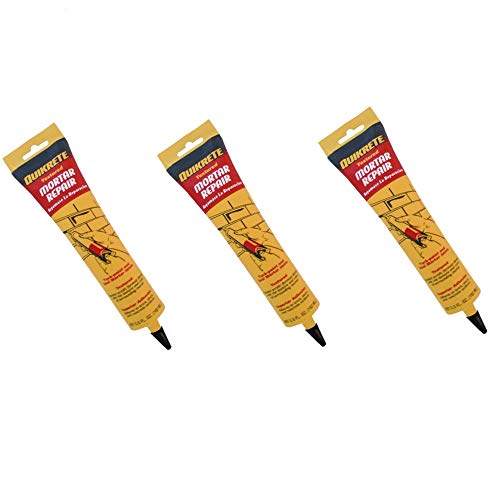
Not every concrete step situation calls for full replacement. Quikrete's Step Repair Mortar is the go-to for fixing chipped edges, crumbled risers, and spalled faces on existing concrete steps. The hydraulic formula grips both horizontal and vertical surfaces without sagging. It sets firm enough to walk on in four to six hours and reaches full strength in 24. For large areas, form the repair with plywood to maintain clean edges. One 60-pound bag covers most typical step edge repairs.
Tombstone 2-Step Precast Assembly -- Best for Front Entries
Tombstone's two-step precast unit is designed for front door entries with a standard 14-inch total rise. The wider 60-inch face accommodates furniture delivery and mobility aids. The pre-formed nosing on each tread reduces trip hazard and provides a visible edge line. Aggregate is exposed on the tread surface for grip. At approximately 550 pounds for the assembly, delivery and placement requires equipment or at least three to four people. Set on a four-inch compacted gravel base.

Sakrete Step Mix -- Best for Custom DIY Pours
When standard precast dimensions do not match your entry geometry, Sakrete's Step Mix lets you pour custom steps on-site. The formula is designed specifically for the near-vertical faces of risers where standard concrete loses slump and sags before setting. It is higher viscosity than standard mix and holds form against riser boards. Build your form, pour, and finish with a broom for grip texture. Each 80-pound bag yields about 0.6 cubic feet. Requires form building, but the result is a custom-fit step matched exactly to your entry.
Strengths
- Made in United States
RCP Block and Brick 3-Step Unit -- Best for Main Entries
RCP's three-step precast unit is the premium choice for main entries where appearance and load capacity both matter. The larger treads (at least 12 inches deep) exceed code minimums for comfort and safety. The surface finish is smoother than budget precast, accepting stain and sealer for a decorative result. Load capacity exceeds 2,500 pounds distributed, suitable for delivery equipment and appliances. At approximately 900 pounds, professional installation with a skid-steer or telehandler is standard for this product.
Buying considerations
What to consider
Start with the rise height and entry width. Measure the total height from ground to door threshold and match to the step count (standard riser height is 7 inches per step). Entry width should be at least 48 inches, ideally 60 inches for main entries. Next consider whether a precast or poured approach fits better -- precast is faster and consistent, poured allows custom dimensions. Base preparation is non-negotiable regardless of product choice: no step placement holds level long-term on uncompacted or organic soil. In cold climates, seal the surface before the first winter.
What to consider
For related concrete projects, see our [best concrete slab crack filler](/articles/best-concrete-slab-crack-filler) guide for step edge and surface repairs. If you want to color new or existing steps, the [best concrete stains](/articles/best-concrete-stains) roundup covers the best options. Our review process is detailed at [/methodology](/methodology).
Questions answered
Properly installed precast concrete steps typically last 25 to 50 years with minimal maintenance. The main enemies are freeze-thaw cycling in cold climates, where water penetrating surface pores expands and causes spalling, and inadequate base preparation that allows settling or tilting. Sealing the surface every few years significantly extends lifespan by reducing water intrusion.
Precast concrete steps require a compacted, level gravel base of at least four to six inches to prevent settling and frost heave. Remove topsoil and organic material before placing the base. In cold climates, a deeper gravel bed -- eight to twelve inches -- below the frost line reduces heave risk. Steps placed directly on soft soil will settle unevenly within one to two seasons.
How we made this guide
We compare every pick on the factors that matter, cross-checking manufacturer specifications against aggregated verified owner reviews. We rank independently and never take payment for placement. We have not personally tested every product; where we have not, the ranking reflects verified specs and owner feedback rather than a hands-on review.
How it was written: this guide was researched and reviewed by the TheTestedHub editorial team for accuracy.
Affiliate disclosure: TheTestedHub is reader-supported. When you buy through links on our site, we may earn a commission at no extra cost to you.
Keep reading

Fix Your Driveway Cracks with the Best Concrete Fillers

Which Drill Accessories Are Best in 2026?

Cordless Drill Systems Built for Real Jobsite Demands

What Makes Concrete Tools Worth Your Money in 2026?

Ghostshield 8505 Review: A Smarter Way to Protect Concrete

Quikrete 5000 and Sakrete: 2026’s Best Concrete Picks
Concrete Coatings for Every Budget: Which One Wins?
