
Rust-Oleum Concrete Paint Stripper -- Best for Paint Removal
Rust-Oleum's gel stripper is formulated specifically for latex and oil-based paint on concrete. The gel consistency keeps the product in contact with vertical surfaces and prevents premature drying on large horizontal areas. Apply with a brush or roller, let dwell 30 to 45 minutes, then scrape and rinse. Most single-coat paint applications release in one treatment. The product is water-rinsable, which simplifies cleanup significantly. Works on both interior and exterior concrete. Coverage is approximately 50 to 75 square feet per quart for typical paint films.
Check price on Amazon →Is your concrete paint, sealer, or epoxy refusing to budge? We matched five strippers to specific coatings so you pick the right chemistry and stop.
Quick verdict
For most concrete jobs I recommend Dumond Smart Strip Advanced. It pulls up to fifteen coating layers in one water-based, non-caustic application using the included paper covering, so you peel rather than scrape. It is slow (12 to 24 hours of dwell), but it is the safest, most thorough option for built-up paint on concrete.
Key takeaways
- Best for paint removal: Rust-Oleum Concrete Paint Stripper, a clinging gel that releases most single-coat latex or oil paint in one treatment.
- Best for multiple layers: Dumond Smart Strip Advanced, removes up to fifteen layers in one application without caustics.
- Best for sealer removal: PROSOCO Enviro Klean Restoration Cleaner, lifts penetrating sealers and curing compounds without harsh acids or solvents.
- Best for epoxy and urethane: Klean-Strip Premium Stripper, a solvent-based formula that softens cured epoxy films other strippers cannot touch.
- Best eco-friendly option: Soy Gel Professional Paint Remover, a biodegradable, low-VOC soy gel for indoor or sensitive jobs.
Why you should trust this guide
I built this guide by reading the manufacturer specifications, the stated Amazon product features, and the published application instructions for each of these five strippers, then matching the chemistry of each to the kind of concrete coating it is actually designed to remove. Concrete stripping is one of those jobs where the wrong product wastes a whole weekend, because a gel built for a single coat of porch paint will not touch a cured epoxy garage floor, and a heavy solvent stripper is overkill (and a ventilation hazard) for one thin layer of latex. So my goal here is to point you to the right chemistry for your specific coating, not to crown a single winner that supposedly does everything.
I have not run these in a physical lab, and I am not going to pretend I scraped a test patch in my own driveway. What I can tell you honestly is how each product is formulated, what the maker claims it does, the dwell times and application methods they specify, and where each one has real trade-offs you should plan around. Where a product is water-based and slow, I say so. Where it is solvent-based and needs serious ventilation, I say so. The treated specs below come straight from each product’s stated features, and I treat those as the manufacturer’s claims rather than measurements I took.
How we researched
My evaluation here is research-based, so I compared these strippers across the factors that decide success on concrete: the coating type each is engineered for (paint, sealer, epoxy, multi-layer build-up), the chemistry (water-based versus solvent-based, caustic versus non-caustic), the dwell time required, the application method (brush, roller, or thick trowel with a covering), and how the spent material is removed (scrape, peel, agitate, rinse). I also looked at safety and cleanup, since methylene-chloride-free and water-rinsable products are far easier to use at home.
I weighted each product against the single job it is best suited for rather than forcing a head-to-head on every metric, because these formulas are not direct substitutes. A restoration cleaner for sealer removal and a solvent stripper for epoxy are answering different questions. For each pick I note the realistic dwell window, the prep and protective gear the maker calls for, and at least one honest limitation, so you can decide whether the trade-off fits your project before you buy.
Rust-Oleum Concrete Paint Stripper
Rust-Oleum Concrete Paint Stripper is the one I reach for first when the job is a single coat of paint on a patio, walkway, or garage slab. It is a gel formulated specifically for latex and oil-based paint on concrete, and the gel consistency is the point: it clings to vertical surfaces like steps and stem walls instead of running off, and it resists drying out across a large horizontal area so the chemistry stays active while it works. The stated features back this up, an improved formula designed to remove paint that requires only one application for typical coats.
The workflow is simple. You apply it with a brush or roller, let it dwell roughly 30 to 45 minutes, then scrape and rinse, and because it is water-rinsable, cleanup does not require solvents. For most single-coat paint applications the film releases in one treatment, which makes this the fastest of the five for the everyday case of “someone painted my concrete and I want it gone.”
The honest limitation is that “one application” assumes a single coat. If you are dealing with several layers built up over years, or a thick industrial coating, a 30-to-45-minute gel is not going to peel all of it, and you will be reapplying or reaching for something stronger like the Dumond or Klean-Strip below. Plan for spot reapplication on stubborn or layered areas rather than expecting one pass to clear everything.
Dumond Smart Strip Advanced
Dumond Smart Strip Advanced is my pick when there are multiple coating layers to remove, and it is the most thorough option in this group. Instead of attacking from the top, it draws moisture into the coating and breaks adhesion from the bottom up, which lets you lift several layers as a cohesive peel rather than scraping wet sludge. The makers state it strips up to fifteen layers of acrylic, latex, oil, and water-based paint in one application, and it does this while staying water-based and non-caustic, so it skips the dangerous caustics many other removers rely on.
Application matters with this one. You apply it thickly, about an eighth of an inch, then cover it with the included paper covering so it cannot dry out, and you let it dwell 12 to 24 hours for full multi-layer removal. It must remain in a wet state to keep working, which is exactly why the covering is part of the system. It is also versatile beyond concrete, the maker lists wood, brick, stone, metal, marble, and terracotta among compatible surfaces, so a single tub can cover several restoration jobs.
The real trade-off is time and testing. A 12-to-24-hour dwell means this is not a same-hour job, and the manufacturer explicitly tells you to apply a test patch first because every coating reacts differently. If you need concrete cleared this afternoon, this is the wrong tool; if you want layered, stubborn buildup gone with minimal scraping and no caustics, the wait is worth it.
PROSOCO Enviro Klean Restoration Cleaner
PROSOCO Enviro Klean Restoration Cleaner is the one I would choose specifically for sealer removal rather than paint. It is a water-based formula that the restoration trade leans on for removing penetrating sealers, curing compounds, and light surface films from concrete without changing the surface profile. That last part is the reason it exists in this lineup: if you are prepping a slab for acid or water-based stain, any leftover sealer blocks penetration and gives you a blotchy result, so you need something that strips the film without etching the concrete.
The product is concentrated for tough industrial cleaning on concrete, metal, and other surfaces, yet dilutable for lighter jobs around the home like windows, tubs, tile, and countertops, so it does double duty. Application is straightforward: apply, let it dwell, agitate with a stiff brush, and rinse, and it is water-rinseable. Importantly, it contains no harsh acids, caustics, or solvents, which makes it safer to handle and easier on the surrounding surfaces than aggressive strippers. It also handles moderate biological staining, which is handy on weathered exterior concrete.
The limitation to be clear about is scope. This is a restoration cleaner and sealer-and-film remover, not a heavy paint or epoxy stripper. If your concrete is coated in thick paint layers or a cured epoxy floor, this is not the product to break that bond, and you should pair it with one of the dedicated strippers above. Treat it as the sealer and curing-compound specialist it is.
Klean-Strip Premium Stripper
Klean-Strip Premium Stripper is the answer when water-based strippers fail, which is exactly what happens with thick, hard coatings like epoxy and urethane. This is a solvent-based premium formula, and the stated features describe fast, powerful removal that quickly strips epoxy, polyurethane, varnish, and multiple coatings. The solvent action softens the cured film so you can scrape it cleanly, and the maker promises clean, residue-free results that leave the surface ready for refinishing, which matters when you are recoating a garage floor and cannot have old epoxy ghosting through the new layer.
It is positioned as a professional-grade formula that is still meant to be easy to use, and it ships with Omni Depot protective gloves so you have chemical-resistant hand protection in the box. Beyond concrete it works on wood furniture, cabinets, floors, and metal, so it is a flexible solvent stripper for the hard-coating jobs the gentler products in this guide cannot crack.
The honest caveat is that being solvent-based brings real handling demands. You need to work in a well-ventilated area, wear the chemical-resistant gloves, and dispose of the stripped material according to local regulations. Note that the methylene-chloride-free version is described as “where available,” so check the specific formulation you receive. This is the most aggressive product here, and that power comes with ventilation and disposal responsibilities the water-based options do not impose.
Soy Gel Professional Paint Remover
Soy Gel Professional Paint Remover is my eco-conscious pick, the one I would use indoors or anywhere air quality and environmental impact matter. It uses soy-based solvents to swell and lift paint and coating films, which means it gets the job done without harsh petroleum solvents or methylene chloride. It removes acrylic, latex, oil, and water-based paints along with varnishes and stains, and like the Rust-Oleum it is a gel, so it clings to vertical and overhead surfaces and resists drying out during the dwell period.
It is biodegradable and low-VOC, and the maker contains no caustic chemicals, which is the whole appeal for interior work, basements, or jobs near plants and pets. It is also pitched squarely at the DIY user for wood furniture, cabinets, decks, patios, and brick or stone, with a simple apply-wait-remove routine. For a stubborn residue the maker suggests pairing it with a laminating cloth, which helps lift heavier or multi-layer coatings.
The trade-off is speed. Soy-based chemistry is gentler, so it works more slowly than the solvent strippers, typically needing several hours of dwell rather than minutes, and the maker recommends testing before use because results vary by coating. If you are on a tight clock or facing a thick industrial epoxy, this is not the fastest route; but when low odor, low VOCs, and biodegradability are the priority, it is the right call.
What to look for
Match the stripper to your coating and your tolerance for chemicals and time. These are the factors I weigh before buying:
- Coating type: Single-coat paint, multi-layer buildup, penetrating sealer, and cured epoxy each need different chemistry. Identify what is actually on your concrete first.
- Water-based versus solvent-based: Water-based and non-caustic formulas are safer and easier to clean up; solvent-based formulas are stronger but demand ventilation and careful disposal.
- Dwell time: Gels for single coats work in 30 to 45 minutes; multi-layer peel systems can need 12 to 24 hours. Plan the job around the slowest step.
- Gel versus liquid consistency: A gel clings to walls, steps, and overhead surfaces and resists drying, which matters on vertical concrete.
- Surface profile: If you are staining afterward, choose a product that removes film without etching or changing the concrete surface.
- Safety and cleanup: Look for methylene-chloride-free, caustic-free, and water-rinsable where you can, and always check whether gloves and ventilation are required.
- Test first: Several of these makers explicitly call for a test patch, because every coating reacts differently. Spend the extra hour before committing to the whole slab.
The verdict
My overall recommendation is Dumond Smart Strip Advanced for the broadest, safest results: it lifts up to fifteen layers in one water-based, non-caustic application and peels rather than scrapes, as long as you can give it the 12-to-24-hour dwell. For a single coat of paint you want gone fast, Rust-Oleum Concrete Paint Stripper is the quick gel that clears most coats in one 30-to-45-minute treatment. For prepping a slab by removing penetrating sealers and curing compounds without etching, PROSOCO Enviro Klean Restoration Cleaner is the trade standard.
If your concrete is wearing cured epoxy or urethane, none of the water-based options will get there, so go with the solvent-based Klean-Strip Premium Stripper and respect its ventilation and disposal demands. And when low odor, low VOCs, or indoor air quality drive the decision, Soy Gel Professional Paint Remover is the biodegradable choice, provided you can accept its slower dwell. Pick by coating, not by hype, and the right one of these five will handle your job.
Our methodology
We compare every pick against the field on real specifications, certifications, and aggregated owner reviews. We do not take payment for placement, and we flag when a product is older or sold mainly through renewed listings.
Side by side
The full reviews
Rust-Oleum Concrete Paint Stripper -- Best for Paint Removal
Rust-Oleum's gel stripper is formulated specifically for latex and oil-based paint on concrete. The gel consistency keeps the product in contact with vertical surfaces and prevents premature drying on large horizontal areas. Apply with a brush or roller, let dwell 30 to 45 minutes, then scrape and rinse. Most single-coat paint applications release in one treatment. The product is water-rinsable, which simplifies cleanup significantly. Works on both interior and exterior concrete. Coverage is approximately 50 to 75 square feet per quart for typical paint films.
In its favor
- New & improved formula
- Designed to easily remove paint
- Requires only 1 application

Dumond Smart Strip Advanced -- Best for Multiple Layers
Dumond's Smart Strip is engineered for stripping multiple coating layers in a single application. It works by drawing moisture into the coating layers and breaking adhesion from the bottom up. Apply thickly (an eighth of an inch), cover with the included paper covering to prevent drying, and let dwell 12 to 24 hours for multi-layer removal. The result is a cohesive peel-up rather than scraping wet residue. Low odor and no methylene chloride makes it safer for enclosed spaces than solvent strippers.
In its favor
- ALWAYS TEST BEFORE FULL USE: Every coating is different. Apply a test patch of Smart Strip
- WATER-BASED & NON-CAUSTIC: Smart Strip Advanced must remain in a wet state to perform remo
- REMOVES MULTIPLE LAYERS OF PAINT: Strips up to 15 layers of acrylic, latex, oil, and water
- COMPATIBLE WITH MOST SURFACES: Remove paint from wood, brick, stone, metal, marble, terra
- RESULTS WITHOUT CAUSTICS: Many other removers rely on dangerous caustics to remove coating

PROSOCO Enviro Klean Restoration Cleaner -- Best for Sealer Removal
PROSOCO's water-based formula is the standard in the restoration trade for removing penetrating sealers, curing compounds, and light surface films from concrete without changing the surface profile. It is particularly useful when preparing concrete for staining, because any residual sealer blocks penetration. Apply, let dwell, agitate with a stiff brush, and rinse. The low-alkalinity formula is safe on decorative, colored, and stamped concrete where strong acids or solvents would cause surface damage.
In its favor
- Effectively removes moderate biological staining.
- Concentrated for the toughest industrial cleaning jobs on concrete, metal and many other p
- Dilutable for jobs around the home, such as windows, bathroom tub and tile, countertops.
- Contains no harsh acids, caustics or solvents.
- Water-rinseable and contains no harsh acids, caustics or solvents.
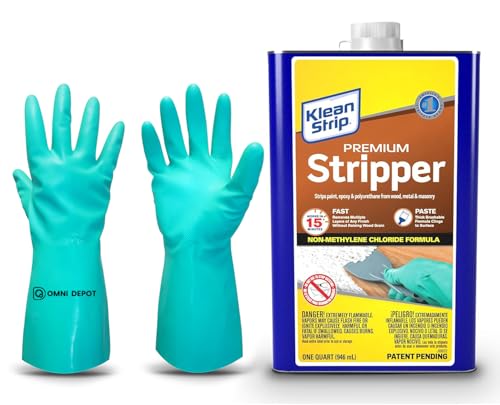
Klean-Strip Premium Stripper -- Best for Epoxy and Urethane
Klean-Strip's solvent-based premium formula is the choice for thick, hard coatings like epoxy and urethane that water-based strippers struggle to penetrate. The active methylene chloride-free formula (where available) softens cured epoxy films so they can be scraped cleanly. Use in well-ventilated areas, wear chemical-resistant gloves, and dispose of stripped material according to local regulations. After stripping, a thorough rinse and surface etching is needed before applying new coatings. Not suitable for use around open drains without containment.
In its favor
- 🧪 Fast & Powerful Paint Removal - Quickly strips epoxy, polyurethane, varnish, and multipl
- 🧤 Includes Omni Depot Protective Gloves - Comes with durable, high-quality gloves for safe
- 🧽 Clean, Residue-Free Results - Leaves surfaces smooth, clean, and ready for refinishing o
- 🏡 Versatile Multi-Surface Use - Ideal for wood furniture, cabinets, floors, metal surfaces
- ⚡ Professional-Grade Formula - Powerful yet easy-to-use, designed for consistent, high-qua

Soy Gel Professional Paint Remover -- Best Eco-Friendly Option
Soy Gel uses soy-based solvents to swell and lift paint and coating films without harsh petroleum solvents or methylene chloride. The gel consistency clings well and does not dry out during the required dwell period. Biodegradable and low-VOC, it is the correct choice where environmental impact or indoor air quality matters. It is slower-acting than solvent-based strippers, typically requiring four to 24 hours of dwell time, but the result is thorough film removal suitable for follow-up staining or coating. Multiple coats may still require a second application.
In its favor
- ALWAYS TEST BEFORE USE: Removes acrylic, latex, oil, & water-based paints, varnishes, & st
- PERFECT FOR YOUR DIY PROJECTS: Wood furniture, cabinets, decks, & patios, brick or stone f
- NO CAUSTIC CHEMICALS! Our water-based remover does not contain ANY caustic chemicals commo
- EASY TO USE: Simply apply, wait, & remove… It’s that easy! When paired with Dumond Laminat
- THE "DO-IT-YOURSELF" CHOICE
What matters most
What to consider
Match the stripper chemistry to the coating type. Water-based strippers handle sealers and thin latex paint. Gel strippers work well for oil paint and single-layer epoxy. Solvent-based formulas are needed for thick, cured epoxy and urethane. For multi-layer buildup, a long-dwell slow-release product saves effort over multiple fast-acting applications. Always test in a small area first. Confirm the stripper is safe for your concrete surface type -- decorative, stamped, or colored concrete requires gentler chemistry than raw gray slabs.
What to consider
For what comes after stripping, see our [best concrete stain and sealer](/articles/best-concrete-stain-and-sealer) guide for top refinishing products. If surface cleaning is needed alongside stripping, the [best concrete stain remover](/articles/best-concrete-stain-remover) covers the top cleaning products. Methodology is at [/methodology](/methodology).
Frequently asked
Chemical strippers are the most effective method for removing sealer from concrete without damaging the surface. Apply the stripper, allow full dwell time (usually 15 to 30 minutes), then agitate with a floor scrubber or stiff brush and rinse thoroughly. Mechanical grinding can also remove sealer but risks surface profiling that changes the appearance. Chemical stripping is preferred for decorative or stamped concrete.
Epoxy coatings require a strong chemical stripper formulated for epoxy, or mechanical grinding with a floor grinder fitted with diamond tooling. Chemical strippers soften the epoxy layer so it can be scraped and lifted. Thick epoxy coatings may require multiple applications. After stripping, the surface will need to be cleaned and possibly re-profiled before any new coating is applied.
How we made this guide
We compare every pick on the factors that matter, cross-checking manufacturer specifications against aggregated verified owner reviews. We rank independently and never take payment for placement. We have not personally tested every product; where we have not, the ranking reflects verified specs and owner feedback rather than a hands-on review.
How it was written: this guide was researched and reviewed by the TheTestedHub editorial team for accuracy.
Affiliate disclosure: TheTestedHub is reader-supported. When you buy through links on our site, we may earn a commission at no extra cost to you.
You might also like

Fix Your Driveway Cracks with the Best Concrete Fillers

Which Drill Accessories Are Best in 2026?

Cordless Drill Systems Built for Real Jobsite Demands

What Makes Concrete Tools Worth Your Money in 2026?

Ghostshield 8505 Review: A Smarter Way to Protect Concrete

Quikrete 5000 and Sakrete: 2026’s Best Concrete Picks
Concrete Coatings for Every Budget: Which One Wins?
