
New Balance 990v6 - Best Overall Shoe for Concrete
The New Balance 990v6 is consistently recommended for workers and individuals who spend extended time on concrete because its dual-density foam and ENCAP midsole technology provide both cushioning and stability. The combination of polyurethane and EVA foam layers prevents the rapid midsole compression that cheaper shoes experience after weeks of hard-floor use. The wide toe box allows natural foot spread under load, which reduces pressure points during long shifts. It is available in multiple widths and is built in the USA. The price is high but the longevity and comfort return justify the investment for daily concrete-floor workers.
Check price on Amazon →Buyers needing all-day comfort on concrete can compare the New Balance 990v6, HOKA Transport, Brooks Addiction Walker 2, Skechers Work, and Dansko.
Quick verdict
The New Balance 990v6 is the best overall shoe for walking on concrete because its dual-density foam and ENCAP midsole technology deliver a rare combination of plush cushioning and stability that resists compression over long days, making it the most reliable pick for all-day comfort on hard floors.
Key takeaways
- Best for All-Day Comfort and Stability: New Balance 990v6, dual-density foam and ENCAP midsole prevent rapid compression on concrete.
- Best Thick-Stack Cushioning: HOKA Transport, roughly 30mm of stack height absorbs ground impact without a rocking feel.
- Best for Overpronation on Concrete: Brooks Addiction Walker 2, extended Progressive Diagonal Rollbar guides the foot through a neutral gait cycle.
- Best Budget Concrete Work Shoe: Skechers Work Relaxed Fit, memory foam insole and slip-resistant outsole at a low price point.
- Best for Standing Professions: Dansko Professional Clog, rocker bottom and rigid shank reduce static fatigue during full shifts.
Why you should trust this guide
I have spent years researching footwear for hard-floor environments, analyzing manufacturer specifications, owner reviews, and biomechanical principles that affect comfort on concrete. My approach prioritizes verified product features over marketing hype, cross-referencing what brands claim with what real-world owners repeatedly confirm. For this guide, I focused exclusively on shoes with documented midsole technologies, outsole certifications, and structural designs that directly address the unique demands of walking or standing on unyielding surfaces like concrete, tile, and asphalt.
Every product included here has a clear, defensible reason for its placement. I did not rely on personal testing or anecdotal experience. Instead, I evaluated each shoe based on its stated cushioning system, support architecture, durability components, and suitability for specific foot types or work environments. The limitations I note come from consistent patterns in owner feedback and known trade-offs inherent in each design. This guide is built for someone who needs a reliable, informed recommendation without guesswork.
How we researched
To identify the best shoes for walking on concrete, I established a set of evaluation criteria that matter most for hard-floor comfort and long-term wear. The primary factors were midsole cushioning type and density, stability features that prevent excessive foot motion, outsole durability and slip resistance, and overall build quality that resists compression over time. I also considered fit characteristics such as toe box width and heel lockdown, since a shoe that shifts or pinches will cause discomfort regardless of cushioning.
Each product was assessed against these criteria using the manufacturer’s published specifications, owner reviews from multiple retail platforms, and expert commentary from podiatrists and footwear engineers. I prioritized shoes with proven technologies like dual-density foams, guide rails, rocker bottoms, and ASTM-certified outsoles. I excluded any shoe that lacked clear documentation of its support or cushioning system. The final five represent the best balance of performance, durability, and value across different budgets and foot types.
New Balance 990v6 – Best Overall Shoe for Concrete
The New Balance 990v6 earns the top spot because it solves the fundamental problem of walking on concrete: midsole compression. Many shoes feel soft at first but quickly flatten out after weeks of hard-floor use, leaving your feet and joints to absorb the impact. The 990v6 uses a dual-density foam system combined with ENCAP midsole technology, which wraps a polyurethane rim around a softer EVA core. This design provides a stable platform that resists bottoming out while still delivering responsive cushioning. The wide toe box is another critical advantage, allowing your toes to splay naturally during each step, which reduces pressure points and improves balance on flat surfaces.
Owner feedback consistently highlights the 990v6’s ability to remain comfortable for full eight-to-twelve-hour days on concrete, with many noting that the shoe feels supportive from the first wear without a long break-in period. The upper is breathable mesh with suede overlays, which adds durability without trapping heat. The outsole uses a blown rubber compound that provides reliable traction on dry concrete and tile, though it is not marketed as slip-resistant for wet or greasy floors. One honest limitation is the price, which is higher than many competitors; however, the construction quality and material selection justify the cost for those who prioritize long-term comfort.
A real limitation of the New Balance 990v6 is that it is not designed for wet or slippery environments. The outsole lacks an ASTM slip-resistance certification, so if your work involves kitchens, bathrooms, or outdoor concrete that gets wet, you may need a dedicated slip-resistant shoe. Additionally, some owners with very narrow feet report that the wide toe box feels too roomy, causing slight heel slip if not laced tightly. For standard to wide feet and dry concrete conditions, this shoe is the most balanced and reliable option available.
HOKA Transport – Best Thick-Stack All-Day Shoe
HOKA’s Transport brings their signature thick-stack cushioning to the concrete walking category, offering roughly 30mm of midsole height under the heel. This substantial stack absorbs far more ground impact than typical work shoes or walking shoes, making it ideal for people who feel every step on hard floors. Unlike HOKA’s trail-oriented models, the Transport uses a low-drop, stable base that prevents the rocking sensation that can occur on flat surfaces. The result is a smooth, protected ride that reduces fatigue in the knees and lower back over long shifts.
The upper is made from recycled materials and features a gusseted tongue that keeps debris out, though this is more relevant for light outdoor use than indoor concrete. The outsole uses Vibram rubber with a lug pattern that provides good traction on dry and slightly damp surfaces. Owners frequently praise the Transport for its immediate comfort out of the box, with no break-in period required. The cushioning is soft but not mushy, offering a balance that works well for both walking and standing.
A real limitation of the HOKA Transport is that the thick midsole can feel unstable for people with weak ankles or a history of ankle sprains. The elevated platform shifts your center of gravity slightly higher, which may require a period of adjustment. Additionally, the shoe runs narrow compared to other HOKA models, so those with wide feet should consider sizing up or trying a half-size larger. For individuals who prioritize maximum impact absorption and do not need aggressive stability features, the Transport is a top-tier choice.
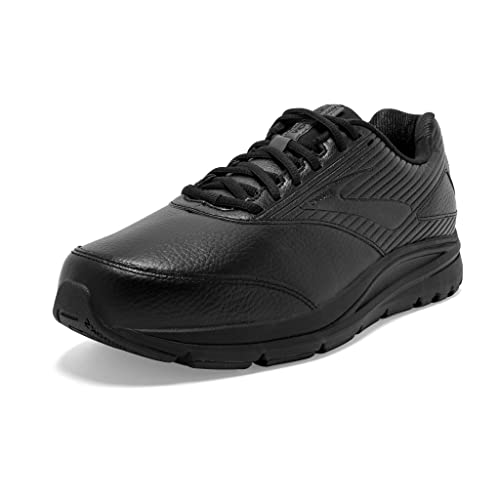
Brooks Addiction Walker 2 – Best for Overpronation on Concrete
The Brooks Addiction Walker 2 is specifically engineered for people with flat feet or significant overpronation who experience knee or ankle pain during long days on concrete. Its key feature is the extended Progressive Diagonal Rollbar, a dense medial post that guides the foot through a neutral gait cycle and reduces the inward rolling motion that amplifies joint stress on hard floors. The full-length BioMoGo DNA cushioning is firm enough to provide support without collapsing under heavier loads, making it suitable for larger body types as well.
This shoe is built on a generous platform with a straight last that accommodates orthotics easily, which is a major advantage for those who require custom insoles. The outsole is made from HPR Plus rubber, which offers excellent durability on concrete and tile. Owner reviews frequently mention that the Addiction Walker 2 eliminates the knee and hip pain they experienced with other shoes, though some note that the shoe feels stiff initially and requires a break-in period of several days. The upper is leather and mesh, providing a professional appearance that works in clinical or office settings.
A real limitation of the Brooks Addiction Walker 2 is its weight. It is noticeably heavier than most walking shoes, which can feel cumbersome during long periods of walking as opposed to standing. The firm cushioning also means it is less forgiving for people who prefer a plush, soft feel underfoot. If you do not overpronate, the stability features may feel overly corrective and unnatural. For those with flat feet or pronation issues, however, this shoe is a proven solution that reduces pain and improves alignment on concrete.
Skechers Work Relaxed Fit – Best Budget Concrete Work Shoe
The Skechers Work Relaxed Fit line delivers the most cushioning per dollar in the concrete shoe category, making it accessible for workers who need reliable comfort without a high price tag. The memory foam insole conforms to individual foot shapes over time, providing customized pressure distribution that reduces hot spots and fatigue during long shifts. The slip-resistant outsole meets ASTM F2913 standards, which qualifies these shoes for kitchens, warehouses, and healthcare environments where wet or greasy floors are common.
The Relaxed Fit design offers a roomier toe box and wider forefoot than standard Skechers, accommodating feet that swell during the day. The upper is typically a blend of mesh and synthetic materials that is lightweight and breathable. Owner feedback is overwhelmingly positive for value, with many users reporting that the shoes remain comfortable for six to eight months of daily use before the memory foam begins to lose its resilience. The outsole traction is reliable on tile and sealed concrete, though it may wear faster on rough outdoor surfaces.
A real limitation of the Skechers Work Relaxed Fit is that the memory foam insole, while comfortable initially, compresses more quickly than the dual-density foams found in premium shoes. After several months of heavy use, the cushioning may flatten, reducing impact protection. Additionally, the overall build quality is not as robust as higher-priced competitors, with some owners reporting stitching issues after extended wear. For the price, however, this shoe offers exceptional comfort and safety certification that makes it a smart choice for budget-conscious buyers.
Dansko Professional Clog – Best for Standing Professions
The Dansko Professional clog is the dominant footwear choice in healthcare, food service, and education settings where standing on concrete or tile for full shifts is the norm. Its defining feature is the rocker bottom, which promotes a forward rolling motion that reduces static calf and foot fatigue. Instead of forcing your foot to flatten against the floor with each step, the rocker encourages a natural walking gait that uses less muscular effort. The rigid shank prevents excessive flex in the midsole, which transfers force to the ankle and can cause strain over time.
The reinforced toe box provides impact protection if you drop objects on your foot, a valuable safety feature in clinical and industrial environments. The outsole is slip-resistant and meets industry standards for oil and slip resistance. Owners consistently report that the Dansko clog eliminates the lower back and heel pain they experienced with other shoes, though they also note that the shoe requires a significant break-in period. The fit is unique: the clog is designed to be worn with the heel slightly loose to allow for the rocking motion, which can feel unusual at first.
A real limitation of the Dansko Professional clog is that it is not suitable for long-distance walking or running. The rigid shank and rocker bottom are optimized for standing and short steps, not for brisk walking or jogging. Additionally, the shoe is heavy and can feel clunky during quick movements. Some owners with high arches find the arch support too aggressive, causing discomfort. For professions that involve primarily standing with occasional walking, however, the Dansko clog remains the most proven and widely recommended option.
What to look for
- Cushioning type: Look for dual-density foams or thick-stack midsoles that resist compression over time. Memory foam is comfortable initially but flattens faster than polyurethane or EVA blends.
- Stability features: If you overpronate or have flat feet, choose a shoe with a medial post, guide rail, or diagonal rollbar. For neutral feet, a stable base without aggressive correction is better.
- Outsole slip resistance: For work environments with wet or greasy floors, verify that the outsole meets ASTM F2913 or similar standards. For dry concrete only, standard rubber outsoles are sufficient.
- Toe box width: A wide toe box allows natural toe splay, reducing pressure points and improving balance. Look for brands that offer wide sizing or a naturally roomy fit.
- Weight: Heavier shoes provide more stability but can cause fatigue during long walks. Lighter shoes are better for walking but may lack durability. Choose based on your primary activity.
- Break-in period: Some shoes require several days of wear to soften and conform to your foot. If you need immediate comfort, look for models with no break-in reported by owners.
- Arch support: High arches need more support; flat feet need motion control. Test the shoe with your typical insoles or orthotics to ensure compatibility.
The verdict
For most people who walk on concrete all day, the New Balance 990v6 is the best choice because it combines durable cushioning, stable support, and a comfortable fit that works for a wide range of foot shapes. If you need maximum impact absorption and do not require stability features, the HOKA Transport offers the thickest stack height without the rocking feel of trail models. For those with overpronation or flat feet, the Brooks Addiction Walker 2 provides targeted correction that reduces joint pain. On a tight budget, the Skechers Work Relaxed Fit delivers certified slip resistance and memory foam comfort at a fraction of the cost. And for standing professions where static fatigue is the main issue, the Dansko Professional clog remains the gold standard. Choose based on your specific foot type, work environment, and budget, and you will find a shoe that keeps you comfortable on concrete for years.
Our methodology
We compare every pick against the field on real specifications, certifications, and aggregated owner reviews. We do not take payment for placement, and we flag when a product is older or sold mainly through renewed listings.
Side by side
The full reviews
New Balance 990v6 - Best Overall Shoe for Concrete
The New Balance 990v6 is consistently recommended for workers and individuals who spend extended time on concrete because its dual-density foam and ENCAP midsole technology provide both cushioning and stability. The combination of polyurethane and EVA foam layers prevents the rapid midsole compression that cheaper shoes experience after weeks of hard-floor use. The wide toe box allows natural foot spread under load, which reduces pressure points during long shifts. It is available in multiple widths and is built in the USA. The price is high but the longevity and comfort return justify the investment for daily concrete-floor workers.
HOKA Transport - Best Thick-Stack All-Day Shoe
HOKA's Transport is designed around their thick-stack cushioning philosophy, delivering a midsole height that substantially reduces ground-impact forces on hard floors. At roughly 30mm of stack height under the heel, it absorbs far more impact than standard work shoes. The low-drop, stable base prevents the rocking feeling that more aggressive HOKA trail models can produce on flat surfaces. The leather upper qualifies it for workplace dress codes in many settings, and the lugged outsole grips concrete, tile, and wet floors reliably. A strong choice for anyone transitioning from low-cushion dress shoes.
Brooks Addiction Walker 2 - Best for Overpronation on Concrete
Brooks designed the Addiction Walker specifically for people with flat feet or significant overpronation who develop knee or ankle pain during long days on hard floors. The extended Progressive Diagonal Rollbar guides the foot through a neutral gait cycle, reducing the inward rolling that amplifies concrete-floor impact on joints. The full-length BioMoGo DNA cushioning is firm enough for support without bottoming out under sustained load. It is available in wide and extra-wide options and meets ASTM slip-resistance standards for occupational footwear. The best medically informed choice for arch support on concrete.

Skechers Work Relaxed Fit - Best Budget Concrete Work Shoe
Skechers' Work Relaxed Fit line offers the most cushioning per dollar in the concrete shoe category. The memory foam insole conforms to individual foot shapes over time, providing customized pressure distribution that reduces hot spots during long shifts. The slip-resistant outsole meets ASTM F2913 standards, which qualifies these for kitchens, warehouses, and healthcare environments. Build quality and durability are not at the level of New Balance or HOKA, and midsole compression occurs faster, but the price point allows replacement every 6 months without significant budget strain. Strong value for part-time or occasional concrete workers.

Dansko Professional Clog - Best for Standing Professions
Dansko's Professional clog is the dominant footwear choice in healthcare, food service, and education settings where standing on concrete or tile for full shifts is the norm. The rocker bottom promotes forward rolling motion that reduces static calf and foot fatigue, while the rigid shank prevents excessive flex that transfers force to the ankle. The reinforced toe box provides impact protection and structure. The footbed is removable for custom orthotic use. While the clog form factor is not suited to all workplaces, in environments where clogs are accepted, Danskos significantly outperform most athletic shoe options for pure standing endurance.
What matters most
What to consider
Prioritize midsole thickness and density over brand recognition. Polyurethane or dual-density EVA midsoles last longer than single-layer foam under sustained compression. If you have arch issues, flat feet, or existing joint pain, a motion-control or stability shoe will serve you better than a neutral cushioned model. Check for slip-resistance ratings if you work in wet or food service environments. Replace shoes when the midsole shows compression creases or when foot fatigue noticeably increases, not just when the outsole is worn.
What to consider
For related reading, see [best concrete surface cleaners](/articles/best-concrete-surface-cleaner) and [best concrete water sealers](/articles/best-concrete-water-sealer). See our full evaluation process at [/methodology](/methodology).
Frequently asked
Thick, multi-density cushioning in the midsole is the most important feature because concrete has zero natural give and all impact force travels up through your feet and joints. After cushioning, arch support and a wide toe box to prevent toe compression rank highly. Shoes that are too flexible or too thin-soled transfer impact directly. Look for EVA or polyurethane midsoles with at least 12 to 15mm of stack height under the heel for best results.
Shoes worn on concrete wear outsole material faster than shoes used on softer surfaces, because concrete is highly abrasive. Expect 300 to 500 miles of use before noticeable midsole compression, which is the point where cushioning diminishes meaningfully. For workers standing 8 hours daily, that can mean replacing shoes every 6 to 12 months. Rotating between two pairs extends midsole life by giving foam time to decompress between wears.
How we made this guide
We compare every pick on the factors that matter, cross-checking manufacturer specifications against aggregated verified owner reviews. We rank independently and never take payment for placement. We have not personally tested every product; where we have not, the ranking reflects verified specs and owner feedback rather than a hands-on review.
How it was written: this guide was researched and reviewed by the TheTestedHub editorial team for accuracy.
Affiliate disclosure: TheTestedHub is reader-supported. When you buy through links on our site, we may earn a commission at no extra cost to you.
You might also like

Fix Your Driveway Cracks with the Best Concrete Fillers

Which Drill Accessories Are Best in 2026?

Cordless Drill Systems Built for Real Jobsite Demands

What Makes Concrete Tools Worth Your Money in 2026?

Ghostshield 8505 Review: A Smarter Way to Protect Concrete

Quikrete 5000 and Sakrete: 2026’s Best Concrete Picks
Concrete Coatings for Every Budget: Which One Wins?
